Japan is Nippon
Can You Bring Your Medicine into Japan, and What Can You Buy There?
Medicine for your own use can usually come in with no paperwork if it's no more than a two-month supply of over-the-counter medicine or a one-month supply of prescription medicine. But narcotics (such as codeine) and stimulant raw materials (such as pseudoephedrine) need permission in advance, and s
The short answer
Medicine you take as a matter of course at home can be treated differently under Japanese law. Under the rules of the Narcotics Control Department of the Regional Bureaus of Health and Welfare (the Ministry of Health, Labour and Welfare offices that grant permission to bring in medical narcotics and similar drugs), the medicine travellers bring falls into three broad groups: (1) narcotics and stimulant raw materials, which need permission in advance; (2) psychotropics, which need no paperwork up to a set amount; and (3) prohibited drugs, which can't be brought in even with a prescription.
Anything else, such as cold medicine, stomach medicine or the prescription medicine you take every day, can usually come in without special documents as long as the amount stays within 'for your own use'. As a guide, that means up to a two-month supply of ordinary medicine and up to a one-month supply of prescription medicine.
So there are two things to do before your trip: check the ingredients of the medicine you're taking to see whether any of it falls into groups (1) to (3), and make sure the amount is within the guideline. This is based on official information as of November 2026, but the rules can change, so always check the official websites before you leave.
How much medicine can you bring into Japan without any paperwork?
You can bring in medicine for your own use without a document called a yunyu kakuninsho (import confirmation certificate) up to these amounts: ordinary medicine such as tablets (including quasi-drugs) up to a two-month supply based on the directions for use; poisonous or powerful drugs and prescription medicine up to a one-month supply; and external medicine such as creams and pain-relief patches up to 24 standard-size items per product.
As a guide, cosmetics are up to 24 standard-size items per product, medical devices one set of a home-use device, and disposable medical devices such as disposable contact lenses up to a two-month supply (all as of November 2026).
Keep in mind that all of this applies only to medicine for your own use. Selling or giving medicine you've imported personally to anyone else breaks the law. Bringing in a batch of medicine that family or friends asked you to pick up isn't allowed.
Which medicines need permission, and which are banned in Japan?
Examples of narcotics include morphine, fentanyl, oxycodone, codeine and tapentadol. Note that codeine, which is used in cough medicine and the like, is on the list. Medicine that counts as a narcotic can't be brought in without prior permission from the Narcotics Control Department, whatever the amount.
Stimulant raw materials include lisdexamfetamine (sold as Vyvanse, among other names), a treatment for ADHD (attention deficit hyperactivity disorder), and pseudoephedrine, which is used in decongestants. Each ingredient has its own threshold; ephedrine and methylephedrine, for example, are not treated as stimulant raw materials at a content of 10% or less. If you see names like these in the ingredients of a cold or allergy medicine, check with the Narcotics Control Department before you leave.
On the other hand, heroin, opium powder, stimulants (amphetamine and methamphetamine) and methaqualone can't be brought into Japan by anyone, even to treat their own illness. Adderall (amphetamine), prescribed for ADHD in the United States and elsewhere, is one of the drugs that can't be brought in.
Psychotropics, a group that includes many sleeping pills and anti-anxiety medicines, can be brought in without permission up to set amounts, except for injections. The limit is set per ingredient: for example, 72 mg for alprazolam, 1.2 g for diazepam and 2.16 g for methylphenidate (from the Kanto-Shinetsu Regional Bureau of Health and Welfare's list). Above those amounts, or for injections, you need documents such as a doctor's certificate.
How do you apply for permission or an import confirmation certificate?
Permission to bring in narcotics or stimulant raw materials is applied for at the Narcotics Control Department of a Regional Bureau of Health and Welfare. You need an application form and a medical certificate from your doctor, which must give the patient's name and address, the specific reason the medicine is needed, the medicine's name, strength and directions for use and dosage, and the doctor's signature. The certificate must have been issued within the last three months, and you also attach photos of the medicine's packaging.
You must apply at least two weeks before your departure or arrival date. Last-minute applications will not be accepted for any reason, especially at the Tokyo office. A trial of online applications also began in November 2026. The offices close over the New Year holidays, so the deadline is brought forward: for example, people arriving between 21 December and 4 January are asked to apply by 7 December (guidance for 2026-27).
Once permission is granted, you receive a permit in Japanese and a certificate of permission in English, which you show to Customs when you enter Japan. Even with permission, you can't post the medicine or have someone else carry it for you: you must bring it in yourself.
Even for ordinary medicine that isn't a narcotic or similar, you need a yunyu kakuninsho (import confirmation certificate) from a Regional Bureau of Health and Welfare if you're bringing more than the guideline amounts above. Since July 2025, the Kanto-Shinetsu and Kinki Regional Bureaus of Health and Welfare have, as a rule, taken applications through an online system called the Import Confirmation Information System for Pharmaceuticals and Other Products. For amounts above the guideline, you attach a medical certificate or instructions from your doctor. If you're entering through an area covered by Hakodate, Tokyo or Yokohama Customs, apply to the Kanto-Shinetsu bureau; otherwise apply to the Kinki bureau.
Should you bring a copy of your prescription or a doctor's letter in English?
For medicine within the amounts that need no permission, a prescription or doctor's letter isn't legally required. But the Ministry of Health, Labour and Welfare advises people taking medicine from Japan to other countries to carry a document explaining their condition and what medicine they take (in English if needed), and to keep medicine in its original container or packaging. Doing the same when you enter Japan makes things easier to explain at Customs.
If you're bringing in more psychotropics than the set amount, or injections, you need a doctor's certificate. If you want to bring in more than a one-month supply of psychotropics, contact the Narcotics Control Department in advance.
Also, avoid posting medicine separately from your luggage. The basic rule is to carry the medicine you'll take during your trip in your hand luggage yourself.
Where can you buy medicine in Japan?
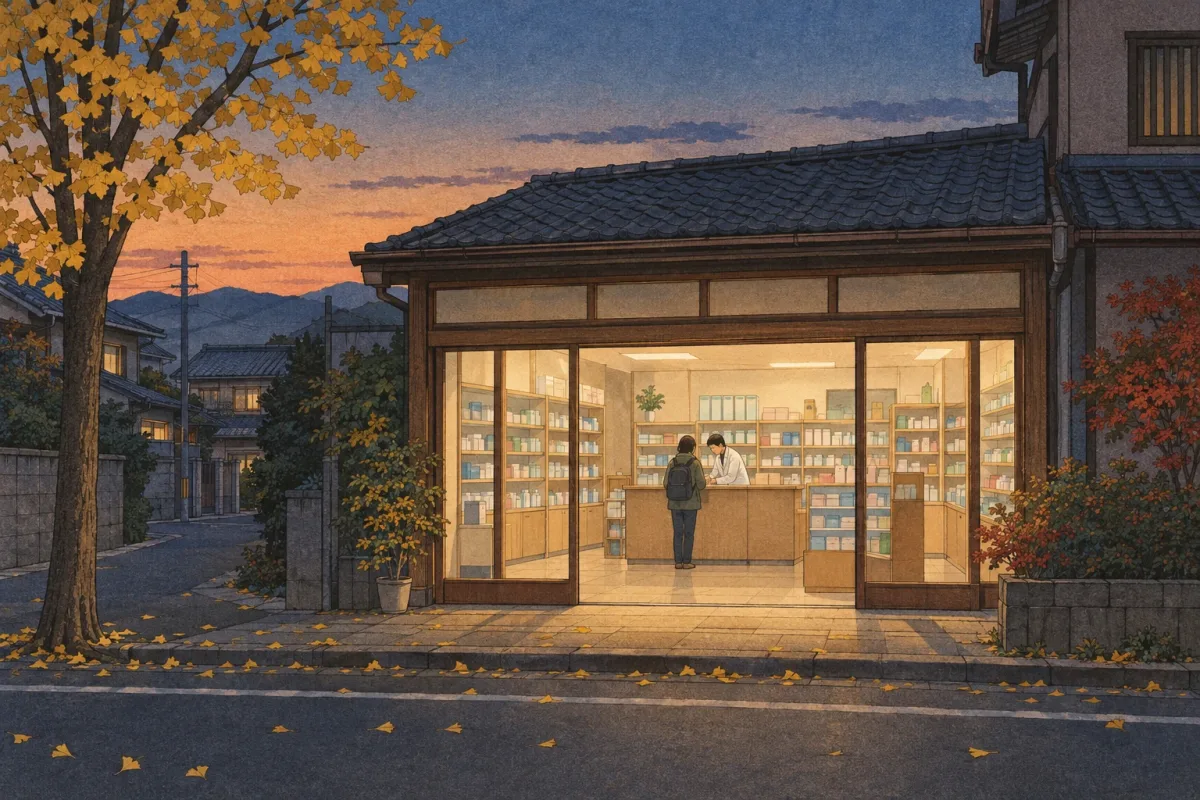
For symptoms that don't need a doctor, you can buy over-the-counter medicine at a nearby pharmacy or drugstore.
Over-the-counter medicine in Japan is classified by its level of risk. 'Requires guidance' medicines, which need a pharmacist to explain them face to face, and Class 1 medicines, which carry a relatively high risk of side effects and the like, can only be sold by a pharmacist. Class 2 medicines are sold by a pharmacist or a 'registered seller' (a shop worker qualified to sell over-the-counter medicine), and low-risk Class 3 medicines are sold relatively freely.
This means some medicine can't be bought when no pharmacist is on duty. If you're looking for medicine labelled daiichirui iyakuhin (Class 1 medicine) on the box, go when a pharmacist is in.
The medical guide from the Japan National Tourism Organization (JNTO) also links to a site where you can search in English for over-the-counter medicine available in Japan by name, by the part of the body affected or by what it does. Even if the box is only in Japanese, a pharmacist or registered seller in the shop can help you choose something that suits your symptoms.
How do you find a doctor or hospital in Japan if you get ill?
JNTO's guide for when you feel ill lets you search for medical facilities by area, language and department. You can also find facilities chosen as hubs for accepting foreign patients and hospitals certified under JMIP (Japan Medical Service Accreditation for International Patients). The site is available in English, Chinese, Korean and other languages.
On payment, credit cards are mainly accepted at large hospitals, while clinics are generally cash only. It's reassuring to ask at reception for a rough idea of the cost of treatment. Medical costs during a trip can be high, so travel insurance is a good idea, and some policies include interpreting and hospital referral services.
For fires, traffic accidents and serious illness or injury, you can call an ambulance on 119. JNTO also runs the Japan Visitor Hotline, which offers advice in English, Chinese and Korean in case of illness or disaster, 24 hours a day, 365 days a year (check the number on JNTO's official website).
Tips
- Before you leave, check the ingredients list of the medicine you're taking for names such as codeine, pseudoephedrine, lisdexamfetamine and amphetamine. If any appear, look up how they're treated on the Narcotics Control Department's English page.
- The deadline for applying for permission for narcotics or stimulant raw materials is two weeks before you arrive, and it comes earlier over the New Year holidays: for 2026-27, arrivals from 21 December to 4 January must apply by 7 December, arrivals from 5 to 11 January by 14 December, and arrivals from 12 to 18 January by 21 December.
- Keep your medicine in its original box or container and carry it in your hand luggage. An English document saying what condition it's for makes it easier to explain at Customs.
- Buying a Class 1 medicine (daiichirui iyakuhin) at a Japanese pharmacy needs a pharmacist. You may not be able to buy one late at night, so go earlier in the day.
- Choosing travel insurance with interpreting and hospital referral services gives you peace of mind. Many clinics only take cash, so carry a little cash as well.
Sources
- Application Guidance - Narcotics Control Department (MHLW) (opens in a new tab)
- 麻薬・覚醒剤原料などを携帯して日本を出入国する方へ - 麻薬取締部 (opens in a new tab)
- 携帯による医薬品である覚醒剤原料の輸入・輸出手続きに関する手引き - 厚生労働省地方厚生局麻薬取締部 (opens in a new tab)
- 医療用向精神薬を携帯して出入国する際の総量一覧表 - 関東信越厚生局 (opens in a new tab)
- 医薬品等の個人輸入について - 厚生労働省 (opens in a new tab)
- 医薬品等の個人輸入に関するQ&A - 厚生労働省 (opens in a new tab)
- 医薬品等の輸入手続について - 関東信越厚生局 (opens in a new tab)
- 個人使用のために輸入する場合 - 近畿厚生局 (opens in a new tab)
- 海外渡航先への医薬品の携帯による持ち込み・持ち出しの手続きについて - 厚生労働省 (opens in a new tab)
- 1806 Private importation of drugs, cosmetics, etc. (FAQ) - Japan Customs (opens in a new tab)
- 9005 For Overseas Travelers (Quasi-drugs/Cosmetics, etc.) - Japan Customs (opens in a new tab)
- 医薬品の販売制度 - 厚生労働省 (opens in a new tab)
- For safe travels in Japan - Guide for when you are feeling ill - JNTO (opens in a new tab)
- Japan Visitor Hotline - JNTO (opens in a new tab)