Japan is Nippon
How Do You Get Tickets for the Nintendo Museum in Kyoto?
Tickets for the Nintendo Museum (in Uji, Kyoto Prefecture) are mainly sold by lottery on the official ticket page: you apply with a free Nintendo Account during the month that falls three months before the month you want to visit. Tickets carry each visitor's name, and everyone has to show ID on the
The short answer
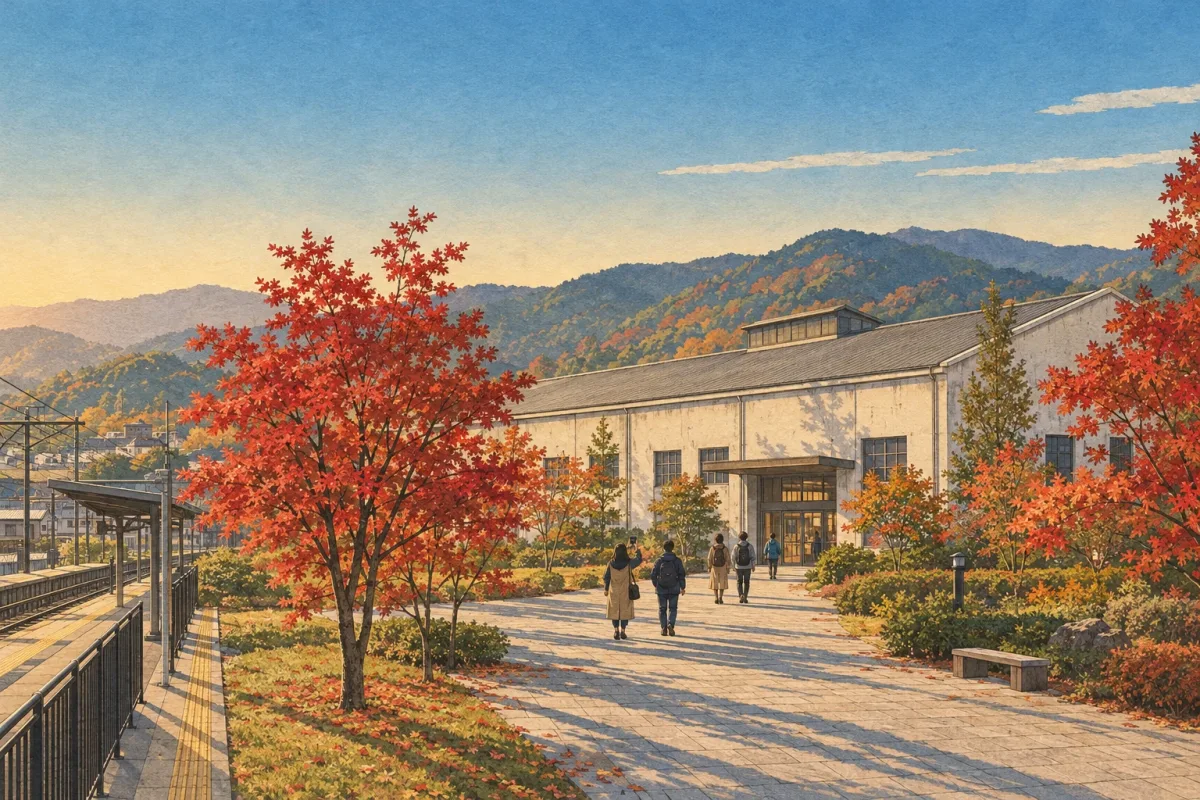
The Nintendo Museum is a public relations facility that Nintendo built in Uji, Kyoto Prefecture, and it opened on 2 October 2024. It is a place to learn about and experience the history of how the company has made entertainment, told through the products Nintendo has released, from hanafuda cards to the Nintendo Switch.
The building is Nintendo's former Uji Ogura Plant. The plant was built in 1969 and served as the main factory for making toys, then was later used to produce playing cards and karuta (traditional Japanese card games), as a service centre handling repairs, and as a warehouse.
Tickets are sold only on the official Nintendo Museum ticket page. They are mainly sold by lottery, and you need a free Nintendo Account to apply. This is not somewhere you can drop into on a whim, so once your travel dates are fixed, the first thing to do is plan your ticket application.
When should you apply for Nintendo Museum tickets?
Lottery applications are accepted for one month, three months before the month you want to visit. The example on the ticket page is that if you want to go on 15 July, you can apply from 1 April to 30 April. As of November 2026, the official website says 'now accepting reservations for February 2027 visits', so applying in November gets you a February visit.
Lottery results are sent from the afternoon of the 1st of the following month to the email address registered to your Nintendo Account, and you can also check them on the ticket page. If you win, you pay by 23:59 on the 7th of that month. If you don't pay by the deadline, the tickets are cancelled automatically.
If you lose, you still have a chance. When places open up after the lottery, through cancellations and the like, tickets are sometimes sold first come, first served on the ticket page, covering visits up to two months ahead (for example, for a 15 July visit, from mid-May to 14 July). You may also be offered a place on a cancellation waiting list when the lottery results come out; if a winner cancels, you move up and win. If you win from the waiting list, the payment deadline is the 14th of the month.
What do you need to apply, and how much are tickets?
To buy tickets you need the buyer's Nintendo Account, a phone number (mobile or landline), a credit card and the names of everyone who will visit. The names must be written exactly as they appear on the ID you will show on the day. You can't apply until you know who is coming with you.
Payment is by credit card only, and the accepted brands are Visa, Mastercard, JCB and Discover. Prepaid and debit cards from these brands also work, but they must be registered for 3D Secure (the card authentication service). You are only charged if you win.
Prices (tax included, as of November 2026) are 3,300 yen for adults (18 and over), 2,200 yen for junior high and high school students, 1,100 yen for elementary school children, and free for preschool children. High school students aged 18 buy the junior high and high school ticket. Children of elementary school age and younger must be accompanied by an adult, and when you buy an elementary school ticket you must buy at least one adult ticket with it. Holders of a disability certificate or Mirairo ID (a Japanese digital disability ID app) and one companion pay 1,100 yen each (preschool children are free).
Can you get in with a resold ticket or one in someone else's name?
No. Nintendo Museum tickets carry the visitor's name, and nobody other than the registered person can enter. There have been several confirmed cases where tickets bought anywhere other than the ticket page were invalid and the holders could not get in.
Transferring or reselling tickets to anyone else is forbidden, whether for profit or not. If tickets are found being traded improperly on resale sites, auctions or social media, not only those tickets but every ticket the buyer has purchased may be cancelled without notice, the buyer may be barred from future entry, and no refund is given. Be careful with sites claiming to be tour companies or proxy-buying services too.
On the day, you show your QR ticket and ID to staff at the entrance. Accepted ID includes the My Number Card, a driving licence, a passport and a residence card. If you're a traveller, don't forget your passport. If your identity can't be confirmed, you may be refused entry.
You issue your QR ticket on the ticket page from 14:00 on the day before your visit. Note that once it is issued it can no longer be cancelled. If one representative bought tickets for the whole group, they can show the QR tickets for all their companions and everyone goes in together.
What can you do inside the Nintendo Museum?
The second floor of Exhibition Building 1 is lined with the products Nintendo has released over the years. The displays deliberately come without detailed explanations, and visitors are encouraged to enjoy comparing them with their own memories and experiences. You can also see original artwork of characters from Super Mario, The Legend of Zelda, Animal Crossing and more, as well as development materials for some games.
The first floor of Exhibition Building 1 is the hands-on area. The entry pass you receive when you arrive is loaded with 10 coins per person, and you spend those coins to play. The options include Zapper & Scope SP, where you fire the Zapper and Super Scope light guns at a giant screen; a batting experience recreating the Ultra Machine, a toy pitching machine released in 1968; and Nintendo Classics, where you can choose from more than 80 Famicom, Super Famicom and Nintendo 64 games to play. You can't buy extra coins, and 10 coins aren't enough to try every exhibit, so deciding how to spend them is part of the fun.
There are also workshops on hanafuda (traditional Japanese playing cards decorated with flowers and plants for each of the 12 months), the product Nintendo started with. 'Let's Make Hanafuda', where you make your own cards, takes about 60 minutes and costs 2,000 yen (tax included); 'Let's Play Hanafuda', where you learn to play, takes about 30 minutes and costs 500 yen per person (tax included, in pairs). Both have to be booked for the same day after you enter, first come, first served, so sign up early.
At the museum's cafe, Hatena Burger, you can have an original burger set, built by choosing your own bun and fillings, from 2,200 yen, and there are more than 270,000 possible combinations. The cafe and shop are only open to ticket holders. The cafe is busiest from around 12:00 to 15:00.
How do you get to the Nintendo Museum from Kyoto?
The Nintendo Museum's address is 56 Ogura-cho Kaguraden, Uji, Kyoto Prefecture. The nearest station is Ogura Station on the Kintetsu Kyoto Line, a 5-minute walk from the east exit. From JR Ogura Station on the JR Nara Line it's an 8-minute walk from the north exit. You can also take a 6-minute bus ride (route 64, Uji-Ogura Line) from the south exit of Uji Station on the JR Nara Line. The Kintetsu Kyoto Line starts from Kyoto Station.
One important point: there is no car park and no bicycle parking. Arriving by taxi, private car, motorbike or bicycle is not allowed; visitors must come by public transport such as trains and buses.
The route 64 Uji-Ogura Line bus runs in a loop linking Keihan Uji Station, JR Uji Station, the Nintendo Museum and Kintetsu Ogura Station. With this bus you can combine the museum and a stroll around Uji, which the Uji City Tourist Association calls 'the town of Uji tea and The Tale of Genji', in one day.
What rules should you know before you go?
Opening hours are 10:00 to 20:00 (as of November 2026). The museum is closed every Tuesday (if Tuesday is a public holiday it opens and closes on the following Wednesday instead) and over the New Year period from 30 December to 3 January. Nintendo's news release at the opening gave a closing time of 18:00, so check the official website for the latest hours.
Photos are allowed in the hands-on area of Exhibition Building 1, but not in the exhibition area where the products are displayed. Large photography equipment such as selfie sticks and tripods, as well as live streaming, are also banned.
You can't bring in food, except baby food, snacks for children and meals for people with dietary restrictions such as allergies. You can bring drinks other than alcohol in plastic bottles or flasks (bags are checked at the entrance). Large luggage such as suitcases isn't allowed inside, so use the free coin lockers near the entrance (you insert a 100-yen coin, which comes back after use).
Entry in cosplay (costume) is not allowed. Children of elementary school age and younger can't enter on their own and must come with an adult aged 18 or over. At the cafe and shop inside, you can pay with cash, credit cards, transport IC cards and QR code payments.
Tips
- The lottery application period runs from the 1st to the last day of the month three months before the month you want to visit. Put it in your calendar as soon as your trip is fixed (for example, apply in November to go in February).
- Before you apply, get the names of everyone in your group ready, spelled exactly as on their ID (a passport, if you're a traveller).
- Tickets are sold only on the official ticket page. Tickets bought on resale sites or through proxy services may be invalid.
- If you lose the lottery, you still have a chance through the waiting list or first-come, first-served sales. Check the ticket page regularly.
- The hanafuda workshops are booked first come, first served after you enter. Once inside, check the available slots at the information desk first.
Sources
- ニンテンドーミュージアム | 任天堂 (opens in a new tab)
- チケット購入からご来館の流れ | ニンテンドーミュージアム | 任天堂 (opens in a new tab)
- ご利用案内 | ニンテンドーミュージアム | 任天堂 (opens in a new tab)
- User Guide | Nintendo Museum | Nintendo (opens in a new tab)
- Nintendo Museum チケットページ | 任天堂 (opens in a new tab)
- チケットの転売・決済代行・それに類するサイトまたはサービスについて | ニンテンドーミュージアム | 任天堂 (opens in a new tab)
- 施設紹介 | ニンテンドーミュージアム | 任天堂 (opens in a new tab)
- 館内のご案内 | ニンテンドーミュージアム | 任天堂 (opens in a new tab)
- カフェ | ニンテンドーミュージアム | 任天堂 (opens in a new tab)
- アクセス | ニンテンドーミュージアム | 任天堂 (opens in a new tab)
- 「ニンテンドーミュージアム」2024年10月2日オープンのお知らせ | 任天堂 (opens in a new tab)
- 宇治市観光協会 公式ホームページ (opens in a new tab)
- Railway Network Map | Travel by Train | Kintetsu Railway Co.,Ltd. (opens in a new tab)