Japan is Nippon
What Is a Ryokan, and Is It Worth Staying at One?
A ryokan is a traditional Japanese inn where you sleep on a futon in a tatami room, bathe in a hot spring in a yukata and have dinner and breakfast at the inn. Prices are usually per person with two meals, so it can look pricier than a hotel, but as a taste of Japanese culture with meals and baths i
The short answer
A ryokan is a traditional-style Japanese inn. Ryokan are thought to date back to the 8th century, and they may be the oldest form of hotel in the world.
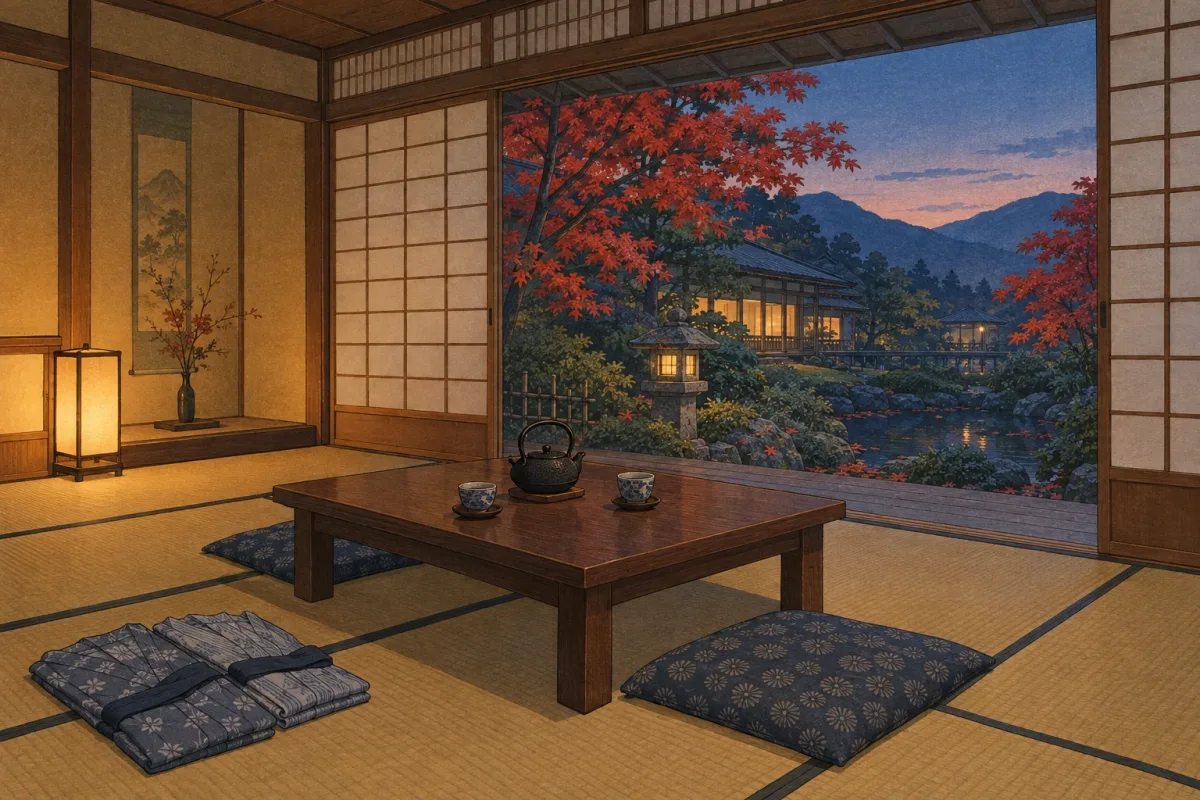
What ryokan have in common are tatami floors (a traditional Japanese flooring with a surface of woven igusa rush), futons, yukata (a cotton, kimono-style robe to wear around the inn), a multi-course dinner known as kaiseki and a Japanese breakfast. Many ryokan also have hot springs.
The Japan Ryokan & Hotel Association, which ryokan across the country belong to, sums up the ryokan experience as 'spending time in a tatami room, changing into a yukata after a hot-spring bath, and sleeping on a futon laid directly on the tatami'. In other words, a ryokan is less a place to sleep than a place to experience a whole evening of the Japanese way of living.
How is a ryokan different from a hotel?
The biggest difference from a hotel is how the price works. A ryokan's rate is usually for one night with two meals: dinner on the day you arrive and breakfast the next morning. At many ryokan the meals are commonly served in your room, known as heya-shoku ('room meals'), and what arrives is a proper multi-course meal rather than room-service snacks.
The building is used differently too. At a ryokan you usually take off your shoes at the entrance and change into slippers or zori (traditional sandals), and you take the slippers off as well before stepping into a tatami room. These days, though, more and more ryokan let you keep your shoes on all the way to your room door.
Rooms are basically Japanese-style, with a low table (zataku) in the middle and legless chairs (zaisu) to sit on. When the sun is strong, you close the shoji (sliding screens of wood and paper) to soften the light. A growing number of ryokan provide chairs and tables for guests not used to sitting on the floor, or offer Japanese-style rooms with beds, or wa-yō-shitsu (rooms combining Japanese and Western styles).
Incidentally, under the law ryokan and hotels are treated the same. The Inns and Hotels Act divides accommodation businesses into three types, 'ryokan and hotel business', 'simple accommodation business' and 'boarding house business', and ryokan and hotels both fall under 'ryokan and hotel business'. The difference lies not in the law but in the style of the building and service.
What happens from check-in to the next morning?
Check-in usually starts around 15:00 to 16:00, not very different from a hotel. Most ryokan will look after your luggage at the front desk if you arrive early. Ryokan meals often have set times, and if you're late, you may miss your meal. If you expect to arrive well after check-in time, or a delayed train means you won't make it, contact the ryokan.
A room attendant called a nakai-san shows you to your room, giving you a brief tour of the inn on the way. Once you're settled, the nakai-san serves green tea and a Japanese sweet, confirms your meal times and tells you about the area. You're usually asked at check-in what time you'd like dinner and breakfast.
Dinner is a Japanese course using seasonal ingredients, and the nakai-san brings it dish by dish to match your pace, explaining each one. In the evening, staff also lay out your futon. Breakfast is typically Japanese: rice, miso soup, grilled fish, a tofu dish, an egg dish, nori seaweed and tsukudani (small fish and the like simmered down in soy sauce and sugar). Some ryokan serve a Western breakfast, but you need to ask for it in advance.
Check-out is often between 10:00 and 12:00. Many ryokan also have a curfew (for example, midnight) for safety and so guests can sleep well, so if you want to stay out late, check beforehand.
What's the etiquette for yukata and the shared bath?
There's a yukata in the room for each guest, and it's a good idea to change into it after your bath. Once your arms are through the sleeves, men and women alike wrap the left side over the right and then tie the obi (sash). In the cold season, a tanzen (a thick, padded kimono) or haori (a short jacket) may be provided to wear over the yukata.
The daiyokujō (the large bath shared by guests) can usually be used without booking, and is often open late at night and early in the morning too, apart from cleaning times. To prevent accidents, though, avoid bathing late at night or after drinking alcohol.
These are the basics. Wash before getting into the bath, and sit down to wash in the washing area (don't wash standing up). Pour hot water over yourself to get used to the temperature, which is called kakeyu, before you get in. Keep your towel out of the bath water and tie up long hair. And avoid taking photos, bathing in a swimsuit or chatting loudly.
The small towel is for covering yourself and washing outside the bath; when you get in, you can fold it and put it on your head or on the edge of the bath. And you don't need to get too nervous about doing everything perfectly.
How are ryokan prices worked out?
A distinctive feature of ryokan is that you usually pay per person. The idea is that the price includes hospitality for each guest, such as meals and the hot springs. These days some ryokan charge by the room like hotels, but even then you pay an extra per-person charge if you go over the room's capacity.
Children's rates vary from ryokan to ryokan. Many ryokan don't charge for small children, for example those under 3, some charge 50% or 70% of the adult rate depending on the child's age, and many charge the full adult rate from 12 upwards. On booking sites, enter the number of children accurately.
As a rough guide, the average ryokan costs around 15,000 yen a night, and more at luxury ryokan. These days, though, more and more ryokan offer not only 'one night with two meals' but also breakfast-only plans and room-only plans without meals, called sudomari, so you can choose to suit your budget.
Cancellation fees work much like a hotel's: they rise as the date of your stay gets closer, and if you don't turn up without letting them know, you're usually charged 100%. When you pay also differs by ryokan and booking site: on arrival, in advance, or a mix of both. As for tipping, it isn't common at hotels and similar places.
Can you stay at a ryokan if you have tattoos or dietary needs?
How tattoos are treated varies widely from ryokan to ryokan. In Japan tattoos are associated with organised crime groups, and ryokan have historically turned tattooed guests away from the baths so as not to make other guests uneasy. On the other hand, understanding has grown recently, and some ryokan have no restrictions at all, while others decide case by case, for example allowing a small single tattoo.
If you're worried, private baths and in-room baths are your best friends. There are two kinds of hot-spring baths you can have to yourself: ones attached to your room that you can use at any time, and ones you reserve for a set time slot, which need booking. Kashikiri-buro (private baths) and rooms with their own outdoor bath are a good choice for guests with tattoos or anyone shy about being naked in front of others.
Many ryokan also try their best to meet dietary requests. Examples of requests include not eating raw food, allergies, and vegetarian, vegan and gluten-free diets; if you have any, get in touch early, ideally several days ahead. They can't always be accommodated, however. If you give details in advance, a ryokan may prepare vegetarian dishes for you.
For guests with disabilities and older guests, some ryokan are becoming barrier-free with lifts, handrails and ramps, and even at those that aren't, staff will help with getting around and carrying luggage. Traditional buildings can have their own drawbacks, such as a step at the entrance, so tell the ryokan about your needs when you book and talk it over.
Who is a ryokan stay best for?
There are several types of ryokan: long-established shinise ryokan with more than 100 years of history, common in Kyoto, Nara and historic hot-spring towns; onsen ryokan in Japan's more than 3,000 hot-spring areas; and large ryokan with a big shared bath, souvenir shops, karaoke and more under one roof.
A ryokan suits people who would rather make the inn itself the point of the trip than rush round the sights. Ryokan in hard-to-reach places are built with the idea that 'we want you to relax at the ryokan all day', and some offer a free shuttle from the station (mostly by reservation).
On the other hand, if you don't want to be tied to a dinner time or a curfew, or want to be out on the town until late, a ryokan with two meals may feel a bit restrictive. In that case you can choose a room-only or breakfast-only plan, or stay at a hotel and enjoy a day-trip bath instead. Hot-spring towns such as Kusatsu in Gunma Prefecture have plenty of places offering day-trip bathing.
Even so, a night of being welcomed by a nakai-san, soaking in hot water in your yukata, tasting seasonal food in your room and sleeping on a fluffy futon is a Japanese experience no hotel can give you. For some people, a ryokan stay is the part of their Japan trip they look forward to most. Even working in just one ryokan night on your trip is well worth it.
Tips
- When you book, always check whether the plan includes meals or is room-only (sudomari). Ryokan rates are usually per person with two meals (as of November 2026).
- Check-in is usually around 15:00 to 16:00. Meal times are often fixed, so contact the ryokan if you're running late.
- If you have dietary needs such as allergies or a vegetarian diet, letting the ryokan know several days ahead if possible will give you peace of mind.
- If you have tattoos, ask the ryokan about its policy before booking, or choose one with private baths or rooms with their own outdoor bath.
- Men and women alike wear the yukata with the left side on top. In the shared bath, wash before getting in and keep your towel out of the water.
Sources
- Japanese Ryokan Guide | Guide | Travel Japan - Japan National Tourism Organization (Official Site) (opens in a new tab)
- How to Best Enjoy Japan’s Onsen | Guide | Travel Japan - Japan National Tourism Organization (Official Site) (opens in a new tab)
- A Vegetarian and Vegan Guide to Japan | Guide | Travel Japan - Japan National Tourism Organization (Official Site) (opens in a new tab)
- Tipping in Japan | Travel Japan | JNTO (opens in a new tab)
- 旅館Q&A あなたの疑問に答えます!(料金設定) | 観光庁 (opens in a new tab)
- 旅館Q&A あなたの疑問に答えます!(旅館到着まで) | 観光庁 (opens in a new tab)
- 旅館Q&A あなたの疑問に答えます!(部屋・館内利用時) | 観光庁 (opens in a new tab)
- 旅館Q&A あなたの疑問に答えます!(外出時) | 観光庁 (opens in a new tab)
- 旅館Q&A あなたの疑問に答えます!(食事) | 観光庁 (opens in a new tab)
- 旅館Q&A あなたの疑問に答えます!(大浴場) | 観光庁 (opens in a new tab)
- 旅館業法 | 厚生労働省 (opens in a new tab)
- Japan Ryokan Association - What is a Ryokan? (opens in a new tab)
- Japan Ryokan Association - What is a Ryokan? (2: Difference between a Western-style hotel and a Japanese Ryokan) (opens in a new tab)
- Japan Ryokan Association - Guestrooms of the Ryokan (opens in a new tab)
- Japan Ryokan Association - On the way to your guestroom (opens in a new tab)
- Japan Ryokan Association - After Settled Down in Guestroom (opens in a new tab)
- Japan Ryokan Association - Yukata (opens in a new tab)
- Japan Ryokan Association - Dinner (opens in a new tab)
- Japan Ryokan Association - Sleeping on a Futon bedding (opens in a new tab)
- Japan Ryokan Association - An Appetizing Breakfast (opens in a new tab)
- Japan Ryokan Association - How to choose a Ryokan (3: Onsen Ryokans) (opens in a new tab)
- Japan Ryokan Association - How to enjoy staying at a RYOKAN: Japanese Bath Etiquette (PDF) (opens in a new tab)