Why Do Japanese People Bring Souvenirs Back for Their Coworkers?
Those little sweets on your desk after someone's holiday go back to Edo-period pilgrimages to Ise and thanking the people who covered for you.
The short answer
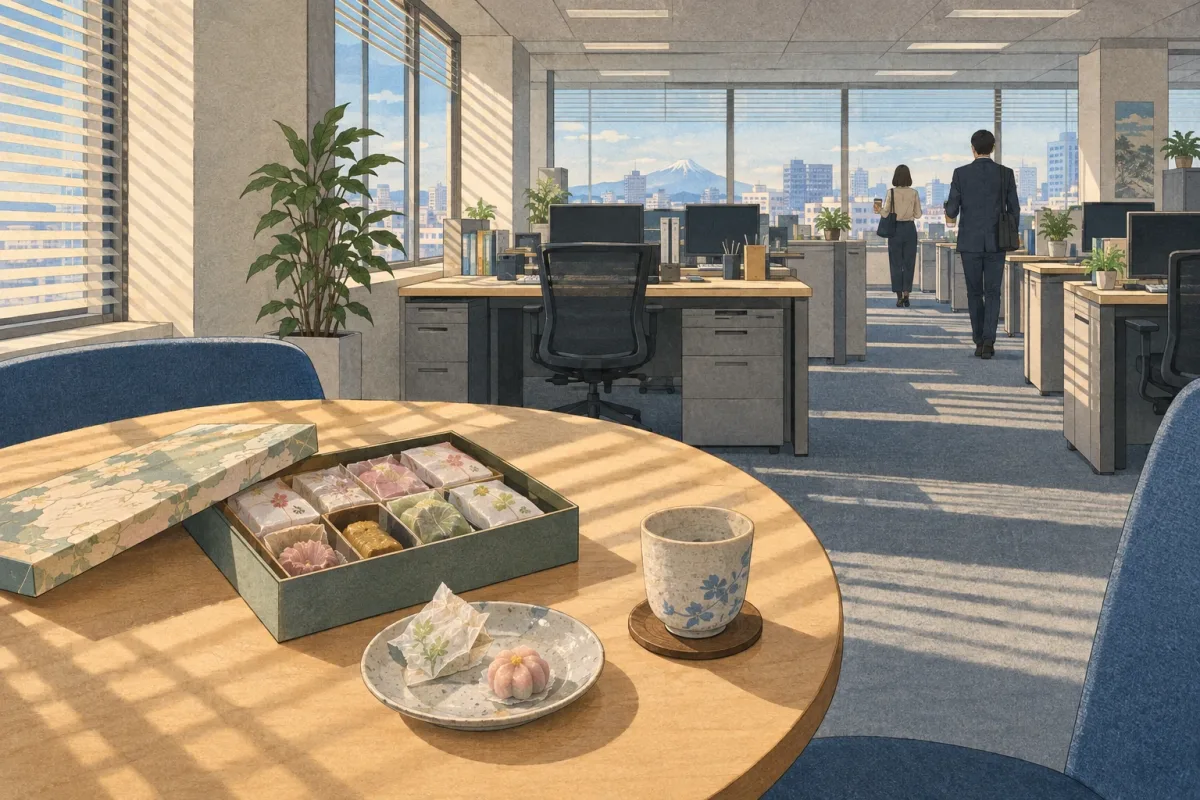
Omiyage (souvenirs) handed out at work are an easy way of saying "thanks for keeping things running while I was away" and "thank you for all your help". Their roots are said to lie in an Edo-period travel custom: people who made the long trip to a distant shrine or temple with the backing of their village or group brought back ofuda (paper talismans) and gifts to hand out.
It is not compulsory, but it continues in many workplaces today, and the usual thing to give is individually wrapped sweets.
The roots: a journey "on everyone's behalf"
The way the word for souvenir, 土産, is read as "miyage" is a little odd, and there are several theories about its origin. One is the "miyake" (宮笥) theory: vessels, talismans and other things received when visiting a shrine later became associated with local produce and turned into "miyage". An article in the Asahi Shimbun newspaper also presents this as one of several theories.
In the Edo period, a pilgrimage to Ise Grand Shrine (Ise-mairi), the dream of ordinary people, was a major journey that cost a lot of money and time. According to the Ise City Tourism Association, communities around the country had groups of fellow believers called "ko", and the members pooled money for travel costs so that a representative could make the pilgrimage on their behalf, a practice called "daisan" (proxy pilgrimage). The representative brought back talismans and gifts to hand out to the members of the ko.
In other words, a souvenir was originally a report to, and a thank-you for, "the people who sent me on my journey". There is also an explanation that it was a paired custom, with "senbetsu" (a parting gift given to someone setting out) on one side and souvenirs on the other.
According to the Ise City Tourism Association, these journeys were supported by people called "onshi". Onshi were originally among the shrine priests involved in prayers at the Grand Shrine; they travelled the country handing out the shrine's talismans and the "Ise calendar", and came to have "danka" (affiliated households) in each region. When those households came to Ise, the onshi put them up in their own residences, looked after their meals and even guided them on their pilgrimage. Ties with people far away were kept alive through something tangible: a talisman.
According to the Nihon Bunka Iroha Jiten (an online dictionary of Japanese culture), in the Muromachi period court nobles visiting Ise Grand Shrine brought back everyday items such as cotton cloth, small knives and tweezers as souvenirs, and in the Edo period souvenir shops appeared and the custom took hold along with the fashion for visiting shrines and temples. Some villages saved up for travel costs, sent a representative on the pilgrimage, and on his return he told the villagers stories of the journey (miyage-banashi, "souvenir tales") along with handing out amulets and talismans.
Railways created the "famous local sweet"
Today's style of buying region-only sweets at stations and airports to take home took shape in the modern era. In his book "Omiyage to Tetsudo" (Souvenirs and Railways, Kodansha), historian Yuichiro Suzuki argues that the sight of manju (filled buns) and yokan (sweet bean jelly) being sold as "meibutsu" (local specialities) at stations around the country is rarely seen in other countries, and that it arose when modern transport networks, starting with the railways, met Japan's history and culture. He says, for example, that the spread of Okayama's kibidango and Ise's Akafuku as local specialities was also driven by the development of the railways.
Easy to carry, long-lasting and with a flavour of the place: once sweets like that were lined up in stations, it became easy to give a little to lots of people.
According to the book's description, the fact that the abekawa mochi of Shizuoka Station is actually made from gyuhi (a soft dough used in Japanese sweets) rather than mochi, and the fact that Hokkaido somehow has a banana manju, cannot be explained without the railways either. Competitions between regional sweets at expositions and fairs also gave a boost to the creation of "local specialities".
This trend continues today. In a 2024 nationwide survey of 20 to 69-year-olds by Cross Marketing, 63.5% said they "like" buying souvenirs, and "region-only sweets" were the most popular choice both for themselves and for giving to others.
Workplace souvenirs today
In a 2024 survey of 640 working women by the job site "Onna no Tenshoku type", 87.6% said their workplace had a culture of handing out souvenirs, and 82.6% said they hand them out themselves (almost every time, or only when they feel like it). The top reasons were "to thank people for their help day to day" (53.1%), "to thank people for the time off" (44.8%) and "as a form of communication" (43.1%).
The most common budget per person was 100 to 199 yen (41.8%), and among the points people pay attention to, "being individually wrapped" was far ahead at 89.5%. The feeling is that "a bite-sized sweet and a few words" is enough, rather than anything expensive. Other points mentioned were "the number of pieces" (57.8%) and "the best-before date" (51.8%), and in free answers people wrote things like "whether anyone at work has allergies" and "in busy periods, choose something more filling than sweets". It shows careful thought for making sure the recipient is not put out even if they cannot eat it straight away.
On the other hand, 30.5% in the same survey said they "don't think it's a good" custom. Their reasons included "then I have to buy some too", "it's a waste of money" and "it's a hassle". Some people feel burdened by the pressure to reciprocate or keep up with everyone else, and in reality attitudes vary from workplace to workplace.
What surprises people from abroad
Abroad, many people think of travel souvenirs as something you buy for family and close friends. In Japan, souvenirs may go to colleagues you are not especially close to, or to everyone in the department, so some people are surprised to find a single sweet sitting on their desk after someone's holiday.
You may also wonder whether you are expected to bring souvenirs back from a trip home or a holiday of your own. In most cases what is expected is not something luxurious, but a small sweet that gets a conversation going and a quick "thank you for covering while I was off". In Cross Marketing's 2024 survey, "things from an area I could not go to buy myself" was mentioned among the souvenirs people were happy to receive, so sweets from abroad are likely to go down well.
Small tips for handing them out
The basics are to get a few more than the number of people, and choose something individually wrapped that keeps well. In the same survey, "food that does not keep" and "keyrings or ornaments" were mentioned among the souvenirs people found awkward to receive.
The usual way is either to go round on the morning you are back saying "thank you for letting me take time off, please help yourself", or to leave them all in the break area with a short note. Someone may not be able to eat them because of allergies or religious reasons, so it is thoughtful to keep the box or label so that the ingredients can be checked.
Tips
- It is not compulsory, but after a longer holiday, having a box of individually wrapped sweets ready will help you fit in at work.
- A budget of about 100 to 200 yen per person is plenty. Something expensive can actually make people feel awkward.
- Get a few more pieces than the number of people, and choose something that keeps well.
- Sweets from your home country tend to be welcomed as "something I could not buy myself", and are a good conversation starter.
- Leave the outer box or a description with them so people can see the ingredients.
- When you receive one, reply with something like "Thank you, where did you go?" to get a conversation going. You generally do not need to give anything back.