Why Is Tipping Considered Rude in Japan?
It is less "rude" than "awkward". How tipping disappeared from Japan, and the best ways to say thank you instead.
The short answer
In Japan there is no custom of tipping in restaurants, cafés, bars, taxis, hotels and so on. The thinking is that payment for the service is already included in the displayed price or in a "service charge".
So a tip is not so much "rude" as something people do not know how to accept: in almost every case it causes confusion or is politely declined. The Japan National Tourism Organization (JNTO) also recommends showing your gratitude with a smile and a simple "arigatō gozaimashita" (thank you very much).
Japan did have "tips" once
It may come as a surprise, but Japan once had customs close to tipping. At inns in the Edo period, it was common to give the innkeeper "chadai" (literally "tea money") on top of the lodging charge, and to give "kokorozuke" (a gratuity) to the women who looked after the rooms and the people who carried luggage. People also gave goshūgi (gratuities) to waitresses at restaurants, ushers at theatres and so on.
Chadai was supposedly left to the guest's free will, but in practice paying it was taken for granted, and guests decided the amount based on the inn's standing, the room and how well they were looked after. An etiquette book from 1940 reportedly gave 20 to 30% of the bill as a guide for chadai, and 10 to 20% for gratuities to maids. The poet Sakutaro Hagiwara said it began because Edo-period rules fixed the price of lodging, so inns started accepting extra from wealthy guests they had looked after especially well, under the name of "chadai". Conversely, even into the Showa era it was usual not to take chadai from students or travelling pedlars.
From the Meiji era through the Taisho era, however, calls grew to abolish this custom, since it was hard to know how much to pay. The thinker Kanzo Uchimura criticised chadai as a kind of bribe. Many guests also disliked the hassle, and by around the early Showa era more and more inns were adding 10 to 15% of the lodging charge to the bill as a "service charge" (hōshiryō) and doing away with gratuities. In other words, Japan chose a system that "builds the tip into the price", so guests no longer had to agonise over the amount.
Meanwhile, in the Western-style restaurants that spread from the Meiji era onwards, the culture of tipping waiters never took root at all.
How prices work in Japan today
In Japan, when shops display prices to consumers, the law requires them to show the "tax-inclusive price", including consumption tax (total price display). As a rule, the amount on the price tag or menu is exactly what you pay.
On the other hand, some hotels and restaurants add a "service charge" to the bill. And at izakaya (Japanese pubs), you are often served a small dish you did not order, called "otōshi", when you sit down; this is not a free extra but the equivalent of a seat or table charge. If you are not sure whether there are extra charges, just ask the staff.
Because of this system, many businesses teach their staff not to accept money from customers. When a tip you offer is declined, it is often less a matter of the person being modest and more that it is their workplace's rule.
How Japan differs from tipping countries
In countries where tipping is the norm, the minimum wage for service workers is said to be set relatively low, and tips are the income that supports workers' livelihoods. In other words, a tip is not a "bonus" but effectively part of the wages. In many European countries, a service charge is included in the price in advance, so tipping is not necessarily compulsory. Recently, self-checkouts and touch screens that spread from around 2020 showing tip options such as "15 to 20%", pushing up the amount people pay, have also become a talking point. There is also criticism that tip amounts vary with the customer's race or gender, creating discrimination.
Japan could be described as the country that has taken this "include it in the price" approach the furthest. An encyclopaedia also explains that including the service charge in the bill in advance is common in Japan. The business pays its staff's wages, and customers simply pay the displayed price. For Japanese staff used to this system, being given a tip is the "unusual, out-of-the-ordinary event".
Why do people say it is "rude"?
Travel guides abroad sometimes say that "tipping in Japan is rude", but JNTO's explanation is that it "often causes confusion". The person on the receiving end means no offence; they simply do not have the custom and are not sure how to respond. That is probably closer to the reality.
Still, there is a background to the "rude" label. In Japan, it is considered good manners to wrap money in paper or a small envelope (a pochibukuro, or a shūgibukuro for celebrations) when giving it to someone, and handing over coins or notes as they are has traditionally been seen as disrespectful. By that standard, the Western-style tip of cash left bare on the table may look a little crude.
Also, giving a gratuity to a public servant is an act for which the giver can be charged with bribery. Many hospitals now also decline "thank-you" money for doctors. There are certainly many situations where people are careful about "showing their feelings with money".
Exceptions: where kokorozuke lives on
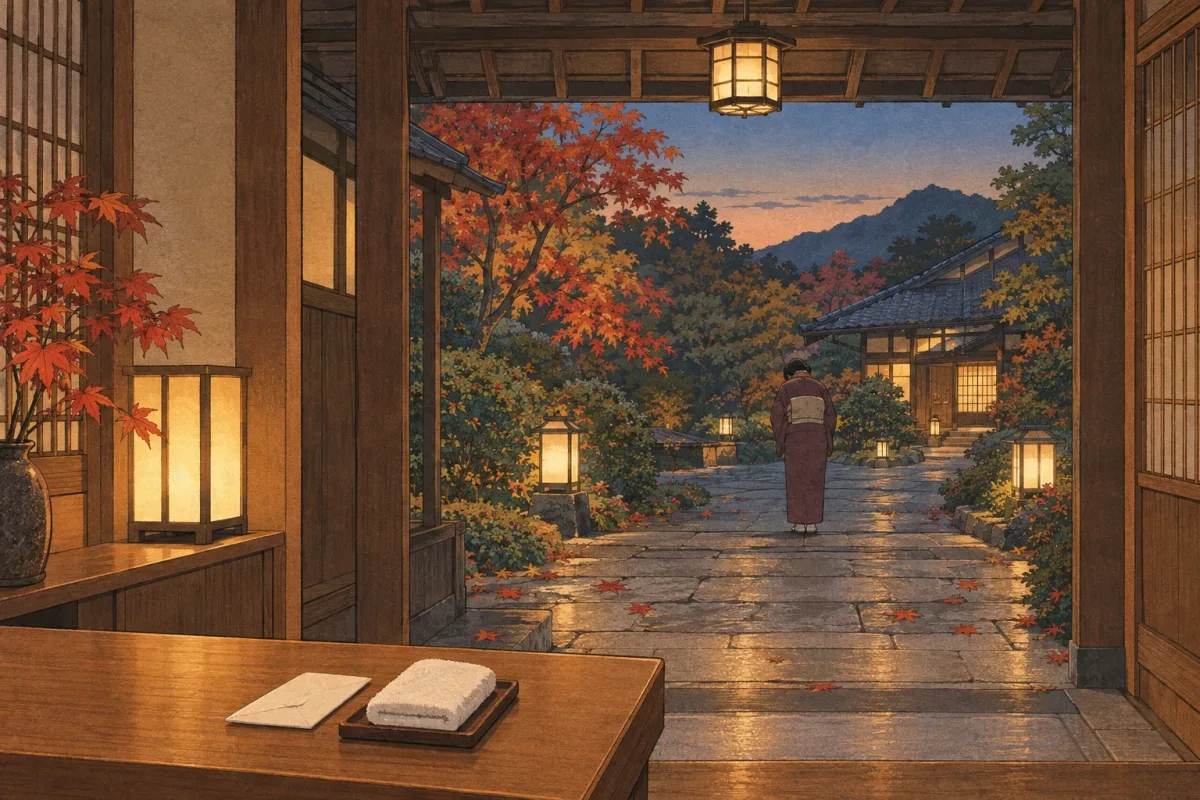
That is not to say money is never given. According to JNTO, if you hire a private guide or interpreter who is used to overseas customs, giving a gratuity is one option. It is entirely voluntary, though, and best given discreetly. The custom is to put it in an envelope, and small envelopes are sold at konbini (convenience stores), stationery shops and 100-yen shops.
Even among Japanese people, some give removal workers a small amount "for lunch", or give a golf caddie a gratuity in an envelope. For school outings and school trips, gratuities for the bus guide and driver are sometimes collected along with the trip costs. Telling a taxi driver "keep the change" is also a kind of small tip. None of these are "things you must pay"; they all come down to personal feeling.
The best way to say thank you
In shops and restaurants, simply saying "gochisōsama deshita" (thank you for the meal) when you pay and "arigatō gozaimashita" as you leave is more than enough to get your feelings across. If you received particularly good service, praising the place on a review site or coming back again are also fine ways of saying thanks.
If you were especially well looked after at a ryokan (traditional inn) and really want to give something, do not hand over bare cash: wrap it in an envelope and give it with a word such as "osewa ni narimasu" (thank you for looking after me), and nobody will be offended. But if it is declined, the Japanese way is to step back rather than press it on them.
Tips
- As a rule, the amounts on price tags and menus include tax. There is no need to leave a tip on top.
- The bill may include a "service charge" or, at an izakaya, a charge for "otōshi" (a small starter served as a table charge). If you are unsure, ask the staff.
- Show your thanks with a simple "arigatō gozaimashita" (thank you very much) or "gochisōsama deshita" (thank you for the meal).
- If you want to give a gratuity to a private guide or similar, put the cash in a small envelope, available at konbini and 100-yen shops.
- If the money you offer is declined, do not insist. Staff are often not allowed to accept it under workplace rules.