Why Is It Safe to Eat Raw Eggs in Japan?
Raw egg on rice is an everyday dish in Japan because the whole chain from farm to table is built on the assumption that eggs will be eaten raw.
The short answer
Japanese eggs are produced and distributed from the start on the assumption that some people will eat them raw. Hygiene controls on poultry farms, washing, sterilising and inspection at GP centres (facilities that wash, grade and pack eggs), and a best-before date that means "the date until which the egg can be eaten raw" all work together to keep the risk of Salmonella food poisoning very low.
That does not mean eggs are "absolutely safe", though. How you handle them at home, such as keeping them in the fridge after buying them and eating them as soon as you crack them, is also part of the system.
Eating raw eggs is unusual worldwide
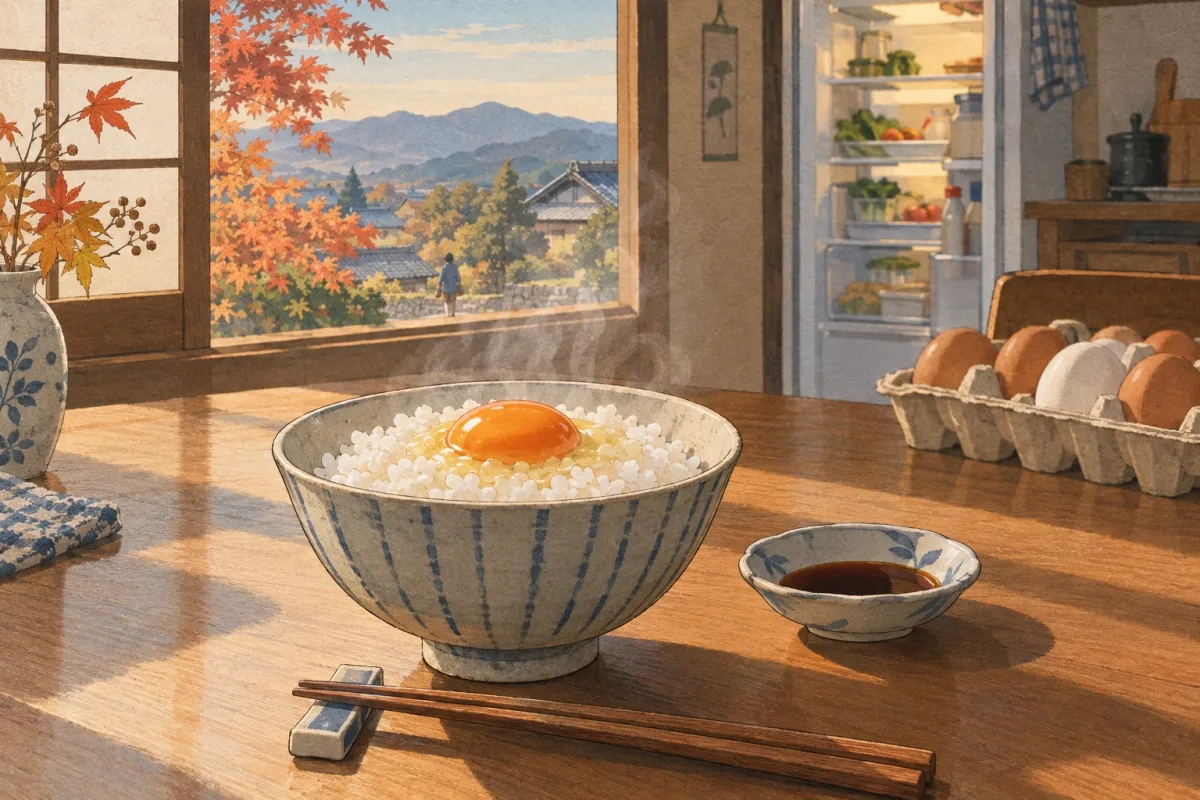
"Tamago kake gohan" (raw egg dropped onto hot rice with a dash of soy sauce, sometimes shortened to TKG) and beaten raw egg for dipping sukiyaki meat into are completely ordinary in Japan. The Agriculture and Livestock Industries Corporation (ALIC), however, notes that eating eggs raw is an unusual food culture worldwide.
In 2016, for example, the US Centers for Disease Control and Prevention (CDC) urged people not to eat raw or undercooked eggs in order to prevent salmonellosis. Japan's Food Safety Commission of the Cabinet Office explained that this advice probably reflected the fact that the United States has no tradition of eating raw eggs in the first place, and said that eggs in Japan can be eaten with confidence because hygiene controls there assume they will be eaten raw.
Dishes using raw egg are not unique to Japan, however. The Ministry of Agriculture, Forestry and Fisheries mentions that there are dishes abroad that use raw egg, such as Korean yukhoe and Polish steak tartare, and that Japanese-style tamago kake gohan is also eaten in Hong Kong and Singapore.
The turning point: Salmonella outbreaks in the 1990s
The current system was triggered by a rise in Salmonella food poisoning thought to be caused by eggs in the 1990s. According to a 1998 report submitted by the government's Food Sanitation Investigation Council, food poisoning from a type of bacteria called Salmonella Enteritidis (SE) was increasing, and "eggs and egg products" had been increasingly identified as the cause since 1994. Of the 224 SE food poisoning cases reported since 1992, about 90% were confirmed or suspected to have been caused by eggs in their shells.
The council made it clear that since Japan has a habit of eating raw eggs, measures had to be based on that assumption. It recommended building up measures at every stage from farm to table, making date labelling compulsory for eggs to be eaten raw, enforcing strict hygiene at GP centres, and producing a handling manual for households, among other things. In response, the Enforcement Regulations of the Food Sanitation Act were amended in 1999, and the best-before date on eggs in their shells came to show "the date until which they can safely be eaten raw".
The recommendations also included not using badly cracked eggs as food, always heating foods made with eggs not intended for raw eating at some stage to kill Salmonella, and setting standards for "liquid egg" (commercial egg made from cracked eggs pooled together). The reports of the time show that the most common place for SE food poisoning to occur was restaurants, with 71 cases, followed by catering facilities (44) and boxed-meal manufacturers (39), and there were also 32 cases at home. This is why the measures covered handling in households as well as businesses.
For reference, in a 1992 government survey, SE was found in 6 out of 24,000 eggs in their shells (0.03%). Compared with the 2020 results described below, it is clear that the situation has improved greatly over the past 30 years or so.
What happens today, from farm to supermarket
According to ALIC, poultry farms disinfect vehicles, have workers change clothes and shoes and disinfect their hands, use bird nets and other measures to keep wild birds and animals out, and manage feed so that animals cannot get into it.
The collected eggs are taken to a GP centre (short for Grading & Packing), where they go through washing to remove dirt from the surface, ultraviolet sterilisation, crack checks by special machines and sample testing for Salmonella. People also check them by eye at several stages, and eggs that do not meet the standards are removed before shipment to shops.
The results show up in the data. When the Ministry of Agriculture, Forestry and Fisheries tested eggs from 1,870 packs bought at shops across Japan in 2020, SE was found inside the egg in only one sample, which works out at an estimated contamination rate of about 0.0027% per egg. The ministry also notes that, according to the Ministry of Health, Labour and Welfare's food poisoning statistics, reports of Salmonella food poisoning caused by eggs or egg products have stayed at 0 to 2 a year since 2015, and says contamination is being kept at a low level.
The best-before date means something slightly different from abroad
The best-before date (shōmi kigen) on a Japanese egg pack shows "the date until which the eggs can be eaten raw if stored refrigerated (at 10°C or below)". According to the Ministry of Agriculture, Forestry and Fisheries, it is currently set at up to 21 days after laying as a guide, including 7 days of storage in a home fridge. The Food Safety Commission explains that in practice, the date is often set at around two weeks after packing.
In other words, eggs past their date are not something to throw away straight away; they simply become "eggs for cooking". If an egg looks fine when you crack it, it is considered safe to eat as long as it is cooked thoroughly. The guidance on heating is worded a little differently by different bodies: the Ministry of Agriculture, Forestry and Fisheries says until the whole food reaches 70°C, while the Food Safety Commission says 75°C or above for at least one minute.
The 1998 government recommendations also drew on the fact that the WHO (World Health Organization) advised transporting and storing eggs in their shells at 10°C or below, and that Britain and Germany required date labels and labels saying to keep eggs refrigerated after purchase. You could say Japan's system was built to suit its own habit of eating eggs raw, while taking on board knowledge from abroad.
What surprises visitors, and what to watch out for
In Japan it is not unusual for a raw egg to be served just as it is at a set-meal restaurant or a sukiyaki restaurant, which must surprise many travellers. According to ALIC, the quality of Japanese eggs that can be eaten raw is also appreciated abroad, and exports are growing year after year.
Still, this safety is maintained within Japan's domestic system. The Food Safety Commission advises older people, infants aged 2 and under, pregnant women and people with weakened immune systems to avoid raw eggs and choose thoroughly cooked egg dishes instead. There are also reports that bacteria multiply more easily if eggs are cracked and the yolk and white mixed, then left at room temperature, so the basic rule is to crack eggs just before you eat them.
There is no need to wash Japanese eggs when you take them home. They have already been washed and sterilised at the GP centre, and rinsing them at home risks letting germs in with the water through the countless tiny holes (pores) in the shell. If dirt bothers you, the advice is to wipe it off or wash the egg just before using it.
In winter you may see news about bird flu, but the Food Safety Commission says that, given the current situation in Japan, it does not consider it possible for people to be infected by eating chicken or eggs. According to the Ministry of Agriculture, Forestry and Fisheries, chickens on an affected farm are culled immediately, so meat and eggs from that farm never reach the market.
Tips
- If you are eating eggs raw, choose ones within the "shōmi kigen" (best-before date) on the pack. In Japan, this date is the limit for eating them raw.
- Put eggs in the fridge as soon as you have bought them. Japanese best-before dates assume storage at 10°C or below.
- Crack eggs just before eating, and do not leave beaten egg sitting at room temperature.
- Eat cracked eggs or eggs past their best-before date cooked right through, not raw.
- Pregnant women, small children, older people and anyone feeling unwell are best advised to avoid raw eggs and choose cooked egg dishes.
- Do not eat raw eggs in the same way in other countries. How eggs are managed for raw eating differs from country to country and region to region.