Why Do People in Japan Wear Face Masks When They Aren't Sick?
Hay fever, not wanting to pass things on, a pandemic 100 years ago and a sense of security: why masks became part of everyday life in Japan.
The short answer
People wearing masks in Japan are not necessarily ill. One of the biggest reasons is kafunshō (hay fever), which, according to Japan's Forestry Agency, is said to affect about 40% of the population. Beyond that, the reasons vary from person to person: avoiding catching a cold or flu on packed trains, not passing it on to others when you have a cough, or simply keeping warm.
A society where masks are a normal sight took shape gradually, starting with a pandemic about 100 years ago. After COVID-19, since March 2023 the basic rule has been that wearing one is a matter of personal choice.
It began with the "Spanish flu" 100 years ago
Masks are said to have spread among ordinary people in Japan because of the influenza pandemic that swept the world from 1918 (Taisho 7), the so-called Spanish flu. A device called a kokyuki (respirator) had existed in the Meiji era too, but this time wearing masks was recommended, and as army soldiers and officers of the Tokyo Metropolitan Police led the way by wearing them, the habit spread to the public. When influenza went round again in 1927, the Home Ministry of the time also recommended masks.
Even so, masks were not accepted from the start. A Yomiuri Shimbun article of 10 January 1920 reported that a girls' school in Tokyo had decided that all teachers and pupils would wear masks, and poked fun at it: "Beautiful monsters to appear around town soon." That is how strange a masked face looked at the time. In the same month, the paper also printed instructions for making your own mask from wire, cloth and gauze. In this way masks for preventing colds took hold, especially in schools. A 1955 photo of an elementary school lunch shows the children serving the food wearing white cloth masks.
Hay fever and epidemics made it everyday
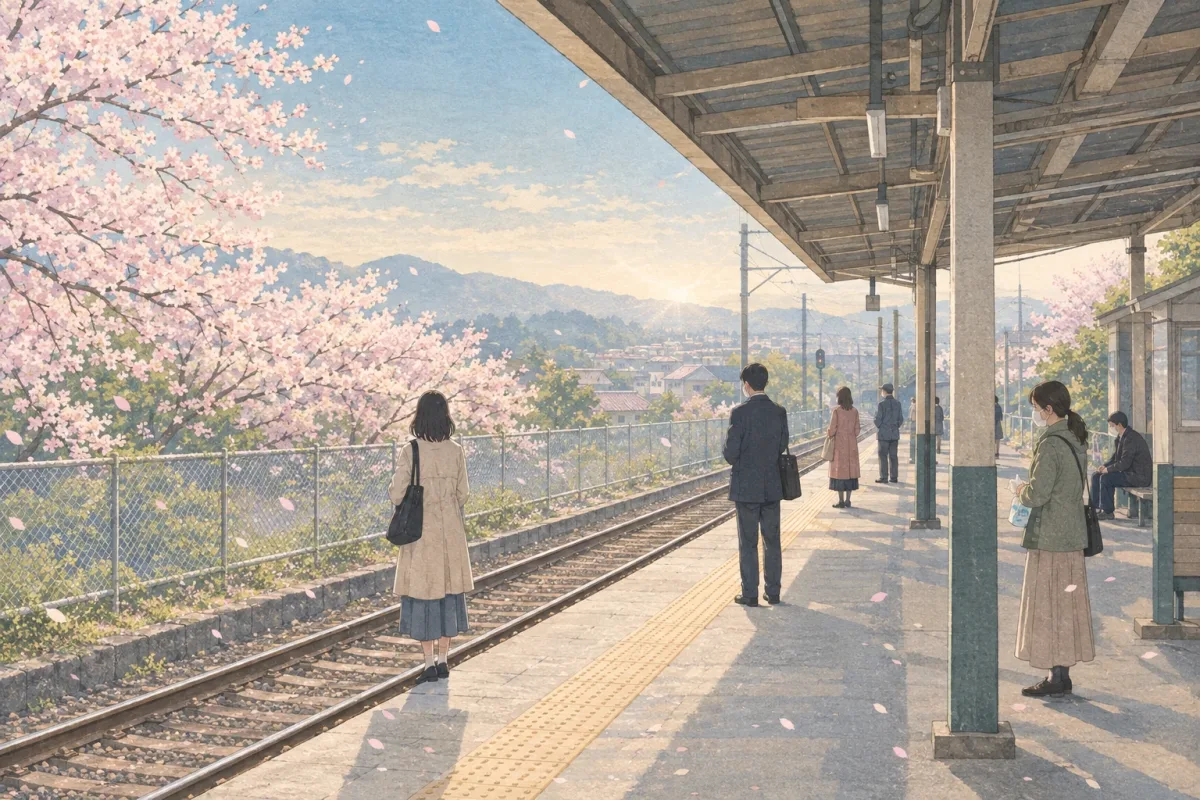
After the war, a big reason masks became even more familiar was hay fever. Japan's mountains are heavily planted with sugi (Japanese cedar) and hinoki (Japanese cypress), and when hay fever cases rose from the 1980s onwards, commuters in masks in early spring became a yearly sight. The Forestry Agency is working to replace cedar and cypress forests that release a lot of pollen with low-pollen forests.
The SARS (severe acute respiratory syndrome) outbreak of 2002 raised awareness of prevention, and during the 2009 new influenza (swine flu) pandemic masks sold out. By this time, the habit of wearing a mask "so as not to catch something" is thought to have taken hold in the cities. Falling prices, to the point where boxes of masks could be bought at 100-yen shops, helped too.
There is also this anecdote. After the Great East Japan Earthquake of 2011, foreign media described Tokyo commuters as "Japanese people wearing masks for fear of radiation". In reality, it was simply hay fever season, and the same scene as every year.
The post-COVID rule: now it's personal choice
When the COVID-19 pandemic began in early 2020, Japan too saw panic buying of masks and a severe shortage. Many non-woven masks were made in China and imports dropped sharply, so companies from other industries stepped in, such as the electronics maker Sharp, which began making masks in its factories. In 2021 a test method for measuring mask performance was set as a Japanese Industrial Standard (JIS T 9001).
During the COVID-19 pandemic, the rule in Japan was to wear a mask indoors. From 13 March 2023 the Ministry of Health, Labour and Welfare changed this so that whether to wear a mask is "basically a personal decision, respecting each individual's own choice", and it asks that nobody be forced to put a mask on or take it off against their will.
However, masks are still recommended when visiting a hospital or clinic, when visiting places such as care homes for older people, and when riding crowded trains or buses, such as at rush hour. Shops and facilities are also allowed to ask customers to wear masks, for infection control or other reasons. If you see a sign at a hospital entrance or elsewhere asking you to wear a mask, please follow it.
People with symptoms or who have tested positive are asked to avoid going out, and if they really must go out, for example to see a doctor, to avoid crowds and wear a mask. For children, it is considered important to take care that masks do not get in the way of healthy development.
"It makes me feel safe" is a reason too
The reasons for wearing a mask are not only about health. Experts who study masks say some people wear them to hide a face without make-up, or because wearing one makes them feel at ease. People who always wear a mask even when not ill are sometimes said to wear a "date mask" (date meaning "for show"). Some enjoy it as fashion, while for others it seems to be a way of easing anxiety about showing their face in public. The Japan National Tourism Organization (JNTO) also notes that the reasons range from allergies to hiding spots. Of course, this does not apply to everyone.
There is a difference in outlook compared with other countries, too. According to a Yomiuri Shimbun column, many countries in Europe and North America have laws banning people from covering their faces in public without good reason. In those countries, a healthy person in a mask tends to be seen not just as odd but as suspicious. This difference in assumptions is probably a big part of why so many people are surprised by masks in Japan.
Masks in Japanese culture
Masks turn up in Japanese culture too. In haiku, "mask" is a kigo (seasonal word) for winter, meaning something worn against the cold or colds. Interestingly, the very same mask worn against hay fever does not count as a seasonal word. Before the war there was a saying that "when bamboo flowers, colds go round", and when that rumour spread, people reportedly started wearing masks. The physicist and essayist Terada Torahiko wrote that the city contained "the mask race" and "the non-mask race". For 100 years, people who wear masks and people who don't have been a familiar sight side by side in Japanese towns.
Advice for travellers and residents
Masks are not compulsory in Japan, so if you are healthy it is fine not to wear one. But when you are coughing or sneezing, wearing a mask is seen as being considerate to those around you. JNTO also says it is good manners to wear one when you have those symptoms. Masks are easy to buy at konbini (convenience stores), drugstores and 100-yen shops.
If you are coming to Japan in spring, or living here, remember that there is a pollen season. If sneezing, a runny nose or itchy eyes keep going, it is a good idea to ask for advice at a drugstore or see a doctor.
Tips
- If you are coughing or sneezing, wear a mask on trains and in shops.
- Hospitals and care homes may ask you to wear a mask. Follow the signs at the entrance.
- You can buy masks at konbini (convenience stores), drugstores and 100-yen shops.
- If itchy eyes and sneezing keep going in early spring, it may be hay fever. Try pollen masks or medicine.
- Don't tell people off for not wearing a mask, or find it odd that others do. Whether to wear one is a personal decision.