Takayama Inari Shrine
髙山稲荷神社
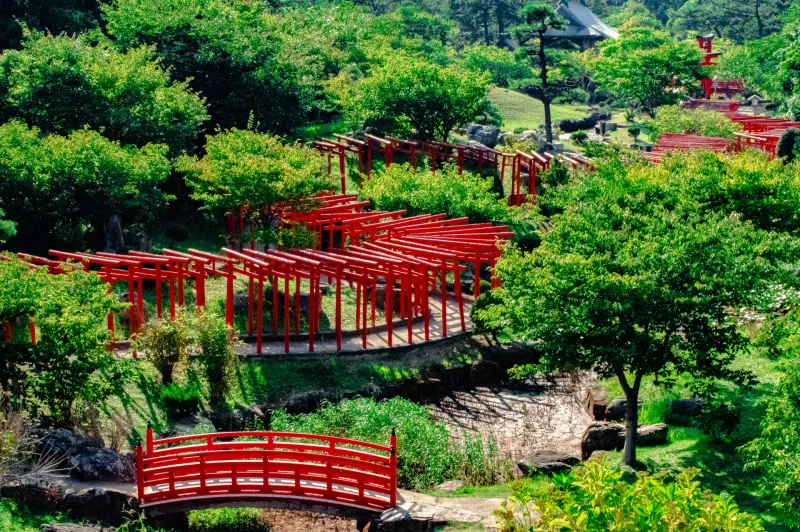
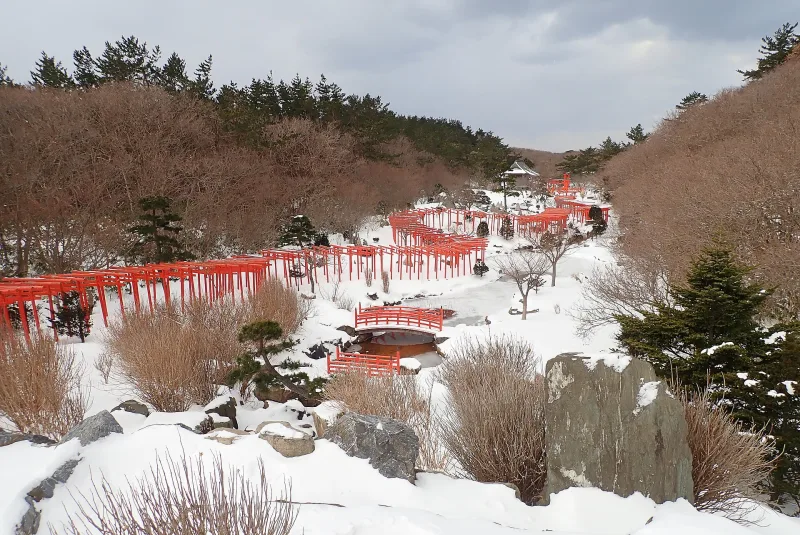
A shrine on a Tsugaru hill near the Sea of Japan, where vermilion torii gates wind like a dragon through a pond garden. A view you will find nowhere else.
An Inari shrine for Tsugaru's harvests and safe seas
Takayama Inari Shrine stands on high ground in Tsugaru city, Aomori Prefecture, close to Shichiri-nagahama, a long beach facing the Sea of Japan. Nobody knows exactly when it was founded, but tradition says it began as a Sanno shrine built by the Ando clan, a powerful local family who ruled this area from the Kamakura (1185-1333) to the Muromachi (1336-1573) periods. The Inari deity came to be worshipped here in the Edo period (1603-1868).
Three deities are enshrined, including Ukanomitama-no-mikoto, and they are believed to bring bountiful harvests of grain, safety at sea and success in business. Farmers, merchants, craftspeople and fishing families have long come here to pray. Along the approach stand stone foxes, the familiar messengers of Inari shrines.
A thousand torii winding like a dragon
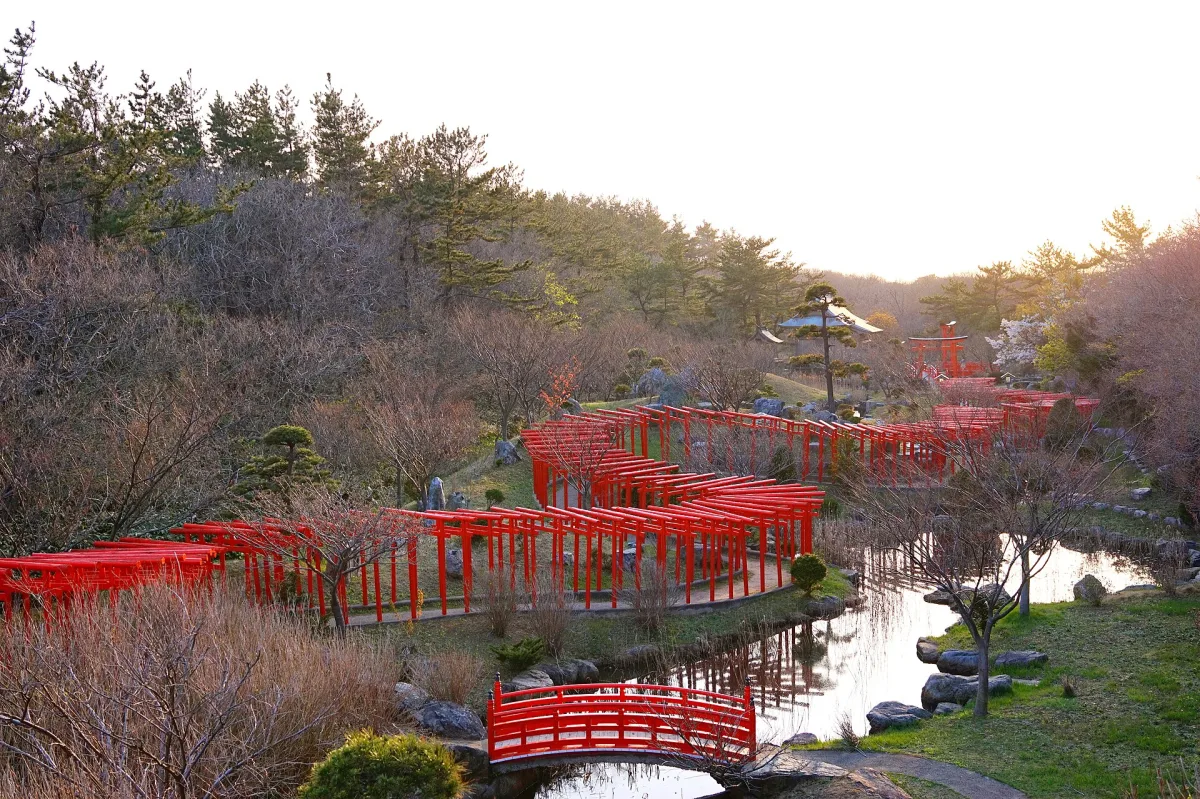
What made the shrine famous is its senbon torii, "thousand torii": a long line of vermilion torii gates, each about 2 metres tall. It began about 40 years ago when a local farmer donated a torii to the shrine. More and more people followed his example, but the grounds include a shin-en (shrine garden) with a pond, so lining the gates up straight was difficult. Because there is a small shrine to a dragon god where the gates begin, they were set out in a winding, dragon-like curve instead.
The path of gates threads its way around a lotus pond. Walking through the gates is lovely, and so is looking at the snaking line from the far side of the pond. From the lookout on the high ground you can see the whole line from above.
Retired foxes and the four seasons
Near the lookout is a corner lined with many old fox statues that have been retired from service. Each one has a different face, and you could spend a long time looking at them.
The vermilion gates look different through the year: with cherry blossom in spring, green in summer and snow in winter. The annual grand festival is held on 25 September.
Getting there
It is about 30 minutes by car from Goshogawara Station on the JR Gono Line, and about 1 hour 15 minutes by car from JR Aomori Station. It is too far to walk from any station, so going by car or taxi is the realistic option. There is a car park. Check visiting hours on the official site or Aomori Prefecture's tourism site.
Tips
- If you are using public transport, the usual way is a taxi from Goshogawara Station or Kizukuri Station. Sort out your ride back before you go.
- For a photo of the winding gates, the lookout on the high ground gives the clearest view.
- The path of gates runs around the pond, so watch your footing in the snowy season.
Sources
- 髙山稲荷神社(公式)
- 高山稲荷神社|スポット・体験|【公式】青森県観光情報サイト Amazing AOMORI
- 高山稲荷神社/つがる市
- 竜のようにうねる千本鳥居が織りなす絶景:青森・髙山稲荷神社 - nippon.com
Updated 30 September 2026. Opening hours and prices change, so check the official site before you go.