Japan is Nippon
Magome-juku
馬籠宿
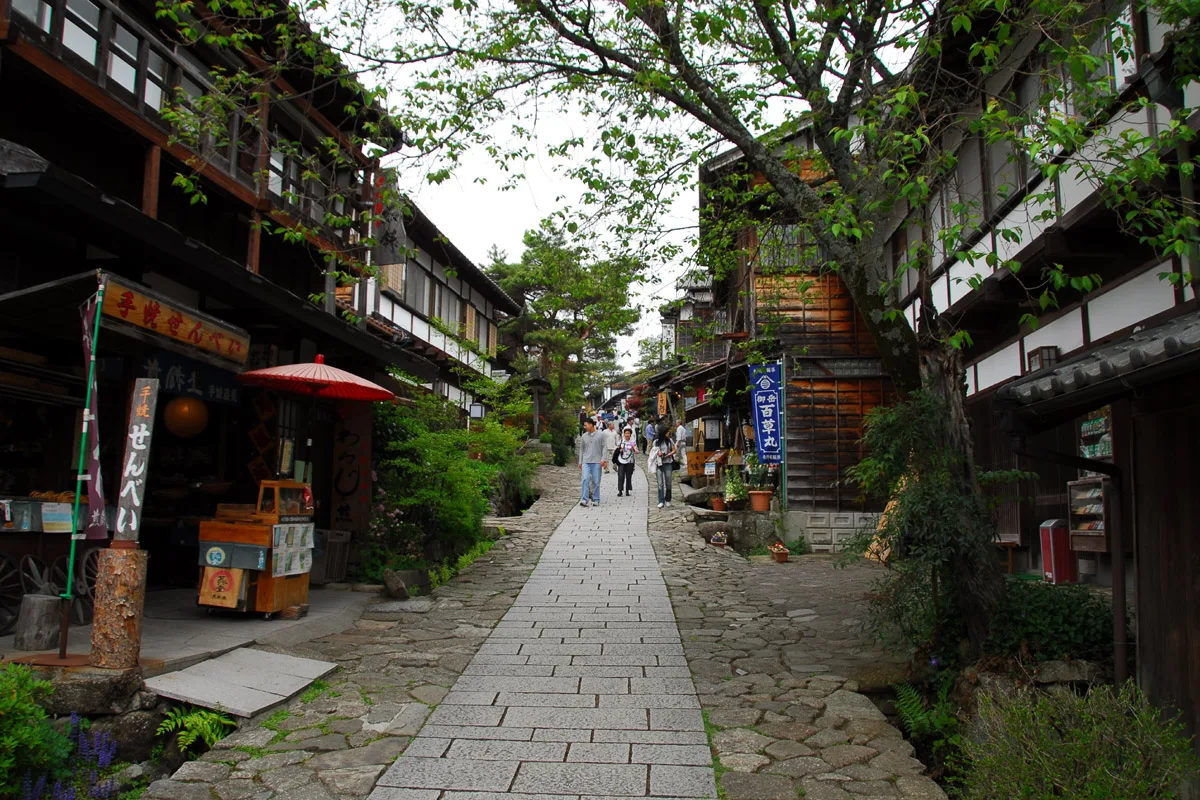
An Edo-period post town on the old Nakasendo road, strung along a stone-paved slope. Wander its wooden streets, then hike over the pass to Tsumago.
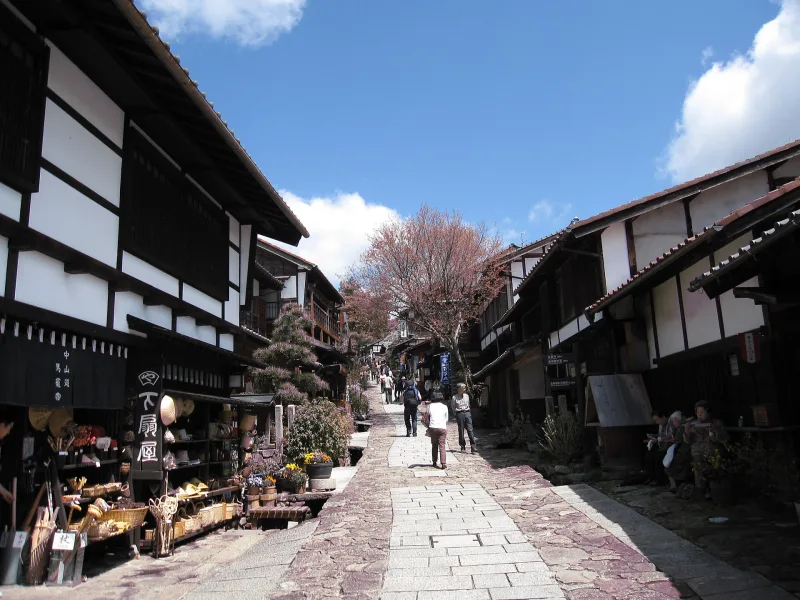
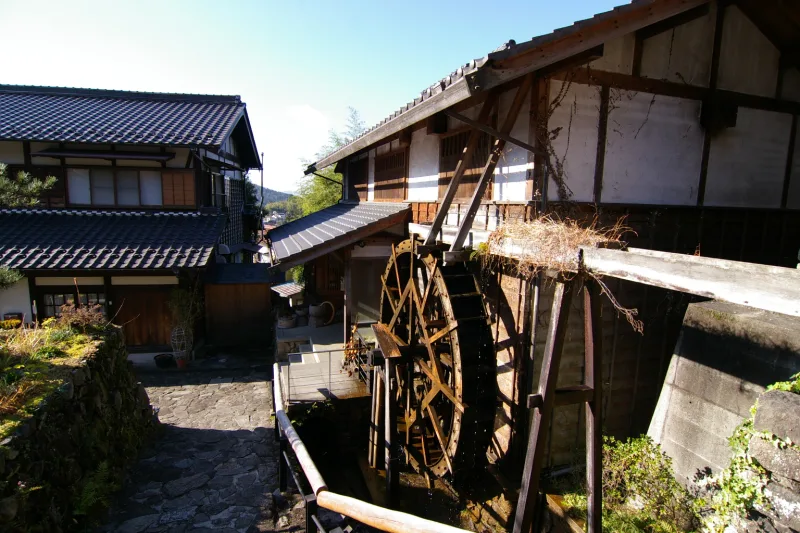
A Nakasendo post town built on a slope
In the Edo period, the Nakasendo was the inland highway linking Kyoto with Edo (today's Tokyo). Along it stood shukuba, or post towns, where travellers stayed the night and changed horses. Magome-juku was the 43rd of the Nakasendo's 69 post towns, and the southernmost of the 11 on the Kisoji, the stretch of road that runs through the deep mountains of the Kiso Valley.
Nakatsugawa City describes Magome-juku as "a post town on a slope, which is rare even nationwide". Traditional-style restaurants and souvenir shops line both sides of a stone-paved slope about 600m long.
Great fires in 1895 and 1915 burned the town down, leaving little more than the stone paving, so the streetscape you see today was rebuilt afterwards. Magome was originally part of Yamaguchi Village in Nagano Prefecture, but in 2005 a merger across the prefectural border made it part of Nakatsugawa City in Gifu Prefecture.
Hometown of Shimazaki Toson
Magome is the birthplace of Shimazaki Toson, a writer active from the Meiji era into the Showa era. His family home was the town's honjin, the inn where feudal lords and other high-ranking travellers stayed. The Toson Memorial Museum now stands on the site. Inside you can see manuscripts including his long novel Before the Dawn (Yoake Mae), and a room recreating the study in Oiso, Kanagawa Prefecture, where he spent his last years.
Also in town are Eisho-ji, a temple linked to Toson, and the Magome Waki-honjin Museum, which explains how an Edo-period post town worked and what life was like in the Kiso area.
Walking over the pass to Tsumago-juku
From Magome-juku you can follow the old Nakasendo over Magome Pass to Tsumago-juku on the Nagano side. It is about 8km and takes 2 to 3 hours. Going from Magome to Tsumago involves less climbing; walking the other way means more uphill.
Along the way you pass sights such as the Tateba Chaya, a teahouse built in the Edo period. In the warmer months, a luggage service carries bags between the Magome and Tsumago tourist information centres, so you can walk light. Check the dates and times the service runs before you set out.
Getting there
By train, go to Nakatsugawa Station on the JR Chuo Main Line, then take the Magome Line local bus, which reaches Magome in about 25 minutes.
By car, the nearest exits are Nakatsugawa Interchange and Misaka Smart Interchange on the Chuo Expressway, about 1 hour 15 minutes from Nagoya. Cars are not allowed into the post town during the day, for pedestrians' safety, so use one of the car parks nearby. Check opening hours and fees for the Toson Memorial Museum and other sights on their official websites.
Tips
- If you are walking to Tsumago-juku, go from Magome to Tsumago, which has less climbing. Plan how you will get back from Tsumago, for example by bus.
- In winter the pass road can freeze. If you walk it then, wear shoes with good grip.
- Some people carry a bear bell on the mountain path. You can buy one at the tourist information centre.
- The Magome Tourist Association also runs guided tours that you book in advance.
Sources
- 馬籠宿(まごめじゅく) - 中津川市 (opens in a new tab)
- 馬籠観光協会 (opens in a new tab)
- 馬籠宿 - Wikipedia (opens in a new tab)
- Magome-Tsumago Trail - Wikivoyage (opens in a new tab)
Updated 30 September 2026. Opening hours and prices change, so check the official site before you go.