Nagoya Castle
名古屋城
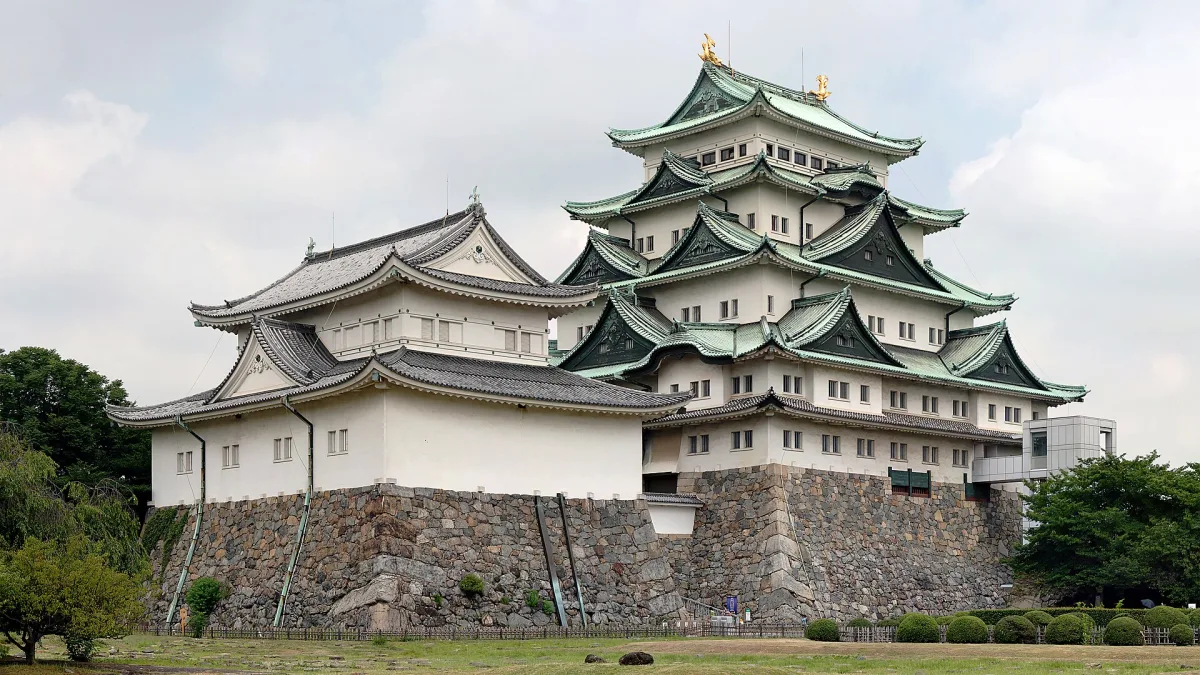
Nagoya's symbol, built by Tokugawa Ieyasu and topped with golden shachihoko. The keep is closed for now, but you can tour the superbly restored Honmaru Palace.
The Owari castle built by Tokugawa Ieyasu
After the Battle of Sekigahara in 1600, Tokugawa Ieyasu had Nagoya Castle built as a key stronghold guarding the route between Edo (today's Tokyo) and Kyoto and Osaka. Work began in 1610 and the keep was completed in 1612. It was built by tenka-bushin, a method in which the work was divided among daimyo (feudal lords) from all over the country.
The first lord of the castle was Ieyasu's ninth son, Tokugawa Yoshinao, and after him the Owari Tokugawa family lived here for 17 generations until the Meiji Restoration. The golden shachihoko on the keep's roof (ornaments of an imaginary creature with a tiger's head and a fish's body) have become a symbol of Nagoya.
The keep and the Honmaru Palace burned down in air raids in 1945, and the present keep was rebuilt in steel-framed reinforced concrete in 1959. The castle site is a national Special Historic Site, and six Edo-period buildings that survived the air raids are Important Cultural Properties.
The highlight: the Honmaru Palace
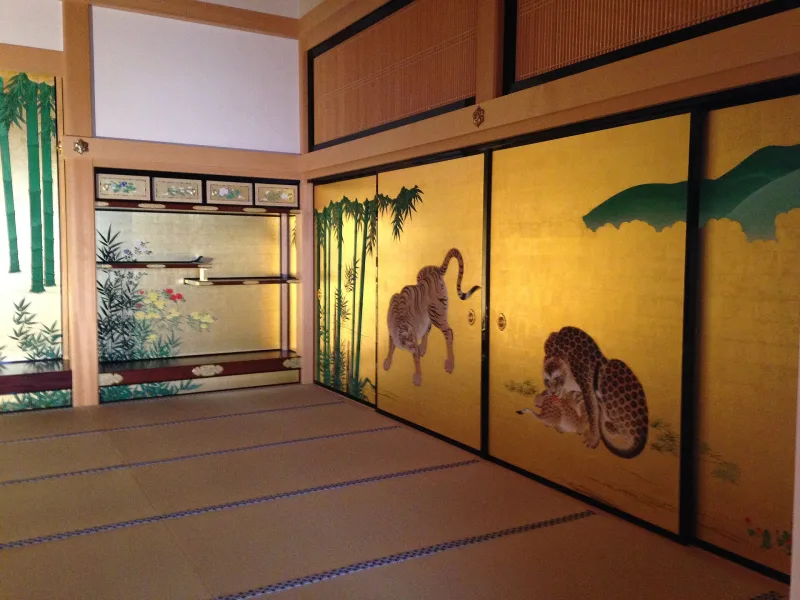
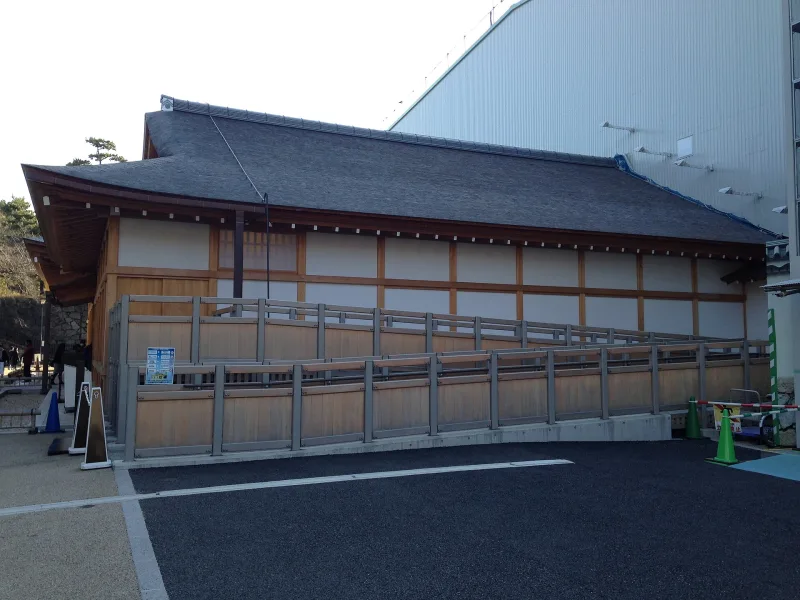
The Honmaru Goten (Honmaru Palace) was built in 1615 as the residence and government office of the lord of the Owari domain. It later became a special building for the shogun to stay in. After being lost in the air raids, it was restored in wood over about 10 years based on reliable historical records, and the whole palace opened to the public in June 2018.
Inside you can see sliding-door paintings glowing with gold, decorative metal fittings (kanagu) and lavish ceilings. The Jorakuden, built for the shogun, is the most splendid space in the palace. The wall and door paintings on display are faithful reproductions copied from the originals of the time.
The keep today
The concrete keep is closed because the building is ageing and has earthquake-resistance problems, and you cannot go inside at present. Nagoya City is pursuing a plan to rebuild the keep in wood, as it was in the Edo period, but there are issues with preserving the stone walls and with barrier-free access, and no completion date has been set.
Even though you cannot go in, you can admire the keep and its golden shachihoko towering over the stone walls from outside.
Getting there and how long to allow
It is about a 7-minute walk from Exit 7 of Nagoyajo Station on the Meijo subway line. The official website suggests allowing about two to three hours to see the extensive grounds.
Opening hours and admission fees may change, so check the official website.
Tips
- In the Honmaru Palace you take off your shoes and walk around in slippers. There is no heating, air conditioning or toilets inside the palace, so use the toilet before you go in.
- Flash photography is not allowed inside the Honmaru Palace, and you may not touch the walls or sliding doors.
- Entry to the Honmaru Palace is included in the Nagoya Castle admission ticket.
Sources
- 名古屋城公式ウェブサイト
- 本丸御殿 | 観覧ガイド | 名古屋城公式ウェブサイト
- 天守閣整備事業の進捗情報 | 名古屋城公式ウェブサイト
- 天守閣整備事業の概要 | 名古屋城公式ウェブサイト
- 名古屋城の歴史 | 名古屋城公式ウェブサイト
- 名古屋城天守の木造復元計画が再始動(メ〜テレ, 2026年2月11日)
- 名古屋城 - Wikipedia
Updated 28 September 2026. Opening hours and prices change, so check the official site before you go.
.jpg)

