Japan is Nippon
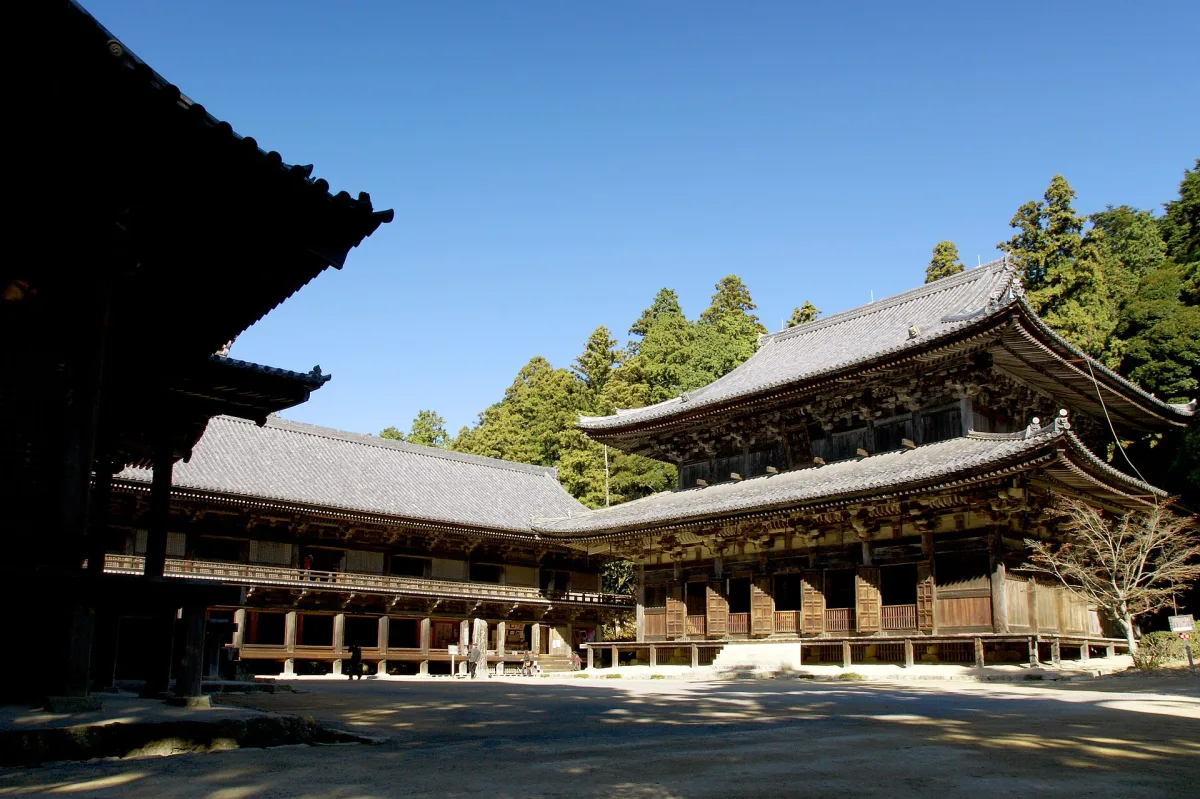
Mount Shosha Engyo-ji Temple
書寫山圓教寺
A training temple over 1,000 years old atop Mount Shosha in Himeji, the "Mount Hiei of the West", with a cliffside hall and great halls set in the forest.
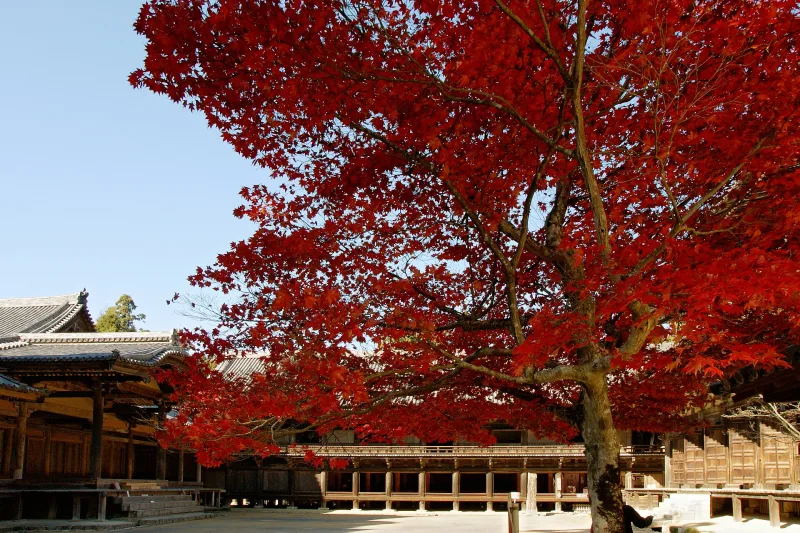
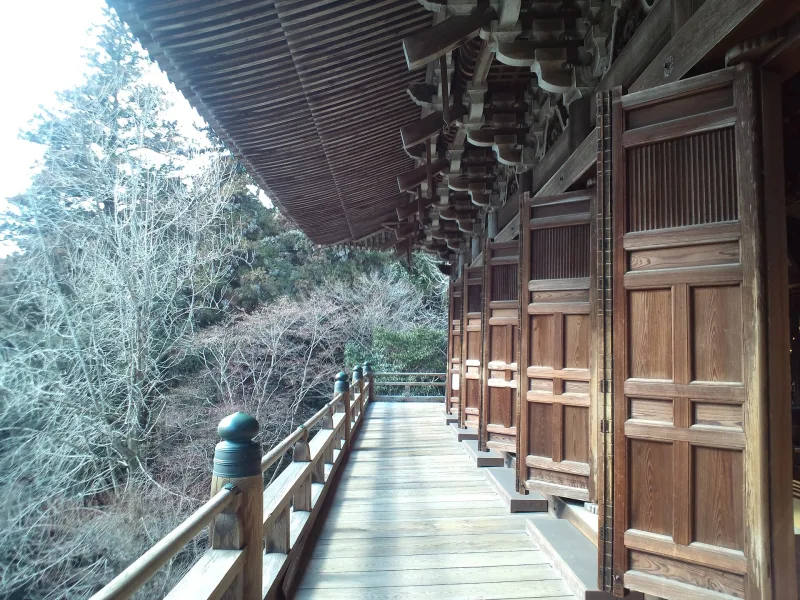
The mountain temple called "Mount Hiei of the West"
Engyo-ji Temple on Mount Shosha (Shoshazan Engyo-ji) stands on top of Mount Shosha, 371m above sea level and about 6km north-west of Himeji Castle. It was founded in 966 by the monk Shoku Shonin as a training centre of the Tendai school of Buddhism, and as a training temple on a par with Mount Hiei in Kyoto it is also called the "Mount Hiei of the West".
The temple grounds are a designated national Historic Site, with buildings dotted along a narrow ridge stretching about 1km from east to west. It is also stop number 27 on the Saigoku Sanjusansho, a pilgrimage to 33 temples of Kannon, the Buddhist figure of compassion, in the Kinki region and beyond.
Maniden, the hall on the cliff
The first building to catch your eye is the Maniden. Built in the butai-zukuri (stage) style, it juts out over a sheer cliff and recalls Kiyomizu-dera in Kyoto.
According to the temple, it began in 970 as the Nyoirindo hall, which is today's Maniden.
Mitsunodo, three great halls in the forest
Walk on past the Maniden and you reach Mitsunodo (the Three Halls), where three large halls, the Daikodo (Great Lecture Hall), the Jikido (dining hall) and the Jogyodo, face one another in a U shape. All three are national Important Cultural Properties, and their massive forms in the quiet of the forest make for a solemn space.
According to the temple, this atmosphere of old buildings in harmony with nature caught a film director's eye, and it was used for filming The Last Samurai, starring Tom Cruise. Allow an hour and a half to two hours to see the whole temple.
Getting there
From Himeji Station (JR and Sanyo Electric Railway), take a Shinki Bus bound for Shoshazan Ropeway to the last stop, about 30 minutes. From there the Mount Shosha Ropeway reaches the summit station in about 4 minutes.
From the summit station it is about 1km, or 15 to 20 minutes, on foot along the sando (approach path) to the Maniden. On entering, you pay a shinokin, a donation that works as the entry fee. A minibus (charged separately) also runs from in front of the donation desk to just below the Maniden.
Tips
- The Mount Shosha Ropeway is due to stop running from February to the end of October 2027 for major renovation of its stations and other facilities. During that time you will have to climb on foot by the hiking trail (roughly 45 minutes to an hour to the temple), so getting there will be very different. If you are planning a visit, check the latest information from Himeji City or the Mount Shosha Ropeway.
- The ropeway can stop in strong winds or when a typhoon is approaching. If the weather looks rough, check the service information before you set off.
- Car navigation systems cannot find the temple under its name (圓教寺 or 円教寺), so the temple advises setting the Shosha Art and Craft Museum (Shosha no Sato Bijutsu Kogeikan) at the foot of the mountain as your destination. There is a free car park next to the ropeway's base station.
Sources
- 天台宗別格本山 西国二十七番札所 書寫山圓教寺 (opens in a new tab)
- 縁起|書寫山圓教寺 (opens in a new tab)
- 花山法皇と性空上人|書寫山圓教寺 (opens in a new tab)
- アクセス|書寫山圓教寺 (opens in a new tab)
- 書寫山圓教寺|姫路観光なび (opens in a new tab)
- 書寫山圓教寺|HYOGO!ナビ(兵庫県公式観光サイト) (opens in a new tab)
- 姫路市「書写山ロープウェイ」が大規模リニューアル|Kiss PRESS (opens in a new tab)
Updated 30 September 2026. Opening hours and prices change, so check the official site before you go.