Japan is Nippon
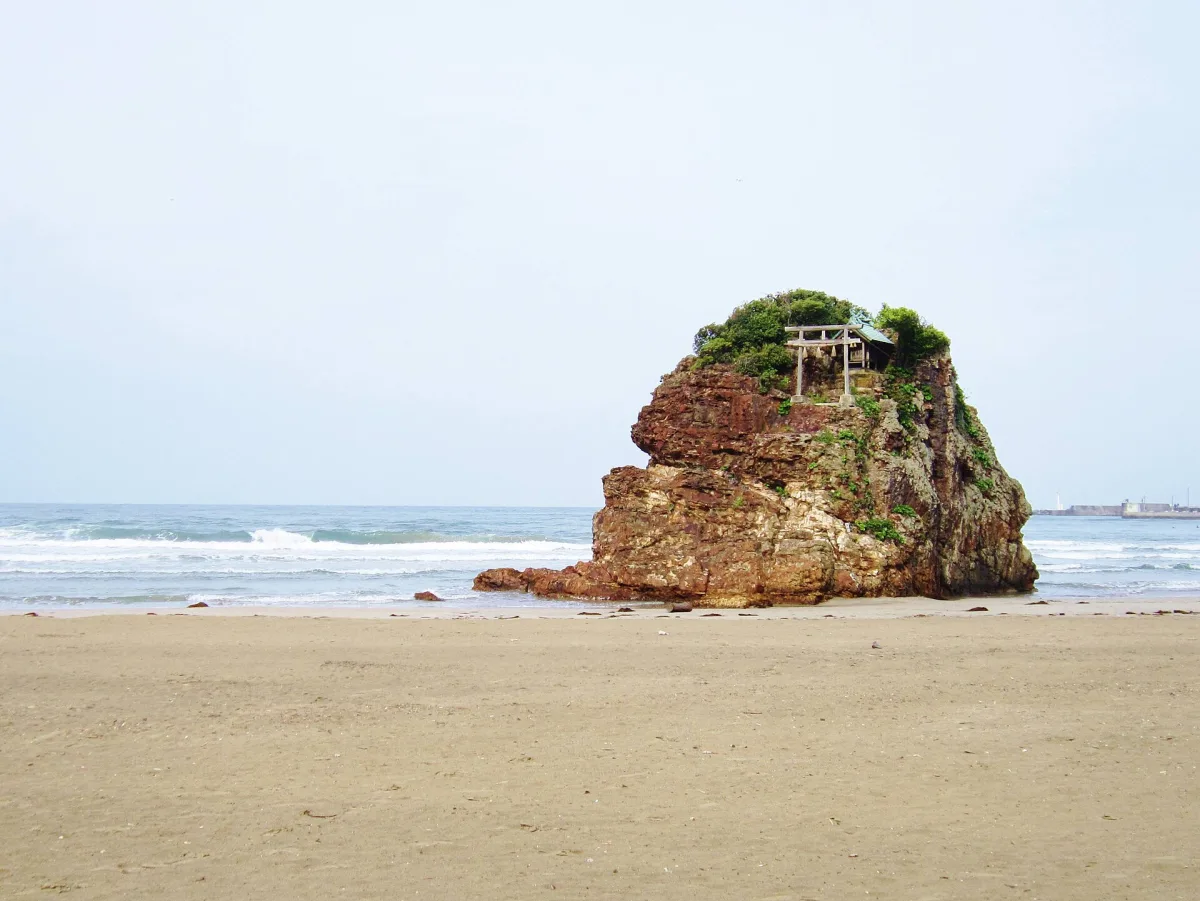
Inasa Beach
稲佐の浜
A beach from Japanese myth, 15 minutes on foot from Izumo Taisha, with the rock islet Bentenjima. Each autumn, it is said, the gods of Japan arrive here.
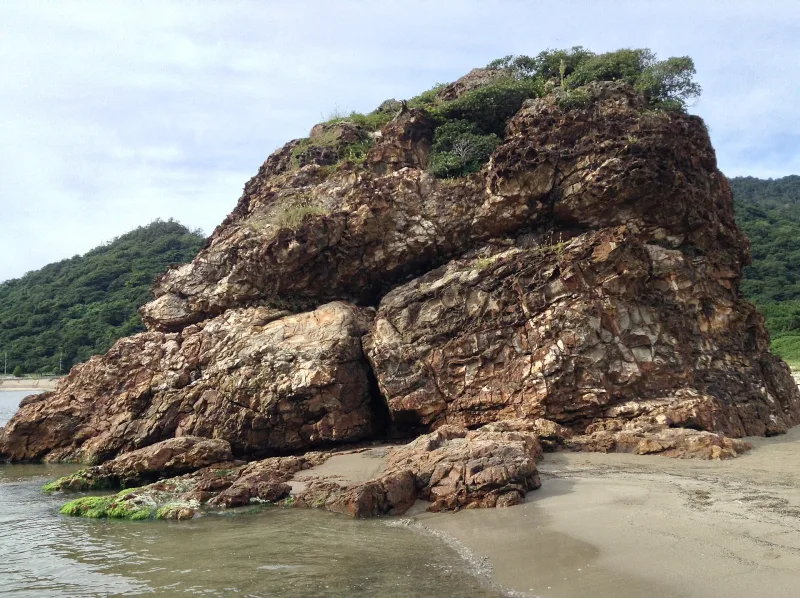
Where the myth of the "handing over of the land" took place
Inasa Beach (Inasa-no-hama) is a sandy beach just west of Izumo Taisha, the great shrine in Izumo, Shimane Prefecture. It is known as the setting of the kuniyuzuri myth, the "handing over of the land", told in Japan's oldest chronicles, the Kojiki and the Nihon Shoki.
In the myth, Takemikazuchi-no-o-no-kami, a messenger of the heavenly gods, came down to this beach and negotiated with Okuninushi-no-okami, the deity of Izumo Taisha, over whether he would hand over the land. At the back of the beach is Byobu-iwa ("folding screen rock"), which Takemikazuchi is said to have had at his back during the talks.
It is also one of the core sites of "Izumo, the Sacred Land Where the Sun Sets", a Japan Heritage designation that recognises Izumo's culture around the sunset.
Bentenjima and the sunset
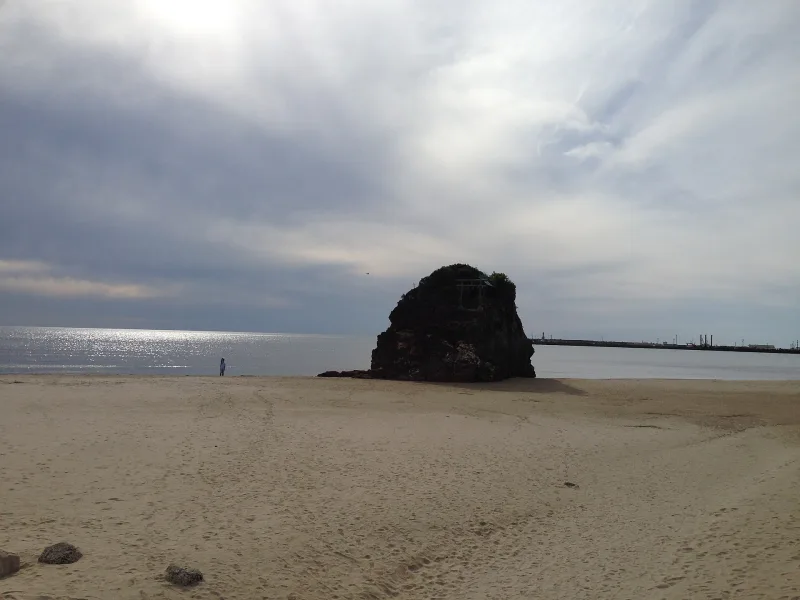
The eye-catcher here is Bentenjima, a round rocky outcrop standing alone on the sand. In the era of shinbutsu shugo, when Shinto and Buddhism were blended together, it was dedicated to the Buddhist goddess Benzaiten; since the Meiji era it has enshrined Toyotamahime-no-mikoto, a goddess of the sea. On 28 June 2025, a sengu (a ceremony in which the shrine is renewed and the deity moved into it) was held for the first time in 60 years.
Facing the Sea of Japan, the beach is also a famous sunset spot. On clear evenings many people come to watch the sun go down into the sea beyond Bentenjima.
The beach that welcomes the gods
Inasa Beach is where the yaoyorozu no kami, the "eight million" gods from all over Japan, are welcomed on the 10th day of the 10th month of the old lunar calendar.
About 300 metres south of the beach along National Route 431, the Kami-mukae-no-michi ("road for welcoming the gods") begins, marked by a large lantern; from there it is about a 20-minute walk to Izumo Taisha. On the night the gods are welcomed, local people line both sides of the road and quietly watch them pass.
The sand custom with Izumo Taisha, and getting there
Izumo Taisha has a custom involving sand from Inasa Beach. First you scoop up some sand at the beach, then visit Soga-no-yashiro, a shrine behind the main hall of Izumo Taisha, and place the sand under its floor. In exchange, you take home some of the sand that is already there as a charm to protect your home or land.
According to Izumo Taisha, the sand at Soga-no-yashiro is not something you can simply take away. Always offer your sand from Inasa Beach first, and only then take some home.
The beach is about 15 minutes' walk or about 3 minutes by car from Izumo Taisha. If you come by Ichibata Bus, it is about 13 minutes' walk from the bus stop near Izumo Taisha.
Tips
- Stop at Inasa Beach and scoop up some sand before you visit Izumo Taisha, and you can take part in the sand custom at Soga-no-yashiro straight away.
- If you want the sunset, look up the sunset time and get to the beach a little early.
- Bentenjima is a place where a deity is enshrined. Show respect and pay your respects from the beach.
Sources
- 稲佐の浜 | 出雲観光ガイド【出雲観光協会公式】 (opens in a new tab)
- 稲佐の浜 | 日本遺産「日が沈む聖地出雲」 (opens in a new tab)
- 稲佐の浜から出雲大社へ。神々が通る由緒ある「神迎の道」| 島根県観光連盟 (opens in a new tab)
- 「御砂」を持ち帰ることができる御社はどこですか | 出雲大社 (opens in a new tab)
Updated 30 September 2026. Opening hours and prices change, so check the official site before you go.