Japan is Nippon
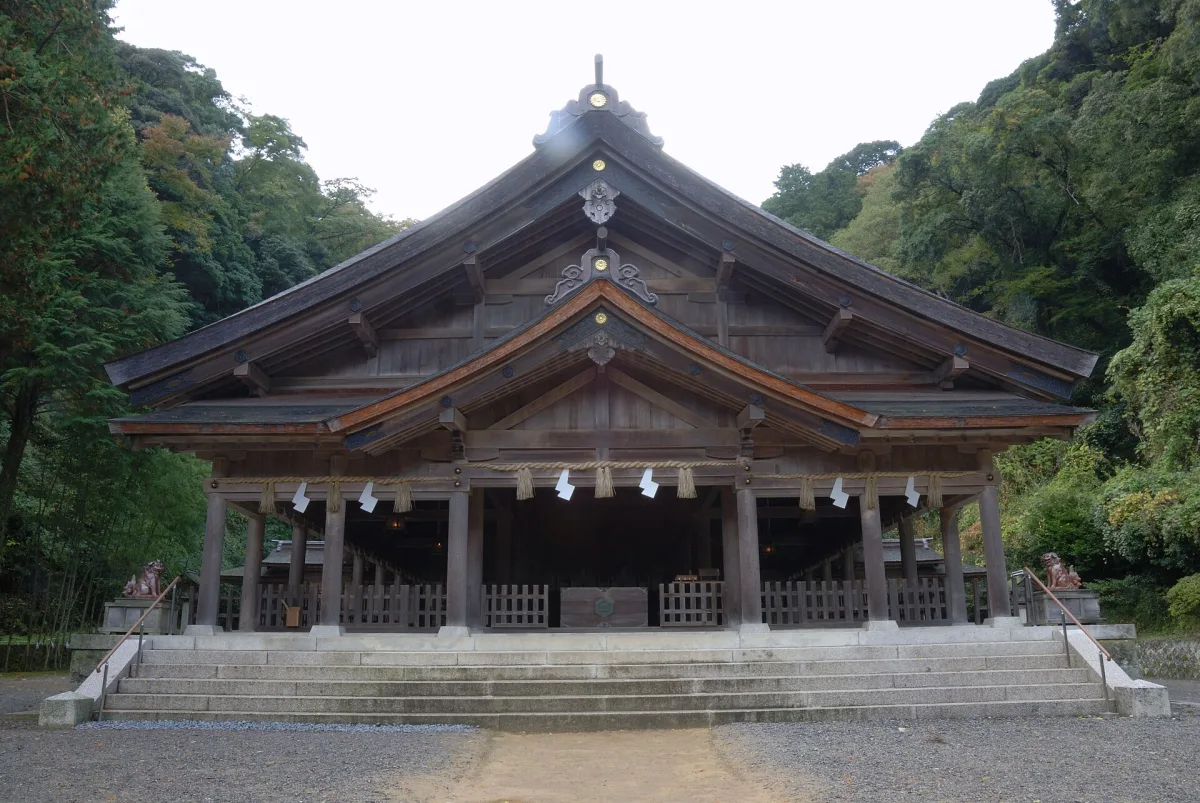
Miho Shrine
美保神社
The head shrine of all Ebisu shrines, in the small port of Mihonoseki, with a rare twin main hall and a stone-paved lane that glows blue.
The head shrine of Ebisu
Miho Shrine (Miho-jinja) stands in Mihonoseki, in Matsue, Shimane Prefecture. It is regarded as the head shrine of the roughly 3,300 Ebisu shrines across Japan. Ebisu is the god who looks after fishermen and business.
Two deities are enshrined here: Ebisu (Kotoshironushi-no-kami) in the right-hand main hall, and Mihotsuhime-no-mikoto in the left-hand one. Ebisu is said to be a son of Okuninushi-no-okami, the deity of Izumo Taisha. Besides thriving business, people have long prayed to him for safe voyages.
Miho-zukuri: two main halls side by side
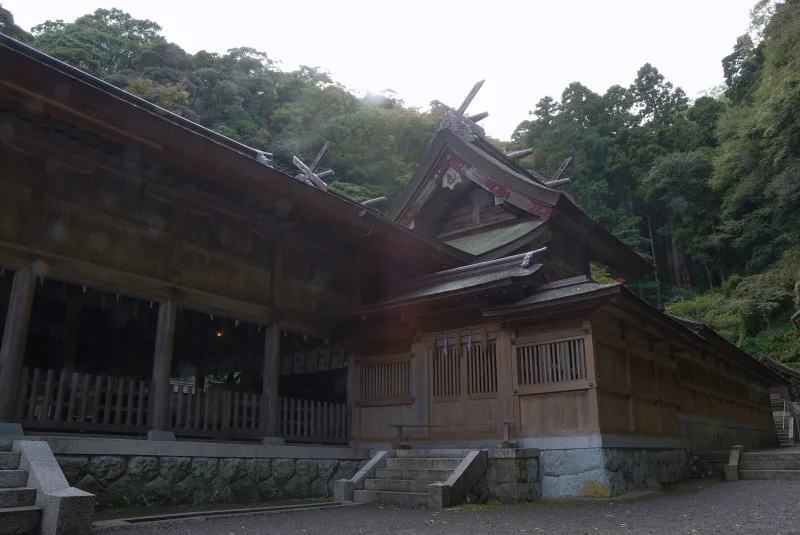
The main hall was built in 1813 in a rare style called miho-zukuri. Two buildings in the taisha-zukuri style, the same style as Izumo Taisha, stand side by side, joined by a connecting room (ai-no-ma), with one roof over the whole front. As the largest and oldest building of its kind in the region, it is designated an Important Cultural Property of Japan.
Ebisu is said to love narimono (musical instruments), and many have been offered to the shrine over the years. The 846 instruments donated here are designated an Important Tangible Folk Cultural Property of Japan.
Rituals linked to the myth of the "handing over of the land"
Miho Shrine keeps rituals linked to kuniyuzuri, the Japanese myth of the "handing over of the land". The Morotabune Shinji on 3 December re-enacts the scene in which messengers came by boat to Kotoshironushi, who was fishing at Mihonoseki, to ask whether he would hand over the land.
The Aofushigaki Shinji on 7 April is based on the myth that Kotoshironushi, having decided to hand over the land, built a green shibagaki (a fence of tree branches) in the sea and hid himself behind it.
The blue stone lane of the port, and getting there
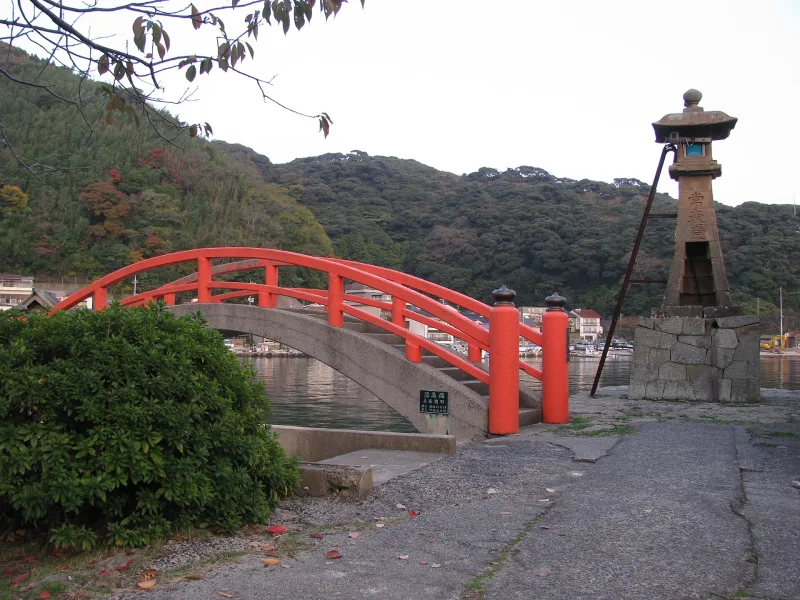
Mihonoseki is a small port town on a crescent-shaped bay. In the Edo period it bustled as a port for ships carrying iron, pottery, sake and other goods around the country.
Go through the shrine's torii (the gate that marks a shrine) and turn right, and you reach Aoishidatami-dori, the "blue stone-paved street", which leads to Bukkokuji temple. The paving was laid in the Edo period, and the street takes its name from the way the stones look bluish when wet with rain. Kaisen-donya, merchants who handled cargo shipped by sea, once lined the street.
It is about 50 minutes by car from JR Matsue Station. By bus, go from Matsue Station to Mihonoseki Terminal, then change to a community bus. Services are not frequent, so check the times in advance.
Tips
- On a rainy day the stones of Aoishidatami-dori glisten bluish, giving the street a different look from sunny days.
- The shrine, the stone-paved street and the harbour are all a short walk apart. After your visit, take your time wandering the lanes and the waterfront, which still have the feel of an Edo-period port town.
- Time your visit for the Morotabune Shinji (3 December) or the Aofushigaki Shinji (7 April) to see the world of the myths right in front of you.
Sources
- 美保神社 | 松江観光協会 (opens in a new tab)
- 美保神社本殿 | 国指定文化財等データベース (opens in a new tab)
- 美保神社本殿 - 文化遺産オンライン (opens in a new tab)
- 美保関(青石畳・北前船)| 観光庁 地域観光資源の多言語解説文データベース (opens in a new tab)
- 青石畳通り | 島根県観光連盟 (opens in a new tab)
- 美保神社 - Wikipedia (opens in a new tab)
Updated 30 September 2026. Opening hours and prices change, so check the official site before you go.