 Japan is Nippon
Japanese Phrases for Travellers
Japanese for stations, restaurants, shops, hotels and onsen, what staff will say to you, and emergency phrases. With search, audio and Show mode.
'Say' phrases are things you say; 'Hear' phrases are things people say to you. Speak in the polite desu/masu form and you'll never come across as rude. If the words won't come out, tap 'Show' to display the Japanese in large type and show your screen to the other person. In an emergency, you can call 110 (police) or 119 (fire and ambulance).
No phrases match your search.
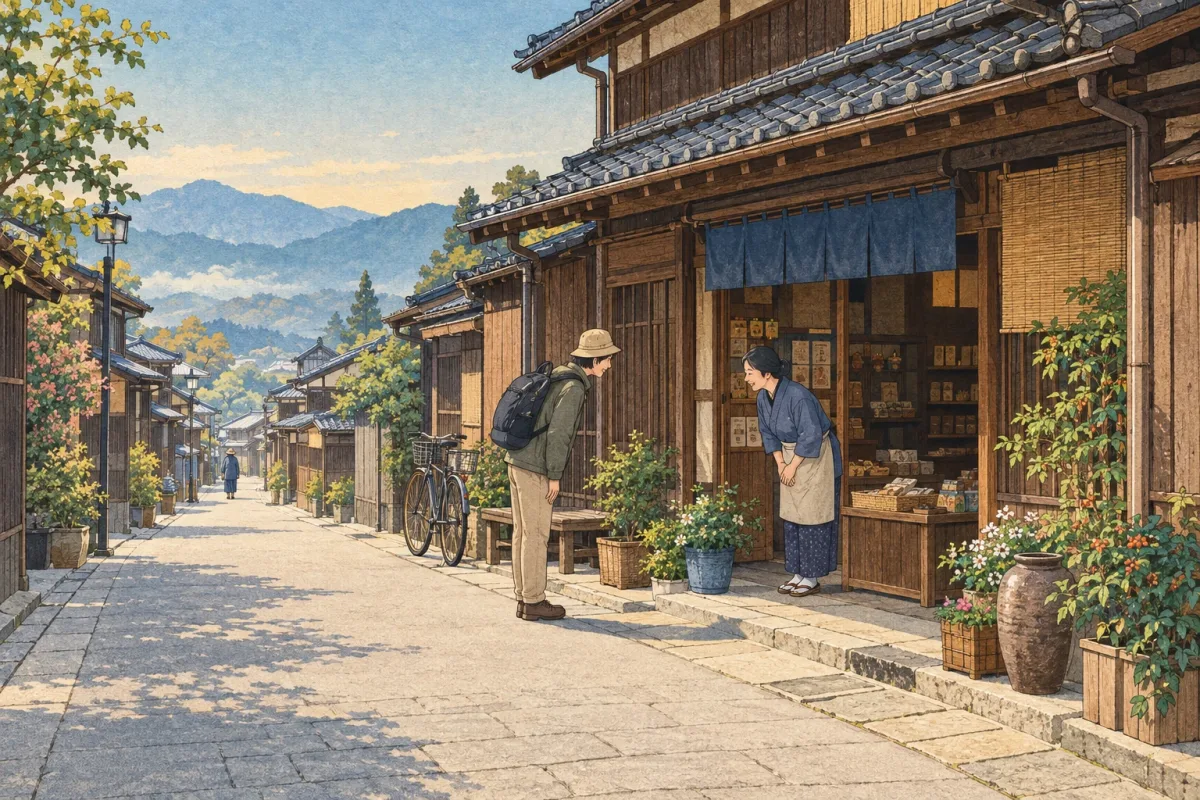
すみません
Excuse me
すみません · sumimasen
Also used to say sorry, to get someone's attention, or as a light thank-you
An all-purpose word: use it to apologise, to stop someone and ask something, to get people to let you past, and even as a light thank-you.
ありがとうございます
Thank you
ありがとうございます · arigatō gozaimasu
The polite form of 'thank you'
Use this polite form to thank shop and station staff. A slight bow gets the message across even better.
こんにちは
Hello
こんにちは · konnichiwa
The daytime greeting, roughly 'good afternoon'
The daytime greeting. In the morning it's ohayō gozaimasu, and in the evening konbanwa.
おはようございます
Good morning
おはようございます · ohayō gozaimasu
The polite morning greeting
The greeting to use until about 10 a.m.
はい
Yes
はい · hai
Can also simply mean 'I'm listening'
It's also used to show you're listening, so it doesn't necessarily mean 'I agree'.
いいえ
No
いいえ · iie
A plain 'no', often softened in practice
When turning something down, softening it to 'iie, daijōbu desu' (no, I'm fine) sounds more natural.
大丈夫です
I'm fine / No, thank you
だいじょうぶです · daijōbu desu
Literally: 'It is fine'
Also works for declining offers such as 'Would you like a bag?'. A small wave of the open hand avoids any misunderstanding.
お願いします
Please
おねがいします · onegai shimasu
Literally: 'I request it'; used to ask for or accept something
Use it to ask for something, to accept an offer, or while pointing at the menu to order.
日本語がわかりません
I don't understand Japanese
にほんごがわかりません · nihongo ga wakarimasen
Literally: 'Japanese, I don't understand'
For when someone speaks to you and you're stuck. Follow it with 'eigo wa hanasemasu ka' (do you speak English?) to speed things up.
英語は話せますか
Do you speak English?
えいごははなせますか · eigo wa hanasemasu ka
Literally: 'As for English, can you speak it?'
Even if they can't, plenty of people will help with a translation app or by writing things down.
もう一度お願いします
Could you say that again, please?
もういちどおねがいします · mō ichido onegai shimasu
Literally: 'One more time, please'
For when you didn't catch what was said.
ゆっくり話してください
Please speak slowly
ゆっくりはなしてください · yukkuri hanashite kudasai
Literally: 'Slowly, please speak'
ここに書いてください
Please write it here
ここにかいてください · koko ni kaite kudasai
Hand over a notebook or your phone as you say it
Getting place names and numbers written down on paper or your phone is the surest way.
トイレはどこですか
Where is the toilet?
トイレはどこですか · toire wa doko desu ka
Literally: 'As for the toilet, where is it?'
Use the pattern '〇〇 wa doko desu ka' for anything: a station, an exit, a konbini (convenience store) and so on.
写真を撮ってもいいですか
May I take a photo?
しゃしんをとってもいいですか · shashin o totte mo ii desu ka
Literally: 'Is it all right if I take a photo?'
Ask first before taking photos inside a shop or of people.
大丈夫ですか
Are you all right?
だいじょうぶですか · daijōbu desu ka
Literally: 'Is it all right?'; a kind check-in
What people may say to you if you look like you're in trouble.
- 大丈夫です、ありがとうございます daijōbu desu, arigatō gozaimasu — I'm fine, thank you · Polite: 'It's all right, thank you very much'
- 助けてください tasukete kudasai — Please help me · Literally: 'Help, please'
いらっしゃいませ
Welcome!
いらっしゃいませ · irasshaimase
A formal 'come in, welcome'; no reply expected
The greeting staff say when you walk into a shop. It isn't rude not to reply; a small nod is plenty.
- こんにちは konnichiwa — Hello · Only if you'd like to reply
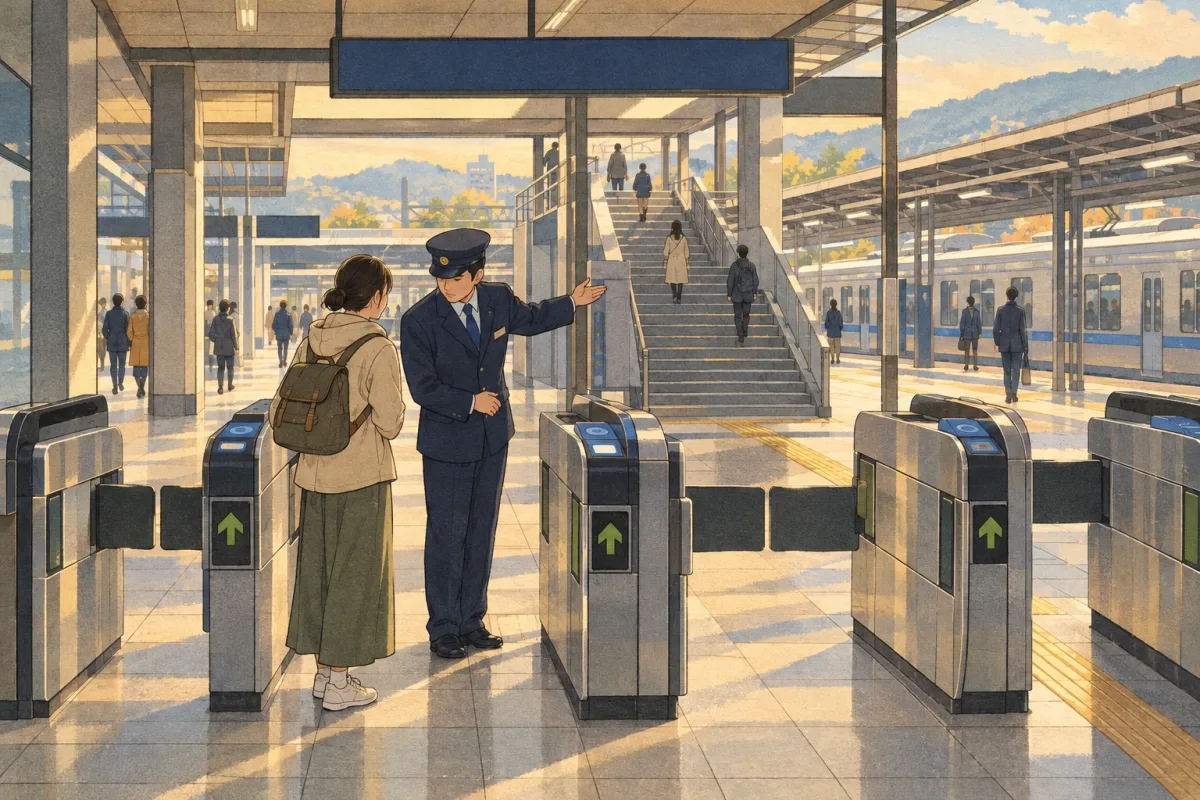
〇〇駅はどこですか
Where is 〇〇 Station?
〇〇えきはどこですか · 〇〇 eki wa doko desu ka
Swap 〇〇 for the station name
Put the station name in place of 〇〇. Showing your map app as you ask makes it foolproof.
〇〇に行きたいです
I'd like to go to 〇〇
〇〇にいきたいです · 〇〇 ni ikitai desu
Literally: 'I want to go to 〇〇'
Just tell the station staff where you're going and they'll often tell you which train and platform to take.
〇〇行きは何番線ですか
Which platform for 〇〇?
〇〇いきはなんばんせんですか · 〇〇 iki wa nanbansen desu ka
Literally: 'The train bound for 〇〇 is track number what?'
Put your destination station in place of 〇〇. '〇 bansen' is the platform (track) number.
この電車は〇〇に止まりますか
Does this train stop at 〇〇?
このでんしゃは〇〇にとまりますか · kono densha wa 〇〇 ni tomarimasu ka
Asks whether the train calls at 〇〇 Station
Rapid and express trains skip some stations, so it's worth checking before you get on.
どこで乗り換えますか
Where do I change trains?
どこでのりかえますか · doko de norikaemasu ka
Literally: 'Where should I transfer?'
〇〇線はどこですか
Where is the 〇〇 Line?
〇〇せんはどこですか · 〇〇 sen wa doko desu ka
Asks where the platforms for the 〇〇 Line are
Put the line name (such as the Yamanote Line) in place of 〇〇. Useful when changing trains.
〇〇までいくらですか
How much is it to 〇〇?
〇〇までいくらですか · 〇〇 made ikura desu ka
Asks the fare to 〇〇
チャージはどこでできますか
Where can I top up my card?
チャージはどこでできますか · chāji wa doko de dekimasu ka
'Chāji' (charge) means adding money to an IC card
IC cards such as Suica and PASMO can be topped up ('charged') at the ticket machines in almost every station.
ICカードが通りません
My IC card isn't working
アイシーカードがとおりません · aishī kādo ga tōrimasen
Literally: 'My IC card won't go through' (the ticket gate)
If the gate stops you, go to the staffed gate. The usual reason is not enough money on the card.
乗り越してしまいました
I've gone past my stop
のりこしてしまいました · norikoshite shimaimashita
Literally: 'I've ridden past (my station)'
You can pay the difference at the fare adjustment machine inside the gates or at the staffed gate.
切符をなくしました
I've lost my ticket
きっぷをなくしました · kippu o nakushimashita
Kippu means a paper ticket
Tell the staff at the staffed gate before you go out through the barrier.
次は〇〇ですか
Is the next stop 〇〇?
つぎは〇〇ですか · tsugi wa 〇〇 desu ka
Asks whether the next station is 〇〇
For quietly asking someone nearby on the train. Talking on the phone on trains is considered bad manners.
〇〇口はどちらですか
Which way is the 〇〇 exit?
〇〇ぐちはどちらですか · 〇〇 guchi wa dochira desu ka
Guchi (kuchi) means an exit or entrance; dochira is a polite 'which way'
Big stations have many exits, such as Higashi-guchi (East Exit) and Nishi-guchi (West Exit), so ask for the one nearest where you're going and you won't get lost.
コインロッカーはどこですか
Where are the coin lockers?
コインロッカーはどこですか · koin rokkā wa doko desu ka
Koin rokkā comes from the English 'coin locker'
Some station lockers can be paid for with an IC card.
忘れ物をしました
I left something on the train
わすれものをしました · wasuremono o shimashita
Literally: 'I've left something behind'
Tell them the time of the train, which carriage you were in and what you left, and it'll be easier for them to find.
どちらまでですか
Where are you going?
どちらまでですか · dochira made desu ka
Literally: 'As far as where?'
What station staff say when checking where you're going.
- 〇〇までです 〇〇 made desu — To 〇〇 · Literally: 'It's as far as 〇〇'
各駅停車に乗ってください
Please take the local train
かくえきていしゃにのってください · kakueki teisha ni notte kudasai
Kakueki teisha is a train that stops at every station
You'll hear this when rapid or express trains don't stop at your station.
- わかりました、ありがとうございます wakarimashita, arigatō gozaimasu — I see, thank you · Wakarimashita literally means 'I've understood'
- 何番線ですか nanbansen desu ka — Which platform? · Asks for the platform number
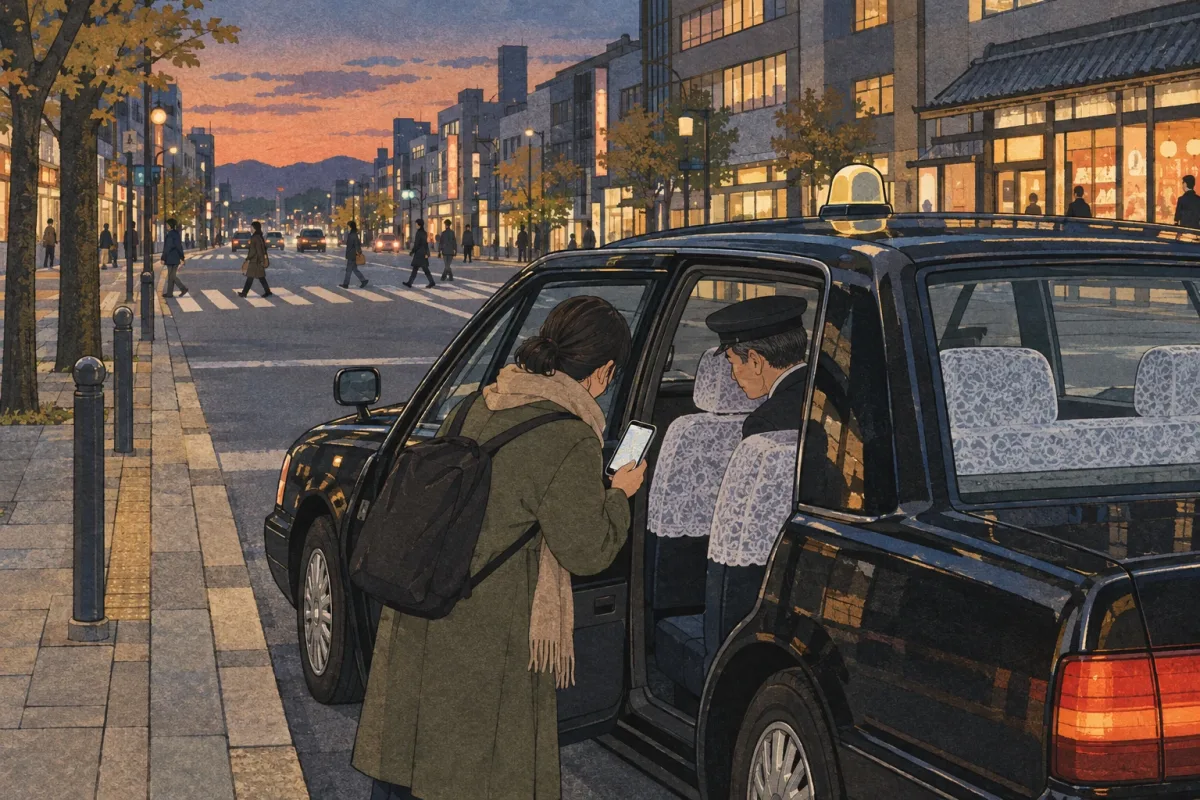
ここまでお願いします
Here, please
ここまでおねがいします · koko made onegai shimasu
Said while pointing at a map or an address
Say it while showing a map app or an address written in Japanese. Unless you're going to a famous sight or hotel, have your destination ready in Japanese to be safe.
〇〇までお願いします
To 〇〇, please
〇〇までおねがいします · 〇〇 made onegai shimasu
Literally: 'As far as 〇〇, please'
Put a hotel, station or venue name in place of 〇〇.
この住所までお願いします
To this address, please
このじゅうしょまでおねがいします · kono jūsho made onegai shimasu
Show the address as you say it
Show the Japanese address from something like your booking confirmation email.
ここで止めてください
Please stop here
ここでとめてください · koko de tomete kudasai
Literally: 'Please stop (the car) here'
The doors open and close automatically, so don't open or shut them yourself.
次の角で止めてください
Please stop at the next corner
つぎのかどでとめてください · tsugi no kado de tomete kudasai
Kado means corner
だいたいいくらですか
Roughly how much will it be?
だいたいいくらですか · daitai ikura desu ka
Asks for a rough idea of the fare
Fares are metered by distance, with a surcharge from 10 p.m. to 5 a.m. No tip is needed.
カードで払えますか
Can I pay by card?
カードではらえますか · kādo de haraemasu ka
Kādo here means a credit card
Many taxis in cities take cards, but in rural areas some are cash only. Asking before you get in saves worry.
領収書をください
A receipt, please
りょうしゅうしょをください · ryōshūsho o kudasai
Ryōshūsho is a formal receipt
If you leave something behind, you can contact the taxi company named on the receipt.
トランクを開けてください
Could you open the boot, please?
トランクをあけてください · toranku o akete kudasai
Toranku (from 'trunk') is the Japanese word for the boot
For when you have big bags.
タクシー乗り場はどこですか
Where is the taxi rank?
タクシーのりばはどこですか · takushī noriba wa doko desu ka
Noriba means a place to get on
To hail one in the street, raise your hand to a taxi showing 空車 (kūsha, 'vacant'), which is often in red.
道に迷いました
I'm lost
みちにまよいました · michi ni mayoimashita
Literally: 'I've lost my way'
Asking the officers at a kōban (police box) is another good option.
〇〇へはどう行けばいいですか
How do I get to 〇〇?
〇〇へはどういけばいいですか · 〇〇 e wa dō ikeba ii desu ka
Literally: 'How should I go to 〇〇?'
Put your destination in place of 〇〇.
今いる場所はこの地図のどこですか
Where am I on this map?
いまいるばしょはこのちずのどこですか · ima iru basho wa kono chizu no doko desu ka
Literally: 'Where on this map is the place I am now?'
Show them your map and ask them to point.
歩いて行けますか
Can I walk there?
あるいていけますか · aruite ikemasu ka
Asks whether it's within walking distance
どちらまでですか
Where to?
どちらまでですか · dochira made desu ka
Literally: 'As far as where?'
The first thing the driver asks when you get in.
- 〇〇までお願いします 〇〇 made onegai shimasu — To 〇〇, please · Literally: 'As far as 〇〇, please'
- ここまでお願いします koko made onegai shimasu — Here, please · Said while showing a map
お支払いはどうされますか
How would you like to pay?
おしはらいはどうされますか · oshiharai wa dō saremasu ka
Polite: 'What will you do about payment?'
- 現金で genkin de — Cash · Literally: 'With cash'
- カードで kādo de — By card · Literally: 'With a card'
- ICカードで aishī kādo de — By IC card · Literally: 'With an IC card'
まっすぐ行って、右です
Go straight on, then turn right
まっすぐいって、みぎです · massugu itte, migi desu
Literally: 'Go straight, and it's on the right'
A phrase you'll often hear when asking the way. 'Left' is hidari, and 'traffic lights' is shingō.
- ありがとうございます arigatō gozaimasu — Thank you · The polite form of 'thank you'
- もう一度お願いします mō ichido onegai shimasu — Could you say that again, please? · Literally: 'One more time, please'
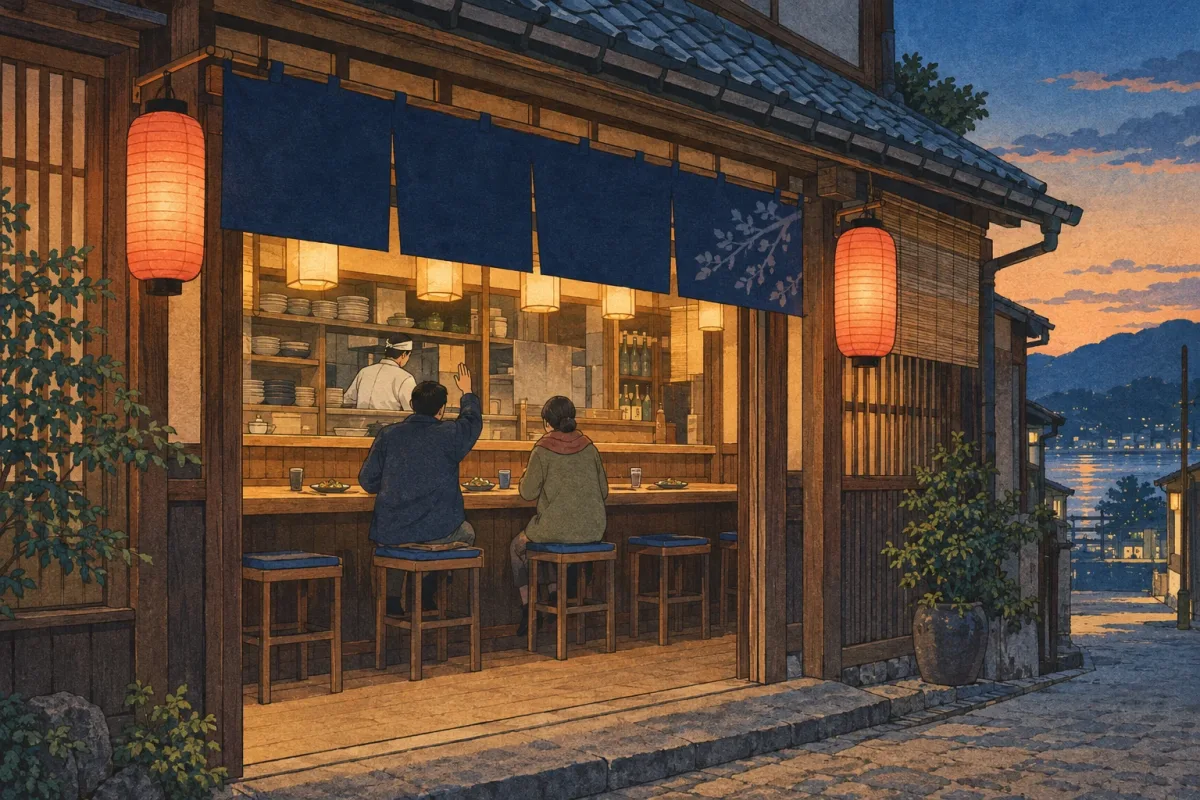
何名様ですか
How many people?
なんめいさまですか · nanmei sama desu ka
Literally: 'How many honoured guests?'
The first thing you're asked when you walk in. Holding up fingers works too.
- 一人です hitori desu — Just one · Hitori is the word for one person
- 二人です futari desu — Two · Futari is the word for two people
- 三人です san nin desu — Three · San-nin is the word for three people
〇人です
〇 people
〇にんです · 〇 nin desu
Literally: 'It's 〇 people'
One person is hitori, two is futari, and from three it's san-nin, yo-nin, go-nin.
英語のメニューはありますか
Do you have an English menu?
えいごのメニューはありますか · eigo no menyū wa arimasu ka
Literally: 'As for an English menu, is there one?'
Even without one, more and more places have picture menus or QR-code ordering.
おすすめは何ですか
What do you recommend?
おすすめはなんですか · osusume wa nan desu ka
Osusume means 'recommendation'
They'll tell you what the place is proud of, so if you can't decide, this is the best question to ask.
これをください
This one, please
これをください · kore o kudasai
Literally: 'This, please give me'
Saying it while pointing at the menu is all you need.
これを二つください
Two of these, please
これをふたつください · kore o futatsu kudasai
Futatsu means 'two (things)'
Things are counted hitotsu, futatsu, mittsu (one, two, three).
注文をお願いします
I'd like to order, please
ちゅうもんをおねがいします · chūmon o onegai shimasu
Literally: 'Order, please'
To call staff over, raise your hand and say 'sumimasen'. Some tables have a call button.
〇〇アレルギーがあります
I'm allergic to 〇〇
〇〇アレルギーがあります · 〇〇 arerugī ga arimasu
Literally: 'I have a 〇〇 allergy'
Put the food in place of 〇〇 (e.g. egg, milk, wheat, soba (buckwheat), peanuts, prawns, crab). Unlike packaged processed foods, dishes in restaurants don't have to carry allergy labelling, so always check by showing a card written in Japanese.
〇〇が食べられません
I can't eat 〇〇
〇〇がたべられません · 〇〇 ga taberaremasen
Literally: '〇〇 cannot be eaten (by me)'
If you don't eat meat or fish, mention dashi (fish stock) and katsuobushi (dried bonito flakes) as well, as they're often used where you can't see them.
これに〇〇は入っていますか
Does this contain 〇〇?
これに〇〇ははいっていますか · kore ni 〇〇 wa haitte imasu ka
Literally: 'In this, is 〇〇 included?'
〇〇抜きでお願いします
Without 〇〇, please
〇〇ぬきでおねがいします · 〇〇 nuki de onegai shimasu
Nuki means 'left out'
For when you'd like the wasabi or spring onions left out, for example. With a serious allergy, don't just ask for it to be left out: make clear that you can't eat it and why.
ご注文はお決まりですか
Are you ready to order?
ごちゅうもんはおきまりですか · gochūmon wa okimari desu ka
Literally: 'Has your order been decided?'
- これをください kore o kudasai — This one, please · Literally: 'This, please give me'
- もう少し待ってください mō sukoshi matte kudasai — Could I have a little more time? · Literally: 'Please wait a little more'
お飲み物は何になさいますか
What would you like to drink?
おのみものはなにになさいますか · onomimono wa nani ni nasaimasu ka
Literally: 'What will you make your drink?'
At an izakaya, you'll usually be asked for your drinks first.
- 生ビールをください nama bīru o kudasai — A draught beer, please · Nama (literally 'raw') means draught here
- ウーロン茶をください ūroncha o kudasai — Oolong tea, please · Ūroncha is the Japanese name for oolong tea
お会計をお願いします
The bill, please
おかいけいをおねがいします · okaikei o onegai shimasu
Okaikei means the bill, or settling up
Some places take payment at the table, others at the till. No tip is needed.
別々でお願いします
Separate bills, please
べつべつでおねがいします · betsubetsu de onegai shimasu
Betsubetsu means 'separately'
Some places can't do this when they're busy, so it's considerate to ask before you order.
カードは使えますか
Do you take cards?
カードはつかえますか · kādo wa tsukaemasu ka
Literally: 'Can a card be used?'
Small places are sometimes cash only.
ごちそうさまでした
Thank you for the meal
ごちそうさまでした · gochisōsama deshita
Literally: 'It was a feast'; a way of saying the food was good
Staff are pleased to hear this when you finish eating or leave. Before eating, you say itadakimasu.
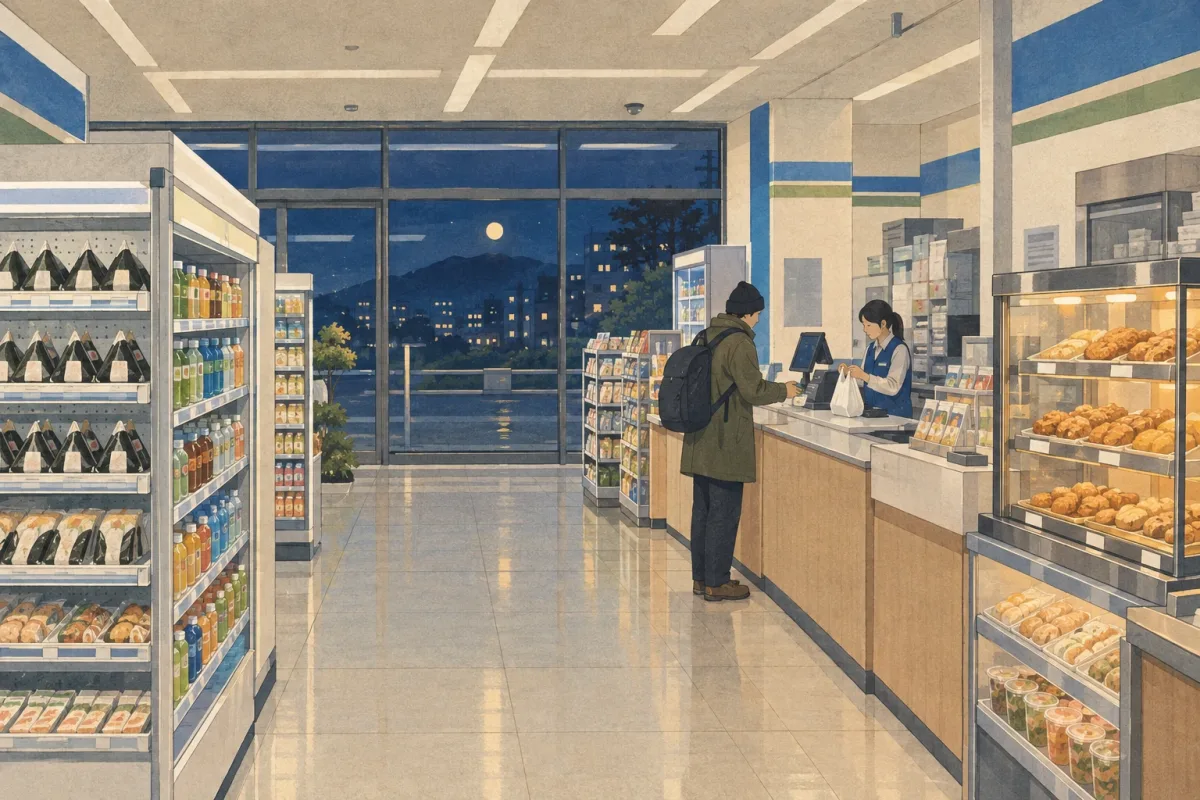
これをください
I'll take this, please
これをください · kore o kudasai
Literally: 'This, please give me'
Pointing at the item as you say it is enough.
袋はご利用ですか
Would you like a bag?
ふくろはごりようですか · fukuro wa goriyō desu ka
Literally: 'Will you be using a bag?'
In many shops in Japan, plastic carrier bags cost a few yen, so you'll always be asked at the till.
- はい、お願いします hai, onegai shimasu — Yes, please · Hai means yes; onegai shimasu means please
- いいえ、大丈夫です iie, daijōbu desu — No, thank you · Iie means no; daijōbu desu means I'm fine
袋はいりません
I don't need a bag
ふくろはいりません · fukuro wa irimasen
Irimasen means 'don't need'
It's fine to say this before they ask.
温めますか
Would you like it heated?
あたためますか · atatamemasu ka
Asks whether to microwave it
You'll often be asked this when you buy a bentō (boxed meal) or onigiri (rice ball) at a konbini.
- はい、お願いします hai, onegai shimasu — Yes, please · Literally: 'Yes, please (heat it)'
- いいえ、そのままで大丈夫です iie, sono mama de daijōbu desu — No, it's fine as it is · Literally: 'No, as it is is fine'
お箸はおつけしますか
Would you like chopsticks?
おはしはおつけしますか · ohashi wa otsuke shimasu ka
Literally: 'Shall I put in chopsticks?'
You may also be asked about a spoon (supūn) or fork (fōku).
- 一つお願いします hitotsu onegai shimasu — One pair, please · Literally: 'One, please'
- いりません irimasen — No, thank you · Literally: 'I don't need them'
ポイントカードはお持ちですか
Do you have a points card?
ぽいんとかーどはおもちですか · pointo kādo wa omochi desu ka
Asks whether you have the shop's loyalty card
As a traveller, you can simply answer 'no'.
- いいえ、持っていません iie, motte imasen — No, I don't · Literally: 'No, I don't have one'
カードで払えますか
Can I pay by card?
かーどではらえますか · kādo de haraemasu ka
Kādo here means a credit card
Some shops don't take cards, so it's wise to carry a little cash.
お支払いはどうなさいますか
How would you like to pay?
おしはらいはどうなさいますか · o-shiharai wa dō nasaimasu ka
Asks which payment method you'll use
With cards and phone payments, you'll usually tap or insert them on the terminal yourself.
- カードでお願いします kādo de onegai shimasu — By card, please · Literally: 'With a card, please'
- 現金で genkin de — Cash · Literally: 'With cash'
- 交通系ICカードで kōtsū-kei aishī kādo de — By IC card · With a transport IC card such as Suica
お支払い回数は一括でよろしいですか
In one payment, is that all right?
おしはらいかいすうはいっかつでよろしいですか · o-shiharai kaisū wa ikkatsu de yoroshii desu ka
Ikkatsu means paying by card in a single instalment
You may be asked this when you pay by card; just say 'hai'.
- はい hai — Yes · Yes, in one payment
レシートをください
A receipt, please
れしーとをください · reshīto o kudasai
Reshīto is a printed till receipt
If you need a handwritten receipt, say 'ryōshūsho o kudasai' (a receipt, please).
いくらですか
How much is it?
いくらですか · ikura desu ka
Ikura means 'how much'
If you can't catch the numbers, look at the till display or ask them to show you on a calculator.
免税できますか
Can I buy this tax-free?
めんぜいできますか · menzei dekimasu ka
Menzei means tax exemption
Tax-free shopping applies at tax-free shops when you spend ¥5,000 or more (before tax) in the same shop on the same day, and you must show your passport. For purchases from 1 November 2026, you pay the tax-inclusive price in the shop, and the consumption tax is refunded after customs check your purchases at the airport or port when you leave Japan.
パスポートをお願いします
Your passport, please
ぱすぽーとをおねがいします · pasupōto o onegai shimasu
Literally: 'Passport, please'
You'll always be asked to show your passport for tax-free shopping.
- はい、どうぞ hai, dōzo — Here you are · Literally: 'Yes, go ahead'
試着してもいいですか
May I try this on?
しちゃくしてもいいですか · shichaku shite mo ii desu ka
Shichaku means trying clothes on
It's usual to take your shoes off before stepping into the fitting room.
もっと大きいサイズはありますか
Do you have a larger size?
もっとおおきいさいずはありますか · motto ōkii saizu wa arimasu ka
Literally: 'Is there a bigger size?'
For a smaller size, say 'motto chiisai saizu'.
〇〇はありますか
Do you have 〇〇?
〇〇はありますか · 〇〇 wa arimasu ka
Asks whether they sell 〇〇
Put the name of what you want in place of 〇〇, or show a photo on your phone as you ask.
見ているだけです
I'm just looking
みているだけです · mite iru dake desu
Literally: 'I'm only looking' (not buying right now)
Handy when a shop assistant speaks to you and you don't need anything in particular.
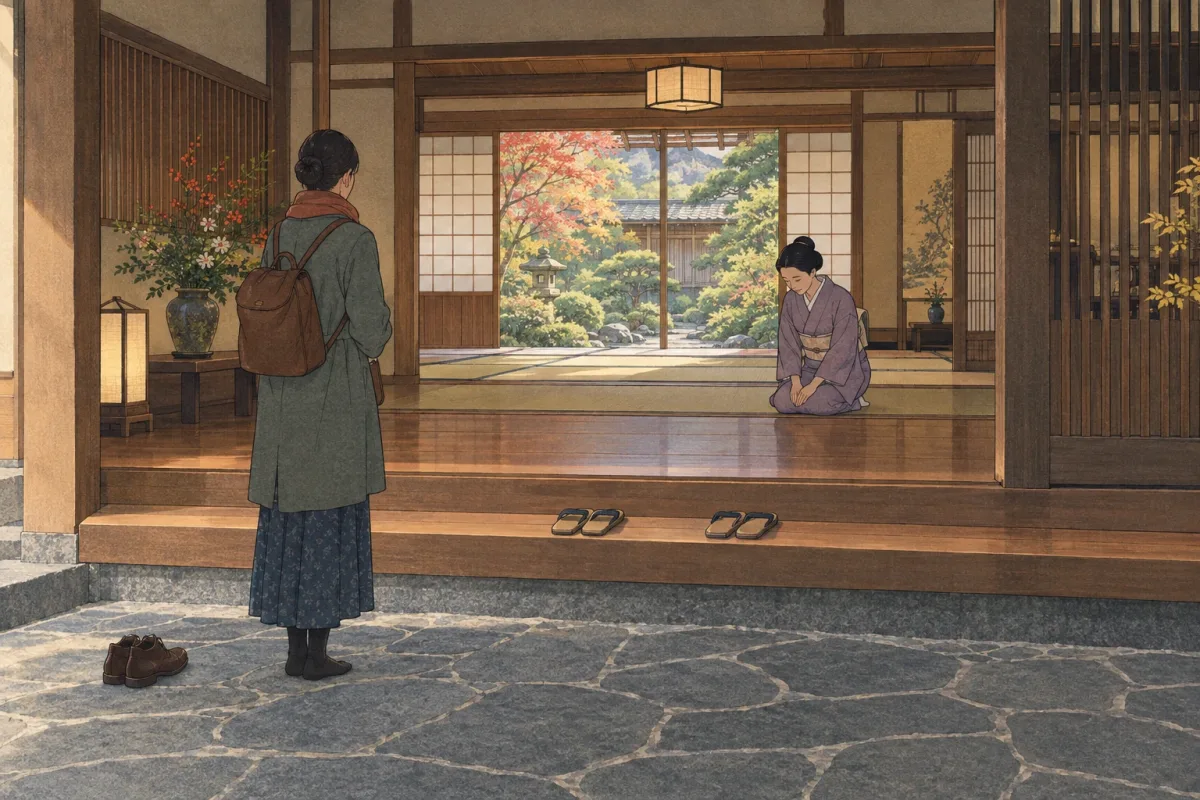
チェックインをお願いします
I'd like to check in, please
ちぇっくいんをおねがいします · chekku in o onegai shimasu
Literally: 'Check-in, please'
予約している〇〇です
I have a reservation under 〇〇
よやくしている〇〇です · yoyaku shite iru 〇〇 desu
Literally: 'I'm 〇〇, who has a reservation'
Put the name the booking is under in place of 〇〇. Showing your booking confirmation makes it even more certain.
パスポートを拝見してもよろしいですか
May I see your passport?
ぱすぽーとをはいけんしてもよろしいですか · pasupōto o haiken shite mo yoroshii desu ka
A very polite way of asking to see something
You'll often be asked this at check-in, so keep your passport handy.
- はい、どうぞ hai, dōzo — Here you are · Literally: 'Yes, go ahead'
荷物を預かってもらえますか
Could you keep my luggage?
にもつをあずかってもらえますか · nimotsu o azukatte moraemasu ka
Azukaru means to look after something for someone
Handy before check-in or after check-out, when you want to go sightseeing without your bags.
荷物を受け取りに来ました
I've come to collect my luggage
にもつをうけとりにきました · nimotsu o uketori ni kimashita
Literally: 'I've come to receive my luggage'
Show the tag (claim ticket) you were given when you left your bags.
チェックアウトは何時ですか
What time is check-out?
ちぇっくあうとはなんじですか · chekku auto wa nanji desu ka
Literally: 'As for check-out, what time is it?'
朝食は何時からですか
What time does breakfast start?
ちょうしょくはなんじからですか · chōshoku wa nanji kara desu ka
Literally: 'Breakfast is from what time?'
To ask when it ends, say 'nanji made desu ka' (until what time?).
朝食会場はどこですか
Where is breakfast served?
ちょうしょくかいじょうはどこですか · chōshoku kaijō wa doko desu ka
Kaijō means the venue or room
夕食は何時になさいますか
What time would you like dinner?
ゆうしょくはなんじになさいますか · yūshoku wa nanji ni nasaimasu ka
Polite: 'What time will you make dinner?'
At ryokan where dinner is included, you'll often choose the time when you check in.
- 7時でお願いします shichi-ji de onegai shimasu — Seven o'clock, please · Shichi-ji means seven o'clock
- 何時が空いていますか nanji ga aite imasu ka — What times are available? · Literally: 'What time is free?'
大浴場は何時まで入れますか
Until what time is the large bath open?
だいよくじょうはなんじまではいれますか · daiyokujō wa nanji made hairemasu ka
Daiyokujō is the large shared bath
A daiyokujō is a large bath shared by all the guests. It may close late at night for cleaning, and the men's and women's baths sometimes swap at set times.
Wi-Fiのパスワードを教えてください
What's the Wi-Fi password?
わいふぁいのぱすわーどをおしえてください · waifai no pasuwādo o oshiete kudasai
Literally: 'Please tell me the Wi-Fi password'
In Japan it's pronounced 'waifai'. It's often written in the room information too.
タオルをもう一枚もらえますか
Could I have another towel?
たおるをもういちまいもらえますか · taoru o mō ichimai moraemasu ka
Ichimai means 'one (flat thing)'
エアコンがつきません
The air conditioning isn't working
えあこんがつきません · eakon ga tsukimasen
Literally: 'The air conditioner won't come on'
Use '〇〇 ga kowarete imasu' (〇〇 is broken) to report other faults.
部屋の鍵をなくしました
I've lost my room key
へやのかぎをなくしました · heya no kagi o nakushimashita
Includes a card key
浴衣で館内を歩いてもいいですか
May I walk around the hotel in my yukata?
ゆかたでかんないをあるいてもいいですか · yukata de kannai o aruite mo ii desu ka
Kannai means 'inside the building'
A yukata is a cotton, kimono-style robe provided by ryokan and similar places for relaxing in. Whether you can wear it around the building depends on where you're staying.
タクシーを呼んでもらえますか
Could you call me a taxi?
たくしーをよんでもらえますか · takushī o yonde moraemasu ka
Literally: 'Could I have you call a taxi?'
もう一泊できますか
Can I stay one more night?
もういっぱくできますか · mō ippaku dekimasu ka
Ippaku means 'one night's stay'
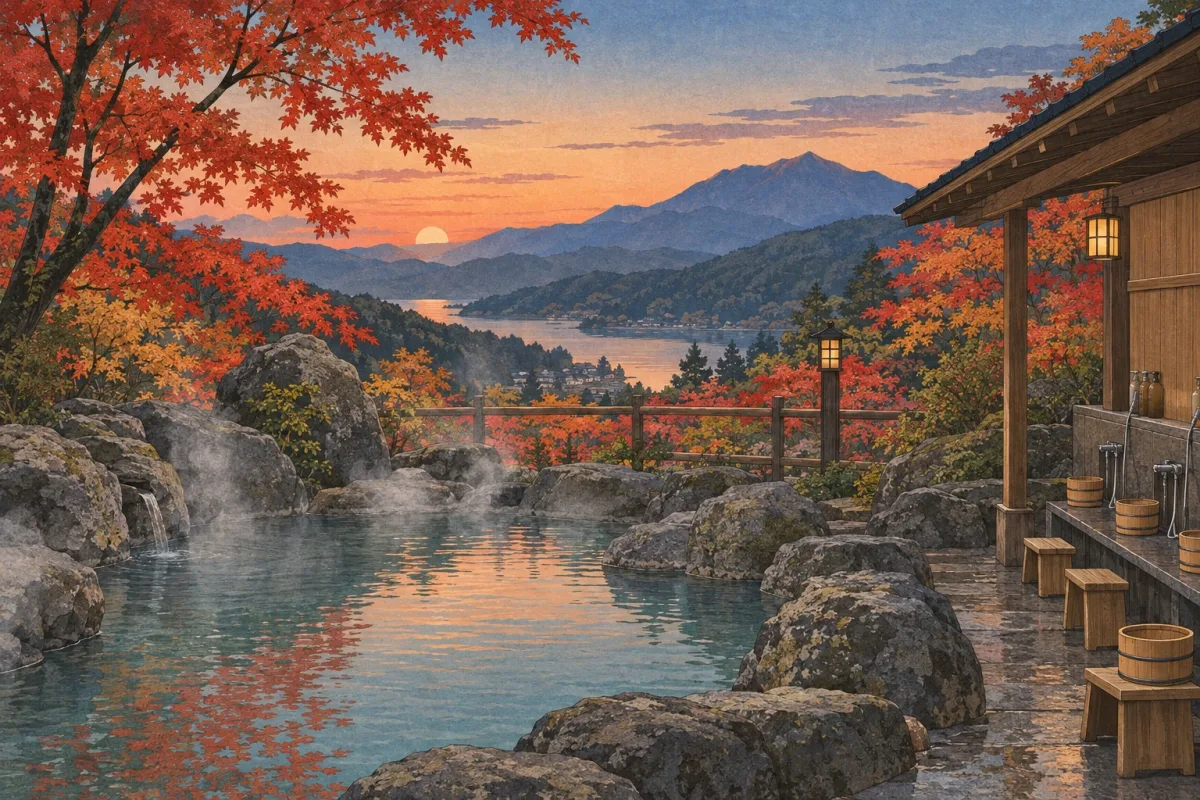
入れ墨があるのですが、入れますか
I have tattoos. Can I still bathe here?
いれずみがあるのですが、はいれますか · irezumi ga aru no desu ga, hairemasu ka
Irezumi is the Japanese word for tattoos
Some places turn away guests with tattoos, so it's safest to ask beforehand. 'Tatū' (tattoo) is understood too.
カバーシールで隠せば大丈夫ですか
Is it all right if I cover them with stickers?
かばーしーるでかくせばだいじょうぶですか · kabā shīru de kakuseba daijōbu desu ka
Asks whether cover-up stickers are allowed
For small tattoos, some places will let you in if you cover them with a sticker.
入れ墨のある方はご入浴いただけません
Sorry, guests with tattoos can't use the baths
いれずみのあるかたはごにゅうよくいただけません · irezumi no aru kata wa go-nyūyoku itadakemasen
Literally: 'Those with tattoos cannot bathe'
If you're turned away, ask whether there's a private bath you can use on your own.
- わかりました wakarimashita — I see · Literally: 'I've understood'
- 貸切風呂はありますか kashikiri buro wa arimasu ka — Do you have a private bath? · Kashikiri means reserved for you alone
貸切風呂はありますか
Do you have a private bath?
かしきりぶろはありますか · kashikiri buro wa arimasu ka
A bath you can book for yourself or your family
A kashikiri buro (also called a kazoku-buro, 'family bath') is a bath you can have to yourselves for a set time; handy if you have tattoos or are travelling with family.
貸切風呂を予約したいです
I'd like to book the private bath
かしきりぶろをよやくしたいです · kashikiri buro o yoyaku shitai desu
Literally: 'I want to reserve the private bath'
To name a time, add '〇-ji kara onegai shimasu' (from 〇 o'clock, please).
男湯はどちらですか
Which way is the men's bath?
おとこゆはどちらですか · otoko-yu wa dochira desu ka
Otoko-yu is the men's bath
The noren (fabric curtain) at the entrance is often marked 男 (men) or 女 (women), so these kanji are worth remembering.
女湯はどちらですか
Which way is the women's bath?
おんなゆはどちらですか · onna-yu wa dochira desu ka
Onna-yu is the women's bath
At some places the men's and women's baths swap at set times, so check the noren before you go in.
タオルは借りられますか
Can I rent a towel?
たおるはかりられますか · taoru wa kariraremasu ka
Literally: 'Can towels be borrowed?'
At sentō and similar places, towels may be rented or sold for a fee.
入浴料はいくらですか
How much is it to bathe?
にゅうよくりょうはいくらですか · nyūyokuryō wa ikura desu ka
Nyūyokuryō is the bathing fee
石けんとシャンプーはありますか
Is there soap and shampoo?
せっけんとしゃんぷーはありますか · sekken to shanpū wa arimasu ka
Asks whether they're provided or you need your own
Before getting into the bath, it's good manners to wash and rinse yourself thoroughly at the washing area.
水着で入れますか
Can I wear a swimsuit?
みずぎではいれますか · mizugi de hairemasu ka
Literally: 'Can I go in wearing a swimsuit?'
At ordinary onsen and sentō, you bathe naked. Keep your small towel out of the water: put it on your head or set it to one side.
靴はこちらの靴箱にお願いします
Please put your shoes in this shoe locker
くつはこちらのくつばこにおねがいします · kutsu wa kochira no kutsubako ni onegai shimasu
Kutsubako is a shoe cubby or locker
Many places ask you to take your shoes off at the entrance and put them in a lockable shoe locker.
- はい、わかりました hai, wakarimashita — Yes, of course · Literally: 'Yes, I've understood'
ロッカーはどこですか
Where are the lockers?
ろっかーはどこですか · rokkā wa doko desu ka
Lockers for your clothes and bags
何時まで入れますか
Until what time can I bathe?
なんじまではいれますか · nanji made hairemasu ka
Literally: 'Until what time can I go in?'
ドライヤーはありますか
Is there a hairdryer?
どらいやーはありますか · doraiyā wa arimasu ka
Doraiyā means a hairdryer
At sentō, hairdryers are sometimes coin-operated.
のぼせてしまいました
I feel dizzy from the hot water
のぼせてしまいました · nobosete shimaimashita
Noboseru: to feel faint from staying in hot water too long
If you feel unwell, don't push yourself: get out of the bath and drink some water. If it's serious, for example someone isn't fully conscious, call 119 for an ambulance.
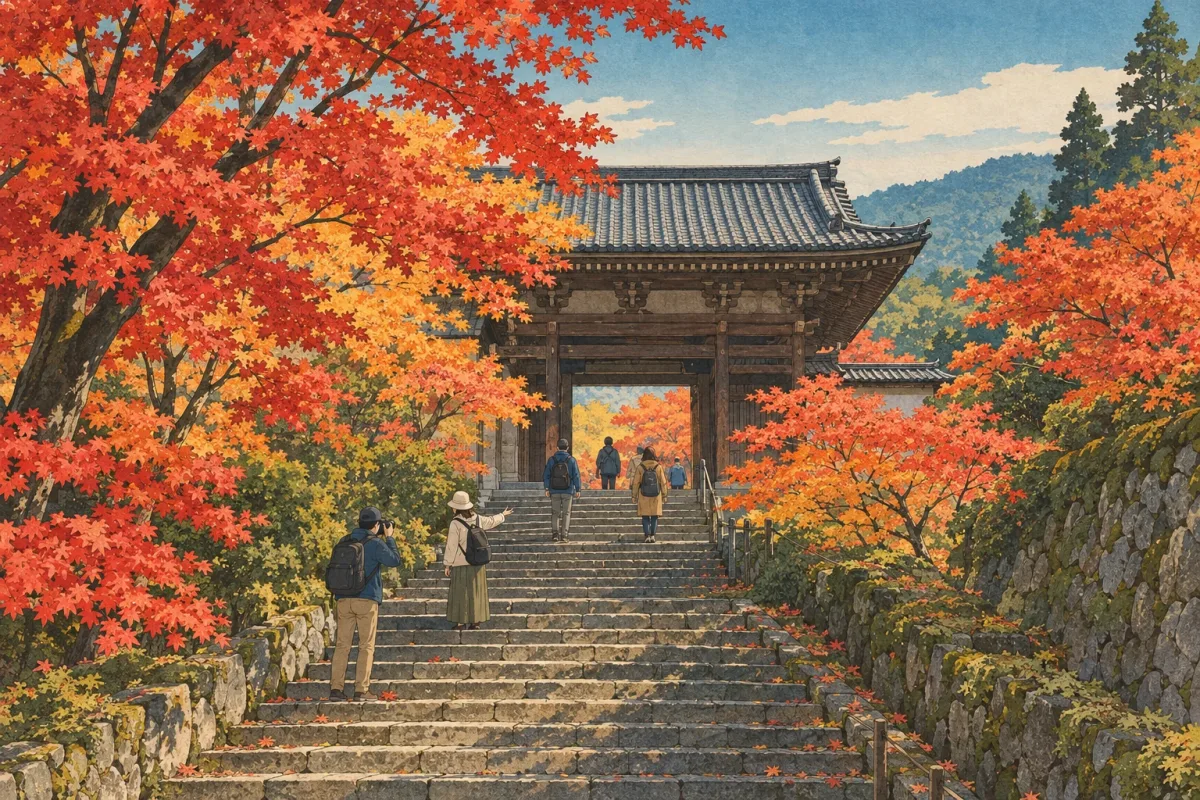
写真を撮ってもいいですか
May I take your photo?
しゃしんをとってもいいですか · shashin o totte mo ii desu ka
Asking someone if you may photograph them
Always get permission before photographing people. Some places don't allow photos, such as inside temple and shrine buildings.
写真を撮ってもらえますか
Could you take a photo of us?
しゃしんをとってもらえますか · shashin o totte moraemasu ka
Asking someone to take your picture
It helps to hand over your phone with the camera already open.
一緒に写真を撮ってもいいですか
Could I take a photo with you?
いっしょにしゃしんをとってもいいですか · issho ni shashin o totte mo ii desu ka
Issho ni means 'together'
撮影はご遠慮ください
No photos, please
さつえいはごえんりょください · satsuei wa go-enryo kudasai
Literally: 'Please refrain from taking photos'
'Go-enryo kudasai' (please refrain) is a polite way of saying something isn't allowed. Some places ban only flash, or only video.
- すみません sumimasen — Sorry · Here it means 'sorry, understood'
入場券はどこで買えますか
Where can I buy a ticket?
にゅうじょうけんはどこでかえますか · nyūjōken wa doko de kaemasu ka
Nyūjōken is an admission ticket
Many places sell tickets from a machine. At temples, the ticket may be called a haikanken (viewing ticket).
大人二枚お願いします
Two adults, please
おとなにまいおねがいします · otona ni-mai onegai shimasu
Ni-mai means 'two (tickets)'
A child is kodomo, and one ticket is ichi-mai.
何時まで開いていますか
What time do you close?
なんじまであいていますか · nanji made aite imasu ka
Literally: 'Until what time are you open?'
最終入場は4時半です
Last entry is at half past four
さいしゅうにゅうじょうはよじはんです · saishū nyūjō wa yo-ji han desu
Yo-ji han means half past four
Many places stop letting people in before closing time, so check the last entry along with the closing time.
- わかりました、ありがとうございます wakarimashita, arigatō gozaimasu — I see, thank you · Wakarimashita literally means 'I've understood'
今日は開いていますか
Are you open today?
きょうはあいていますか · kyō wa aite imasu ka
Literally: 'Today, are you open?'
本日は休館日です
We're closed today
ほんじつはきゅうかんびです · honjitsu wa kyūkanbi desu
Kyūkanbi is a closing day
Many museums and galleries close on Mondays, so check the official website before you go.
- そうですか、ありがとうございます sō desu ka, arigatō gozaimasu — I see, thank you · Sō desu ka means 'is that so?' or 'I see'
入口はどこですか
Where is the entrance?
いりぐちはどこですか · iriguchi wa doko desu ka
Iriguchi means entrance
An exit is deguchi.
英語のパンフレットはありますか
Do you have an English leaflet?
えいごのぱんふれっとはありますか · eigo no panfuretto wa arimasu ka
Literally: 'Is there an English pamphlet?'
For an audio guide, ask for 'eigo no onsei gaido' (an English audio guide).
ここで靴を脱ぎますか
Do I take my shoes off here?
ここでくつをぬぎますか · koko de kutsu o nugimasu ka
Literally: 'Do I take off my shoes here?'
In temple buildings, old houses and similar places, you often take your shoes off at the entrance before stepping up.
コインロッカーはありますか
Are there coin lockers?
こいんろっかーはありますか · koin rokkā wa arimasu ka
Lockers where you can leave your bags
〇〇までどうやって行けばいいですか
How do I get to 〇〇?
〇〇までどうやっていけばいいですか · 〇〇 made dō yatte ikeba ii desu ka
Literally: 'How should I go to 〇〇?'
Put the name of the place you want to go in place of 〇〇. Showing a map as you ask makes it easier to understand.
学生割引はありますか
Is there a student discount?
がくせいわりびきはありますか · gakusei waribiki wa arimasu ka
Waribiki means 'discount'
You may be asked to show a student ID to get the discount.
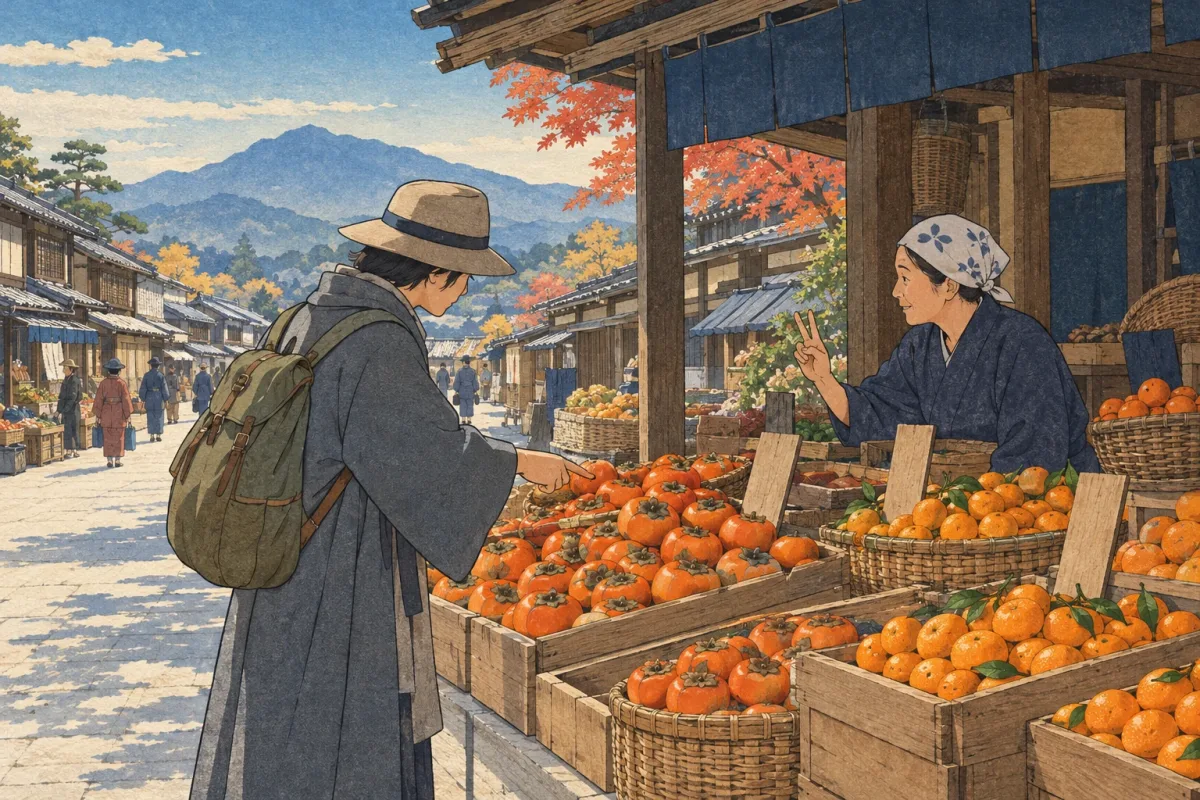
いくらですか
How much is it?
いくらですか · ikura desu ka
Ikura means 'how much'
Point at the item as you say it and that's all you need.
これはいくらですか
How much is this?
これはいくらですか · kore wa ikura desu ka
Kore means 'this'
For when there's no price tag in sight: pick up the item and ask.
全部でいくらですか
How much is it altogether?
ぜんぶでいくらですか · zenbu de ikura desu ka
Zenbu de means 'in total'
For when you're buying several things, or have ordered a few things at once from a food stall.
〇〇円になります
That's 〇〇 yen
〇〇えんになります · 〇〇-en ni narimasu
Literally: 'It comes to 〇〇 yen' (the total)
The set phrase staff use to tell you the total at the till. The amount also appears on the till display, so you can just look at that.
- カードでお願いします kādo de onegai shimasu — By card, please · Literally: 'With a card, please'
- 現金でお願いします genkin de onegai shimasu — Cash, please · Literally: 'With cash, please'
〇〇円のお返しです
Here's 〇〇 yen change
〇〇えんのおかえしです · 〇〇-en no okaeshi desu
Okaeshi is the change being handed back
Said as you're given your change, usually together with the receipt.
- ありがとうございます arigatō gozaimasu — Thank you · The polite form of 'thank you'
一、二、三、四、五
One, two, three, four, five
いち、に、さん、よん、ご · ichi, ni, san, yon, go
1, 2, 3, 4, 5
Four can also be read shi, but that sounds the same as the word for death, so yon is the safer choice.
六、七、八、九、十
Six, seven, eight, nine, ten
ろく、なな、はち、きゅう、じゅう · roku, nana, hachi, kyū, jū
6, 7, 8, 9, 10
Seven can also be read shichi and nine ku, but nana and kyū are more common to avoid mishearing. 100 is hyaku, 1,000 is sen and 10,000 is ichiman.
これを二つください
Two of these, please
これをふたつください · kore o futatsu kudasai
Futatsu means 'two (things)'
To count things, say hitotsu, futatsu, mittsu, yottsu, itsutsu; showing the number on your fingers makes it clearer.
大人二枚お願いします
Two adults, please
おとなにまいおねがいします · otona ni-mai onegai shimasu
Literally: 'Adults, two (tickets), please'
Thin, flat things such as tickets are counted with '-mai'. A child is kodomo.
〇〇人です
〇〇 people
〇〇にんです · 〇〇-nin desu
For saying how many are in your group
One person is hitori and two is futari, which are special forms; from three it carries on san-nin, yo-nin.
税込みですか
Does that include tax?
ぜいこみですか · zeikomi desu ka
Zeikomi means 'consumption tax included'
Price tags in Japan must show the tax-inclusive price, but sometimes the pre-tax price is printed large with the tax-inclusive price in small print beside it.
一万円札でも大丈夫ですか
Is a 10,000-yen note all right?
いちまんえんさつでもだいじょうぶですか · ichiman-en satsu demo daijōbu desu ka
Literally: 'Is it all right even with a 10,000-yen note?'
It's considerate to ask before handing over a big note for a small purchase.
数字を書いてもらえますか
Could you write the number down?
すうじをかいてもらえますか · sūji o kaite moraemasu ka
Sūji means 'numbers'
If you can't catch it, hold out a notepad or your phone's calculator and ask; it never fails.
何時に開きますか
What time do you open?
なんじにあきますか · nanji ni akimasu ka
Asks the opening time of a shop or venue
Times are '〇-ji': 4 o'clock is yo-ji, 7 is shichi-ji and 9 is ku-ji.
何時までですか
Until what time are you open?
なんじまでですか · nanji made desu ka
Literally: 'Until what time is it?'
Use it to find out the closing time or the time of last orders.
どのくらいかかりますか
How long does it take?
どのくらいかかりますか · dono kurai kakarimasu ka
Asks how much time something takes
Use it to ask about waiting or travel times. The answer is often in minutes, '〇-fun' or '〇-pun'; ten minutes is juppun.
〇〇時に予約しています
I have a reservation at 〇〇 o'clock
〇〇じによやくしています · 〇〇-ji ni yoyaku shite imasu
Literally: 'I've booked for 〇〇 o'clock'
Say it along with the name the booking is under when you arrive at a restaurant or hotel.
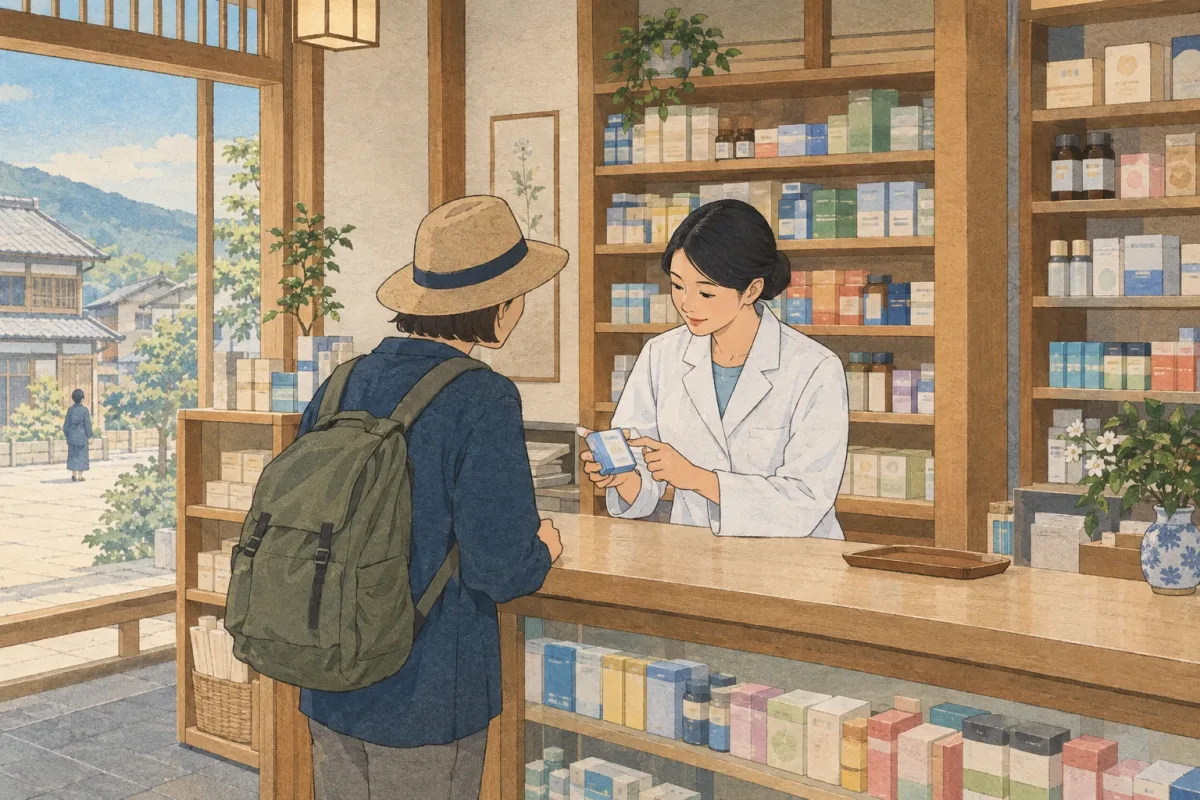
体の調子が悪いです
I don't feel well
からだのちょうしがわるいです · karada no chōshi ga warui desu
Literally: 'My body's condition is bad'
The first thing to get across; it's also on the communication card for emergencies made by the Japan Tourism Agency and JNTO (Japan National Tourism Organization).
〇〇が痛いです
My 〇〇 hurts
〇〇がいたいです · 〇〇 ga itai desu
Itai means 'it hurts'
Put the part of the body in place of 〇〇: head (atama), stomach (onaka), throat (nodo), tooth (ha), chest (mune), leg or foot (ashi) and so on. Pointing to where it hurts helps.
頭が痛いです
I have a headache
あたまがいたいです · atama ga itai desu
Literally: 'My head hurts'
According to JNTO's guidance, the department to see is generally internal medicine.
お腹が痛いです
I have a stomach ache
おなかがいたいです · onaka ga itai desu
Literally: 'My stomach hurts'
Diarrhoea is geri, and constipation is benpi.
熱があります
I have a fever
ねつがあります · netsu ga arimasu
Netsu means 'fever'
Body temperature in Japan is measured in Celsius, and a normal temperature is usually in the 36s. Thermometers are sold at pharmacies and drugstores.
咳が出ます
I have a cough
せきがでます · seki ga demasu
Seki means 'cough'
A runny nose is hanamizu, and a sore throat is 'nodo ga itai'.
吐き気がします
I feel sick
はきけがします · hakike ga shimasu
Literally: 'I have nausea'
If you feel dizzy, say 'memai ga shimasu'.
けがをしています
I'm injured
けがをしています · kega o shite imasu
Literally: 'I have an injury'
If it's serious, such as bleeding or a bone that may be broken, don't hesitate to call an ambulance (119).
〇〇のアレルギーがあります
I'm allergic to 〇〇
〇〇のアレルギーがあります · 〇〇 no arerugī ga arimasu
Literally: 'I have an allergy to 〇〇'
Put the cause in place of 〇〇 (e.g. penicillin, egg = tamago, soba (buckwheat)). Always tell them before an examination or before you're given any medicine.
普段この薬を飲んでいます
I usually take this medicine
ふだんこのくすりをのんでいます · fudan kono kusuri o nonde imasu
Fudan means 'usually' or 'normally'
Showing the medicine itself or a note of its name is the surest way. The Fire and Disaster Management Agency also advises telling them about any long-term conditions and the medicine you usually take.
病院はどこですか
Where is the hospital?
びょういんはどこですか · byōin wa doko desu ka
Literally: 'As for a hospital, where is it?'
For mild symptoms, go to a nearby clinic or general hospital during normal consultation hours. JNTO's website lets you search, by language, for medical facilities that can help in foreign languages.
英語が話せる医者はいますか
Is there a doctor who speaks English?
えいごがはなせるいしゃはいますか · eigo ga hanaseru isha wa imasu ka
Isha means 'doctor'
Only a limited number of medical facilities can handle foreign languages, so check at reception first and, if you can, phone to ask before you go.
カードで払えますか
Can I pay by card?
かーどではらえますか · kādo de haraemasu ka
Kādo here means a credit card
According to JNTO, cards are mainly accepted at large hospitals; clinics are generally cash only.
薬局はどこですか
Where is the pharmacy?
やっきょくはどこですか · yakkyoku wa doko desu ka
Yakkyoku means pharmacy
Take the prescription you're given at the hospital to a pharmacy to collect your medicine, and pay there separately from the hospital. Over-the-counter medicines are also sold at drugstores.
この薬はありますか
Do you have this medicine?
このくすりはありますか · kono kusuri wa arimasu ka
Asks whether they stock this medicine
Show the box, a photo or the names of the ingredients as you ask. Some kinds of medicine can't be sold when no pharmacist is on duty.
どうしましたか
What seems to be the problem?
どうしましたか · dō shimashita ka
Literally: 'What happened?'
The first question from doctors, nurses and the 119 operator. Tell them your symptoms and when they started.
- 〇〇が痛いです 〇〇 ga itai desu — My 〇〇 hurts · Itai means 'it hurts'
- 昨日から熱があります kinō kara netsu ga arimasu — I've had a fever since yesterday · Kinō kara means 'since yesterday'
保険証はお持ちですか
Do you have a health insurance card?
ほけんしょうはおもちですか · hokenshō wa omochi desu ka
Asks for a Japanese health insurance card
Travellers aren't covered by Japan's public health insurance, so as a rule you pay the full cost yourself. If you have travel insurance, tell reception.
- 持っていません。旅行者です motte imasen. ryokōsha desu — No, I'm a tourist · Literally: 'I don't have one. I'm a traveller'
- 旅行保険に入っています ryokō hoken ni haitte imasu — I have travel insurance · Literally: 'I'm enrolled in travel insurance'
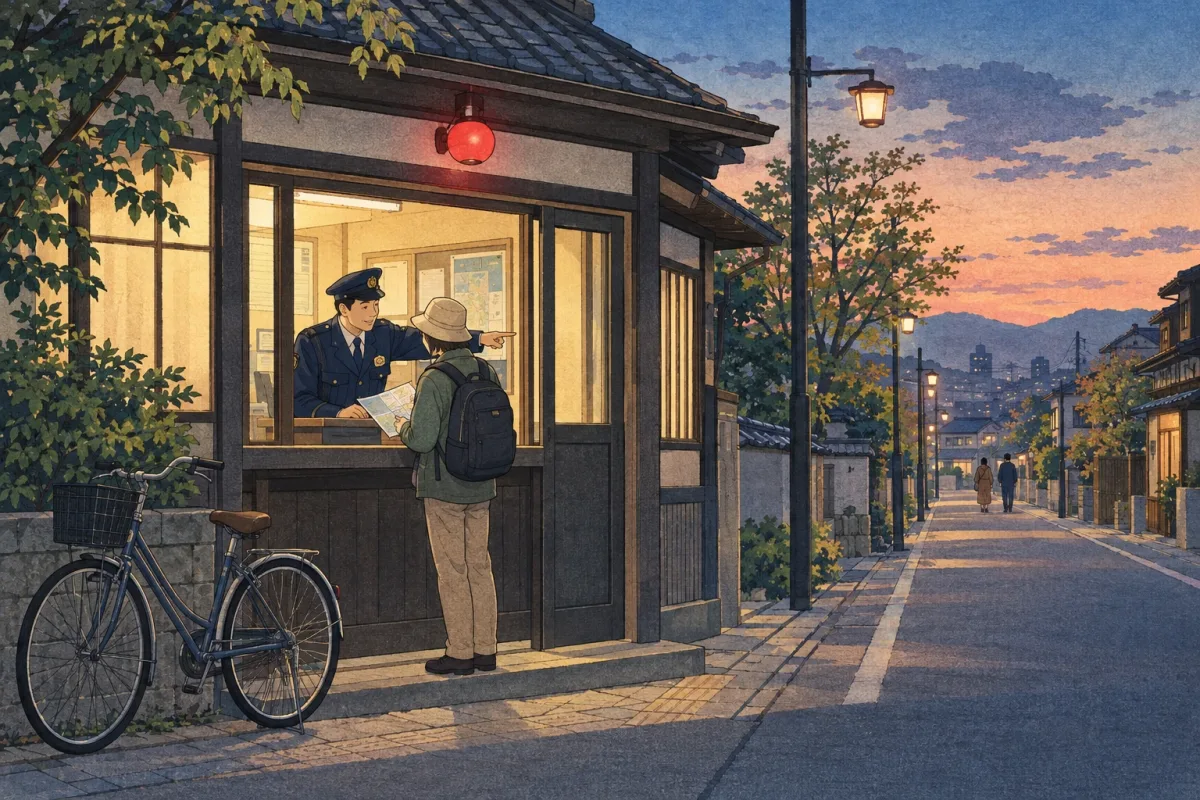
助けて!
Help!
たすけて · tasukete
The short form, for shouting
What to shout to get help from people around you. The polite way to ask is 'tasukete kudasai'.
救急車を呼んでください
Please call an ambulance
きゅうきゅうしゃをよんでください · kyūkyūsha o yonde kudasai
Kyūkyūsha means ambulance
The number for an ambulance is 119. JNTO advises showing this sentence to a Japanese person nearby and asking them to call. You can't choose which hospital you're taken to.
警察を呼んでください
Please call the police
けいさつをよんでください · keisatsu o yonde kudasai
Keisatsu means police
The police number is 110. Call it for crimes (theft, assault and so on) and traffic accidents.
代わりに電話してください
Could you make the call for me?
かわりにでんわしてください · kawari ni denwa shite kudasai
Kawari ni means 'in my place'
The Fire and Disaster Management Agency advises asking someone nearby who speaks Japanese to help you make the 119 call.
日本語が話せません
I can't speak Japanese
にほんごがはなせません · nihongo ga hanasemasen
Literally: 'Japanese, I can't speak'
Say this first when calling for help or reporting something, and the other person will speak slowly and simply.
火事ですか、救急ですか
Fire or ambulance?
かじですか、きゅうきゅうですか · kaji desu ka, kyūkyū desu ka
Kyūkyū covers sudden illness and injury
This is the first thing you're asked when you call 119. Stay calm and answer slowly.
- 救急です kyūkyū desu — Ambulance · Kyūkyū: a sudden illness or injury
- 火事です kaji desu — Fire · Kaji means fire
住所はどこですか
What's the address?
じゅうしょはどこですか · jūsho wa doko desu ka
The address where you need them to come
If you don't know the address, describe a landmark such as a nearby building or junction.
- 住所は〇〇です jūsho wa 〇〇 desu — The address is 〇〇 · Jūsho means address
- 近くに〇〇があります chikaku ni 〇〇 ga arimasu — It's near 〇〇 · Name a landmark in place of 〇〇
事件ですか、事故ですか
Is it a crime or an accident?
じけんですか、じこですか · jiken desu ka, jiko desu ka
Jiken means an incident such as a crime
This is the first thing you're asked when you call 110. Next they'll ask when, where and what happened.
- 事件です jiken desu — A crime · Jiken: an incident such as a crime
- 事故です jiko desu — An accident · Jiko means accident
けが人がいます
Someone is injured
けがにんがいます · keganin ga imasu
Keganin means an injured person
Use this when someone else, not you, is hurt.
ここはどこですか
Where am I?
ここはどこですか · koko wa doko desu ka
Literally: 'As for here, where is it?'
When you need to give your location in an emergency call, ask someone nearby like this and they can tell you the address or a landmark.
財布を盗まれました
My wallet has been stolen
さいふをぬすまれました · saifu o nusumaremashita
Saifu means wallet or purse
Report a theft on 110 or at a nearby kōban (police box) or police station. If cards were stolen, contact your card company straight away too, so they can't be misused.
〇〇をなくしました
I've lost my 〇〇
〇〇をなくしました · 〇〇 o nakushimashita
Nakushimashita means 'I've lost'
Put the lost item in place of 〇〇 (e.g. saifu = wallet, keitai = mobile phone, kaban = bag). If you left it on a train or in a shop, contact that railway company or shop as well.
パスポートをなくしました
I've lost my passport
ぱすぽーとをなくしました · pasupōto o nakushimashita
Literally: 'Passport, I've lost it'
Whether you need a police certificate to get a new one depends on your country, so the Tokyo Metropolitan Police Department advises checking with your own embassy or consulate first.
交番はどこですか
Where is the police box?
こうばんはどこですか · kōban wa doko desu ka
Kōban is a small neighbourhood police post
A kōban is a small police post on street corners and outside stations, where you can also ask for directions or report lost property.
遺失届を出したいです
I'd like to report a lost item
いしつとどけをだしたいです · ishitsu todoke o dashitai desu
Ishitsu todoke is a lost-property report
You fill it in at a kōban or police station. Having a Japanese phone number ready (such as your hotel's) is useful so they can contact you if it turns up.
これは地震ですか
Is this an earthquake?
これはじしんですか · kore wa jishin desu ka
Jishin means earthquake
When you feel shaking, protect yourself first. Your phone may sound an Earthquake Early Warning alarm.
避難所はどこですか
Where is the evacuation shelter?
ひなんじょはどこですか · hinanjo wa doko desu ka
Hinanjo is an emergency shelter
An evacuation shelter is where people go to stay safe in a disaster, often a school or community centre. If there's a risk of a tsunami, don't rely on your own judgement: get to high ground.
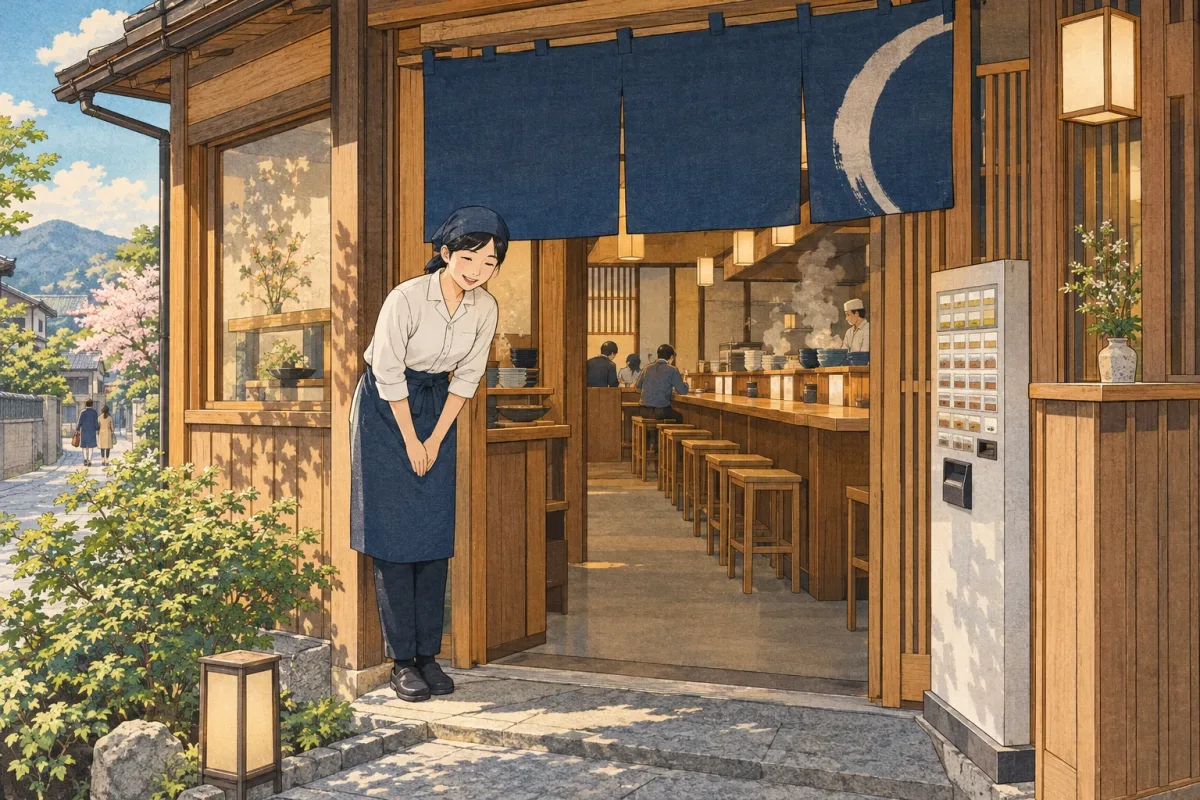
いらっしゃいませ
Welcome!
いらっしゃいませ · irasshaimase
A formal 'come in, welcome'; no reply expected
A greeting you'll hear almost every time you walk into a shop. No reply is needed; a small nod is plenty.
- こんにちは konnichiwa — Hello · Optional; you don't have to say anything
何名様ですか
How many people?
なんめいさまですか · nanmei-sama desu ka
Literally: 'How many honoured guests?'
Asked at the entrance of restaurants. Holding up fingers works too.
- 一人です hitori desu — Just one · Hitori is the word for one person
- 二人です futari desu — Two · Futari is the word for two people
ただいま満席です
Sorry, we're full at the moment
ただいままんせきです · tadaima manseki desu
Literally: 'Right now, every seat is taken'
At some places you write your name and group size on a list at the entrance and wait.
- どのくらい待ちますか dono kurai machimasu ka — How long is the wait? · Literally: 'About how long will I wait?'
- 待ちます machimasu — We'll wait · Machimasu means 'I'll wait' or 'we'll wait'
こちらへどうぞ
This way, please
こちらへどうぞ · kochira e dōzo
Kochira is a polite 'this way'
Said when you're shown to a table or counter. Follow in the direction they point.
- ありがとうございます arigatō gozaimasu — Thank you · The polite form of 'thank you'
店内でお召し上がりですか
Eat in or take away?
てんないでおめしあがりですか · tennai de omeshiagari desu ka
Tennai means 'inside the shop'
Asked at the till in fast-food places, cafés and bakeries. You may also hear 'kochira de omeshiagari desu ka' (eating here?) or 'omochikaeri desu ka' (taking away?).
- 店内で tennai de — Eat in · Literally: 'In the shop'
- 持ち帰りで mochikaeri de — Take away · Mochikaeri means taking it home
以上でよろしいですか
Will that be all?
いじょうでよろしいですか · ijō de yoroshii desu ka
Literally: 'Is it all right with the above?'
The check at the end of your order.
- はい hai — Yes · Yes, that's everything
- あと〇〇もお願いします ato 〇〇 mo onegai shimasu — And 〇〇 as well, please · Ato means 'also' or 'in addition'
温めますか
Would you like it heated?
あたためますか · atatamemasu ka
Asks whether to microwave it
You'll be asked when you buy a bentō (boxed meal), onigiri (rice ball) and the like at a konbini. Say no if you'd rather take it away cold.
- はい、お願いします hai, onegai shimasu — Yes, please · Literally: 'Yes, please (heat it)'
- いいえ、大丈夫です iie, daijōbu desu — No, thank you · Literally: 'No, I'm fine'
お箸はおつけしますか
Would you like chopsticks?
おはしはおつけしますか · ohashi wa otsuke shimasu ka
Literally: 'Shall I put in chopsticks?'
You'll be asked when you buy a bentō or noodles. For a spoon, it's 'supūn wa otsuke shimasu ka'.
- はい、お願いします hai, onegai shimasu — Yes, please · Hai means yes; onegai shimasu means please
- いりません irimasen — No, thank you · Literally: 'I don't need them'
袋はご利用ですか
Would you like a bag?
ふくろはごりようですか · fukuro wa goriyō desu ka
Literally: 'Will you be using a bag?'
They're asking whether you need a carrier bag. If you have your own bag, it's fine to say no.
- お願いします onegai shimasu — Yes, please · Literally: 'Please' (give me one)
- いりません irimasen — No, thank you · Literally: 'I don't need one'
ポイントカードはお持ちですか
Do you have a points card?
ぽいんとかーどはおもちですか · pointo kādo wa omochi desu ka
Asks whether you have the shop's own loyalty card
Asked at the till almost every time. If you don't have one, simply saying no is fine.
- いいえ、ありません iie, arimasen — No, I don't · Literally: 'No, there isn't (one)'
- 大丈夫です daijōbu desu — No, that's fine · Here, a polite 'no need'
お支払いはどうなさいますか
How would you like to pay?
おしはらいはどうなさいますか · oshiharai wa dō nasaimasu ka
Asks which payment method you'll use
They're asking how you'll pay: cash, card, a transport IC card and so on.
- カードで kādo de — By card · Literally: 'With a card'
- 現金で genkin de — Cash · Literally: 'With cash'
お会計はご一緒ですか
Paying together?
おかいけいはごいっしょですか · okaikei wa goissho desu ka
Literally: 'Is the bill together?'
Asked at the till when you've eaten as a group.
- 一緒で issho de — Together · Issho de: all on one bill
- 別々で betsubetsu de — Separately · Betsubetsu de: each person pays for their own
レシートはご利用ですか
Would you like the receipt?
れしーとはごりようですか · reshīto wa goriyō desu ka
Literally: 'Will you be using the receipt?'
You may be asked this at self-checkouts and in small shops.
- はい、ください hai, kudasai — Yes, please · Literally: 'Yes, please give it to me'
- いいえ、大丈夫です iie, daijōbu desu — No, thank you · Literally: 'No, I'm fine'
少々お待ちください
Just a moment, please
しょうしょうおまちください · shōshō omachi kudasai
A polite 'please wait a little'
Said when staff go to check something. Wait where you are.
- はい hai — Sure · Yes (I'll wait)
どちらまでですか
Where to?
どちらまでですか · dochira made desu ka
Literally: 'As far as where?'
You'll be asked your destination at station ticket offices and in taxis. Showing a note or map of where you're going is fine too.
- 〇〇までです 〇〇 made desu — To 〇〇 · Literally: 'It's as far as 〇〇'
- ここまでお願いします koko made onegai shimasu — Here, please · Said while showing a map
白線の内側までお下がりください
Please stand behind the white line
はくせんのうちがわまでおさがりください · hakusen no uchigawa made osagari kudasai
Hakusen means 'white line'
A platform announcement or call from station staff as a train comes in. Keep away from the tracks and wait behind the white line or the tactile paving.
- すみません sumimasen — Sorry · Here it means 'sorry, I'll step back'
Sources
- JNTO: Taxis (自動ドア、チップ不要、カード/現金、行き先を日本語で、空車表示、深夜割増) (opens in a new tab)
- JNTO: How to Travel by Train and Bus in Japan (ICカードのチャージ、精算機、有人改札) (opens in a new tab)
- JNTO: IC Cards (opens in a new tab)
- JNTO: Understanding and Mastering Japanese Manners and Etiquette (すみません、いただきます/ごちそうさまでした、チップ、車内通話) (opens in a new tab)
- JNTO: Vegetarian Guide (だし・鰹節などの隠れた食材、日本語カード) (opens in a new tab)
- 消費者庁: 食物アレルギー表示に関する情報(表示義務は容器包装された加工食品が対象、外食は別扱い) (opens in a new tab)
- 観光庁 消費税免税店サイト【旅行者向け】新制度(リファンド方式)特設ページ (opens in a new tab)
- Japan's Tax Exemption | Travel Japan | JNTO (opens in a new tab)
- Cashless Payments in Japan | Travel Japan (JNTO) (opens in a new tab)
- Japanese Ryokan Guide | Travel Japan (JNTO) (opens in a new tab)
- Wi-Fi in Japan | Travel Japan | JNTO (opens in a new tab)
- How to Best Enjoy Japan's Onsen | Travel Japan (JNTO) (opens in a new tab)
- Responsible Photography in Japan | Travel Japan (JNTO) (opens in a new tab)
- 総務省消防庁「訪日外国人のための救急車利用ガイド」 (opens in a new tab)
- 総務省消防庁「Guide for Ambulance Services 救急車利用ガイド 英語版」(PDF) (opens in a new tab)
- 観光庁・JNTO「Guide for when you are feeling ill」(医療機関の探し方・使い方、緊急連絡先) (opens in a new tab)
- 観光庁・JNTO Safety tips「Helpful Phrases」(災害時コミュニケーションカード) (opens in a new tab)
- 観光庁・JNTO「Safety tips for travelers」(緊急地震速報・津波警報など) (opens in a new tab)
- 警視庁「110番通報から警察官が現場に到着するまで」 (opens in a new tab)
- 警視庁 Multilingual「If you've lost something(落とし物をした方)」 (opens in a new tab)
- 国税庁 タックスアンサー No.6902「総額表示」の義務付け (opens in a new tab)
Checked: 17 October 2026