Japan is Nippon
Should You Rent a Car in Japan? The Licence and Road Rules You Need
A rental car is very handy in rural areas with few trains and buses, such as Hokkaido and Okinawa, but in big cities, where parking is expensive and hard to find, the train is easier. To drive you need a 1949 Geneva Convention International Driving Permit (the booklet type) or a licence from certain
The short answer
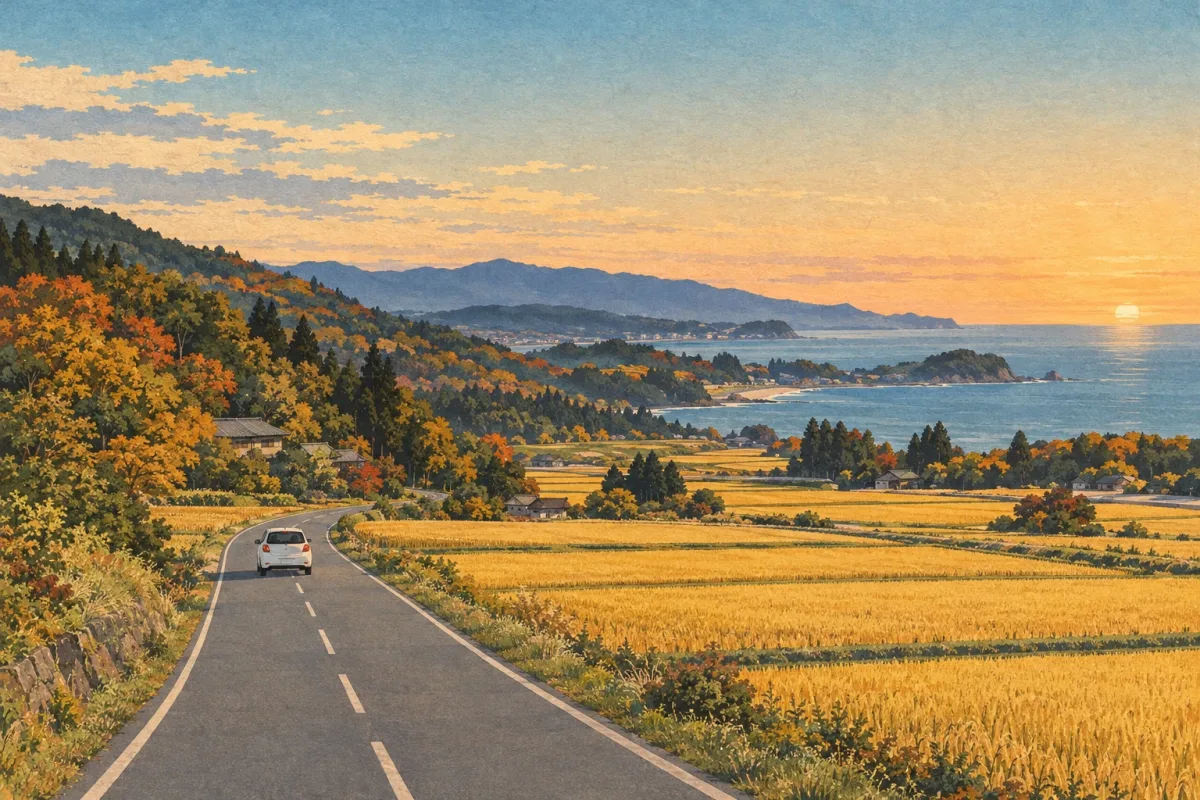
In rural areas where public transport is limited, getting around by car is particularly recommended. Hokkaido and Okinawa are far easier to explore by car, and the roads there are generally easy to drive. If you're heading to areas with only a few buses a day, or to scenic spots a long way from any station, a rental car is a real ally.
Driving in Japan does take some preparation, though. If you don't hold a Japanese licence, you can't drive unless you have either an International Driving Permit or a foreign licence plus a Japanese translation. Either can be used for no more than one year from the day you enter Japan.
Japan drives on the left, and plenty of things will differ from home: 'stop' signs, strict drink-driving limits, snowy roads in winter and more. This article goes through, in order, which trips suit a car and which don't, the licence you need, the traffic rules, expressway tolls and the passes for foreign visitors, winter driving, and what to do about fuel, parking and accidents.
Where is a rental car worth it in Japan, and where don't you need one?
Driving makes most sense in rural areas with limited public transport. The classic examples are Hokkaido and Okinawa, both much easier to get around by car. The fact that unlimited-use expressway passes for foreign visitors are offered in four regions (Hokkaido, Tohoku, San'in-Setouchi-Shikoku and Kyushu) also shows that these regions lend themselves to road trips.
Big cities such as Tokyo and Osaka, on the other hand, don't really call for a car. Parking can be hard to find in city centres, and stopping anywhere other than a designated spot can get you penalised. Car parks in cities and tourist spots are expensive and often tucked away down narrow back streets or underground. Hotels in rural areas often have free parking, whereas in cities paid parking is the norm.
Think about the cost as well. Guide prices for 24 hours with unlimited mileage (fuel not included) are 5,000 to 11,100 yen a day for a subcompact car of 1,000 to 1,300 cc, and 9,000 to 13,500 yen for a compact car of 1,500 to 1,800 cc. Fuel and expressway tolls come on top. A realistic plan is to see the cities by train, then rent a car once you've moved on to the countryside.
Major roads often have signs showing the main destinations in English, but in rural areas there may be no English at all. To be safe, ask the rental company when you book whether they have cars with a satnav that works in foreign languages.
What licence do you need to drive in Japan?
According to the National Police Agency, you can drive in Japan if you hold one of the following: (1) a Japanese driving licence; (2) an International Driving Permit issued under the 1949 Geneva Convention (this is the one for people coming from the United States, Italy, the United Kingdom, Canada, South Korea, Thailand, the Philippines and elsewhere); or (3) a driving licence from Switzerland, Germany, France, Belgium, Monaco or Taiwan, accompanied by a Japanese translation (as of November 2026). International Driving Permits issued under other conventions, such as the 1968 Vienna Convention, can't be used in Japan.
The International Driving Permit that is valid in Japan is the paper booklet type; card-type and smartphone versions can't be used. You need to get your permit before you leave, from the issuing body in your own country, such as its automobile association. The Japanese translation must be produced either by a consulate of the country that issued the licence or by an organisation designated by the National Public Safety Commission. The Japan Automobile Federation (JAF) accepts translation requests online only, and for the six countries and regions above it takes about two to three business days.
You can drive for one year from the day you landed in Japan or until your licence expires, whichever comes first. The International Driving Permit itself is also valid for only one year from its date of issue. Your date of entry is checked from the stamp in your passport, but automated gates don't stamp passports, so get a stamp at a staffed counter. The police may ask to see your passport to check how many days have passed since you arrived.
Foreign residents of Japan need to take care. If you are registered in the Basic Resident Register and come back to Japan within three months of leaving, you can't drive on an International Driving Permit obtained abroad. Long-term residents need to convert their foreign licence to a Japanese one (gaimen kirikae, 'foreign licence conversion'); the conditions are that your licence is valid and that, after getting it, you spent a total of at least three months in the country that issued it. Check the details with the driving licence centre where you live. Driving without a valid licence carries heavy penalties, and the same goes for anyone who lends a car to, or rides with, a driver they know is unlicensed.
Which Japanese road rules catch foreign drivers out?
Japan is one of only a handful of countries in the world that drive on the left. Japanese cars are right-hand drive. One of the most common accidents among foreign drivers happens when turning right at junctions. When you turn right, you must give way to oncoming cars going straight on or turning left, and you must always stop for pedestrians who are crossing or about to cross.
At a red light you can't go straight on, turn right or turn left (when a green arrow is showing, you may go only in the direction of the arrow). Wherever there's a sign reading 止まれ (tomare, 'stop'), you must come to a complete stop and check both ways. Always stop before a level crossing, too, and check that no train is coming. Where no speed limit is posted, the maximum speed for an ordinary passenger car is 60 km/h on ordinary roads and 100 km/h on expressways.
Not just the driver but every passenger must wear a seatbelt, and children under six must ride in a child seat. Using a mobile phone while driving is also banned. You can ask the rental company for a child seat when you book.
Drink-driving is policed very strictly. According to the National Police Agency, 0.15 mg or more of alcohol per litre of breath counts as shuki-obi unten (driving with alcohol in your system), punishable by up to three years' imprisonment or a fine of up to 500,000 yen. Since 21 July 2026, 0.5 mg or more on the breath has also been a threshold for sake-yoi unten (drunk driving), which carries up to five years' imprisonment or a fine of up to 1,000,000 yen. Even below 0.15 mg, drinking and then driving is itself against the law, and anyone who lent the car, served the alcohol or rode along can also be punished. Driving with a hangover is illegal too. 'It was only one drink' gets you nowhere in Japan.
How much are expressway tolls in Japan, and how do ETC cards and visitor passes work?
Japan's expressways are toll roads, and the toll depends on how far you go and which road you take. One route from Tokyo to Kyoto, for example, costs about 10,070 yen. Toll gates have two kinds of lane: lanes marked in green are general lanes where you pay in cash or by credit card, and lanes marked in purple are for ETC (Electronic Toll Collection) only, letting you drive through without stopping. Most rental companies lend ETC cards, and the tolls are settled in one go when you return the car. Go through ETC lanes at 20 km/h or less.
For foreign visitors there are passes that give unlimited use of the eligible expressways for a set number of days. The nationwide Japan Expressway Pass stopped being sold in December 2023, and the passes are now regional. The Hokkaido Expressway Pass costs from 7,700 yen for 4 days to 15,400 yen for 8 days, and the Tohoku Expressway Pass, covering the six Tohoku prefectures, from 8,500 yen for 4 days to 17,000 yen for 8 days (all for standard cars, as of November 2026). Kei cars (Japan's small 'light' cars) are priced a little lower.
The Kyushu Expressway Pass, covering Kyushu's seven prefectures, costs from 6,200 yen for 2 days to 23,800 yen for 10 days, and the San'in-Setouchi-Shikoku Expressway Pass from 10,700 yen for 3 days to 17,700 yen for 10 days. The Kyushu pass is due to stop being sold on 31 March 2027, and applications for the Tohoku pass are likewise accepted only until 31 March 2027 (as of November 2026).
All of the passes are for travellers with a non-Japanese passport (or Japanese nationals with permanent residency abroad) who hold a licence that lets them drive in Japan. You apply through the rental company together with the ETC card, and the price doesn't include the car rental itself. Some rental companies, including major ones, don't currently handle the Kyushu pass, so check before you book.
Is it safe to drive in snowy parts of Japan in winter?
In areas with heavy snow, you need winter tyres or tyre chains. The rules of every prefecture except Okinawa require anti-slip measures such as winter tyres on snowy or icy roads, and breaking them can bring a penalty fee (6,000 yen for ordinary cars, 7,000 yen for large vehicles). If you're renting a car in snow country in winter, make sure when you book that it comes with studless tyres (tyres made for snowy roads).
Something else worth knowing about is chain restrictions. These apply during exceptionally heavy snowfall, of the kind that brings a heavy snow emergency warning or an emergency announcement about heavy snow, and allow only vehicles fitted with tyre chains through sections where large numbers of vehicles have been stranded before, such as mountain passes with steep slopes. Because even cars on studless tyres have got stuck in heavy snow, neither studless-tyred cars nor 4WD vehicles can get through without chains while a restriction is in force.
Any chains sold at car accessory shops and the like will do, whether metal, urethane or rubber, or fabric covers, but spray-on anti-slip products won't get you through. As a rule, chains go on the drive wheels.
On snow, pull away gently and avoid sudden manoeuvres. Icy roads are more slippery than snowy ones, and bridges, overpasses and road entrances and exits need particular care. Carry chains in the car even if you have winter tyres. If a blizzard leaves you unable to see ahead, turn on your hazard lights, stop somewhere safe and clear the snow from around the exhaust pipe so that it doesn't get blocked and cause carbon monoxide poisoning.
What about petrol stations, parking and accidents?
Japanese petrol stations are either full-service, where staff fill up the car for you, or self-service, where you do it yourself. You can spot a self-service station by the セルフ ('self') sign at the entrance. The nozzles are colour-coded: red for regular, yellow for high-octane and green for diesel (keiyu). Before filling up, touch the static discharge pad and wait for the attendant in the office to give the safety check. As a rule you return a rental car with a full tank, and many stations in rural areas close at night, so fill up early.
The usual car park is the pay-by-time kind (often called 'coin parking'), where you pay at the exit gate or at a payment machine. In many of them paying at the machine opens the gate or lowers the lock bar under your car, and department stores and some tourist spots have free parking. The more than 1,160 michi-no-eki ('roadside stations', rest areas along national highways) around the country have parking and toilets you can use 24 hours a day.
If you have an accident, always report it to the police on 110, even if nobody is hurt. If someone is injured, give first aid, call 119 for an ambulance and report it on 110 as well. First move the car somewhere safe and switch off the engine, and ask people nearby to call if you can't phone yourself. Leaving the scene may be treated as a hit-and-run.
Once you've reported it to the police, contact the rental company too. Rental companies often have a 24-hour line for accidents and emergencies, so check the contact details when you pick up the car. Rental cars must carry insurance with a certain level of cover, which differs from company to company, and it's wise to check the car for scratches and dents together with the staff before you set off.
Tips
- Get your International Driving Permit in your home country before you leave. Only the paper booklet type issued under the 1949 Geneva Convention is valid in Japan; card-type and smartphone versions are not (as of November 2026).
- If you use an automated gate at immigration, your passport won't be stamped. If you plan to drive, get an entry stamp at a staffed counter.
- Use trains in the cities and a car in the countryside. If you'll be on expressways for several days, apply for the unlimited-use pass for foreign visitors in Hokkaido, Tohoku, San'in-Setouchi-Shikoku or Kyushu through a rental company that handles it.
- Renting in snow country in winter? Book a car with studless tyres. While chain restrictions are in force, you can't get through without chains, even with studless tyres or 4WD.
- After an accident, call 110 even if nobody is hurt (and 119 as well if someone is). Check the rental company's 24-hour contact details when you pick up the car so you can call them afterwards.
Sources
- Follow the Rules for Safe Driving in Japan (National Police Agency) (opens in a new tab)
- To all foreigners driving in Japan: International Driving Permits / Foreign Driver's Licenses + Translation (National Police Agency) (opens in a new tab)
- みんなで守る「飲酒運転を絶対にしない、させない」(警察庁 飲酒運転の罰則等) (opens in a new tab)
- If I leave Japan and obtain an international driving permit overseas, can I drive with that permit after returning to Japan? (Tokyo Metropolitan Police Department) (opens in a new tab)
- Driving in Japan with a foreign driver's license (JAF) (opens in a new tab)
- Traffic Rules in Japan (JAF) (opens in a new tab)
- Driving Tips (JAF) (opens in a new tab)
- Emergency Measures (JAF) (opens in a new tab)
- Things to know when renting a car (Japan National Tourism Organization) (opens in a new tab)
- Road tripping in Japan: The checklist (Japan National Tourism Organization) (opens in a new tab)
- Expressway Passes (Japan National Tourism Organization) (opens in a new tab)
- [Foreign Visitors to Japan Only] Hokkaido Expressway Pass (NEXCO East Drive Plaza) (opens in a new tab)
- [Visitors to Japan only] Tohoku Expressway Pass (NEXCO East Drive Plaza) (opens in a new tab)
- Kyushu Expressway Pass (KEP) - West Nippon Expressway Company Limited (opens in a new tab)
- San'in-Setouchi-Shikoku Expressway Pass (SEP) - West Nippon Expressway Company Limited (opens in a new tab)
- チェーン規制について(Q&A)(国土交通省) (opens in a new tab)
- 大雪時の道路交通の確保に向けた取り組みについて(チェーン規制の検討状況)(国土交通省) (opens in a new tab)
- 大規模な立ち往生を防止するために(チェーン規制)(国土交通省北陸地方整備局・NEXCO東日本・NEXCO中日本) (opens in a new tab)
- 冬期は事前の冬用タイヤ・チェーンの装着携行をお願いします(国土交通省四国地方整備局) (opens in a new tab)