Japan is Nippon
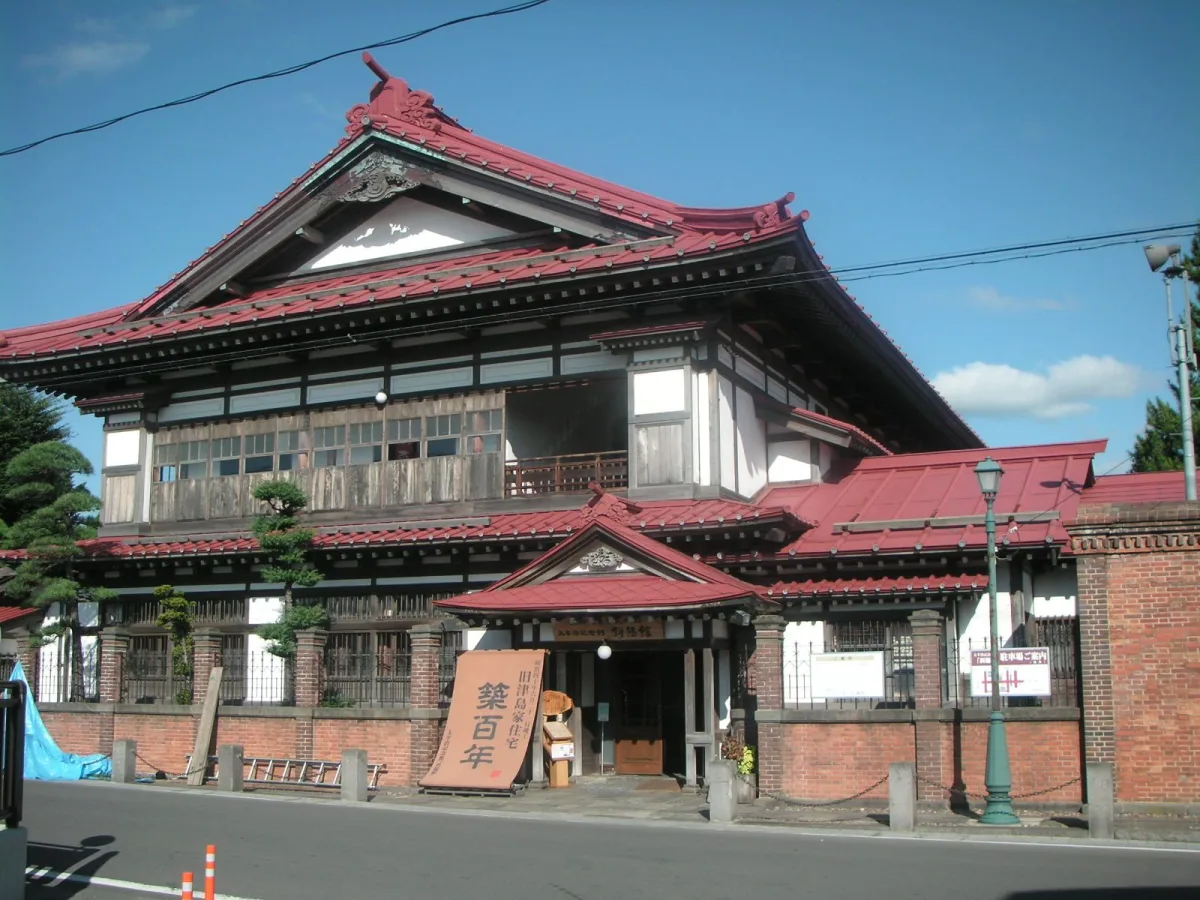
Dazai Osamu Memorial Museum "Shayokan"
太宰治記念館 斜陽館
The Tsugaru mansion where Dazai Osamu, author of The Setting Sun, was born. Walk its Meiji-era rooms behind red-brick walls and see his manuscripts and his cape.
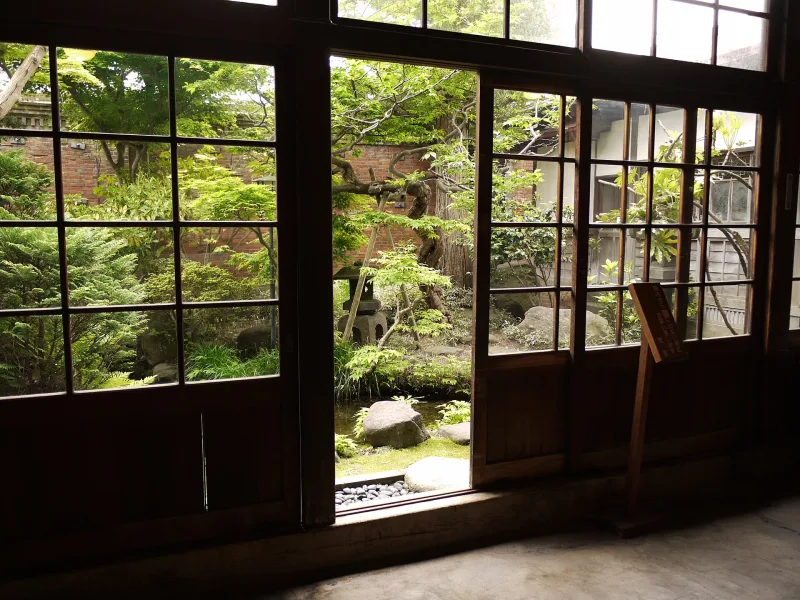
The family home built by a great landowner
Dazai Osamu was a Japanese writer known for novels such as The Setting Sun (Shayo) and Tsugaru. His real name was Tsushima Shuji. He was born in this house in 1909, in the town of Kanagi in the Tsugaru region of Aomori Prefecture, the tenth of eleven children.
The house was built by his father, Tsushima Gen'emon. The Tsushima family had grown rich from moneylending and trade in the Meiji era and become one of the biggest landowners in Tsugaru, and Gen'emon also served as a bank president and a member of the House of Representatives. Completed in 1907, the house was both a home and the premises of the family's moneylending business. It was designed by Horie Sakichi, a master carpenter who built many Western-style buildings in Tsugaru. Hiba, a cypress wood that is a speciality of Aomori, was used throughout, right down to the rice storehouse, and a red-brick wall 4 m high surrounded the whole mansion. Dazai lived here until he was 13, and in 1945, the year the war ended, he came back to Kanagi with his family to escape the bombing and spent about a year here.
From inn to museum
After the war, land reform cost the Tsushima family most of their land, and in 1948 they sold the house. From 1950 it was run as an inn named Shayokan after The Setting Sun (Shayo), one of the great works of Dazai's last years. Fans came from all over Japan to stay in the house where he was born.
In 1996 the former town of Kanagi bought the house, restored it to its original look and opened it in 1998 as the Dazai Osamu Memorial Museum. In 2004 the main house, storehouses, brick wall and other parts were designated an Important Cultural Property of Japan as the Former Tsushima Family Residence.
A house of Japanese and Western styles, and its exhibits
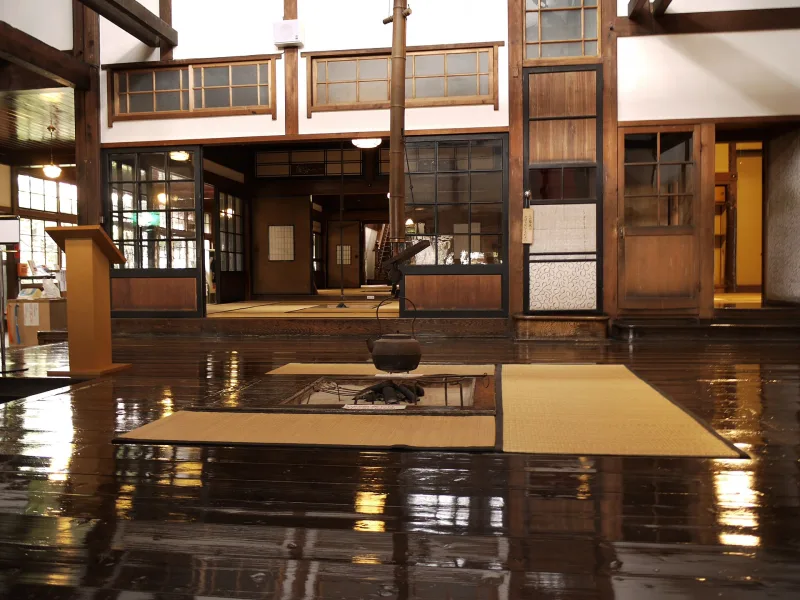
The wooden house has two storeys, with 11 rooms on the ground floor and 8 upstairs. Its layout follows the traditional Tsugaru townhouse, but it mixes in elements of Meiji-era Western architecture: the Western-style business area that once held the bank counter, the stair hall and the Western-style reception room upstairs. Walking through the large tatami rooms gives you a feel for how the Tsushima family lived.
The exhibition rooms in the storehouses display about 300 items, including handwritten manuscripts, first editions, letters, the writing tools he used and the cape he actually wore. Throughout fiscal 2026 (until 22 March 2027), a special exhibition, "Dazai Osamu: On the Road - His Travels and Works", looks at the works that grew out of his journeys.
Getting there
The museum is about a 7-minute walk from Kanagi Station on the Tsugaru Railway. By car, it is about 15 minutes from Goshogawara-Kita IC on the Tsugaru Expressway. Check the official website for opening hours and admission fees.
Tips
- A combined ticket covers this museum and the nearby Tsugaru Shamisen Hall, run by the same non-profit. If you would like to hear Tsugaru shamisen too (a style of playing the three-stringed shamisen born in the Tsugaru region), visit both.
- Read Dazai's Tsugaru or Recollections before you go, and the house and the town of Kanagi will look different to you.
- Unlike in its days as an inn, you can no longer stay the night here.
Sources
- 太宰治記念館「斜陽館」 | かなぎ元気倶楽部(運営者公式) (opens in a new tab)
- 太宰治記念館「斜陽館」 | 五所川原市公式観光サイト (opens in a new tab)
- 太宰治記念館「斜陽館」 | 旅東北(東北観光推進機構) (opens in a new tab)
- 太宰治記念館「斜陽館」 | ウォーカープラス (opens in a new tab)
- 斜陽館 - Wikipedia (opens in a new tab)
Updated 21 November 2026. Opening hours and prices change, so check the official site before you go.