Japan is Nippon
Osorezan Bodaiji Temple
恐山菩提寺
A sacred site deep in the Shimokita Peninsula where rocks hiss with volcanic gas beside a white-sand lake. Locals say "when you die, you go to the mountain".
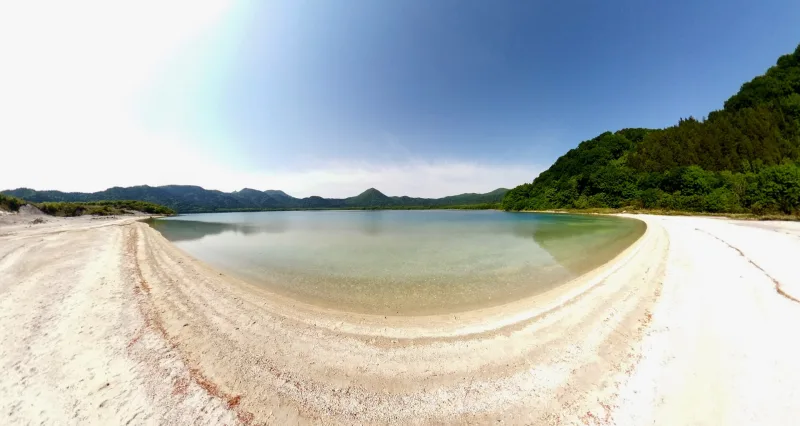
The sacred place "closest to the next world"
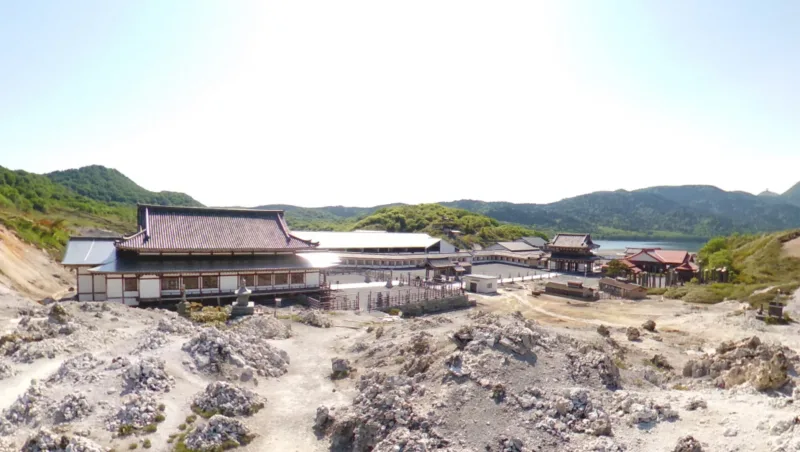
Osorezan is a sacred site in the middle of the Shimokita Peninsula in Aomori Prefecture. Oddly, there is no single mountain called Osorezan; the name covers the group of peaks in the centre of Shimokita, including Mount Kamabuse. Surrounded by these peaks is Lake Usori, a caldera lake (a lake filling the hollow left by a volcanic eruption), and on its shore stands Osorezan Bodaiji Temple, which belongs to the Soto school of Zen.
According to tradition, the temple was founded about 1,200 years ago by a monk called Jikaku Daishi Ennin, and its principal image is a statue of Enmei Jizo (the bodhisattva Jizo, here as a granter of long life) said to have been carved by Ennin himself. In the Shimokita area people have long believed that the dead go to Osorezan, so even today people who have lost family members come here from all over Japan to remember them.
Walking through hell and paradise
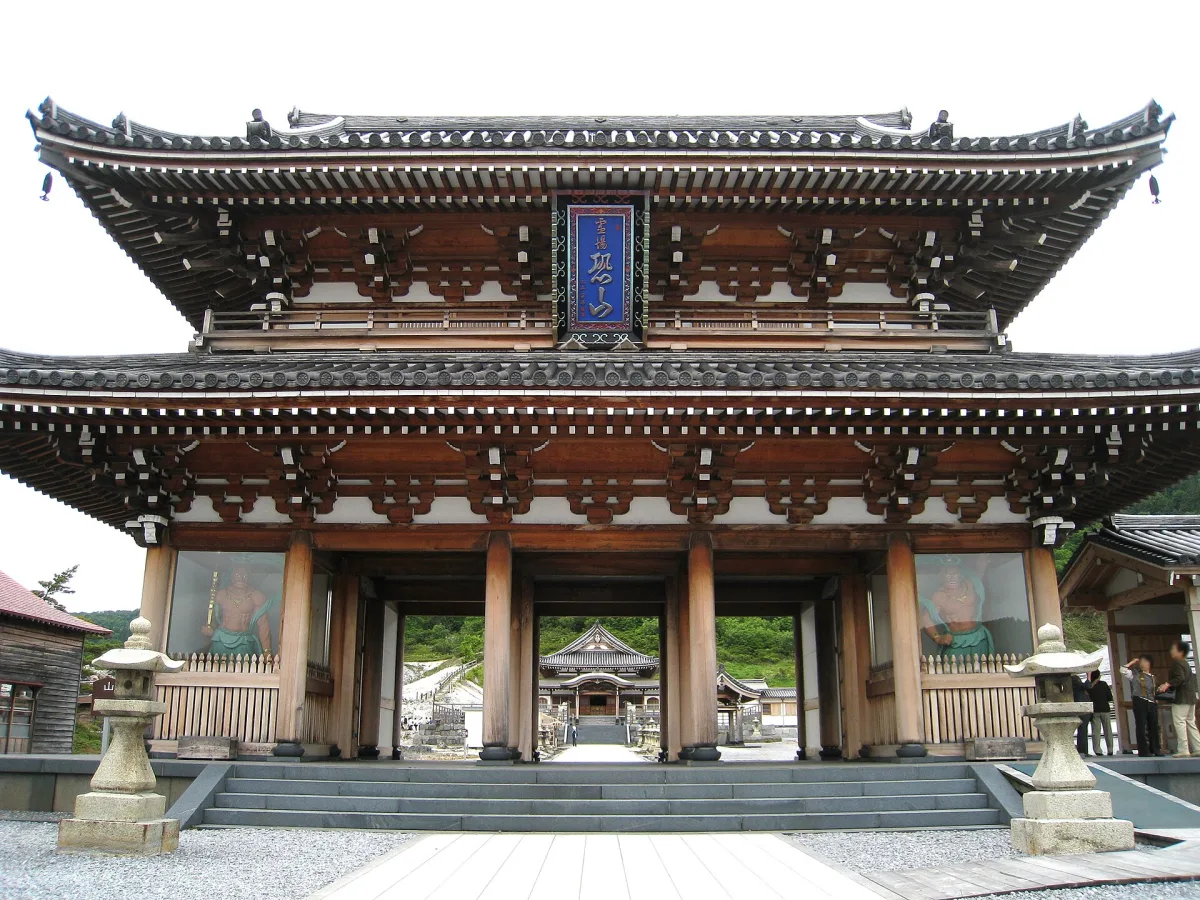
The river flowing out of the lake is called the Sanzu River, the river that in Buddhism separates this world from the next, and an arched bridge crosses it. The approach runs straight from the outer gate through the main gate to the Jizo Hall, which houses the principal image. To its left spreads a rocky field covered in volcanic debris, with gas venting here and there. This harsh landscape has been seen as "hell" since ancient times.
Below the rocks lies Sai no Kawara, a riverbank covered with countless little piles of stones. The name comes from the legend that children who died before their parents pile up stones there to make offerings; today many people stack stones for anyone dear to them, not only children. Pinwheels stand in place of flowers, and towels and straw sandals are tied to the trees, because the dead are thought to need them as they travel between Osorezan and the next world.
Further on, by the lake, is Gokuraku-hama ("Paradise Beach"), a stretch of white sand. Volcanic gas rises from the lakebed and the water is strongly acidic, yet a fish called the ugui (Japanese dace) has adapted to live in it. On the beach is a statue of Jizo dedicated to the victims of the Great East Japan Earthquake. The route around the site is about 3 km and takes about 40 minutes on foot.
Hot springs and temple lodging
Osorezan is thought to have been known as a place to bathe in hot springs for healing even before it became a sacred site. There are four bathhouses with sulphur springs in the grounds, and visitors can use them. There is also a shukubo (temple lodging) where pilgrims can stay, but it is not like an ordinary inn: there are rules, such as joining the morning service, and the meals are shojin ryori, Buddhist cuisine made without meat or fish.
During the grand festival every July and the autumn pilgrimage in October, mediums called itako set up tents in the grounds and perform kuchiyose, passing on the words of the dead. Itako are not at Osorezan all the time, however, and they are separate from the temple.
Getting there
You can visit only during the open season, from May to October each year. During that time, Shimokita Kotsu's Osorezan Line bus runs four or five times a day from Shimokita Station on the JR Ominato Line. In 2026 the temple closed on 7 November, and it next opens in spring 2027. Check the official website for opening dates and hours.
Tips
- The temple is closed from November to April, and you cannot enter the grounds. In 2026 it closed on 7 November, when the prefectural road up to Osorezan closed.
- Volcanic gas comes out of the ground in places, so stay on the marked route.
- Do not touch or take away any of the statues, stones or plants in the grounds.
- Mountain weather changes quickly, and even in the open season visits are sometimes cancelled because of bad weather. Check the official website before you go.
Sources
- 霊場恐山(公式) (opens in a new tab)
- 参拝のご案内 | 霊場恐山(公式) (opens in a new tab)
- 霊場恐山で地獄と極楽を歩く | 青森県観光情報サイト Amazing AOMORI (opens in a new tab)
- 恐山エリア | 下北ジオパーク (opens in a new tab)
- 恐山 - Wikipedia (opens in a new tab)
Updated 21 November 2026. Opening hours and prices change, so check the official site before you go.