Japan is Nippon
Nagasaki Confucius Shrine and Museum of Chinese History
長崎孔子廟中国歴代博物館
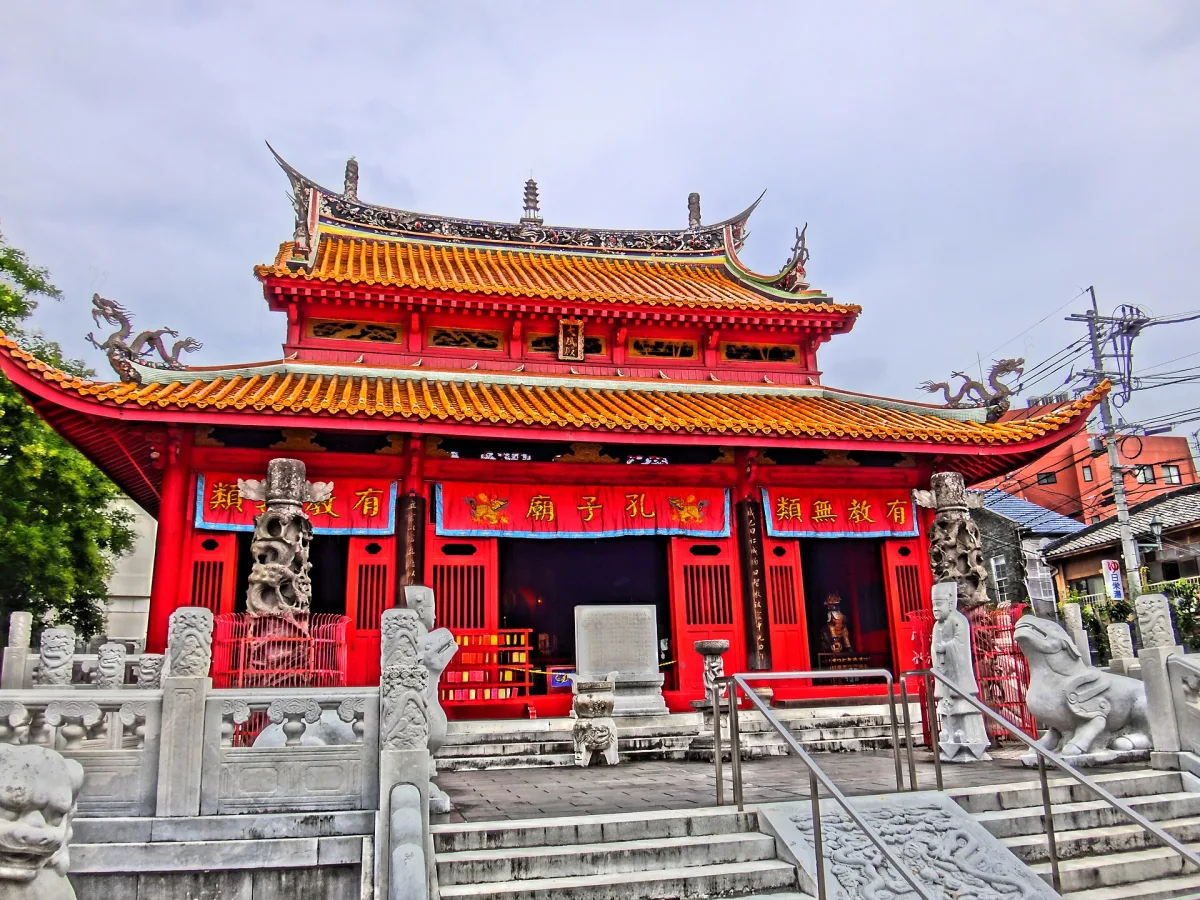
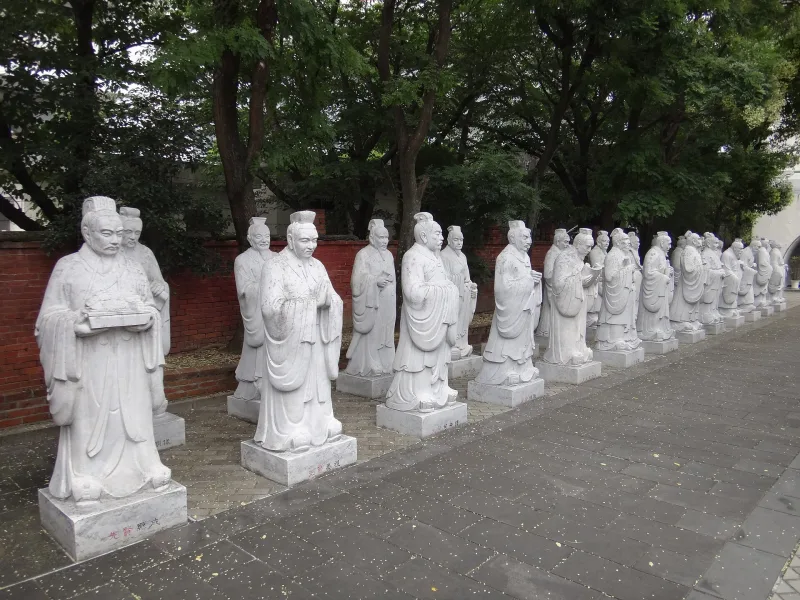
Japan's only authentic Chinese-style Confucius shrine, built in 1893 by the Qing government and Nagasaki's Chinese. Vivid halls and 72 stone statues.
A shrine that links Nagasaki and China
A Confucius shrine (koshibyo) is a building dedicated to Confucius, the Chinese thinker known for the Analects. In Nagasaki, the Confucian scholar Mukai Gensho opened the first Confucius shrine back in 1647, in the Edo period.
Today's Nagasaki Confucius Shrine was built in 1893 (the 26th year of the Meiji era) by the government of Qing China working together with Chinese people living in Japan, and it is said to be the only authentic Chinese-style Confucius shrine in the country. In 1905 a school for Chinese children also opened in the grounds. A major renovation in 1967 gave the shrine its present appearance.
The Main Hall and the 72 stone statues
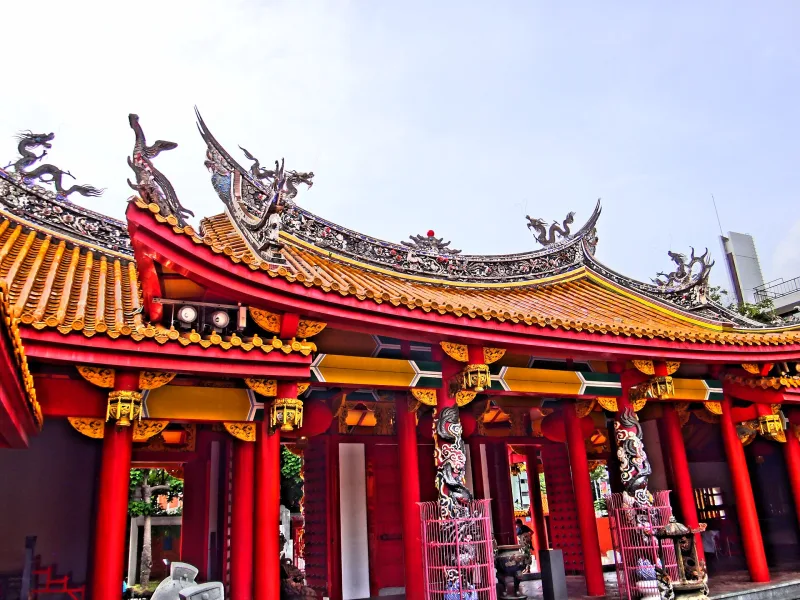
Through the gate stand Chinese-style buildings painted in a riot of bright colours, with dragons and phoenixes decorating the roofs.
The main hall, the Taisei-den, houses what is said to be the largest seated statue of Confucius in Japan. Lining the grounds are marble statues of 72 of his disciples, each weighing about 1.5 tonnes. Every face is different, so take your time comparing them.
The Museum of Chinese History
Behind the Taisei-den, the Museum of Chinese History opened in 1983 to promote mutual understanding and cultural exchange between Japan and China. It displays cultural artefacts of national-treasure quality lent by museums in China. In 2012 an archive hall was added, with materials on the history of the Confucius shrine.
From time to time there are also performances of henmen ("face-changing"), a traditional Chinese art in which the performer's mask changes in an instant. No booking is needed, and the dates are announced on the official website.
Getting there
From Nagasaki Station, take the tram, change at Shinchi Chinatown to a tram bound for Ishibashi and get off at Ishibashi stop. From there it is about a 3-minute walk.
The shrine is in the former foreign settlement, the same area as Glover Garden and Oura Cathedral, and you can walk between them. Check the official website for opening hours and admission.
Tips
- The face-changing show dates are announced month by month. If you want to see it, check the performance days on the official website before you go. On rainy days it takes place in the covered corridor.
- It is in the former foreign settlement, the same area as Glover Garden and Oura Cathedral, so it fits easily into a half-day walk.
- The museum sometimes closes temporarily when exhibits are changed or for maintenance.
Sources
- 長崎孔子廟中国歴代博物館(公式) (opens in a new tab)
- 長崎孔子廟について(公式) (opens in a new tab)
- 長崎孔子廟 中国歴代博物館 - ながさき旅ネット (opens in a new tab)
- 長崎孔子廟 中国歴代博物館 - 長崎市公式観光サイト あっと!ながさき (opens in a new tab)
Updated 30 September 2026. Opening hours and prices change, so check the official site before you go.