Nagasaki Peace Park
平和公園
A hilltop park overlooking land struck by the atomic bomb on 9 August 1945. Before the great Peace Statue, you can mourn the victims and reflect on peace.
A park on land struck by the atomic bomb
On 9 August 1945, an atomic bomb was dropped on Nagasaki. Nagasaki Peace Park was created on and around the hypocentre (the point directly below where the bomb exploded), and it carries a vow never to repeat the horrors of war and a wish for lasting world peace. Construction began in 1951 and the park opened in 1955.
The park is divided into zones, including the Zone of Prayer at the hypocentre, the Zone of Learning with the Nagasaki Atomic Bomb Museum, and the Zone of Hope with the Peace Statue. The part that most people call "Peace Park" and that visitors come to see is the Zone of Hope, on a low hill north of Hypocenter Park. From the top of the hill you can look out over the area devastated by the bomb.
The Peace Statue and the Fountain of Peace
At the heart of the park stands the Peace Statue, made by the Nagasaki-born sculptor Kitamura Seibo. Completed in 1955, the bronze figure is about 9.7 metres tall and weighs about 30 tonnes. The right hand pointing to the sky represents the threat of the atomic bomb, the left hand stretched out level represents peace, and the gently closed eyes express prayers for the repose of the victims' souls.
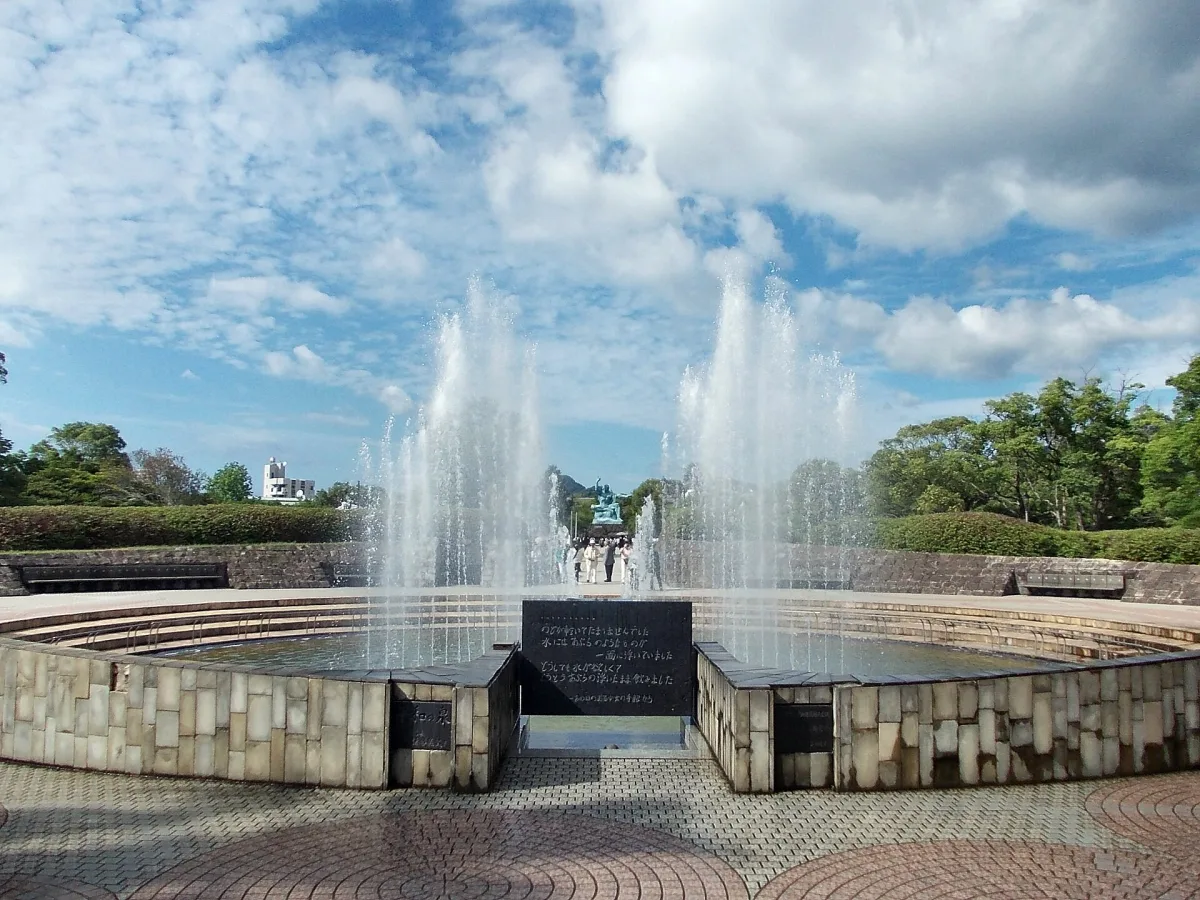
In front of the statue is the round Fountain of Peace, built in 1969. People burned to the core by the heat of the bomb died begging for water, and the fountain was made to offer water to them. On the stone monument at the front is carved the account of a girl who was 9 years old when she was exposed to the bomb, describing how she drank water with oil floating on it.
Traces of the bomb and monuments in the park
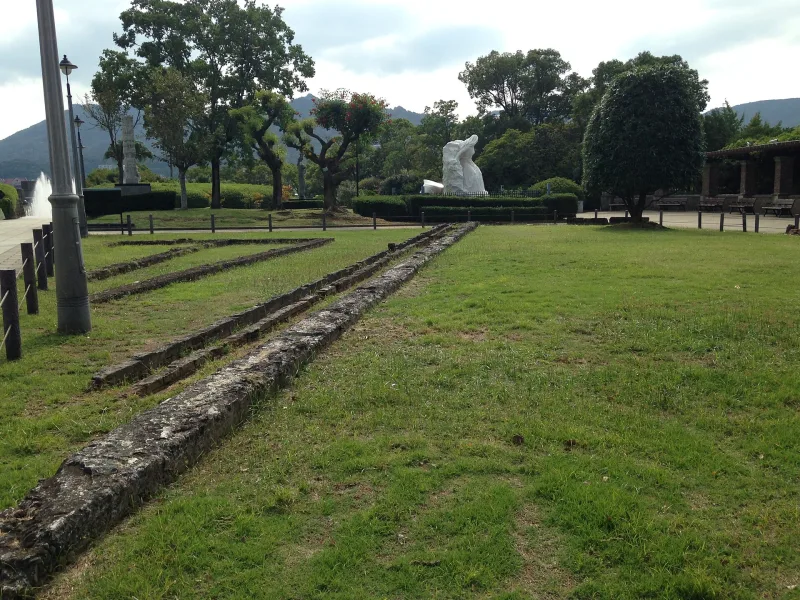
When the bomb fell, the site of today's park was occupied by the Urakami branch of Nagasaki Prison. It was the public facility closest to the hypocentre, and near the front of the Peace Statue, part of the wall that once surrounded the prison still remains in the ground.
The park is lined with peace monuments donated by countries around the world, and there is also the Nagasaki Bell, made in 1977. Every year on 9 August, the Nagasaki Peace Memorial Ceremony for the victims of the atomic bombing is held in front of the Peace Statue, and a Peace Declaration is delivered to the world.
Getting there and getting around
From Nagasaki Ekimae, take a tram (Line 1 or 3, bound for Akasako) for about 15 minutes, get off at the Heiwa Koen (Peace Park) stop and walk for about 3 minutes. Climb the stone steps from the entrance on the tram stop side and you come out first at the Fountain of Peace. You can also get there by bus from Nagasaki Ekimae.
Hypocenter Park, the Nagasaki Atomic Bomb Museum and the Nagasaki National Peace Memorial Hall for the Atomic Bomb Victims are all nearby, and Nagasaki City's tourism website suggests a half-day route combining Peace Park and the Atomic Bomb Museum.
Tips
- This is a place to mourn the victims. When taking photos or talking, be considerate of the people around you who are praying.
- On the evening before the Peace Memorial Ceremony, many candles are lit around the Fountain of Peace in a vigil to remember the victims.
Sources
- 平和公園(平和祈念像・平和の泉) | 長崎市公式観光サイト travel nagasaki
- 願いのゾーン - 長崎市ウェブサイト
- 平和公園 | 長崎県文化財データベース
- 平和公園 - 長崎原爆資料館 遺構コースマップ
Updated 29 September 2026. Opening hours and prices change, so check the official site before you go.