Japan is Nippon
Expo '70 Commemorative Park
万博記念公園
A park of about 260 hectares on the site of Expo '70 in Osaka, home to Taro Okamoto's Tower of the Sun, which you can go inside, and a vast Japanese garden.
The site of the 1970 Osaka Expo
Expo '70 Commemorative Park is in Suita, Osaka Prefecture. It was laid out on the former site of the Japan World Exposition (Osaka Expo) held in 1970, and covers about 260 hectares.
The park divides broadly into the Natural and Cultural Gardens, where the Tower of the Sun stands, the Japanese Garden, and an area of cultural facilities such as museums plus sports facilities. The National Museum of Ethnology and the Japan Folk Crafts Museum Osaka are also inside the park.
The Tower of the Sun, inside and out
The symbol of the park is the Tower of the Sun (Taiyo no To), designed by the artist Taro Okamoto. It was built as part of the Expo's theme pavilion and stands about 71m tall. The Golden Face at the top represents the future, the Face of the Sun on the front the present, and the Black Sun on the back the past. On 27 August 2025 it was designated a national Important Cultural Property (as a structure).
Inside the tower rises the Tree of Life (Seimei no Ki), about 41m tall, fitted with 292 models tracing the evolution of life, from primitive amoeba-like creatures all the way to humans. The interior was closed for about 50 years after the Expo, but has been open to the public again since March 2018.
A Japanese garden that walks you through history
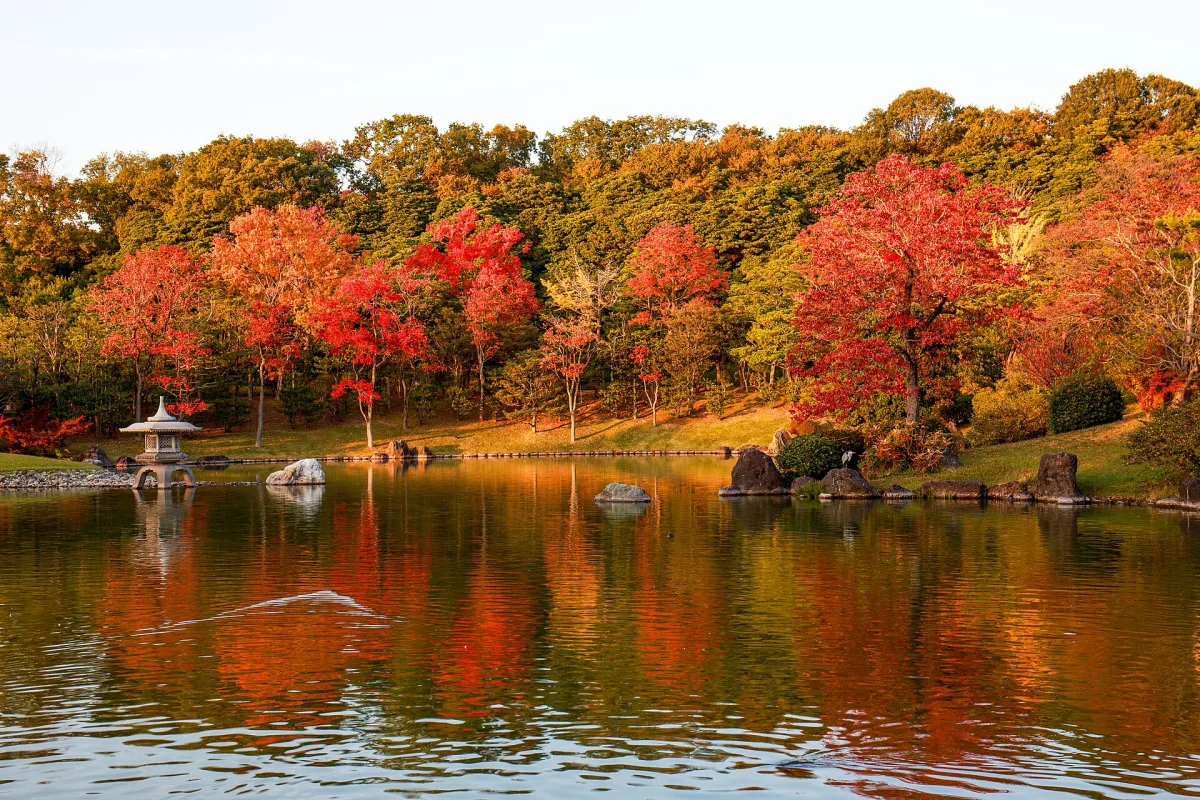
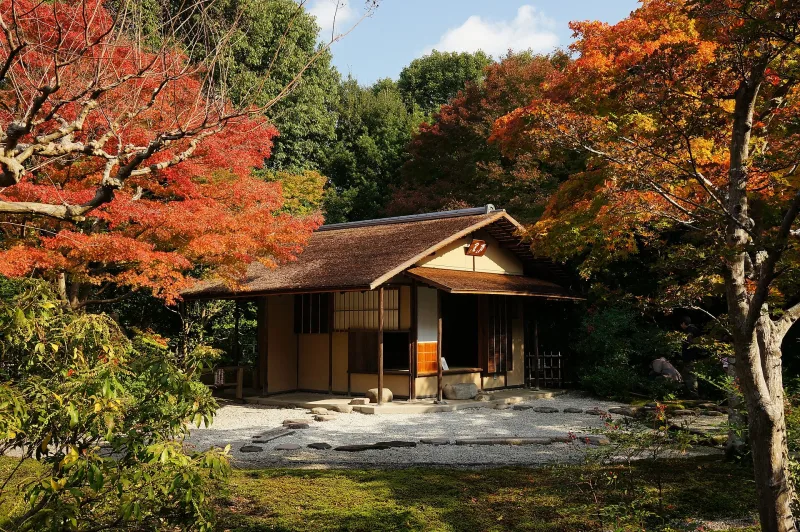
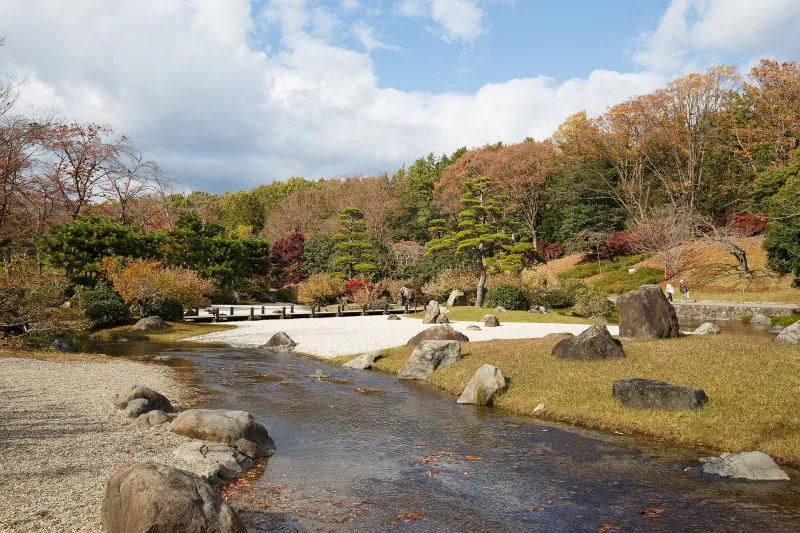
The Japanese Garden was created for the Expo as the government's exhibit. It covers 26 hectares and stretches about 1,300m from east to west. Following a stream that flows from west to east, it sets out garden styles from four eras in order: ancient, medieval, early modern and modern.
The medieval section has a karesansui (dry landscape garden), where stones and sand stand for flowing water, and the early modern section is a stroll garden laid out around a shinji-ike, a pond shaped like the kanji character for "heart" (心). In the Natural and Cultural Gardens, cherry blossoms and other seasonal flowers bloom, and flower events are held in autumn.
Getting there
From Banpaku-kinen-koen Station on the Osaka Monorail, it is about a 10-minute walk to the Tower of the Sun. For the Japanese Garden, Koen-higashiguchi Station is also convenient.
Opening hours and admission fees can change, so check the official website.
Tips
- Tours inside the Tower of the Sun give priority to reservations, which you can make on the official website up to the day before. Same-day tickets are sold if there is space, but not on days when bookings fill every slot, so booking ahead is the safe option.
- On the day of your tower visit you also need an admission ticket for the Natural and Cultural Gardens, separate from the tower's own entry fee.
- Cosmos and kochia events are planned for October 2026.
Sources
- 万博記念公園 公式サイト (opens in a new tab)
- 太陽の塔|万博記念公園 (opens in a new tab)
- 万博記念公園 太陽の塔が重要文化財(建造物)に指定|万博記念公園 (opens in a new tab)
- 太陽の塔内部観覧の当日券試行販売のおしらせ|万博記念公園 (opens in a new tab)
- 日本庭園|万博記念公園 (opens in a new tab)
- 万博纪念公园(中国語版)|万博記念公園 (opens in a new tab)
- 太陽の塔の入館について知りたい。|大阪府 (opens in a new tab)
- 太陽の塔(万博記念公園)|OSAKA-INFO(大阪観光局) (opens in a new tab)
Updated 30 September 2026. Opening hours and prices change, so check the official site before you go.