Japan is Nippon
Hamamatsu Festival
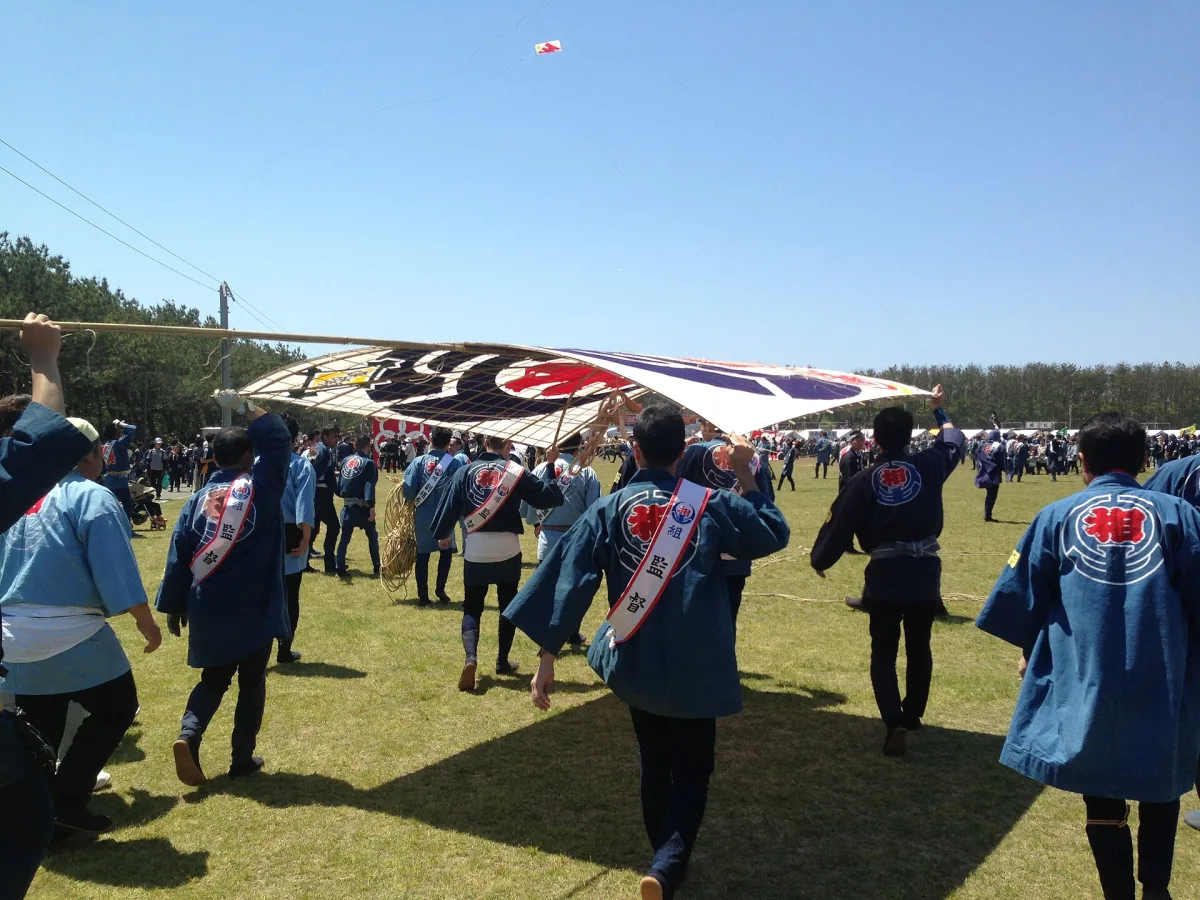
Giant kites bearing babies' names battle to cut each other's lines over the sea; at night, ornate floats and bugles fill Hamamatsu. Three days each May.
Shizuoka
- ShizuokaThe Nakatajima kite-flying grounds in Hamamatsu (kite battles) and the city centre (goten-yatai float parades)
Recent years
| Year | Dates | Visitors | Notes |
|---|---|---|---|
| 2026 | 3–5 May | 2,413,000 (organisers' figure) | 173 neighbourhoods took part in the kite flying, the same as the year before. Rain on the afternoon of the first day cancelled that day's goten-yatai parades. The kite-flying grounds drew more people than the previous year. |
| 2025 | 3–5 May | 2,493,000 (organisers' figure) | Blessed with good weather, with the festive events running longer than usual. The crowds were the second largest on record. |
| 2024 | 3–5 May | just over 2,450,000 (organisers' figure) | With drinking by participants allowed again, it was the first "full" festival in the same form as before the pandemic in five years. |
| 2023 | 3–5 May | 2,555,000 (organisers' figure) | Neri parades and line-cutting kite battles were allowed again for the first time in four years (drinking was still banned). A mounted samurai procession joined by cast members of the NHK historical drama "What Will You Do, Ieyasu?" helped draw record crowds. |
When and where is it held?
The Hamamatsu Festival (Hamamatsu Matsuri) takes place in Hamamatsu City, Shizuoka Prefecture, every year from 3 to 5 May. By day there are kite battles at the kite-flying grounds in the Nakatajima sand dunes by the sea, and by night goten-yatai (palace-style floats) are paraded through central Hamamatsu. It is organised by the Hamamatsu Festival Organising Committee, made up of the Hamamatsu and Lake Hamana Tourism Bureau and others.
The Hamamatsu Festival is not a shrine or temple festival but a "city festival" made by local people. More than 170 neighbourhoods take part in the kite flying and more than 80 in the night-time float parades, and anyone can join in, from children to the elderly, men and women alike.
According to the organisers, more than 2 million people come every year. In 2026 the total over the three days was 2,413,000.
Hatsudako: kites celebrating a new baby
At the heart of the festival is the custom of hatsudako (first kites). A family with a new baby prepares a big kite bearing the family crest and the name of the baby (the uigo, or first-born), and the neighbourhood's young men (wakashu) fly it high in the sky together with the family, wishing the child healthy growth. The higher the kite flies, the more robustly the child is said to grow.
As for how it began, legend has it that between about 1558 and 1569, kites were flown inside Hikuma Castle to celebrate the birth of the eldest son of its lord, who ruled the area at the time. Even the official website says this is "not clear from the records", however, and kites first appear in records in the Kansei era at the end of the 18th century. With the strong winds known as "Enshu no karakkaze" (the dry wind of Enshu), the region has always been well suited to kite flying.
Kite battles between neighbourhoods took off properly around 1887 (Meiji 20). From 1919 they were held at Wajiyama, a former army training ground, and after a break during the war they were revived in 1948 at a new venue, Nakatajima. The name "Hamamatsu Matsuri" dates from 1950.
Kite battles in the sky
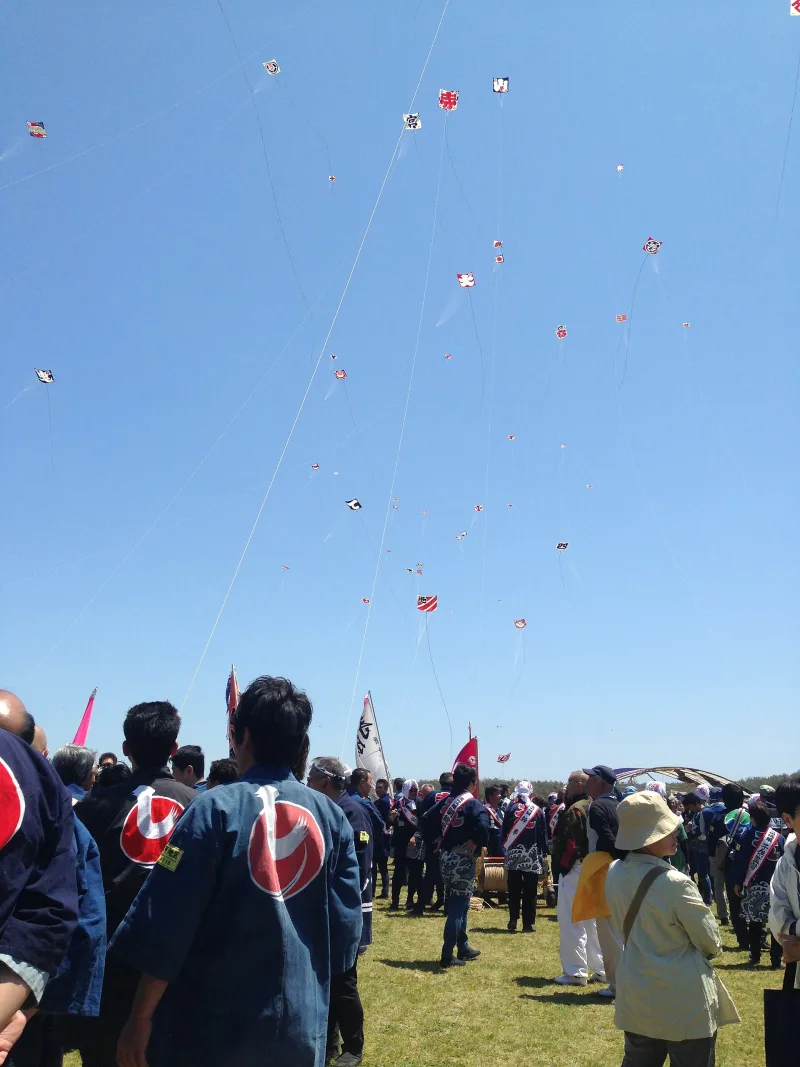
On the morning of 3 May, opening fireworks give the signal and kites from every neighbourhood go up at once, filling the sky. Kite sizes are measured in jo, ranging from 2 jo to 10 jo; most hatsudako are 4-jo kites, about 2.4 metres a side. The 4-jo and 6-jo (about 2.9 metres a side) kites are said to be best for battle.
In a battle, each side tangles its hemp line, about 5 millimetres thick, with an opponent's and cuts it through friction as the lines rub together. That is why they are also called "kenka-dako" (fighting kites). Amid the smell of scorching line and the swirling sand, hundreds of people surge back and forth to the sound of bugles, an impressive sight.
At the grounds you can also see "neri", where groups from each neighbourhood in happi coats (festival jackets) parade with a shuffling step, chanting "Oisho, yaisho!". The signal bugles played by children are another sound you will only hear at the Hamamatsu Festival.
Goten-yatai and neri at night
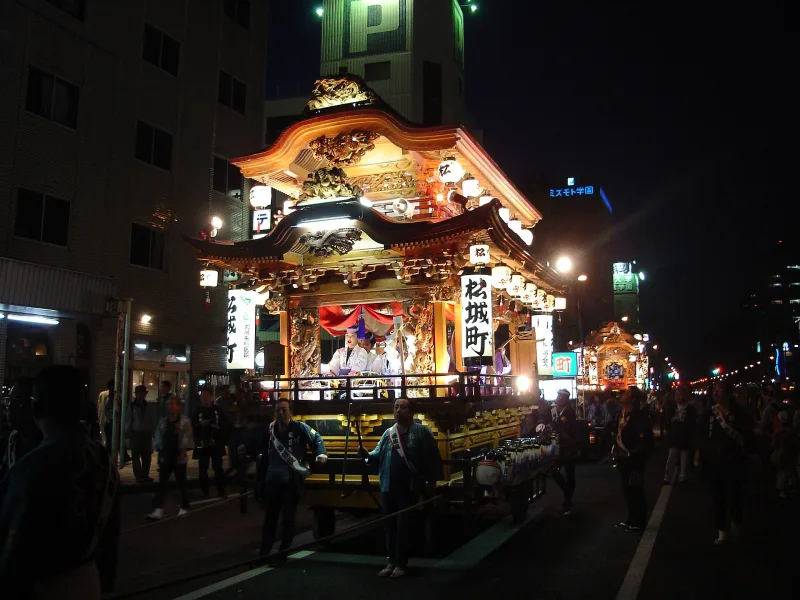
As dusk falls, the action moves to the city centre. Lavish goten-yatai, decorated with carvings and lanterns, move slowly along to the sound of shamisen (three-stringed lutes) and the flutes and festival music of dressed-up children. Goten-yatai are said to date from around the end of the Meiji era, when people coming back from the kite battles pulled a cart with a kite as its roof, and actors and geisha struck up music on bells and drums to liven it up. From the early Showa era, neighbourhoods began competing to build ever finer floats.
In front of the floats, young men in happi coats parade energetically to the chants and bugles. Once the float parade is over, they gather at the homes of each neighbourhood's uigo and perform "gekineri" (also called hatsuneri), a wild neri celebrating the baby's birth and growth. It ends with three cheers of "banzai", and the baby's family thanks everyone with food and drink.
Tips for watching
During the festival, direct shuttle buses run to the Nakatajima kite-flying grounds (details are given on the official website each year). Near the grounds is the Hamamatsu Matsuri Kaikan, a museum with exhibits about the festival.
The night-time float parades take place in the city centre, on Kajimachi-dori and elsewhere, and the streets are packed. On 5 May, Children's Day, there are also events with children as the stars, such as kite flying by elementary and junior high school pupils.
Drones, radio-controlled aircraft and other unmanned aircraft are banned at the Hamamatsu Festival. Smoking while walking and littering are also banned under city bylaws. Events may be cancelled because of the weather, so check the official website or other sources before you go.
Tips
- The daytime kite flying (at Nakatajima) and the night-time goten-yatai floats (in the city centre) are far apart. Plan to enjoy both in one day: kites by day, floats by night.
- Shuttle buses run during the festival and are the easiest way to reach the kite-flying grounds.
- The kite-flying grounds are near the sand dunes and get dusty, so wear shoes and clothes you do not mind getting dirty.
- Drones and radio-controlled aircraft are banned.
- On 5 May you can see events where children take centre stage, such as the children's kite flying.
Sources
- 浜松まつり公式ウェブサイト(浜松まつり組織委員会)「浜松まつりの歴史」 (opens in a new tab)
- 浜松まつり公式ウェブサイト「会場までのアクセス」 (opens in a new tab)
- 浜松まつり公式ウェブサイト「新着情報」 (opens in a new tab)
- 浜松まつり会館「浜松まつりとは」 (opens in a new tab)
- 朝日新聞「浜松まつりに241万人 松下洸平さんらの『家康公パレード』も実施」(2026年5月7日) (opens in a new tab)
- 静岡新聞「『浜松まつり』が開幕 子どもの成長を願う大凧、勇壮に空を舞う 173町が参加」(2026年5月3日) (opens in a new tab)
- 静岡新聞「浜松まつり閉幕 『241万人』盛況の3日間 最終日の主役は子どもたち」(2026年5月5日) (opens in a new tab)
- 毎日新聞「浜松まつりに200万人超 『そんなに多かった?』 人出算出に疑問も」(2026年5月2日) (opens in a new tab)
- 静岡新聞アットエス「浜松まつり人出249万3000人」(2025年5月7日) (opens in a new tab)
- SBS静岡放送「浜松まつり5年ぶりフル開催で人出245万人」(2024年5月7日) (opens in a new tab)
- 日本経済新聞「松本潤さん効果で人出最多255万人、浜松まつり」(2023年5月8日) (opens in a new tab)
- Wikipedia「浜松まつり」 (opens in a new tab)