Shizuoka
Shizuoka stretches from Mount Fuji and hills of tea fields to Suruga Bay, the hot springs of Izu and the lakeside towns around Hamamatsu.
Map outlines: Natural Earth
-
1
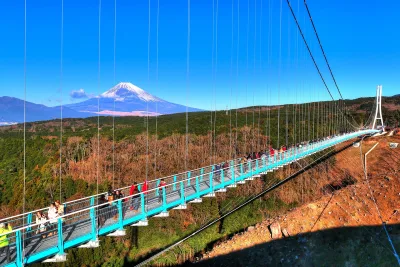 Mishima Skywalk
A 400m pedestrian suspension bridge at the western foot of Hakone. On a clear day you can see Mount Fuji and Suruga Bay at once from the bridge.
Mishima Skywalk
A 400m pedestrian suspension bridge at the western foot of Hakone. On a clear day you can see Mount Fuji and Suruga Bay at once from the bridge.
-
2
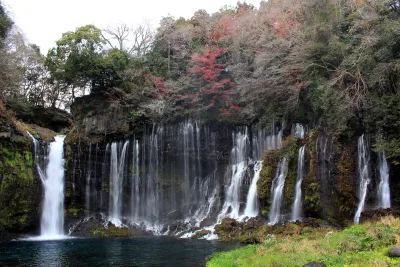 Shiraito Falls
Snowmelt from Mount Fuji pours from a 150m-wide rock wall like hundreds of white threads. One of the component sites of the World Heritage site "Fujisan".
Shiraito Falls
Snowmelt from Mount Fuji pours from a 150m-wide rock wall like hundreds of white threads. One of the component sites of the World Heritage site "Fujisan".
-
3
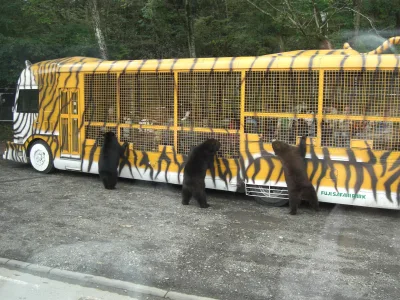 Fuji Safari Park
A drive-through safari zoo at the foot of Mount Fuji, where you drive among lions and bears. From the caged Jungle Bus you can even feed them.
Fuji Safari Park
A drive-through safari zoo at the foot of Mount Fuji, where you drive among lions and bears. From the caged Jungle Bus you can even feed them.


.jpg)
Mountain, bay and peninsula
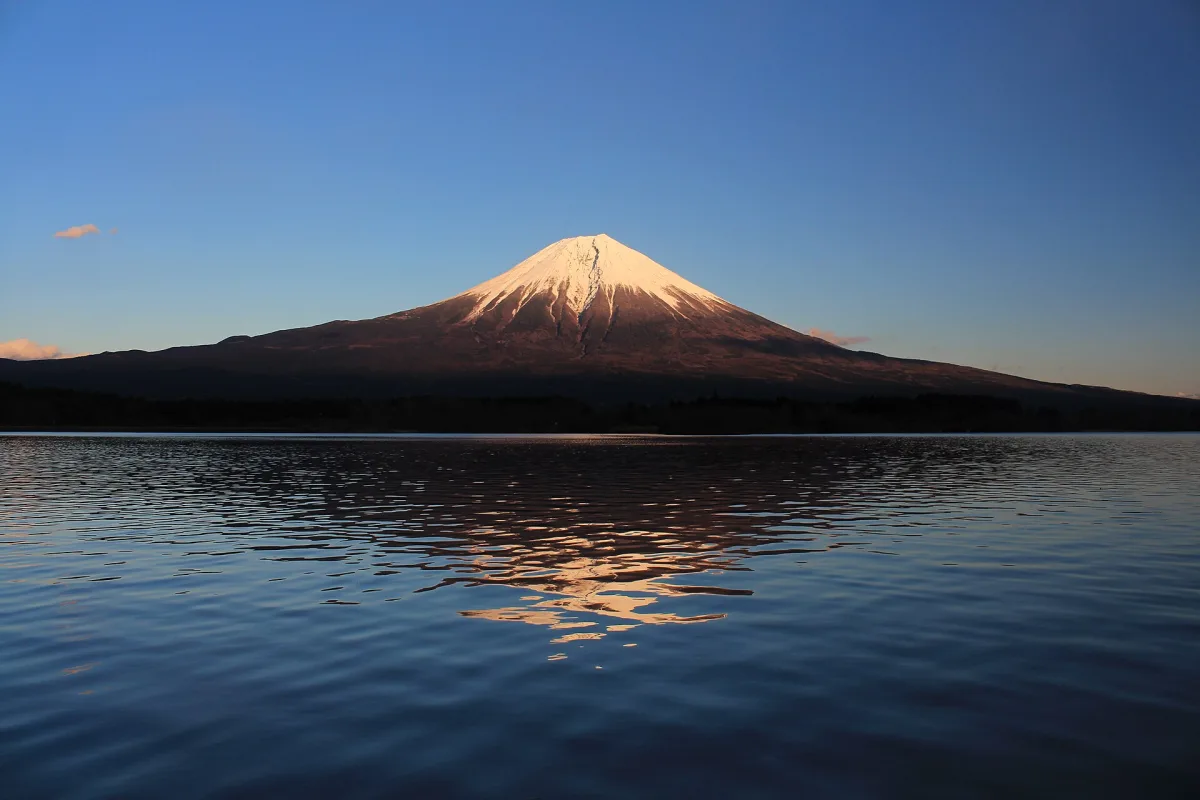
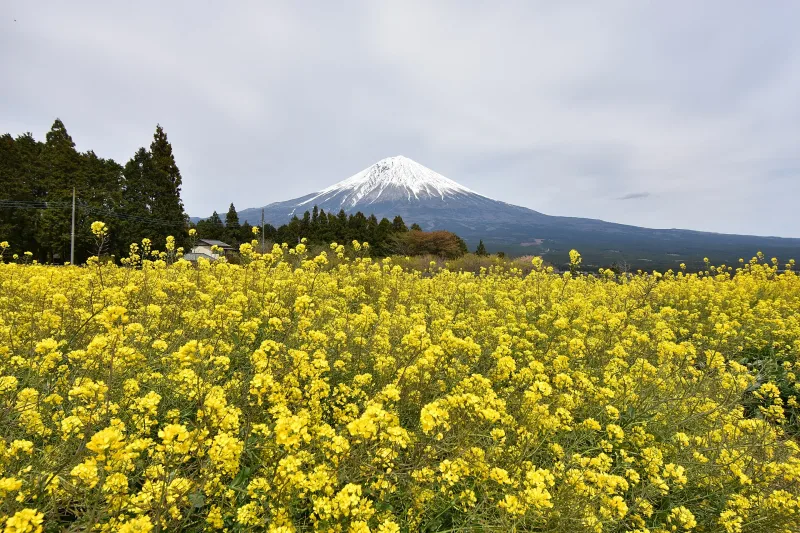
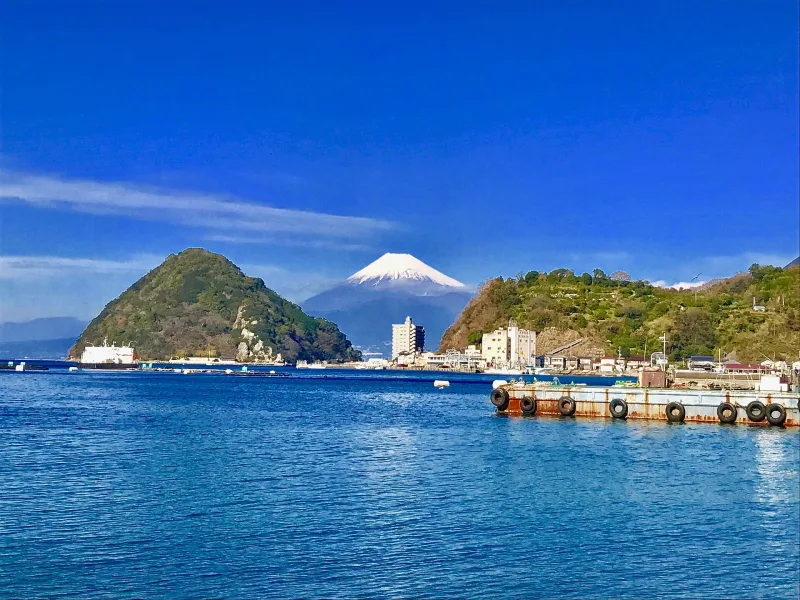
Mount Fuji is Shizuoka's best-known sight, but it is only part of the landscape. Tea fields spread over hills and plains, rivers run down from the mountains, and the coast faces Suruga Bay. Near Shizuoka city, the pine grove of Miho no Matsubara frames a view of Mount Fuji across the sea, a scene that has appeared in Japanese art and poetry.
The Izu Peninsula has a different feel. Its coastline winds along rocky headlands and beaches, while inland there are forested highlands, waterfalls and volcanic landforms such as the bowl-shaped Mount Omuro. Atami and Ito are known for their onsen (natural hot springs). In the west, Hamamatsu sits near Lake Hamana, where lake, sea and mountains give this part of the prefecture a character of its own.
An old highway and a shogun
Shizuoka lay along the Tokaido, the historic highway linking the area around today's Tokyo with Kyoto. Around Shizuoka city, Mariko and Utsunoya keep traces of the old post stations. Shizuoka city is also closely linked with Tokugawa Ieyasu, a shogun (the title of Japan's samurai rulers), who spent part of his boyhood and his final years here. Sunpu Castle Park and Kunozan Toshogu Shrine make that history visible, even if you do not know the whole story before you go.
Further west, Ieyasu lived at Hamamatsu Castle. Further east, Shimoda on the Izu Peninsula tells another chapter of Japanese history. Ships led by Commodore Matthew Perry arrived there as Japan was about to end a long period of limited contact with the outside world. Ryosenji Temple is connected with the treaty concluded in this port town. Places like these make Shizuoka feel like more than a scenic stretch between big cities.
Tea, seafood and everyday dishes
Tea is not just a drink here but part of Shizuoka's working landscape: the prefecture has grown tea for centuries. Around Makinohara and the hills in the centre of the prefecture, the neat rows of tea bushes make the link between a cup of green tea and where it comes from easy to see. Shizuoka city even turns tea into sweets such as gelato.
The sea brings entirely different flavours. Suruga Bay is associated with sakura ebi, a tiny pink shrimp, and tuna and other fish are landed at ports around the prefecture. In Izu, look for kinmedai (splendid alfonsino), a red fish often simmered or grilled. Lake Hamana is closely associated with eel, and inland Izu is known for wasabi grown with mountain water.
For a casual meal that is unmistakably local, try Shizuoka oden: various ingredients simmered in a dark broth, served on skewers and often sprinkled with aonori (green seaweed flakes) and fish powder (a seasoning of powdered fish). The signature ingredient is kuro hanpen, a dark fish cake made from fish such as sardine or mackerel. Hamamatsu has gyoza packed with vegetables, and Fujinomiya's yakisoba (fried noodles) uses especially firm noodles and sardine powder.
Customs rooted in the towns
Shizuoka's local traditions change as you move around the prefecture. In Shizuoka city, oden is not just a winter restaurant dish. Locals talk about eating it as a snack at dagashi-ya (old-fashioned sweet shops) when they were children, and it remains a familiar food even in summer. The small oden shops around Aoba Oden Street and Aoba Yokocho give you a chance to experience that everyday food culture.
In Hamamatsu, children are the stars of the spring festival. Giant kites bearing children's names fly above the Nakatajima Sand Dunes as teams compete to keep them aloft. Afterwards, decorated floats parade through the city to the sound of drums and flutes. The bustle is a contrast to the quiet tea country, and a reminder that no single custom can sum up the whole prefecture.
The turning year
Spring is the season of cherry blossoms, new tea and Hamamatsu's kite festival. In early summer, the rainy season brings hydrangeas and irises (Japanese irises), and after that the Izu coast becomes the centre of swimming and other seaside fun. Which season you choose changes which side of Shizuoka you mainly spend time with.
In autumn the mountain trees turn colour and interest moves inland, though warmth can linger on the Izu coast until September. In winter, Mount Fuji shows off its snowy mantle, and the prefecture's hot spring towns are especially appealing. Think of Shizuoka not as a single destination with one best time to visit, but as a collection of landscapes with different pleasures in each season.
Getting there and getting around
The Tokaido Shinkansen, the Japanese high-speed rail line linking Tokyo with Kyoto and Osaka, is the usual way to travel. Atami is a handy starting point for Izu, and the line also stops at places such as Mishima, Shizuoka city and Hamamatsu. Conventional lines and long-distance buses are other options, and Mt. Fuji Shizuoka Airport is another gateway.
Once you arrive, choose your transport area by area rather than assuming one line goes everywhere. Trains run down the east coast of Izu, and the Izuhakone Railway links Mishima and Shuzenji. Shizuoka and Hamamatsu have local railways too, and buses are handy for places beyond the stations. For a slow journey through the centre of the prefecture, the Oigawa Railway runs up the river valley into tea country. Leave some slack in your plans for travelling between the coast, the hills and the towns.
Sources
- Shizuoka | Tokai | Destinations | Travel Japan - Japan National Tourism Organization (Official Site)
- Shizuoka City | Shizuoka | Tokai | Destinations | Travel Japan - Japan National Tourism Organization (Official Site)
- Izu Peninsula | Shizuoka | Tokai | Destinations | Travel Japan - Japan National Tourism Organization (Official Site)
- Hamamatsu | Shizuoka | Tokai | Destinations | Travel Japan - Japan National Tourism Organization (Official Site)
- Cuisine - Explore Shizuoka
- 5 Japanese Spring Festivals to enjoy in Shizuoka - Explore Shizuoka
- Access - Explore Shizuoka
- What Is Shizuoka Oden? From the 5 Key Points to a Guide to Famous Restaurants
- 黒はんぺん|【静岡県公式】しずおか食の情報センター