Aoyagi Samurai Manor (Kakunodate Rekishimura Aoyagi-ke)
角館歴史村・青柳家
A 400-year-old samurai home on Kakunodate's samurai street, with house, garden, armour and a famous anatomy book. You can even handle swords and helmets.
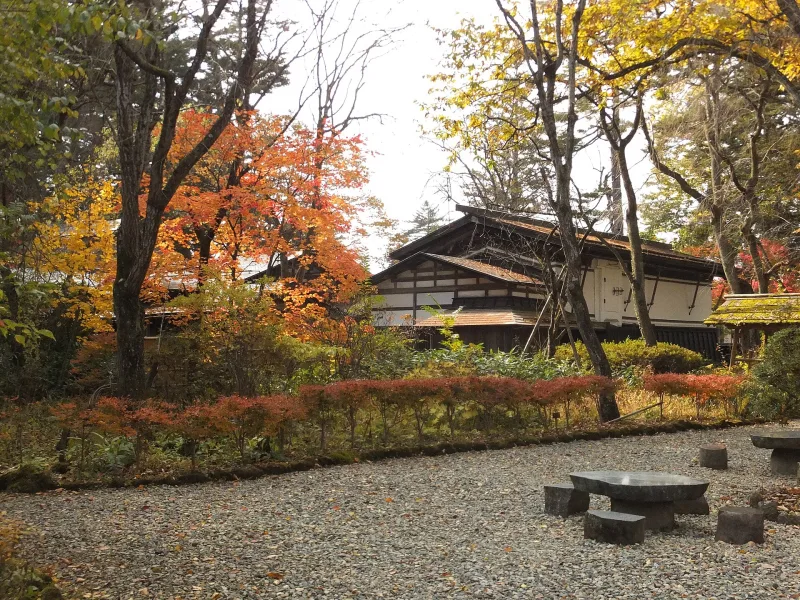
A whole Kakunodate samurai estate to explore
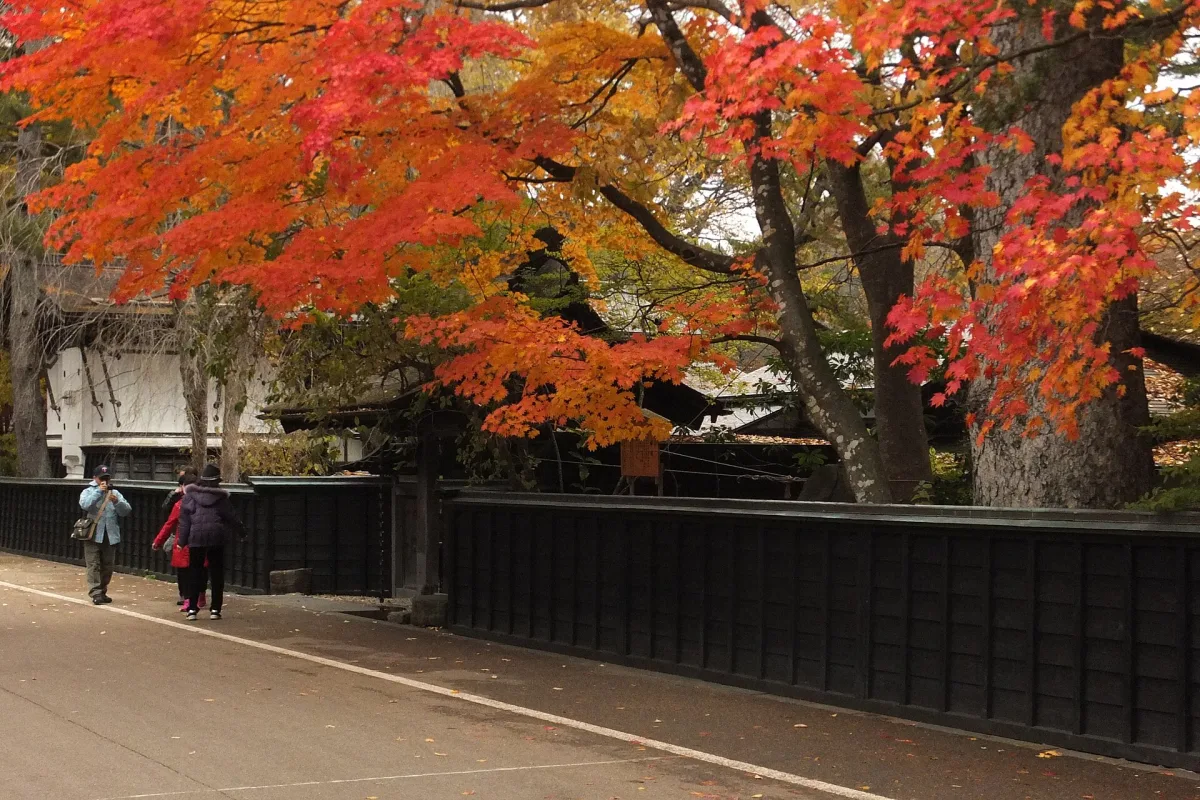
In Kakunodate, in Semboku city, Akita Prefecture, a street lined with Edo-period (1603-1868) samurai houses, the Buke Yashiki Dori, still survives. The Aoyagi house is one of the best-known of them and is designated a Historic Site by Akita Prefecture. The whole area is also a national Important Preservation District for Groups of Traditional Buildings, a district chosen by the state to protect its historic townscape.
The Aoyagi family first served the Ashina clan, who ruled Kakunodate, and after the Ashina line died out they served the Satake Hokke, the branch of the Satake clan that became the new lords of Kakunodate. They remained Satake retainers until the Meiji era began, and it is about 400 years since they settled here.
The yakui-mon gate, the main house and a garden for all seasons
The imposing gate facing the street is a style called yakui-mon, specially permitted in 1860 (the first year of the Man'en era) in recognition of the family's service to the domain. In those days the style of a gate showed a family's rank, and this form was allowed only for high-ranking samurai. Along the street runs a black-painted board fence with windows for looking out from inside.
The thatched main house keeps the form it had when it was built about 200 years ago. Look out for the decoration at the entrance, the family crest cut in openwork in the ranma (decorative panels above the doorways) of the reception room, and the mawari-en, a veranda that wraps around the building, typical of snow country.
In the garden is a pond that has been fed by stream water from the hill behind for several hundred years, and more than 600 kinds of plants grow there. From late April to early May, a double-flowered weeping cherry in the inner garden, the Aoyagi Yae Beni Shidare-zakura, said to be the only one of its kind in Japan, comes into bloom.
Armour, the Kaitai Shinsho and old ways of life
The estate has several exhibition halls, with about 30,000 items on show in all. The armoury displays suits of armour, helmets and more handed down in the Aoyagi family, and near the exit you can actually pick up a real sword and a single-edged spear.
The Kaitai Shinsho Memorial Hall introduces the Kaitai Shinsho, published in Edo (today's Tokyo) in 1774, the first Western medical book translated in Japan. Its anatomical drawings were made by Odano Naotake, a Kakunodate samurai, whose family was related to the Aoyagi family through several adoptions and marriages.
There is also a hall of tools from samurai daily life, the Akita Folk Museum in a relocated old farmhouse, the Haikara-kan with its collection of antiques, and a display of the dashi (large decorated floats pulled at festivals) from Kakunodate's festival. There is even a corner where you can put on a samurai helmet for a photo.
Getting there and when to go
It is about a 15 to 20-minute walk from JR Kakunodate Station, on the samurai house street. It is open every day of the year, with earlier closing in winter. Check opening hours and admission on the official site.
Kakunodate is famous for the weeping cherries along the samurai house street and the avenue of cherry trees along the nearby Hinokinai River, and it gets very crowded in cherry blossom season. On weekends and public holidays during the cherry blossom festival, the samurai house street is closed to traffic and becomes pedestrian-only during the day.
Tips
- Walking around the grounds dressed in armour is available by reservation only. If you want to try it, book with the Aoyagi house in advance.
- There is a café on the ground floor of the Haikara-kan, where you can take a break after your visit.
- If you are driving in cherry blossom season, check the times when the samurai house street is pedestrian-only before you go.
Sources
- 青柳家の概要|角館歴史村 青柳家【公式】
- 展示施設のご案内|角館歴史村 青柳家【公式】
- お知らせ一覧|角館歴史村 青柳家【公式】
- 武家屋敷 観光情報|仙北市
- 重要伝統的建造物群保存地区(武家屋敷 青柳家)|観光庁 多言語解説文データベース
- 角館歴史村 青柳家|アキタファン
Updated 30 September 2026. Opening hours and prices change, so check the official site before you go.