Akita
Akita brings together beech forests, deep winter snow, rice-country cooking and traditions shaped by the mountains and the sea.
Map outlines: Natural Earth
-
1
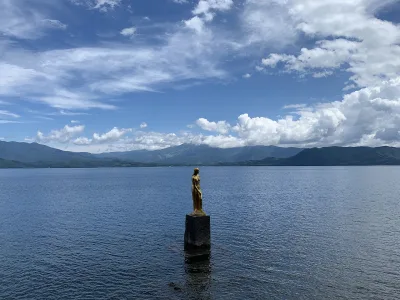 Tatsuko Statue (Lake Tazawa)
A golden statue of a girl on the shore of Lake Tazawa, Japan's deepest lake, telling the legend of Tatsuko, who became a dragon to stay beautiful forever.
Tatsuko Statue (Lake Tazawa)
A golden statue of a girl on the shore of Lake Tazawa, Japan's deepest lake, telling the legend of Tatsuko, who became a dragon to stay beautiful forever.
-
2
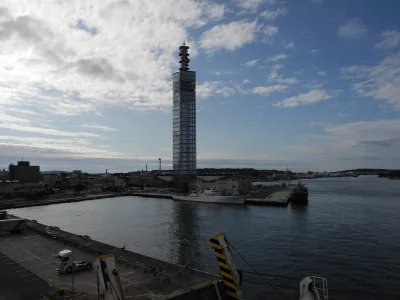 Michi-no-Eki Akita Port (Port Tower Selion)
A roadside station built around Selion, Akita Port's glass tower. Its free 100 m observatory looks out to the Sea of Japan, Oga Peninsula and Mount Chokai.
Michi-no-Eki Akita Port (Port Tower Selion)
A roadside station built around Selion, Akita Port's glass tower. Its free 100 m observatory looks out to the Sea of Japan, Oga Peninsula and Mount Chokai.
-
3
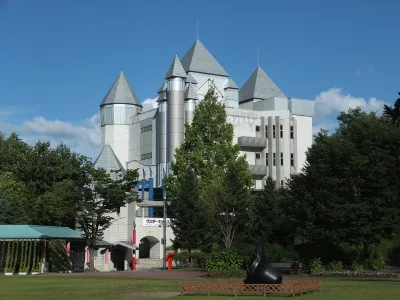 Akita Furusato Mura
A complex in Yokote showcasing Akita's food, crafts and art. Entry is free, and covered walkways link the buildings, so it works on rainy or snowy days.
Akita Furusato Mura
A complex in Yokote showcasing Akita's food, crafts and art. Entry is free, and covered walkways link the buildings, so it works on rainy or snowy days.



From beech forest to the Sea of Japan
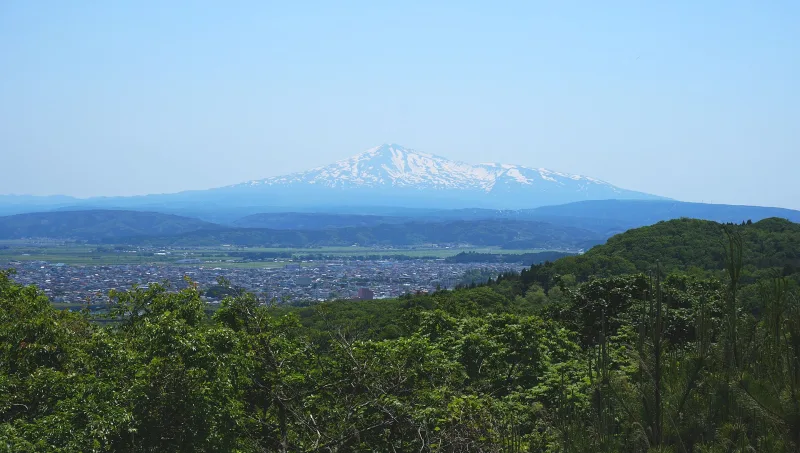
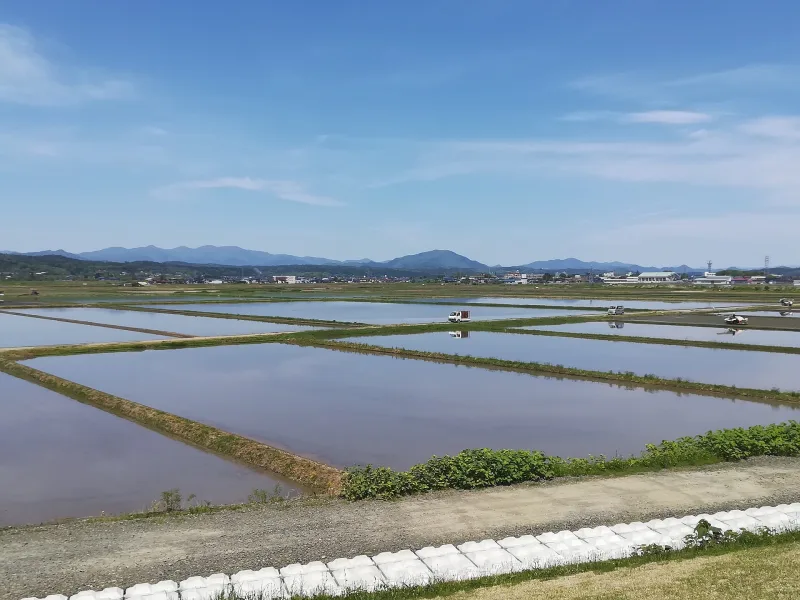
Akita lies on the Sea of Japan side of northern Honshu, where rice-growing plains give way to mountains, forests and a long coastline. In the north-west, the Shirakami Mountains stretch across the prefectural border into Aomori. Their vast beech forest includes a core area registered as a UNESCO World Natural Heritage Site. This is a landscape to engage with as more than a backdrop: forest trails, mountain villages and local woodworking traditions are all part of the same story.
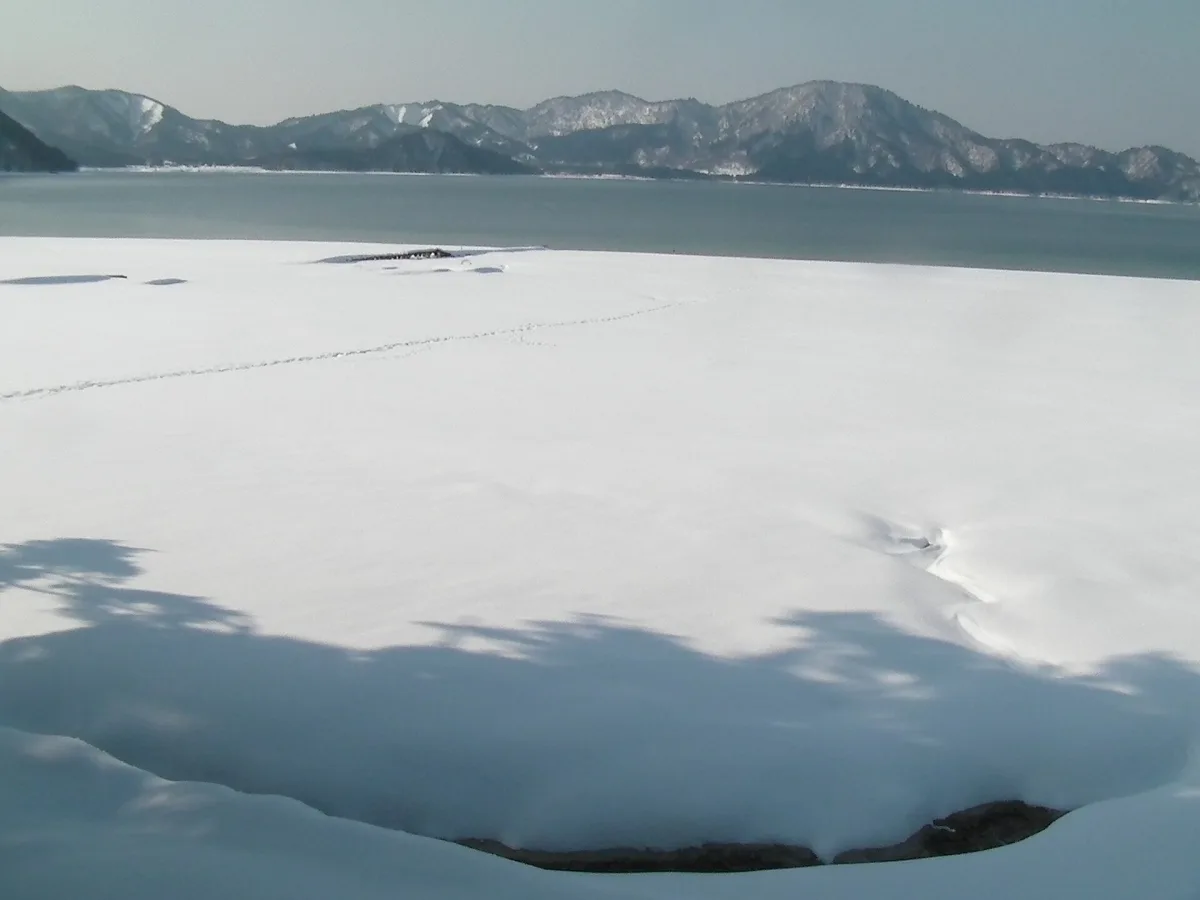
Inland, Lake Tazawa is the deepest lake in Japan. Mountains ring its shores, and its water does not freeze even in winter. Further north, the Akita side of Lake Towada, a much larger caldera lake, meets Aomori. The distances between these places are part of what makes Akita feel so varied: a trip might move from an open lakeshore into enclosed forest, then back through the fields to the sea.
Samurai streets and crafts in wood
Kakunodate developed as a castle town in the early 17th century. The castle is gone, but the samurai district still has old residences, gates and wide streets, which makes its history easy to read as you walk. In spring, weeping cherry trees soften those streets. Rather than hurrying from house to house, take time to notice the contrast between the formal gateways and the everyday townscape around them.
Akita's crafts are another way into its past. Kakunodate is known for kabazaiku, work made from polished mountain-cherry bark and fashioned into items such as tea caddies. In Odate in the north, the region's forests gave rise to magewappa, bent cedar woodwork now made into everyday household items such as bento boxes and trays. Neither tradition is merely a souvenir theme: both make practical use of materials close at hand. The region's mountain heritage also includes the matagi, traditional hunting groups tied to the deep forested interior.
Rice on the table, smoke in the pickles
Rice is at the heart of Akita cooking. Kiritanpo is cooked rice that has been mashed, wrapped around a skewer and grilled. You will find it spread with miso (fermented soybean paste), or cut up in kiritanpo nabe, a shared hotpot with chicken, mushrooms and vegetables. Hinai jidori, a prized local chicken, is used for the broth. Its appeal is obvious once the weather turns cold, but restaurants serve it outside winter too.
For a change of texture, try Inaniwa udon, the smooth, springy noodles associated with Yuzawa. With your meal you may come across iburigakko: daikon radish smoked over an irori (sunken hearth) and then pickled in rice bran. The method grew up in response to snowy winters, when it was hard to dry radishes outdoors. Akita has its own seafood too. Hatahata (sandfish), a cold-water fish, turns up grilled and in hotpots. Taken together, these foods reveal something about the prefecture's fields, forests and coast, and its long seasons spent indoors.
A year marked by lanterns and snow
In spring, weeping cherries bloom in Kakunodate; in summer, attention turns to outdoor gatherings. At the Kanto Festival in Akita city, performers balance long bamboo poles hung with lanterns on their palms, shoulders, hips and foreheads. The poles resemble ears of rice, fitting for a festival that prays for a good harvest. In autumn, mountain areas such as Hachimantai turn red and gold, and after the harvest rice dishes feel like the natural thing to eat.
Winter has community rituals of its own. On the Oga Peninsula, people wearing namahage masks, which differ from one community to the next, visit homes on New Year's Eve and call out to the families inside. Visitors are more likely to learn about the custom through local exhibits than to join a home visit. In Yokote, people build kamakura, snow huts with an altar to the water god, for a winter festival. These events have completely different atmospheres, but both show how Akita's communities turn the cold into an occasion to share.
Getting there, and slower routes
The Akita Shinkansen Komachi links Tokyo with Akita city and also stops at Kakunodate, so starting your trip by rail is easy. There are flights from Tokyo's Haneda Airport to Akita Airport, and to Odate-Noshiro Airport for the north. Akita city is a convenient transport hub, and Kakunodate's historic streets are pleasant to explore on foot.
Beyond these hubs, plan section by section rather than assuming one train will take you to every sight. Local trains and buses link some towns and lakeside areas, and a car gives you flexibility for a trip that spans the coast, forests and mountains. If you want the journey itself to be part of the trip, the Akita Nairiku Line runs through the interior between Kakunodate and Takanosu, passing fields and mountain valleys. The changing view from the window is a gentle reminder that travelling around Akita is also a way of learning how the prefecture fits together.
Sources
- Akita | Tohoku | Destinations | Travel Japan - Japan National Tourism Organization (Official Site)
- Shirakami & Odate | Akita | Tohoku | Destinations | Travel Japan - Japan National Tourism Organization (Official Site)
- Lake Tazawa | Akita | Japan Snow | Japan Travel
- Kakunodate | Travel Japan - Japan National Tourism Organization (Official Site)
- Akita’s Local Flavours | Discover 3 Must-Try Dishes | JNTO
- There are 150 Namahage masks?!|AKITAVISION, Any bad kids?〖Akita Prefecture〗
- Akita Kanto Festival | Travel Japan - Japan National Tourism Organization (Official Site)
- Yokote Snow Festival | Travel Japan | JNTO
- 秋田内陸縦貫鉄道 | 観光・体験スポット | アキタファン
- ローカル線で行く花の百名山・森吉山 絶景秋田旅 | ブランニューアキタ | アキタファン
- アクセス | アキタファン
- 秋田弁の特徴を紹介 | じゃらんニュース
- 観光キャッチコピー「んだ。んだ。秋田。」 | 美の国あきたネット