Senshu Park (Kubota Castle Ruins)
千秋公園
The ruins of Kubota Castle, seat of the Satake lords of Akita, a walk from Akita Station, with cherry blossoms, summer lotuses and a turret with city views.
The Satake clan's castle, with no keep and no stone walls
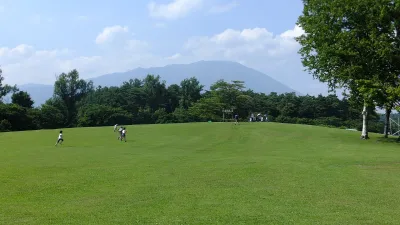
Senshu Park is laid out on the site of Kubota Castle. The castle was built in 1603 on a natural plateau by Satake Yoshinobu, the first lord of the Akita domain, who had been moved to Akita from Hitachi (today's Ibaraki Prefecture) after the Battle of Sekigahara. From then until the start of the Meiji era, it was the centre of the Akita domain (assessed at 200,000 koku, a measure of rice yield) for 12 generations and 267 years.
When people picture a Japanese castle, most imagine high stone walls and a tenshukaku (the tall keep that serves as the castle's symbol). Kubota Castle had almost no stone walls; it was defended by moats and dorui (earthen ramparts), and it never had a keep from the start. Most of its buildings were lost in a fire in 1880, and the Omonogashira Gobansho, a guardhouse used by the captains of the foot soldiers, is the only Edo-period building still standing within the castle.
It was turned into a park in 1896, designed by Nagaoka Yasuhei, a pioneer of modern park design. The name Senshu is said to combine shu, the "aki" (autumn) of Akita, with sen (a thousand), expressing long continuity, as a wish for lasting prosperity. It has been chosen for lists including Japan's 100 Fine Castles and Japan's 100 Historic Parks.
The Osumi Yagura turret, the Omotemon gate and the Satake Historical Museum
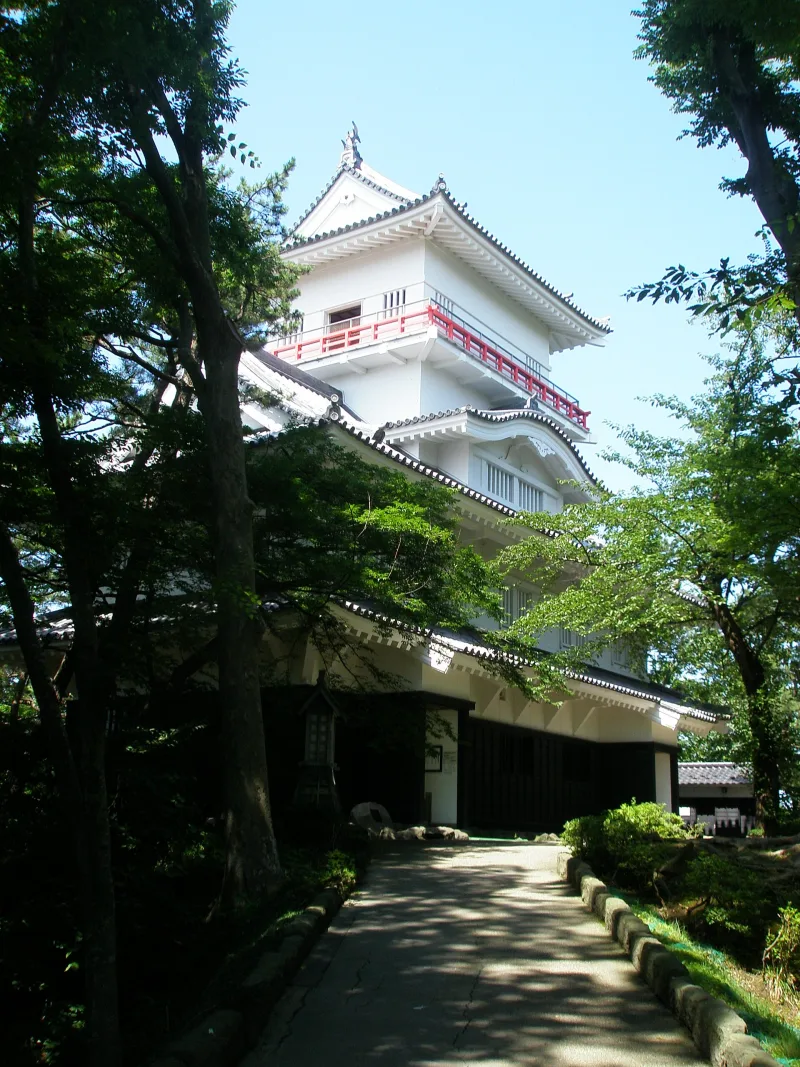
At the north-west corner of the honmaru (the main enclosure) stands the Osumi Yagura, reconstructed in 1989 to mark the 100th anniversary of Akita becoming a city. A yagura is a castle turret used as a lookout or armoury. It was rebuilt based on its recorded two-storey form, with an observation room added at the top, from which you can look out over the city of Akita. Inside, exhibits introduce the history of the Satake clan. The Osumi Yagura is closed in winter (1 December to 31 March).
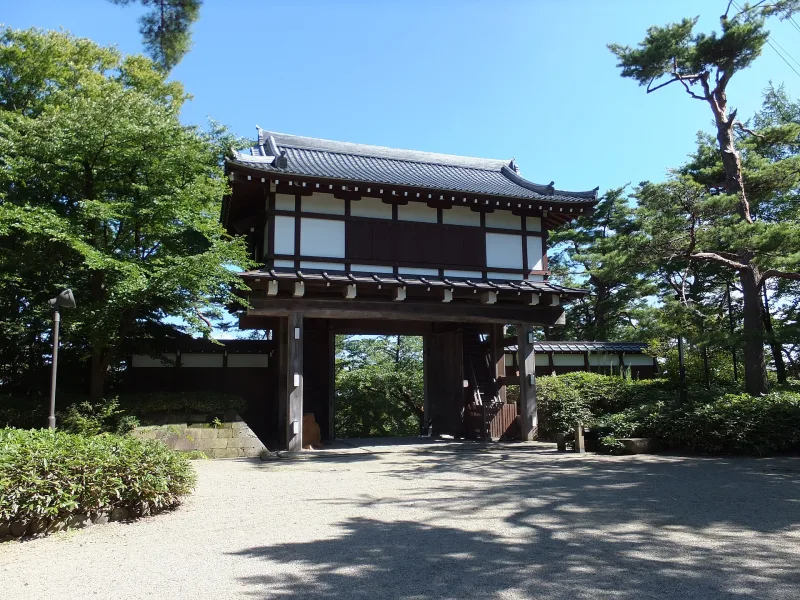
The honmaru's Omotemon (front gate), rebuilt in 2000, is another place where you can really feel you are in a castle. The Satake Historical Museum near the Omotemon reopened in October 2025 after closing for rebuilding. As well as displays of historical material on the Satake clan and the Akita domain, it has projection mapping showing how the castle town changed over time and a viewing terrace overlooking the Omotemon and the ninomaru (second enclosure).
In September 2026, the Akita Dog Fureai-dokoro in Senshu Park, where you can see Akita dogs (a breed designated a national Natural Monument) through a cage, reopened in a new indoor facility. Viewing days and times are limited, so check its official social media or other channels.
Spring cherry blossoms and summer lotuses
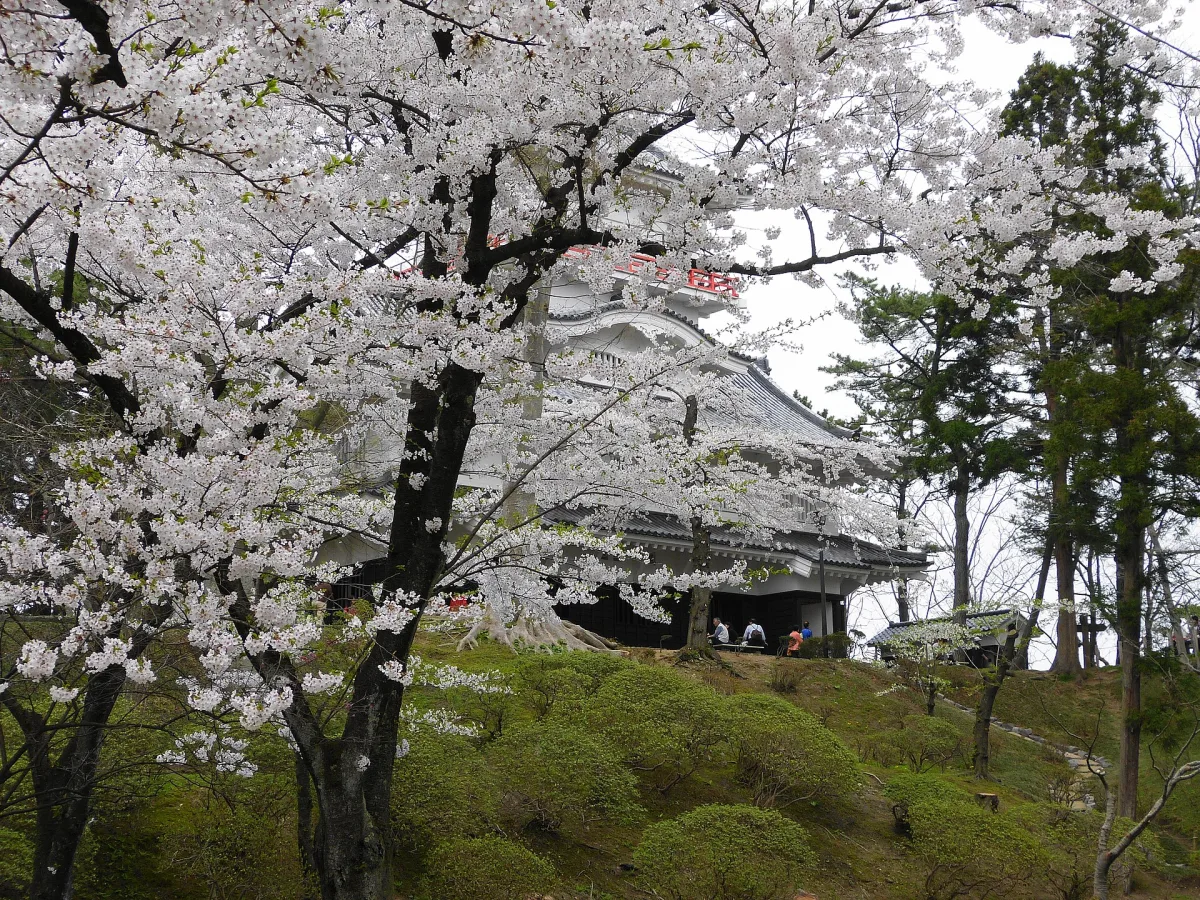
Senshu Park is one of Japan's Top 100 Cherry Blossom Spots, with about 630 cherry trees, about 80 per cent of them Somei-yoshino. Because it sits on high ground, the trees bloom later than Akita City's official benchmark tree: about one to two days later around the ninomaru and about four to five days later around the honmaru. Full bloom usually lasts only about three days, so plan around the blossom forecasts. According to Akita City's records, in most years this falls around mid-April.
In summer the moat by the Otemon gate is covered with lotuses. They bloom from around early July to around mid-September, and are at their best in the morning while the flowers are open, especially from about 7 to 9 am. A walkway runs along the moat so you can see the flowers up close. In Kogetsu Pond in the ninomaru grows the Oga lotus, which sprouted from seeds about 2,000 years old.
Getting there
You can walk from JR Akita Station. According to Akita City, it takes about 5 minutes from the station to the pocket park at the park entrance and about 15 minutes to the site of the ninomaru. The park is open all day and night.
By car, it is about 15 minutes from the Akita-Chuo IC on the Akita Expressway. Cars cannot enter the park, so use a paid car park.
Tips
- The Osumi Yagura is closed from December to March. If you want to look out over the city from its observation room, visit between April and November.
- For the lotuses, go early in the morning. According to Akita City, they are at their best from about 7 to 9 am, while the flowers are open.
- In cherry blossom season, full bloom lasts only a few days. The honmaru blooms a few days later than the ninomaru, so even if you are slightly off the peak, you may still catch the blossoms on the honmaru side.
Sources
- 千秋公園の概要|秋田市公式サイト
- 千秋公園のさくらについて|秋田市公式サイト
- 千秋公園のハスについて|秋田市公式サイト
- 施設案内 久保田城御隅櫓|秋田市公式サイト
- 佐竹史料館リニューアルオープン!(広報あきた2025年10月3日号)
- 久保田城御隅櫓(千秋公園内)|アキタッチ+
- 秋田犬ふれあい処in千秋公園|アキタッチ+
- 久保田城|日本100名城ガイド
Updated 29 September 2026. Opening hours and prices change, so check the official site before you go.