Japan is Nippon
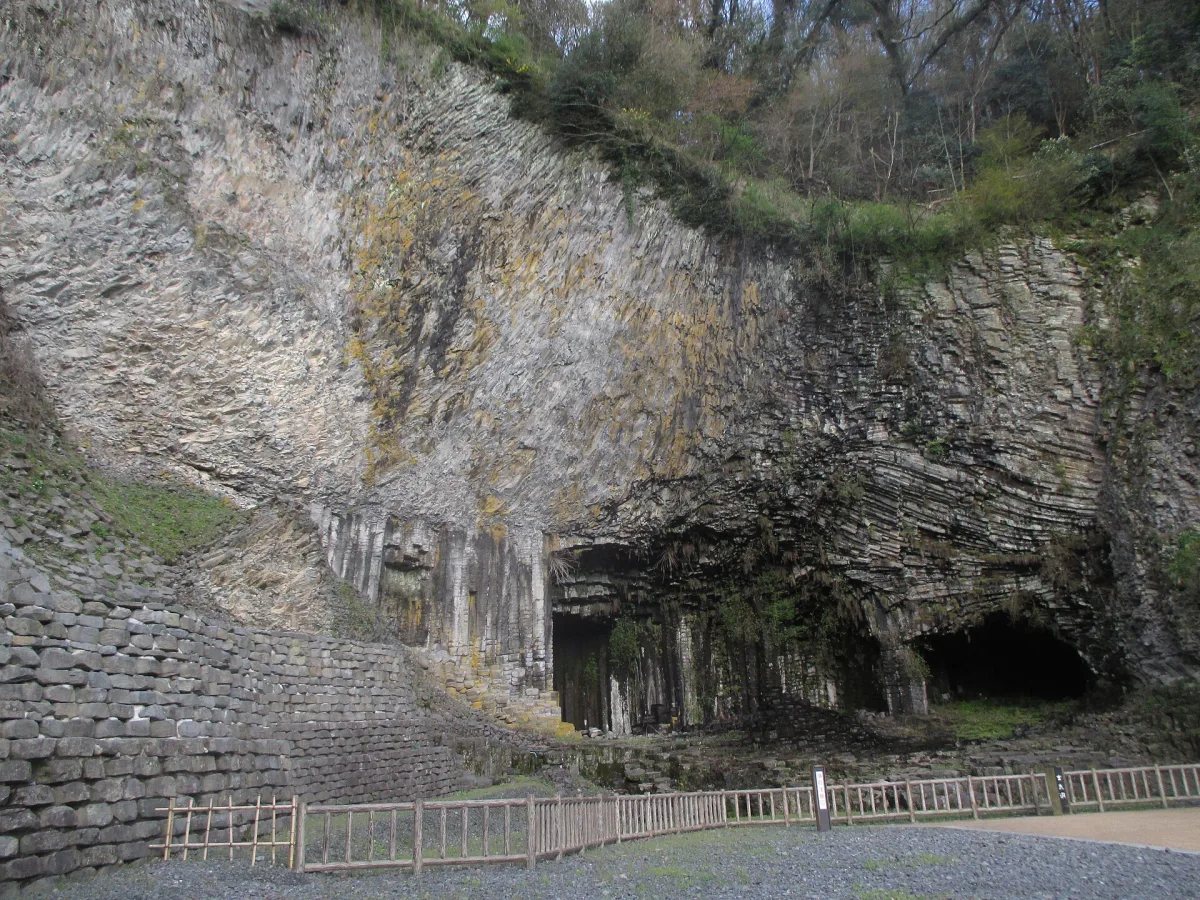
Genbudo Park
玄武洞公園
Rock walls packed with hexagonal columns of lava that cooled 1.6 million years ago: the site behind the word for basalt and the discovery of magnetic reversals.
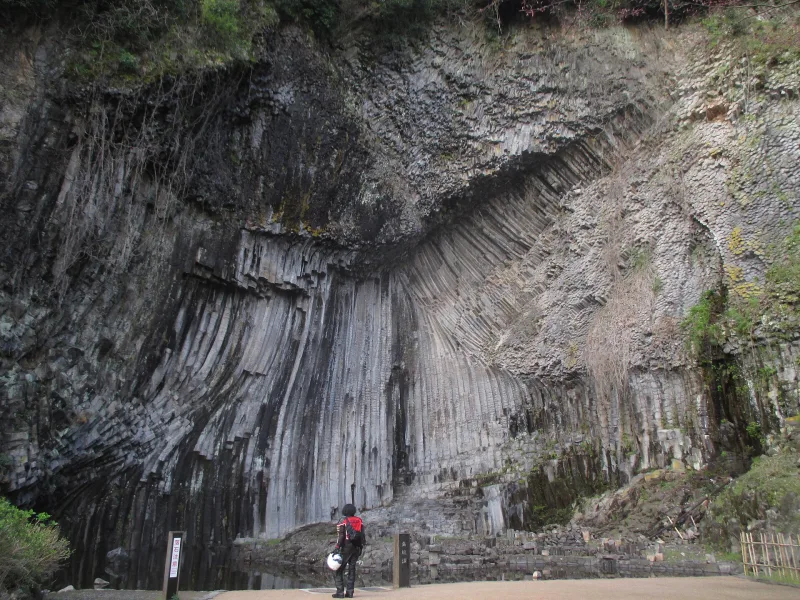
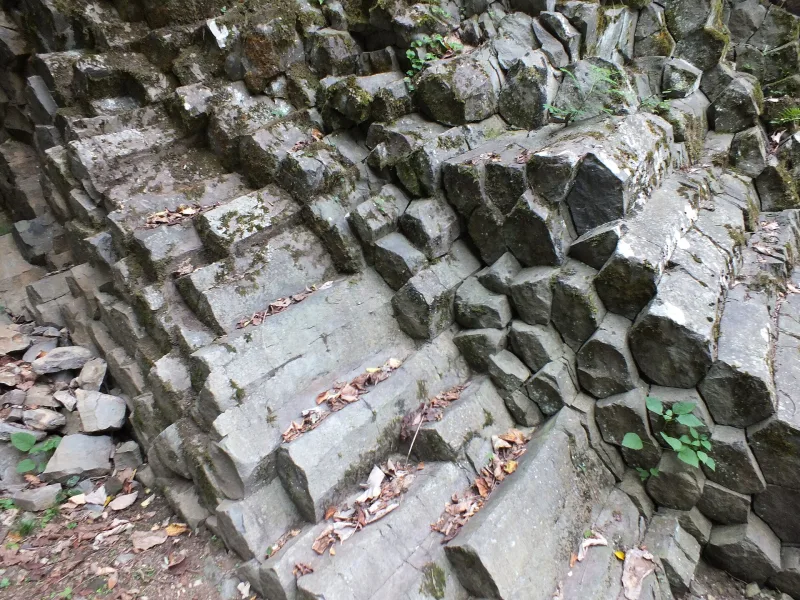
Stone columns made by lava
Genbudo Park is in Toyooka, Hyogo Prefecture, close to Kinosaki Onsen. About 1.6 million years ago, magma poured out by volcanic activity cracked in a regular pattern as it cooled and hardened, forming columnar jointing (chujo setsuri), rock that looks like a bundle of pillars. It is a national Natural Monument and part of both San'in Kaigan National Park and the San'in Kaigan UNESCO Global Geopark.
The stone here came in uniform sizes that were easy to use, and there was a river nearby that made it easy to transport, so in the Edo period the site was used as a quarry. The cave-like rock walls were created by digging out stone from the middle of the Edo period onwards.
Where the Japanese word for basalt comes from
Shibano Ritsuzan, a Confucian scholar of the Edo period, visited the site and named it Genbudo (Genbu Cave), likening the shape of the rock to Genbu, a sacred creature from Chinese legend. In the Meiji era, Dr Koto Bunjiro of the University of Tokyo took this name and called this kind of rock genbugan. So the Japanese name for basalt, a rock found all over the world, was born here.
The park has five caves, named after the Four Gods of China, the sacred creatures that guard north, south, east and west: Genbudo, Seiryudo, Byakkodo, Kita-Suzakudo and Minami-Suzakudo.
Evidence that the Earth's magnetic field once flipped
In 1926 Dr Matsuyama Motonori of Kyoto Imperial University found that the basalt at Genbudo was magnetised in the opposite direction to today's field, and in 1929 he became the first in the world to announce that there had been periods when the Earth's magnetic field was reversed. When lava cools and hardens, it records the direction of the Earth's magnetic field at that moment.
This discovery later became one of the starting points for the theory of plate tectonics, the idea that the Earth's surface is split into many plates that move.
Getting there and visiting
It is about 15 minutes by taxi or hire car from JR Toyooka Station, or about 10 minutes from JR Kinosaki Onsen Station. A local bus (the Kinosaki-Toyooka-Genbudo line) also runs there.
There is a charge to enter the park; check the official website for admission fees and opening hours. Tours with a specialist guide (charged) are also available.
Tips
- On 20 March 2026 part of the upper slope above Genbudo collapsed, and the park closed temporarily. It has been fully open again since 2 May, but a protective fence now stands in front of Genbudo and the area you can visit is partly restricted.
- In winter, Byakkodo, Suzakudo and other caves may be closed without notice because of snow and ice.
- Genbudo and Seiryudo are usually lit up from mid-September to early November. If you are staying at Kinosaki Onsen (hot spring town), it is an easy sight to add to your trip.
Sources
- 【公式】玄武洞公園ホームページ (opens in a new tab)
- 玄武洞と公園の歴史|玄武洞公園 (opens in a new tab)
- 地磁気の逆転|玄武洞公園 (opens in a new tab)
- アクセス|玄武洞公園 (opens in a new tab)
- 玄武洞公園・赤石周辺|山陰海岸ユネスコ世界ジオパーク (opens in a new tab)
- 玄武洞公園|豊岡観光ナビ (opens in a new tab)
- 玄武洞公園|城崎温泉観光協会 (opens in a new tab)
- 壮大な大地の歴史を体感できる景勝地・玄武洞公園|但馬ふるさとづくり協会 (opens in a new tab)
Updated 30 September 2026. Opening hours and prices change, so check the official site before you go.