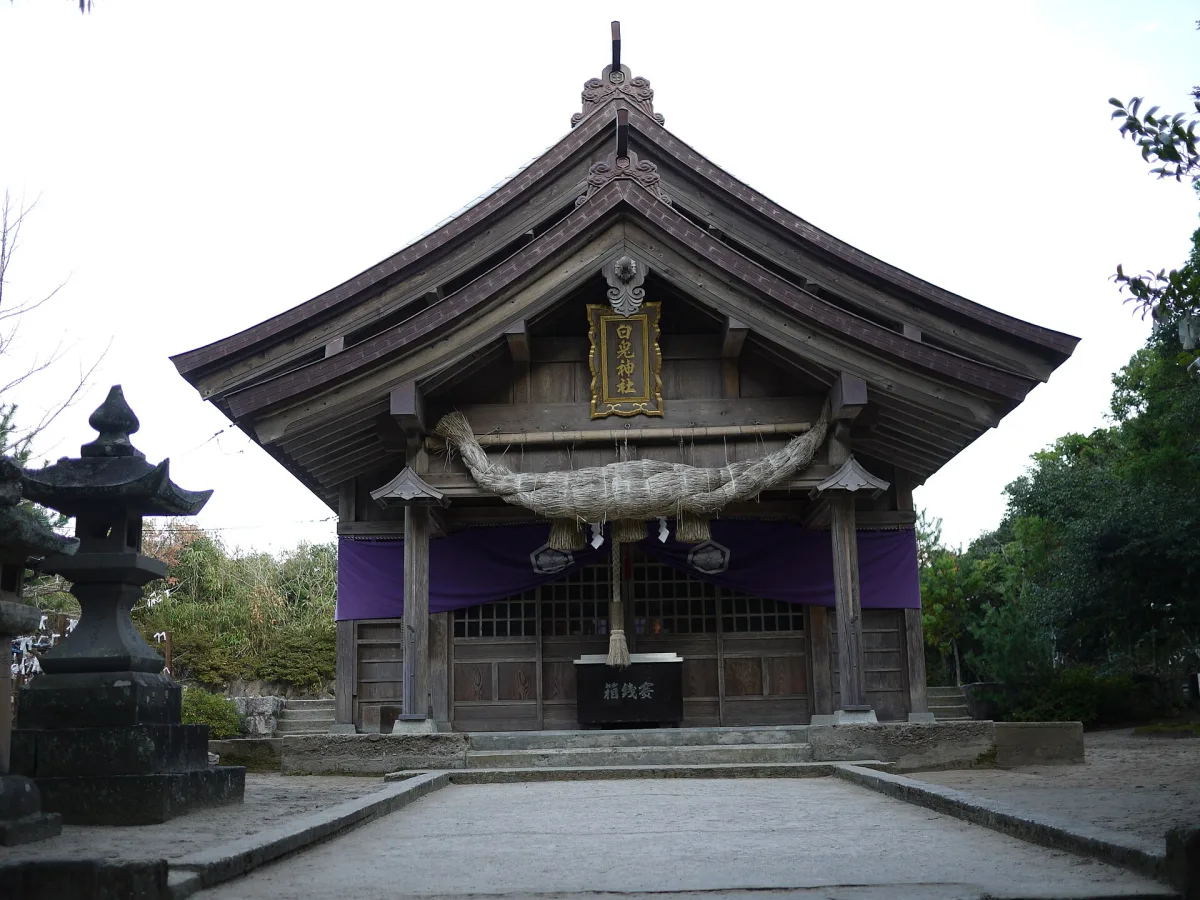
Hakuto Shrine
白兎神社
A shrine at the setting of the White Hare of Inaba myth from the Kojiki. Walk a path lined with stone hares, then see the pond and islet from the story.
The myth of the White Hare of Inaba
Hakuto Shrine stands on the Sea of Japan coast in Tottori City. It enshrines Hakuto-shin, the White Hare deity, who appears in the Kojiki, Japan's oldest surviving book, completed in 712. The hare is the hero of a very well-known myth that even appears in Japanese primary school textbooks.
The story goes like this. A hare living on an island offshore wanted to cross to the mainland, so it tricked the wani (sea creatures) into lining up and hopped across on their backs. But at the very end it boasted about the trick, and the angry wani stripped off its fur. Okuninushi no Mikoto, a god of Izumo, happened to pass by and told the hare to wash in fresh water and roll in the pollen of cattail flowers, and the hare's body healed completely. In thanks, the hare foretold that Okuninushi would marry Princess Yakami of Inaba.
A deity of healing and of matchmaking
Because of this myth, Hakuto Shrine is regarded as the birthplace of medicine and veterinary medicine in Japan, and people have long prayed here for relief from skin diseases and injuries. As the deity who brought Okuninushi and Princess Yakami together, the hare is also known for enmusubi, blessings for finding a good match. In 2010 the shrine was certified as a Lovers' Sanctuary, as the birthplace of Japan's first love story.
The shrine has a long history. After its buildings were burnt down in war, Kamei Korenori, lord of Shikano Castle, restored it in the Keicho era at the start of the Edo period, and the main hall was built in 1670. The forest around the shrine is a designated national Natural Monument.
Scenes from the myth, in and around the shrine
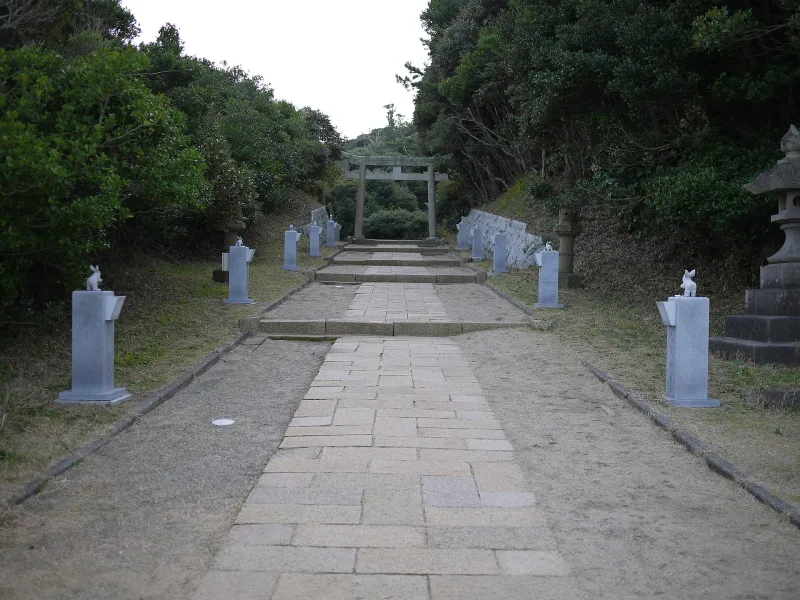
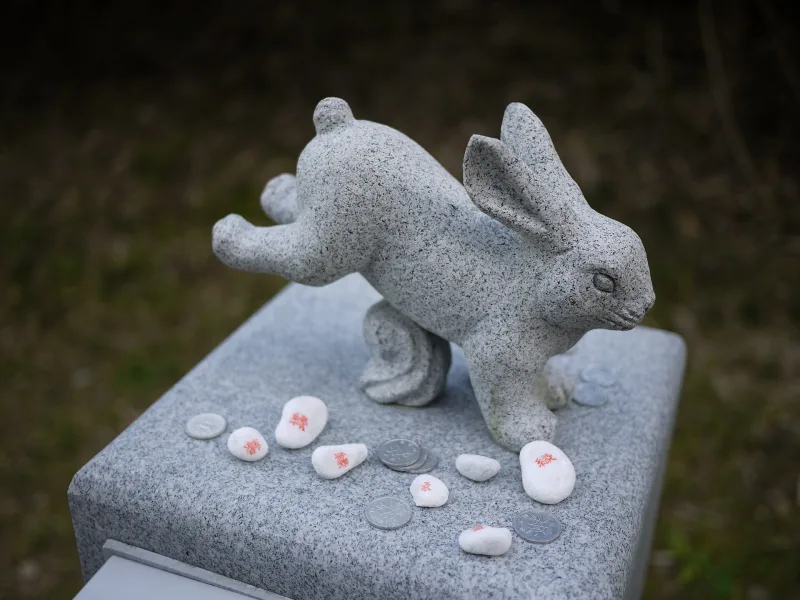
Rows of white stone hares line the approach to the shrine, welcoming visitors. In front of the shrine buildings is Mitarashi-ike, the pond where the hare is said to have washed its wounds. Because its water level hardly ever changes, it is also called the pond that neither rises nor falls.
North of the shrine lies Hakuto Beach. Kedanosaki, the headland jutting out at the western end of the beach, is said to be where the hare came ashore, and about 150m off it floats Okinoshima, the island where the hare is said to have lived. The rocks that appear and disappear between the island and the headland are likened to the backs of the wani.
Getting there
From JR Tottori Station, take a Hinomaru Bus for about 40 minutes and get off at Hakuto Jinja-mae. By car it is about 20 minutes from JR Tottori Station. Check the bus times before you go.
On the west side of the beach is Hakuto no Oka, a viewing area where you can take photos with the Sea of Japan behind you, and it is easy to visit together with the shrine.
Tips
- At the shrine office you can receive musubi-ishi, a set of five small pebbles. It is said that if you make a wish and place them on top of the torii (the gate that marks a shrine) or on the stone hares, your wish will come true.
- While the shrine office is open, you can also get hare-themed omamori (protective charms), ema (wooden wish plaques) and goshuin (the calligraphy stamp shrines give to visitors).
- East of Hakuto Beach there is a large patch of wild beach roses (hamanasu), which bloom every year from mid-May to mid-June.
Sources
- 白兎神社 鳥取|神話 因幡の白うさぎ(公式)
- 因幡の白兎 日本神話|白兎神社
- 白兎の神跡と自然|白兎神社
- ご参拝・授与品|白兎神社
- 白兎神社|鳥取縣神社廳
- 白兎神社|鳥取市観光サイト【公式】
- 白兎海岸・白兎の丘|鳥取市観光サイト【公式】
Updated 29 September 2026. Opening hours and prices change, so check the official site before you go.
.jpg)

.jpg)