Japan is Nippon
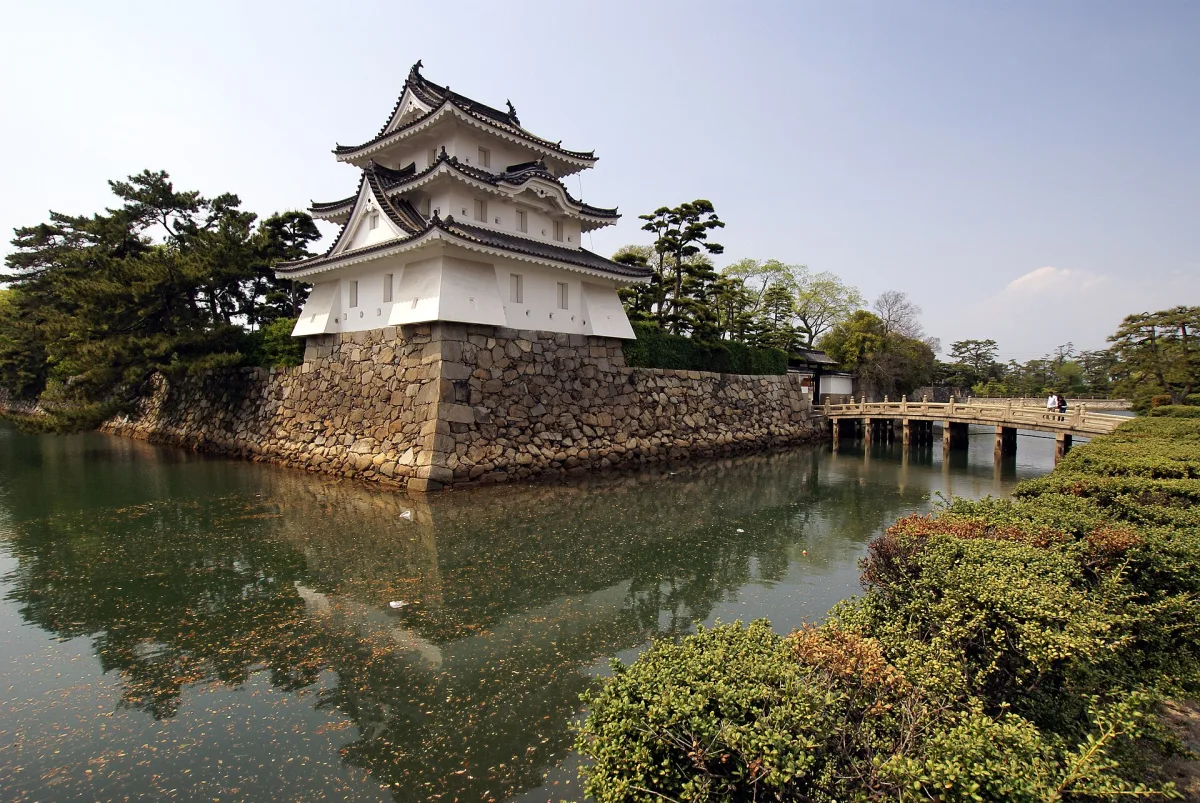
Takamatsu Castle Ruins (Tamamo Park)
史跡高松城跡玉藻公園
The ruins of a "sea castle" whose moats are filled with Seto Inland Sea water. Next to the station, with stone walls, old turrets and sea bream swimming by.
A "water castle" filled by the sea
Takamatsu Castle was built in 1590 by Ikoma Chikamasa. Later Matsudaira Yorishige became its lord, and the castle was extensively rebuilt under the Matsudaira family. Its north side faced the Seto Inland Sea, and seawater was channelled into its moats. That is why it counts, together with Imabari Castle in Ehime Prefecture and Nakatsu Castle in Oita Prefecture, as one of Japan's three great mizujiro, or "water castles" that used water for defence.
The outer and inner moats are still filled with seawater today, and sea bream (tai) swim in them. The castle ruins are a National Historic Site and are open to the public as Takamatsu city's Tamamo Park. "Tamamo" is a word the poet Kakinomoto no Hitomaro used in connection with Sanuki (the old name for Kagawa Prefecture) in the Man'yoshu, Japan's oldest poetry anthology, and the sea around here was once called Tamamo-no-ura.
The keep base and the surviving turrets and gates
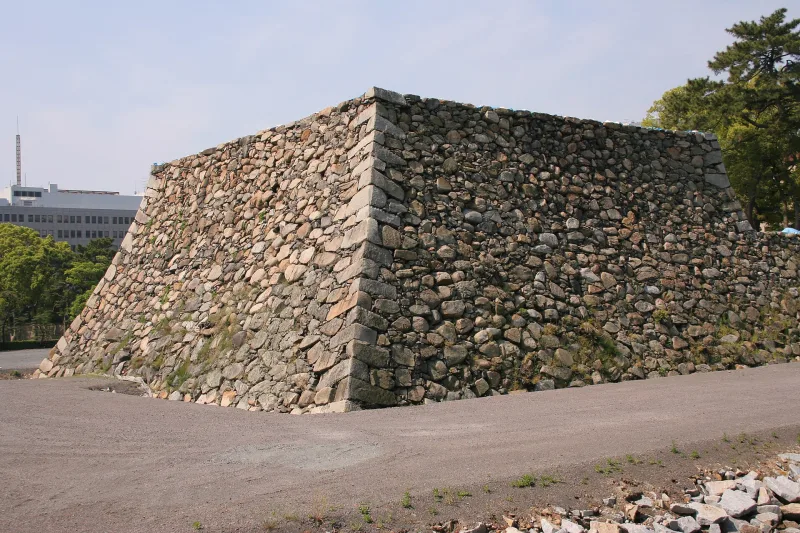
The three-tiered keep was pulled down in 1884 after it had fallen into serious disrepair. What remains is the tenshudai, the stone platform the keep stood on, whose walls were repaired between 2006 and 2012. Takamatsu city is researching a possible reconstruction of the keep, but not enough records, such as drawings showing how it looked, have been found.
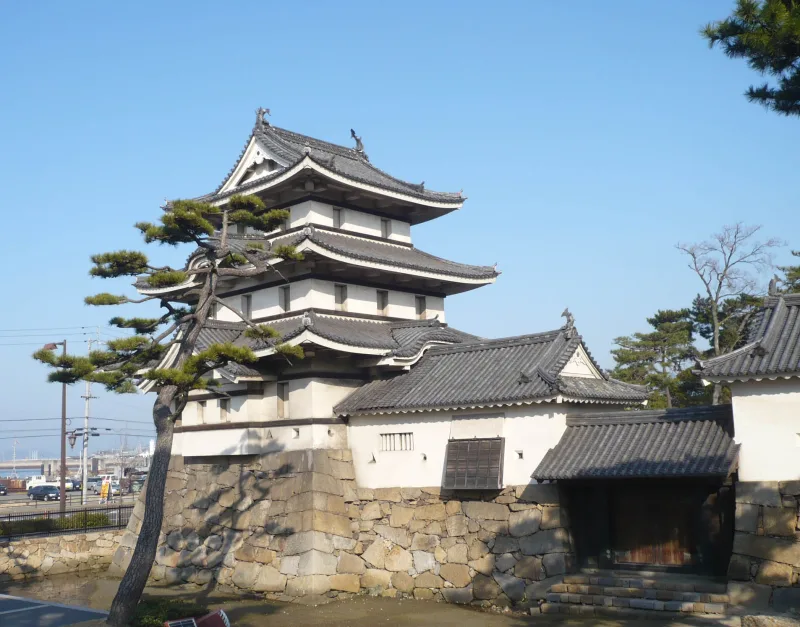
The park has five Important Cultural Properties: the Tsukimi Yagura (Moon-Viewing Turret) facing the sea, the Watari Yagura (a connecting turret), the Mizute Gomon (the Water Gate), the Ushitora Yagura (the north-east turret), and Hiunkaku, built in 1917 (Taisho 6) as a second residence for the Matsudaira family. Hiunkaku's garden is a nationally designated Place of Scenic Beauty. The inside of the Tsukimi Yagura opens on set days of the week, and from the top you can look out over the Seto Inland Sea and the castle grounds. There is also an exhibition room on the upper floor of the reconstructed Sakura Gomon (Cherry Blossom Gate).
Feeding the sea bream in the moat
In the park you can feed the sea bream in the moat. It is something you can only do in a seawater moat, and watching the fish crowd to the surface is a big hit with children. There are seasonal events too, such as cherry blossom in spring and a chrysanthemum show in autumn.
You can also tour the inner moat in a small boat on the Shirobune (castle boat) experience. Sailing days and how to book can change, so check the official website.
Getting there
It is about a 3-minute walk from JR Takamatsu Station and right next to Takamatsu-Chikko Station on the Kotoden (the local Takamatsu-Kotohira Electric Railway). It is also close to the high-speed boat and ferry terminals at Takamatsu Port, so you can drop in before or after crossing to islands such as Shodoshima or Naoshima. Opening hours vary by season and there is an admission fee. Check the official website for the latest information.
Tips
- If you want to see inside the Tsukimi Yagura or the exhibition room in the Sakura Gomon, check the opening days on the official website before you go.
- Earthquake-proofing work on Hiunkaku is being carried out room by room, so some rooms have restricted access. The official website also introduces a VR tour that lets you see the interior while the work is going on.
- It is right by the station and the port, so a lap of the park is a good way to fill time while waiting for a ferry.
Sources
- 史跡高松城跡 玉藻公園(公式) (opens in a new tab)
- 高松城(玉藻公園)|高松市 (opens in a new tab)
- 披雲閣耐震補強工事に伴う利用制限のお知らせ|高松市 (opens in a new tab)
- 史跡高松城跡・玉藻公園|うどん県旅ネット (opens in a new tab)
- 高松城 (讃岐国) - Wikipedia (opens in a new tab)
Updated 30 September 2026. Opening hours and prices change, so check the official site before you go.