Japan is Nippon
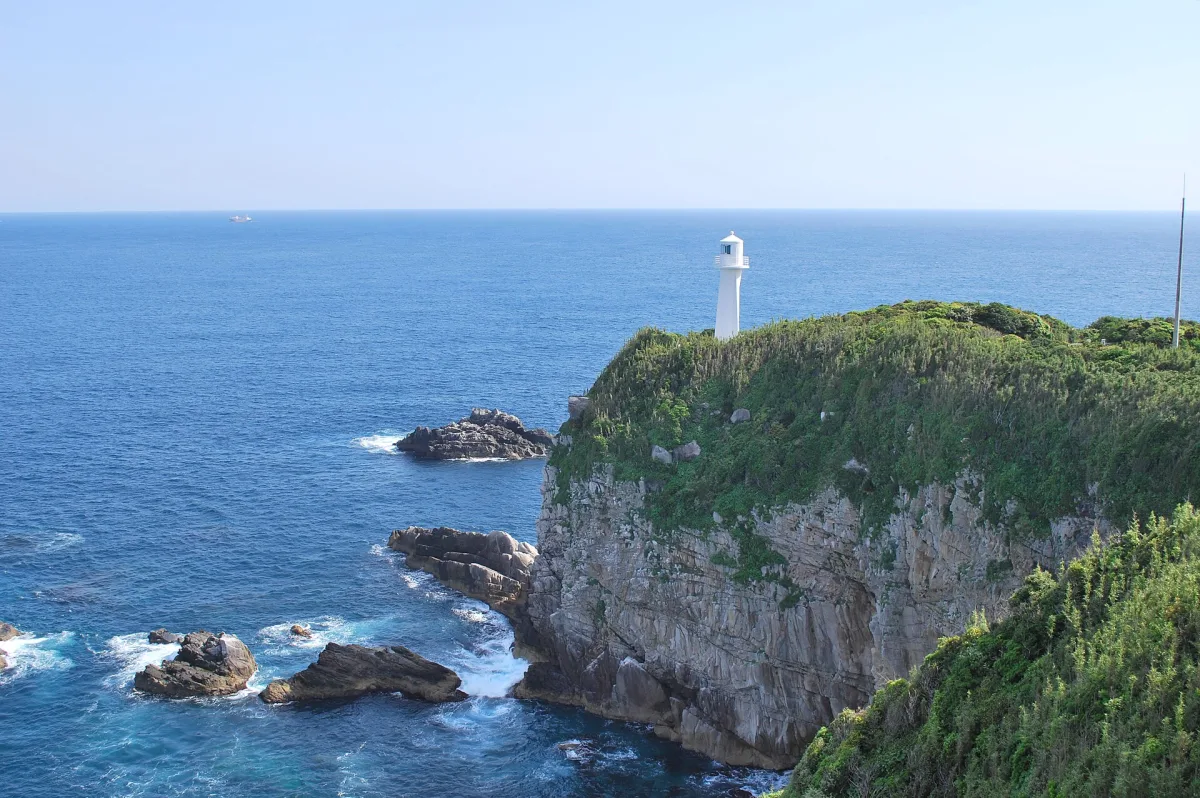
Cape Ashizuri
足摺岬
Shikoku's southernmost point, a cliff-lined cape jutting into the Pacific. The viewpoint's 270-degree curving horizon makes you feel the Earth is round.
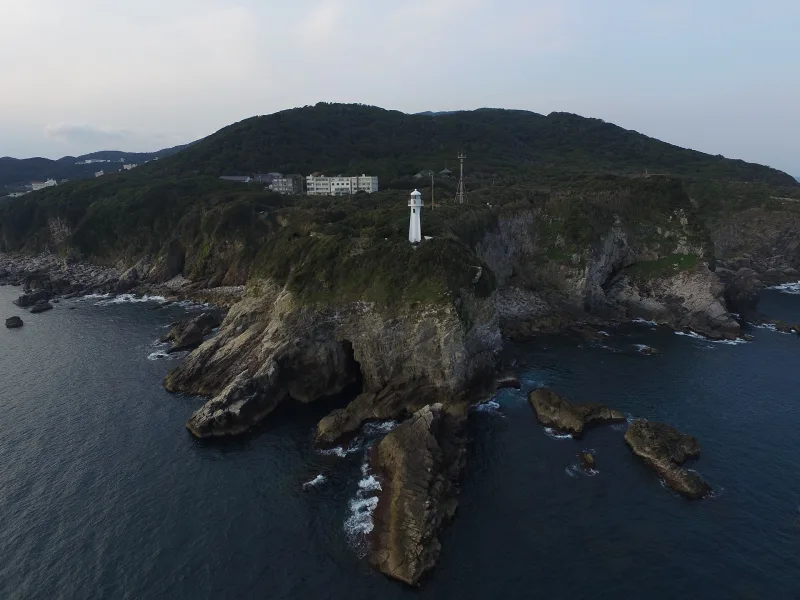
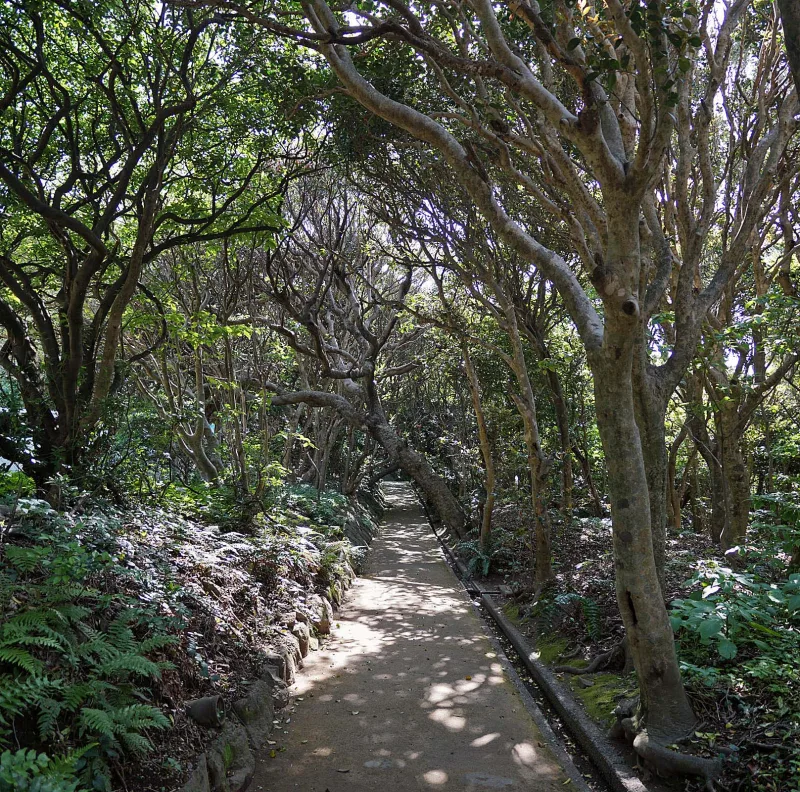
The southern tip of Shikoku
Cape Ashizuri, in Tosashimizu city in south-western Kochi Prefecture, is the southernmost point of Shikoku. It is the centrepiece of Ashizuri-Uwakai National Park, with tall cliffs running along the Pacific.
From the viewpoint at the tip, the view opens up across 270 degrees and the distant horizon bends like an arch. You can also watch big ships passing offshore. It is a good place to see the sunrise, too, and every New Year's Day crowds come to watch the first sunrise of the year. The Michelin Green Guide Japon gives two stars both to "Cape Ashizuri" and to "the view from Cape Ashizuri".
The lighthouse and the statue of John Manjiro
Standing on the cliff top, the Ashizuri-misaki Lighthouse is 18 metres tall and one of the largest in Japan. It has watched over passing ships since it was first lit in 1914 (Taisho 3).
In the square leading to the viewpoint is a bronze statue of John Manjiro. Manjiro was born in 1827, the son of a fisherman, in Nakanohama here in Tosashimizu. After being shipwrecked at sea he ended up in America, where he learned English, navigation and surveying, and then came back to Japan while it was still closed to the outside world. He had a great influence on the activists of the Bakumatsu, the last years of the Edo period. In his hands the statue holds a compass and a set square, essential tools for navigation and surveying.
"The Cape of Camellias" and Kongofuku-ji
Cape Ashizuri is also known as "the Cape of Camellias": about 150,000 wild camellias grow across the Ashizuri Peninsula, about 60,000 of them at the tip of the cape alone. They are at their best around February each year.
The area at the tip of the cape was originally the grounds of Kongofuku-ji, Temple No. 38 of the Shikoku 88 Temple Pilgrimage (a pilgrim route around 88 temples linked to the monk Kobo Daishi). Kongofuku-ji is an old temple said to date from 822, and it is the southernmost of the Shikoku pilgrimage temples. Along the coastal path are legendary spots known as the "Seven Wonders of Ashizuri", each with its own sign.
Hakusan Domon, and getting there
Near the tip of the cape is Hakusan Domon, a natural arch that the rough Pacific waves have bored through a granite outcrop. It is 16 metres high and 17 metres wide, said to be one of the largest granite arches in Japan, and it is a natural monument of Kochi Prefecture. From the path down by the road, steep steps lead down about 10 minutes to the shore, where you can see it up close. Near the top of the path there is also a footbath where you can soak your feet while looking at the arch.
By public transport, take a Kochi Seinan Kotsu bus to the Ashizuri Misaki stop, which is just a short walk away. If you drive, there are car parks at the tip of the cape and around it.
Tips
- On weekends, public holidays and during long school holidays, volunteer guides show visitors around from the Cape Ashizuri Tourist Information Centre in the square with the John Manjiro statue. There are also guided tours of the "Seven Wonders of Ashizuri" (reservation required).
- The steps down to Hakusan Domon are steep, so wear comfortable shoes, and do not go down in bad weather.
- The cape's sights are linked by a coastal footpath of about 2 km, so you can walk to the lighthouse, the viewpoint and the Seven Wonders.
Sources
- 足摺岬・足摺岬灯台|土佐清水市観光協会 (opens in a new tab)
- ジョン万次郎銅像|土佐清水市観光協会 (opens in a new tab)
- 第38番札所 金剛福寺|土佐清水市観光協会 (opens in a new tab)
- 白山洞門|土佐清水市観光協会 (opens in a new tab)
- Cape Ashizuri|VISIT KOCHI JAPAN (opens in a new tab)
Updated 30 September 2026. Opening hours and prices change, so check the official site before you go.