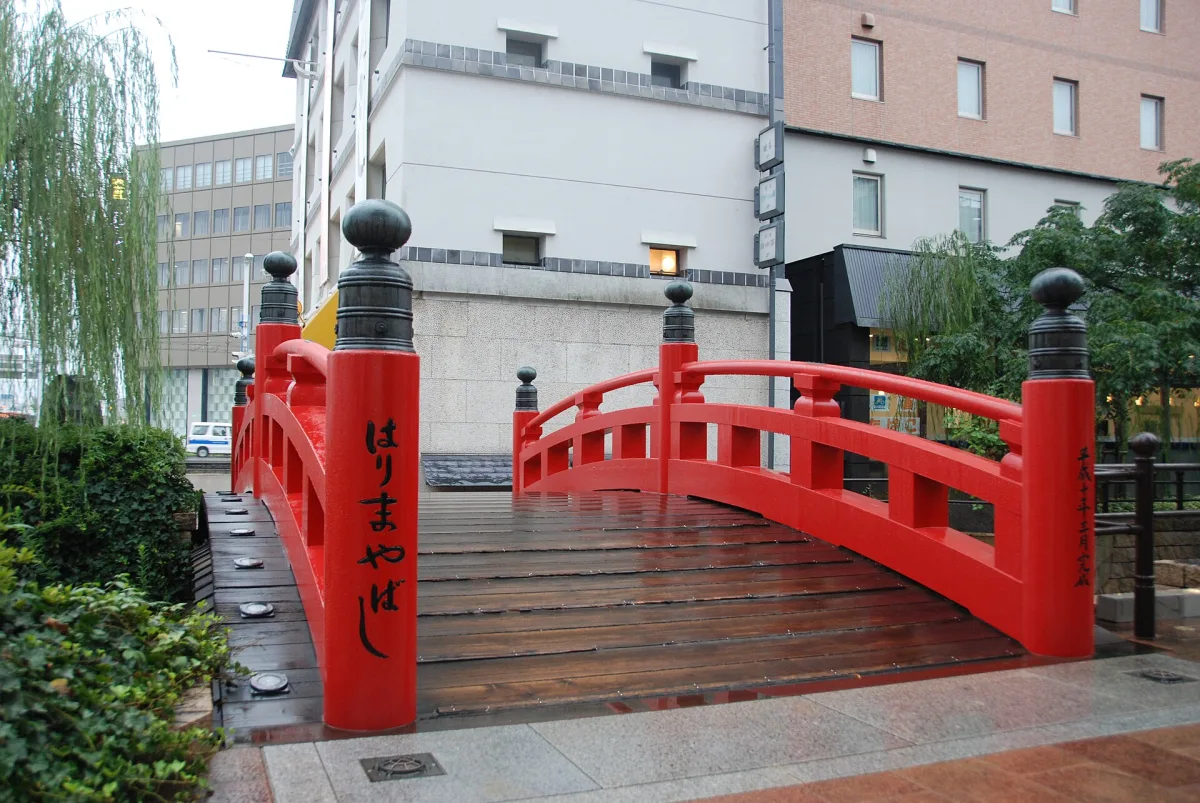
Harimaya Bridge
はりまや橋
A small red bridge in central Kochi, setting of a monk's love story in the folk song Yosakoi-bushi. Every local knows it; a handy start for a city walk.
A bridge that linked two merchant houses
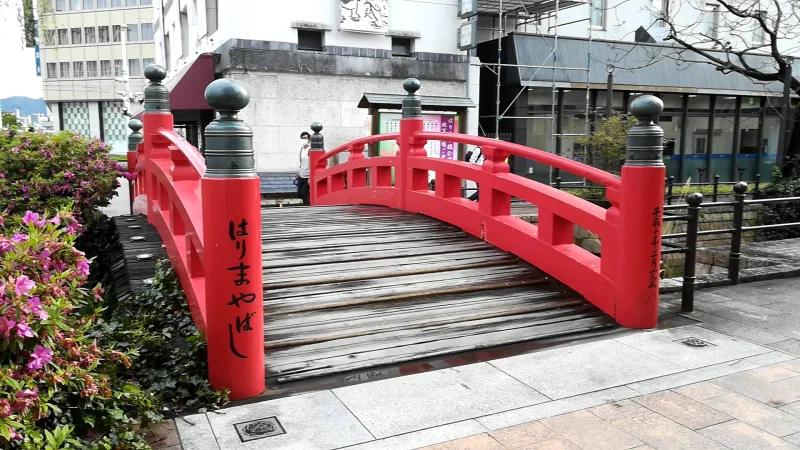
Harimaya Bridge is in Harimaya-cho, in the centre of Kochi City. It is said to have begun in the early Edo period as a bridge built by two merchants, Harimaya and Hitsuya, whose houses faced each other across a moat, so they could go back and forth. Its name comes from Harimaya.
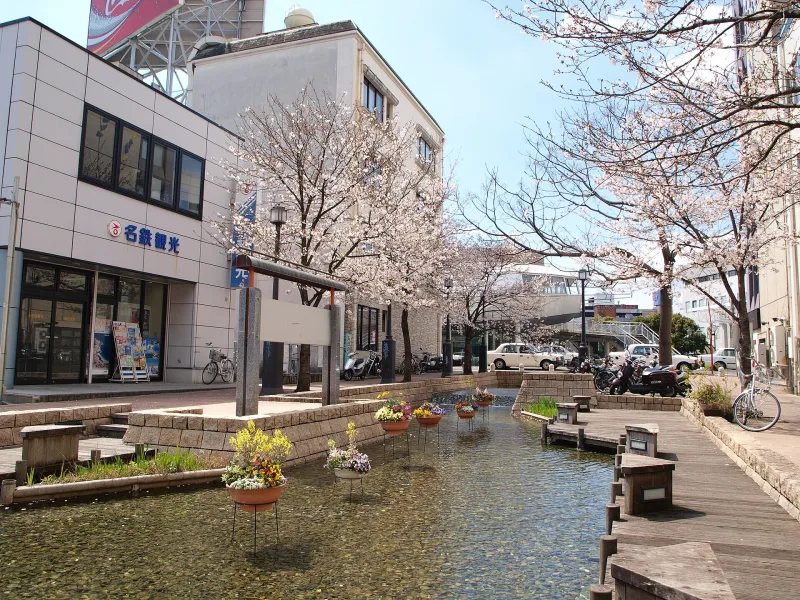
The bridge has been rebuilt many times since. It became an iron bridge in 1908 and a concrete one in 1929. Today the area around it has been laid out as Harimaya Bridge Park, and in 1998 a bridge with vermilion-lacquered rankan (railings) was recreated.
"I saw a monk buying a hairpin"
What made the bridge famous is Yosakoi-bushi, a Kochi folk song. One verse goes: "Tosa no Kochi no Harimaya-bashi de, bosan kanzashi kau wo mita", "At Harimaya Bridge in Kochi, Tosa, I saw a monk buying a kanzashi." A kanzashi is an ornament a woman wears in her hair. The lyric, about spotting a monk buying one at Harimaya Bridge, sings of a love affair.
That love affair is the tragic story of Junshin, a monk at Chikurin-ji temple on Mount Godai, and Ouma, of a family of ikakeya (craftsmen who mended pots and pans). The tale has been handed down together with Harimaya Bridge, where it is set. Yosakoi-bushi is still sung today, and a verse of it is also used in Kochi's Yosakoi Festival.
Keep your expectations modest, and use it as a starting point
The bridge is small, only about 20 m long, and surrounded by buildings and a main road. That is why it is sometimes jokingly called one of Japan's "three great disappointing sights", along with the Sapporo Clock Tower and others. It is best enjoyed as a quick stop to see the place from the song.
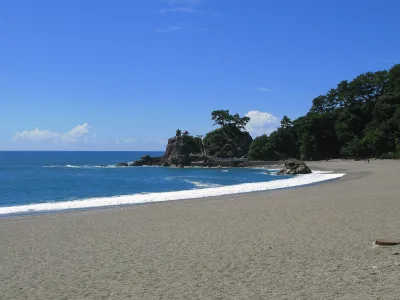
On the east side of the park is a mechanical clock where figures of Ryoma and Katsurahama appear to the melody of Yosakoi-bushi. At the nearby crossroads, the tram lines cross each other at right angles, so you can watch the trams coming and going.
Getting there
It is about a 10-minute walk from JR Kochi Station. It is right next to the Harimaya-bashi tram stop on the Tosaden Kotsu tram line, and Tosaden Kotsu buses to Katsurahama also leave from Harimaya Bridge. There is no dedicated car park.
Tips
- It is easy to drop by while sightseeing in Kochi City, for example on the way to Kochi Castle or Katsurahama. Pop over for a quick look when you are changing trams or buses.
- The mechanical clock performs at set times. Check the times on the information on site.
- If you are driving, there is no dedicated car park, so use one of the paid car parks nearby.
Sources
- はりまや橋 | 高知県観光情報Webサイト こうち旅ネット
- はりまや橋 - Wikipedia
- よさこい節 - Wikipedia
- 桂浜ってどんなところ?アクセスや見どころ【高知県公式】高知家の◯◯(はりまや橋からのバス)
Updated 28 September 2026. Opening hours and prices change, so check the official site before you go.
.jpg)

