Kochi Castle
高知城
The only castle in Japan where both an Edo-period keep and palace survive. On a hill in central Kochi, walk from the lord's rooms to the top of the keep.
A castle with its inner citadel intact
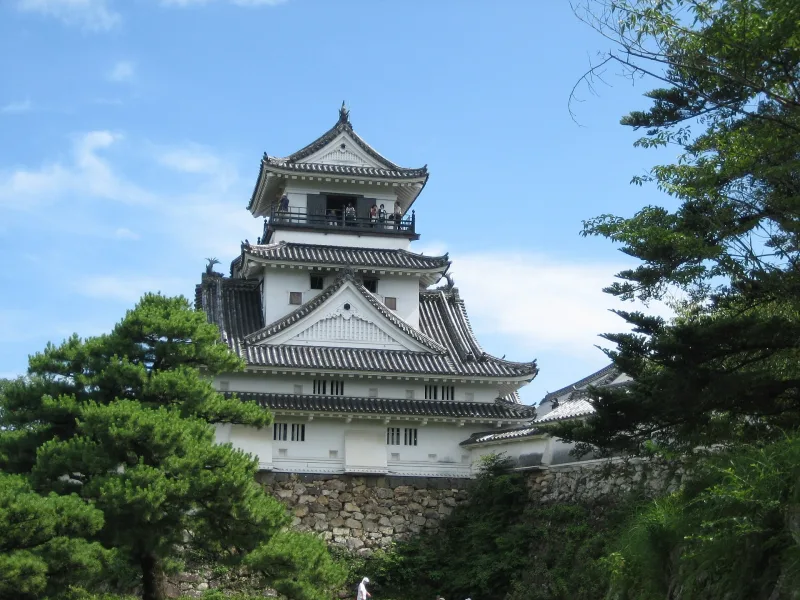
Kochi Castle stands on Otakasaka-yama, a hill in the centre of Kochi city. Yamauchi Kazutoyo, who was given Tosa (today's Kochi Prefecture) after the Battle of Sekigahara, began building it in 1601, and it was completed in 1611.
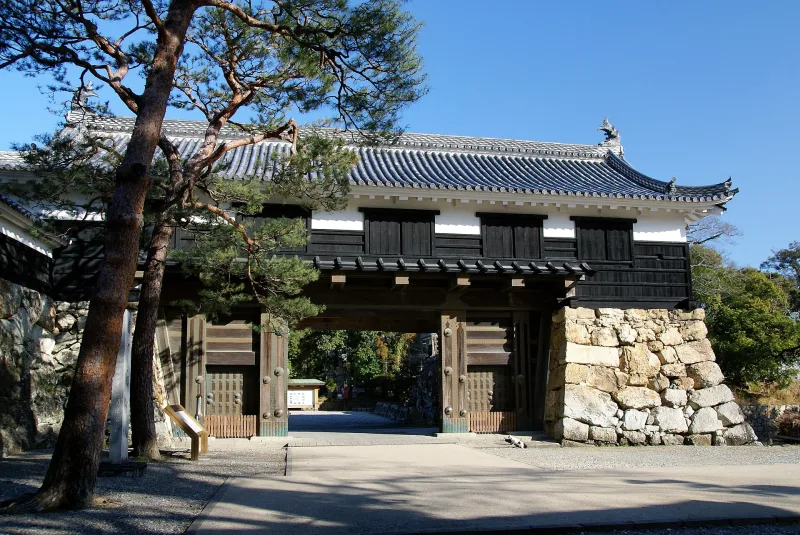
A great fire in 1727 destroyed almost everything except the Otemon (the castle's main front gate), but it was rebuilt to its original form by the mid-18th century. It went on to survive the abolition of castles in the Meiji era and the air raids of the Second World War, and 15 structures, including the keep, the Honmaru Palace and the Otemon, are national Important Cultural Properties.
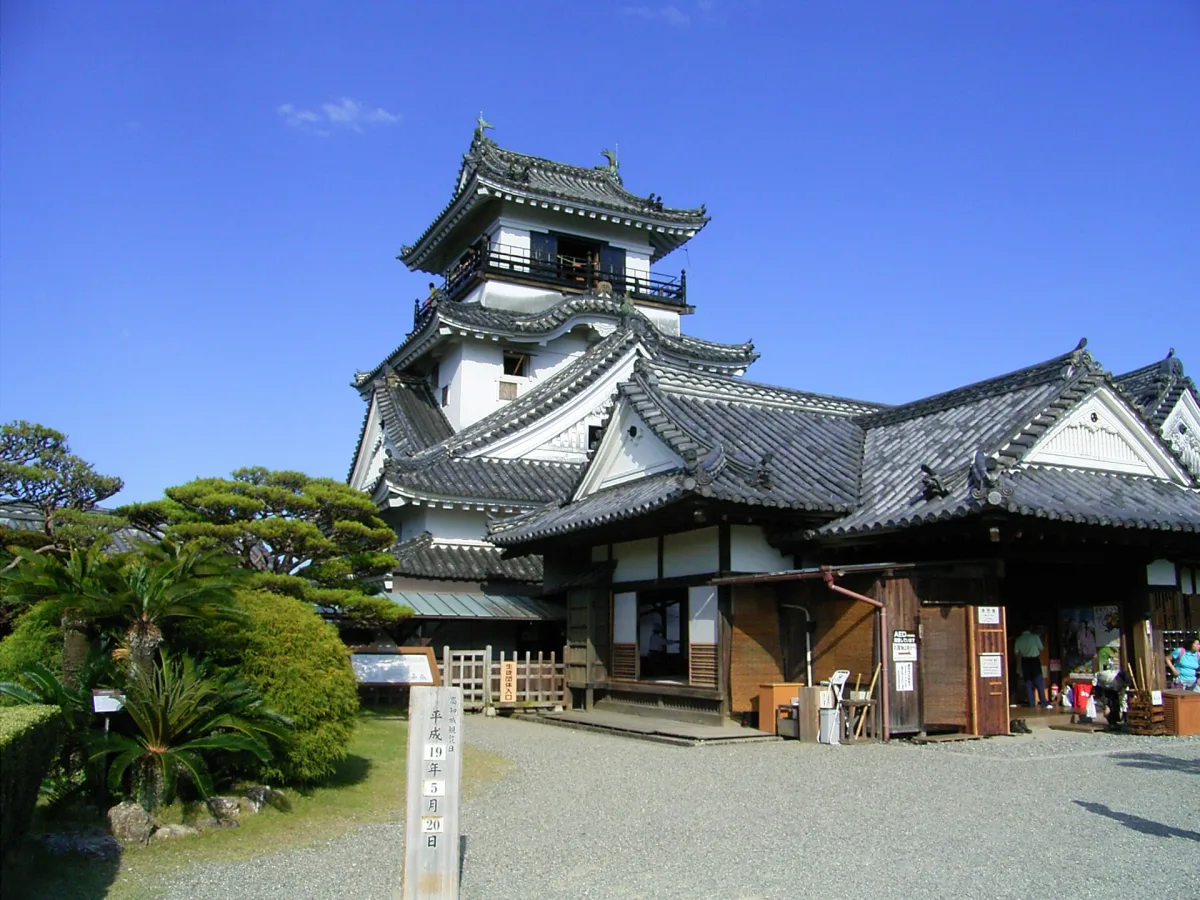
There are 12 castles in Japan whose keeps date from the Edo period or earlier, but of these, Kochi Castle is the only one where the honmaru goten (the palace used by the domain's lord) also survives. It is also known as a castle where all the buildings of the honmaru (inner citadel) remain complete.
From palace to keep
The Honmaru Palace, also called Kaitokukan, is connected to the keep. It has rooms such as the Jodan-no-ma, where the lord sat, and its ranma (openwork carved panels above the rooms) are carved with the rough waves of Tosa. Kochi Castle is also the only one where a palace still connects directly to the keep in this way.
The keep looks four-tiered from outside but has six floors inside, and is 18.5 m tall.
Gates and stone walls
Only three castles still have both their Otemon and their keep: Kochi Castle, Marugame Castle (Kagawa Prefecture) and Hirosaki Castle (Aomori Prefecture). From in front of the Otemon you can fit the gate and the keep into a single photo.
Most of the stone walls are nozurazumi, built by stacking natural stones as they are. The Tsumemon, a turret gate spanning the moat between the Honmaru and Ninomaru, is a design found only at Kochi Castle. The gates and keep also still have ishiotoshi (openings for dropping stones on attackers) and shinobigaeshi (iron spikes to stop enemies climbing over walls).
Kochi Park, where the castle stands, also has statues of Yamauchi Kazutoyo and his wife Chiyo.
Getting there
The castle is about 25 minutes' walk from JR Kochi Station, or about 10 minutes by bus. You can also walk from the Kochijo-mae tram stop (Tosaden Kotsu). Walking around the park is free, but there is an admission fee to enter the keep and the Honmaru Palace. Check the official website for opening hours and fees.
Tips
- Because the buildings are cultural properties, many paths in the park are unpaved and there are no ramps inside the buildings. Wear comfortable shoes.
- There are free coin lockers and volunteer guides (according to the official website).
- The keep and Honmaru Palace close over New Year (26 December to 1 January). Opening hours are sometimes extended during holidays, so check the notices on the official website.
Sources
Updated 28 September 2026. Opening hours and prices change, so check the official site before you go.