Japan is Nippon
To-ji Temple
東寺
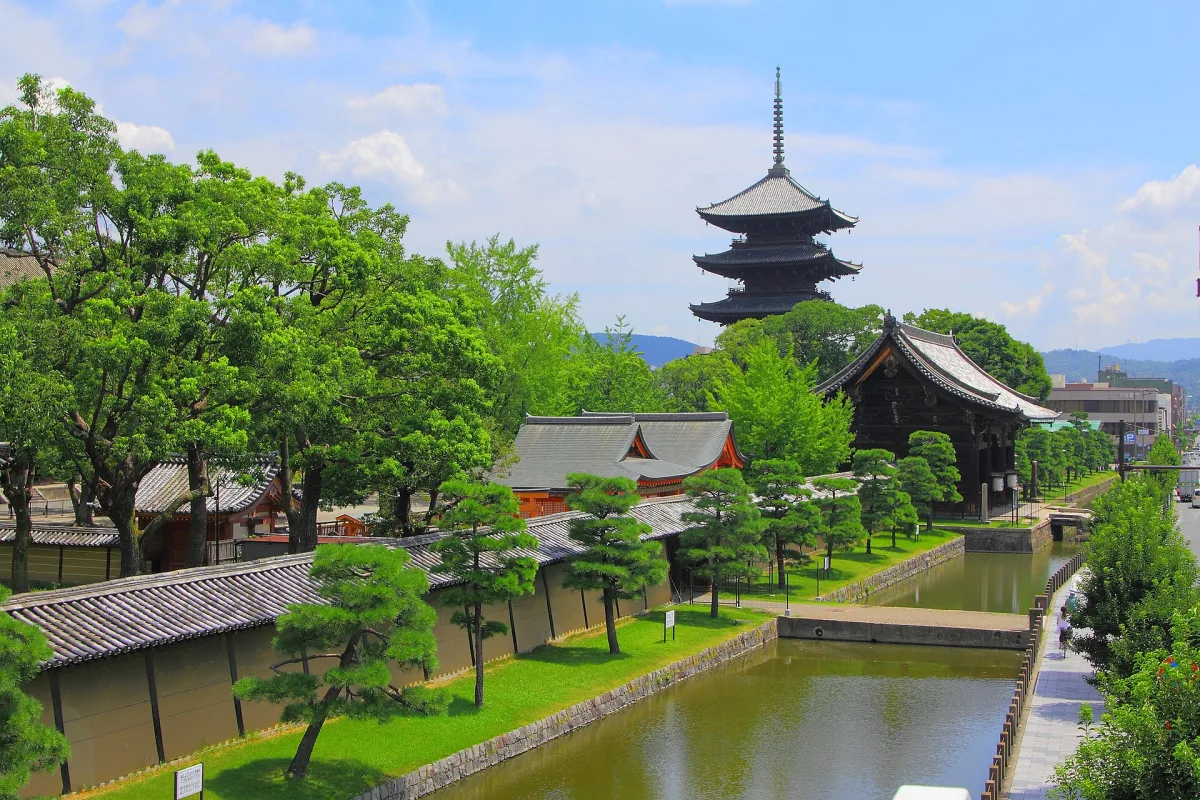
A World Heritage temple within walking distance of Kyoto Station, home to Japan's tallest wooden pagoda (about 55m) and a hall of statues forming a 3D mandala.
A temple built at the gateway to the old capital
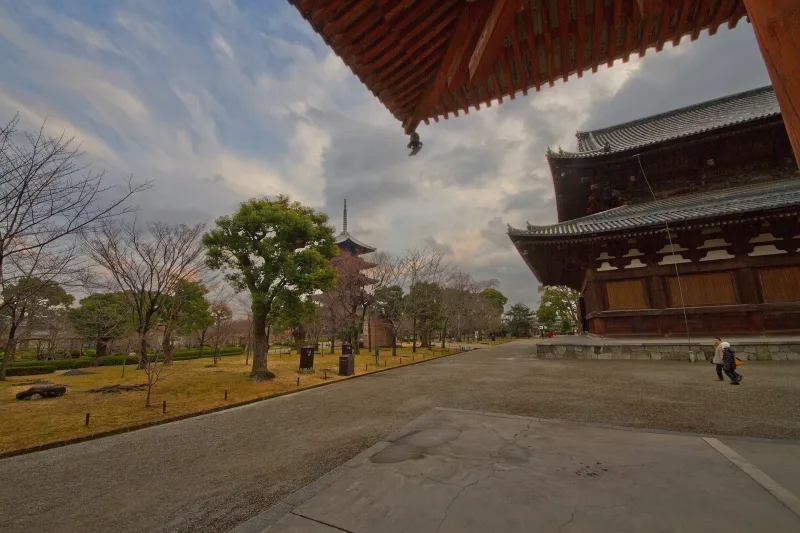
To-ji's formal name is Kyo-o-gokoku-ji, and it is the head temple of the Shingon school of Buddhism. When the capital moved to Heian-kyo (today's Kyoto), the temple was built on the east side of Rajomon, the great gate at the southern entrance to the city.
The temple was later entrusted to Kobo Daishi Kukai, and it became the central training centre for Esoteric Buddhism (mikkyo), a form of Buddhism that places great weight on secret teachings and rituals. With 1,200 years of history, it is also a UNESCO World Heritage Site.
Japan's tallest wooden pagoda
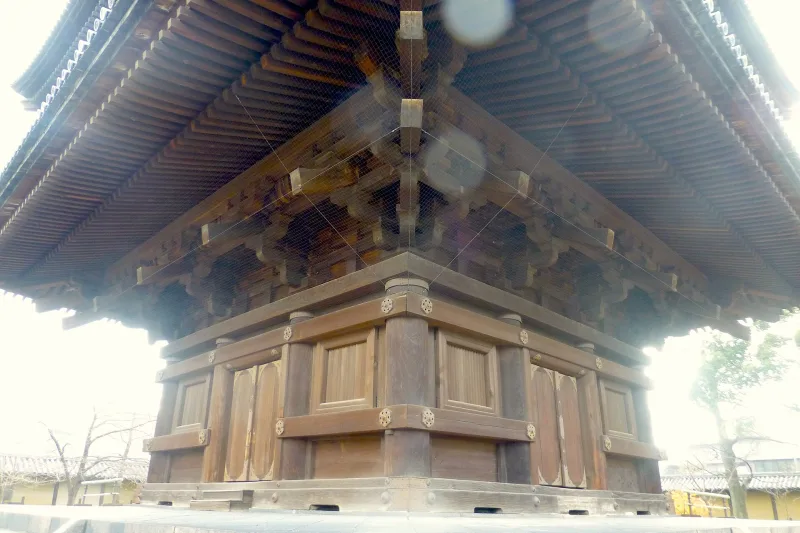
The symbol of the temple is its five-storey pagoda, about 55m tall. It is the tallest wooden pagoda in Japan and a landmark on the Kyoto skyline; you can even see it from the shinkansen (bullet train).
Kukai began building the pagoda, but it was lost four times to lightning strikes and other disasters, and rebuilt each time. The current pagoda is the fifth, rebuilt in 1644 (the 21st year of the Kan'ei era) by Tokugawa Iemitsu, the third shogun of the Edo shogunate. It holds busshari, relics of the Buddha himself, which Kukai brought back from Tang-dynasty China. The inside of the ground floor is not normally open to the public.
The "3D mandala" in the Lecture Hall, and the Main Hall
Inside the Lecture Hall (Kodo), 21 Buddhist statues are arranged into a rittai mandala, a three-dimensional mandala. A mandala is a picture of the Buddhist world as Esoteric Buddhism sees it; here, it is expressed in statues set out in three dimensions. Kukai worked on this hall even before the pagoda.
The Main Hall (Kondo) enshrines the temple's principal image, Yakushi Nyorai, the Buddha of healing. The Main Hall, the Lecture Hall and the Rengemon gate, among others, are designated National Treasures. The treasure house opens during its special exhibitions in spring and autumn.
Getting there, and the Kobo-ichi market on the 21st
It is about a 15-minute walk from the Hachijo exit of JR Kyoto Station, or about 10 minutes on foot from To-ji Station on the Kintetsu Kyoto Line. City buses also run there from outside Kyoto Station.
On the 21st of every month, the day linked to Kukai's death, the temple holds Kobo-ichi, an ennichi (temple fair day). More than 1,000 stalls selling antiques, second-hand clothes, old tools and food fill the grounds, and crowds pour in. The January market is called Hatsu-Kobo (the first Kobo) and the December one Shimai-Kobo (the last Kobo).
Tips
- On Kobo-ichi market days (the 21st of every month) the car park cannot be used, so come by train or bus.
- In autumn 2026 the treasure house is planning a special exhibition on the art and history of the five-storey pagoda, along with an autumn-leaves illumination (special night-time opening). Check the official website for dates.
- Opening hours and admission fees can change with the season, so check the official website.
Sources
- 東寺(教王護国寺)公式サイト (opens in a new tab)
- 五重塔|東寺 (opens in a new tab)
- 境内案内|東寺 (opens in a new tab)
- 交通アクセス|東寺 (opens in a new tab)
- 世界遺産(世界文化遺産)教王護国寺(東寺)|京都府 (opens in a new tab)
- 弘法市【東寺】|京都観光Navi(京都市公式) (opens in a new tab)
Updated 30 September 2026. Opening hours and prices change, so check the official site before you go.