Kinkaku-ji (Golden Pavilion)
金閣寺
A Zen temple in north Kyoto whose gold-leafed pavilion is mirrored in its pond. Once shogun Ashikaga Yoshimitsu's villa; formally named Rokuon-ji.
From a shogun's villa to a Zen temple
The formal name of Kinkaku-ji is Rokuon-ji. It is a temple of the Shokoku-ji branch of Rinzai Zen in Kyoto's Kita Ward, and one of the tatchu (sub-temples belonging to a large temple) of Shokoku-ji. "Kinkaku-ji" is a popular name taken from the golden reliquary hall in its grounds, the Kinkaku ("Golden Pavilion").
It began as Kitayama-dono, a villa built in 1397 by Ashikaga Yoshimitsu, the third shogun of the Muromachi shogunate, and became a Zen temple after his death. The Golden Pavilion is the defining building of Kitayama culture in the early Muromachi period. In 1994 it was inscribed as a World Heritage Site as part of the "Historic Monuments of Ancient Kyoto".
A pavilion with a different style on each floor
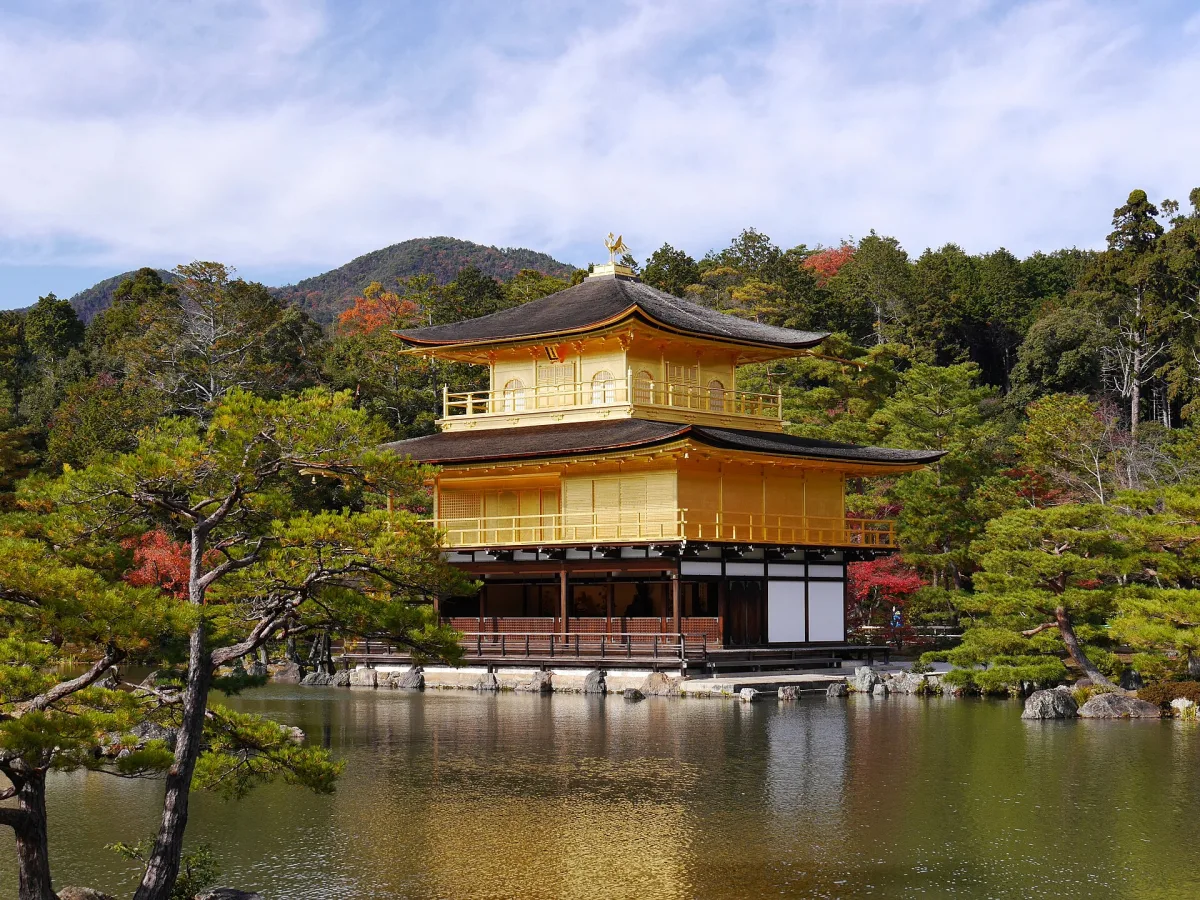
The Golden Pavilion has three storeys, each built in a different architectural style: the first in the style of an aristocrat's residence, the second in the style of a samurai residence, and the third in the style of a Zen Buddhist hall. The outside of the second and third floors is covered in gold leaf, and a statue of a phoenix (hoo, a legendary bird) stands on the roof.
According to the temple, the first floor housed a Shaka (Buddha) triad, the second a Kannon, and the third a relic of the Buddha (busshari, remains of the historical Buddha). You cannot go inside the pavilion; you view its exterior from places such as the far side of the pond.
Destroyed by fire in 1950 and rebuilt
The pavilion you see today is not the original Muromachi-period building. In 1950 it was burned down in an arson attack by a young monk of the temple, and it was rebuilt in 1955. The incident became the subject of the novel The Temple of the Golden Pavilion by the writer Mishima Yukio. From 1986 to 1987 major restoration work was carried out, including replacing the gold leaf.
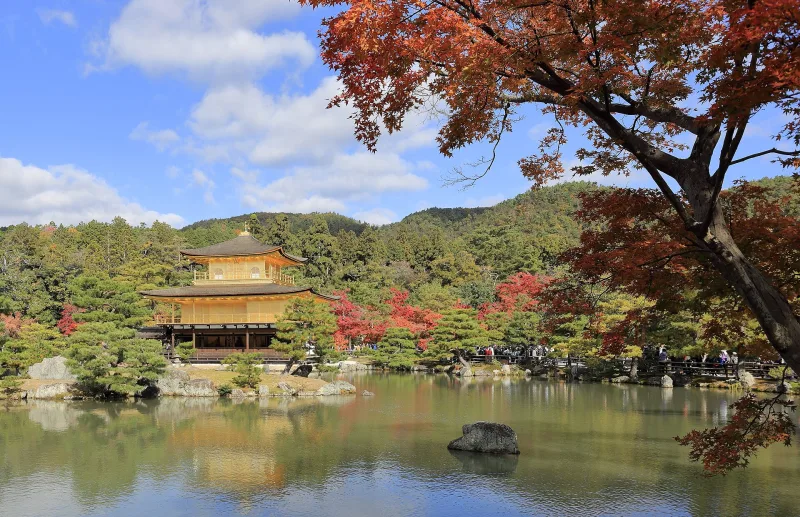
Kyoko-chi, the "mirror pond" in front of the pavilion, is dotted with islands and stones, and on clear days the pavilion is reflected in the water. The garden is designated a Special Historic Site and Special Place of Scenic Beauty.
Getting there and what to look for
The nearest bus stop is "Kinkakuji-michi" on the city bus network. You can take a city bus from Kyoto Station, or ride the Karasuma subway line to Kitaoji Station and change to a route 204 or 205 bus.
JNTO highlights how the pavilion looks different in each season, above all the winter scene when it is covered in snow. Visiting hours and admission fees can change, so check the official website.
Tips
- You cannot go inside the Golden Pavilion. The usual way to see it is from outside, across the pond.
- When snow settles in winter, you may get to see the pavilion dusted in white. If you are visiting Kyoto in winter, keep an eye on the weather forecast.
- From Kyoto Station there are direct buses, or you can take the Karasuma subway line to Kitaoji Station and change to a bus.
Sources
Updated 28 September 2026. Opening hours and prices change, so check the official site before you go.