Japan is Nippon
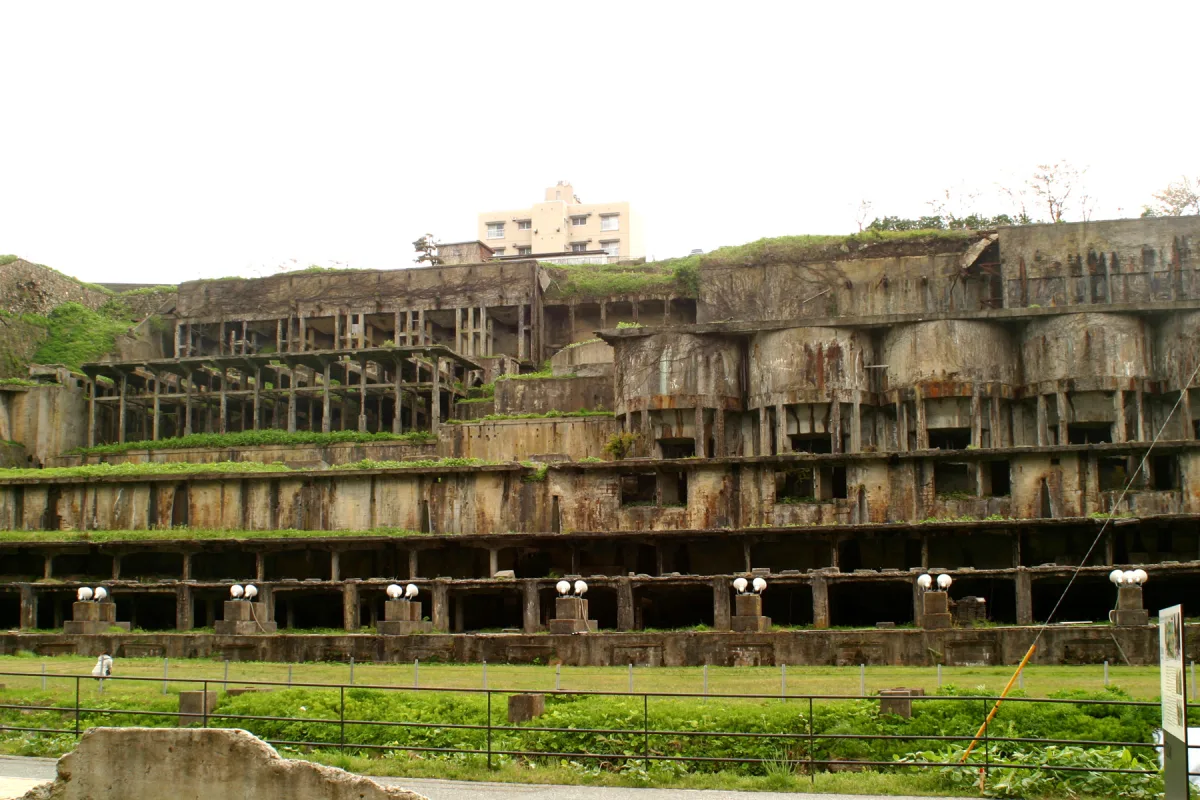
Kitazawa Flotation Plant Ruins
国史跡 北沢浮遊選鉱場跡
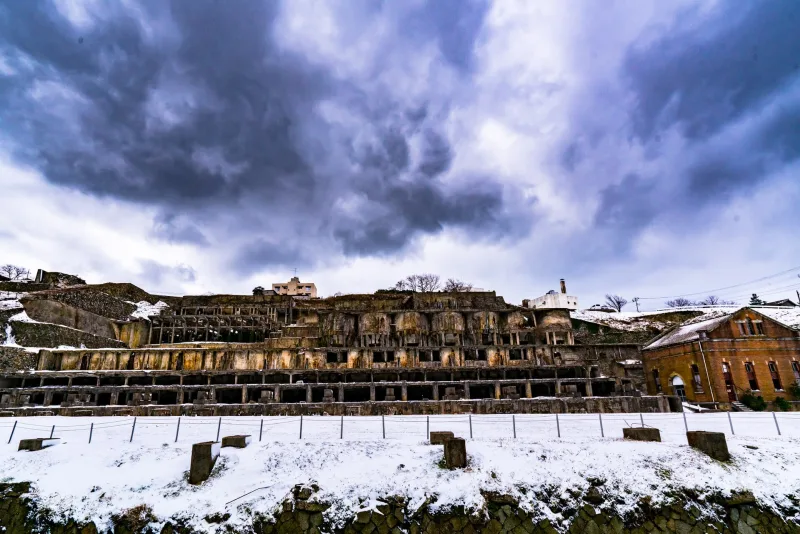
Huge concrete ruins on Sado Island where gold and silver ore was sorted. Ivy-covered and terraced, they are dubbed "Sado's Laputa" and lit up at night.
A plant hailed as "the best in the East"
Sado Island lies off the coast of Niigata Prefecture and prospered as a source of gold and silver from the Edo period onwards. The Kitazawa Flotation Plant is what remains of a facility in the Aikawa district, on the west side of the island, where ore from the Sado Gold and Silver Mine was sorted.
Flotation is one way of separating gold, silver and other valuable components from the ore that has been dug out. The method was originally used in copper production; it was adapted for gold and silver and put into practical use for the first time in Japan around 1940 (Showa 15). Under wartime plans to raise output, large-scale equipment was installed, and because it could process up to 50,000 tonnes of ore a month it was called "the best in the East".
The concrete ruins and the thickener
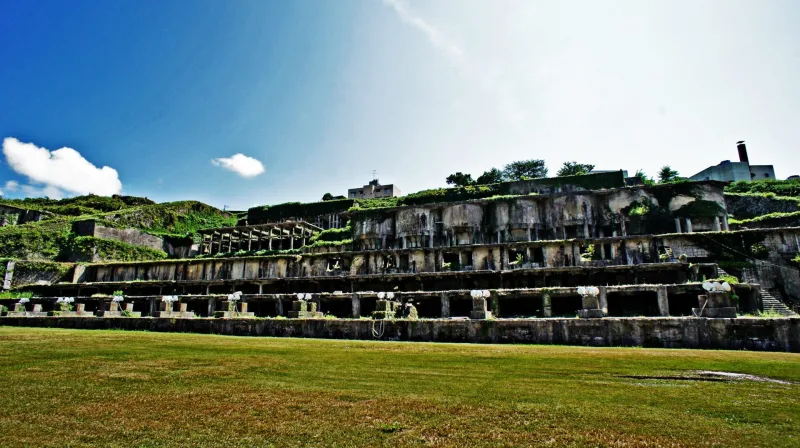
The plant stopped working in 1952, when the mine was drastically scaled back. Today only its concrete framework remains, stacked in terraces up the hillside, and because it is draped in green ivy it is sometimes called "Sado's Laputa", after the floating castle in the Studio Ghibli film Castle in the Sky.
In front of the plant, one circular thickener, 50m across, survives. It was used to separate water from ore in a muddy, slurry-like state. The Kitazawa area is home to a cluster of facilities that supported the modernisation of the mine, such as the remains of a brick thermal power station built from the Meiji period onwards, and it is a National Historic Site.
Night-time illuminations and a café
At night the ruins and the thickener are lit up with multicoloured LEDs. In 2026 this is scheduled from 17 April to 5 January 2027. Times vary through the season, so check Sado City's tourism site, Sado Kanko Navi.
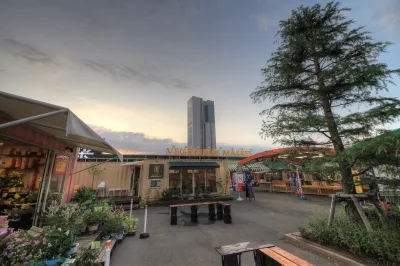
KITAZAWA KICHI, a community space in a converted warehouse in front of the plant, has a café on its 2nd floor with views over the plant and the thickener.
Getting there
It is about 50 minutes by car from Ryotsu Port, the gateway to Sado Island. By local bus, take a bus bound for Aikawa; the ruins are about 2 minutes' walk from the nearest stop. There is a car park for about 30 cars.
Nearby are several places where you can explore the history of the gold and silver mine, such as the Sado Magistrate's Office, a reconstruction of the Edo-period government office, and the Aikawa Folk Museum, so it is well worth walking round them too.
Tips
- The mood by day and by night is completely different. If you can, see it once in daylight and come back again when it is lit up.
- Getting around Sado Island takes time. If you are touring by bus, check the time of your return bus first.
- The ruins are outdoors, so watch your step on rainy days and in winter.
Sources
- 北沢浮遊選鉱場 | さど観光ナビ (opens in a new tab)
- 北沢浮遊選鉱場ライトアップ(2026年4月17日~2027年1月5日) | さど観光ナビ (opens in a new tab)
- 北沢浮遊選鉱場 | にいがた観光ナビ (opens in a new tab)
- 北沢浮遊選鉱場 - Wikipedia (opens in a new tab)
Updated 30 September 2026. Opening hours and prices change, so check the official site before you go.