Niigata
Niigata runs from snowy mountains to the Sea of Japan, with rice paddies, skilled metalworkers, lively festivals and Sado Island, a world of its own.
Map outlines: Natural Earth
-
1
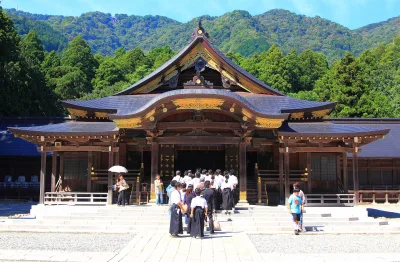 Yahiko Shrine
The top shrine of old Echigo, fondly called Oyahiko-sama in Niigata. In its deep forest you pray with two bows, four claps and a bow, unlike most shrines.
Yahiko Shrine
The top shrine of old Echigo, fondly called Oyahiko-sama in Niigata. In its deep forest you pray with two bows, four claps and a bow, unlike most shrines.
-
2
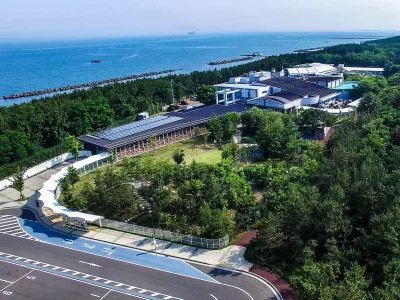 Niigata City Aquarium Marinepia Nihonkai
Niigata City's aquarium, one of the largest on the Sea of Japan coast: about 600 species, a tunnel under a giant tank, and dolphin shows.
Niigata City Aquarium Marinepia Nihonkai
Niigata City's aquarium, one of the largest on the Sea of Japan coast: about 600 species, a tunnel under a giant tank, and dolphin shows.
-
3
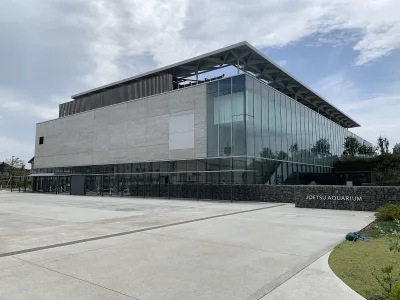 Joetsu City Aquarium Umigatari
Joetsu's aquarium right by the Sea of Japan, with a terrace where the big tank seems to merge into the sea, and Japan's largest group of Magellanic penguins.
Joetsu City Aquarium Umigatari
Joetsu's aquarium right by the Sea of Japan, with a terrace where the big tank seems to merge into the sea, and Japan's largest group of Magellanic penguins.
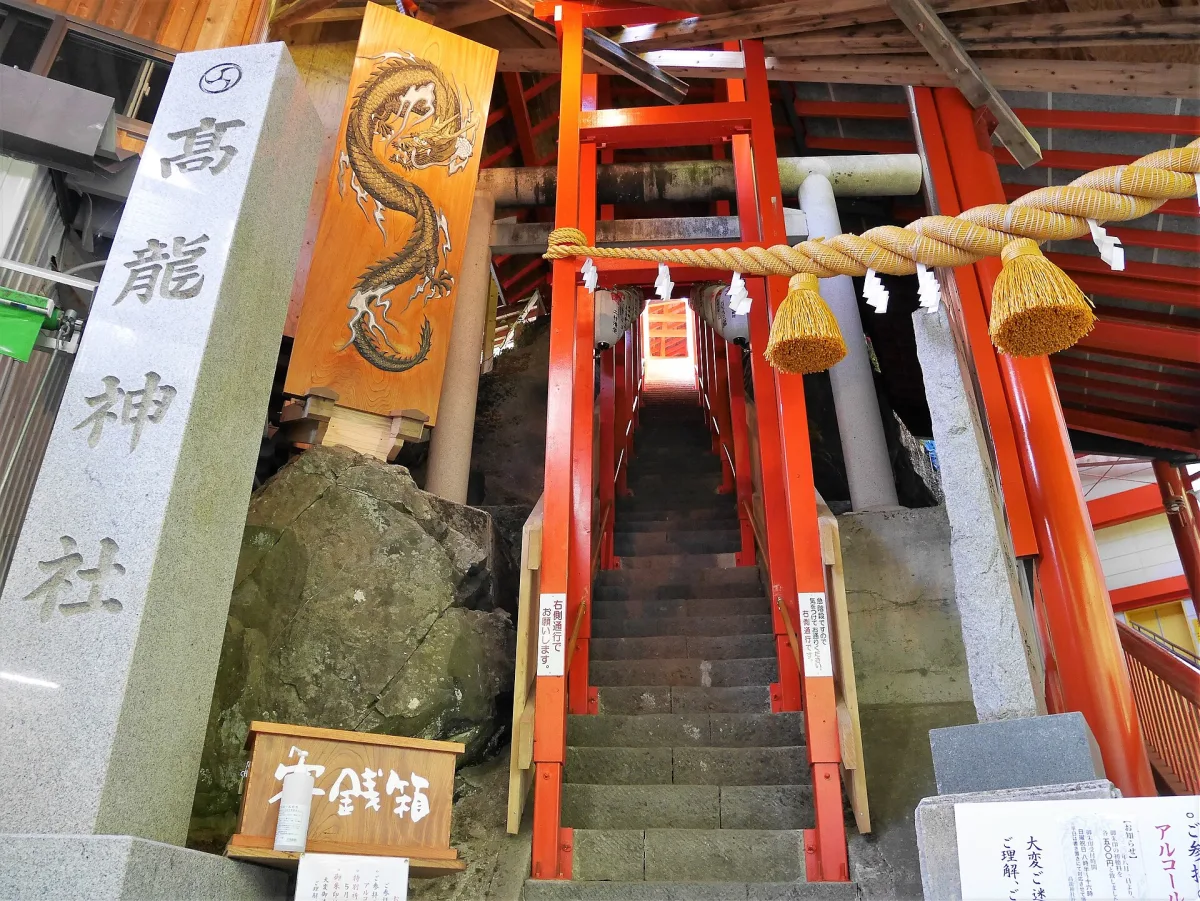

Between the mountains and the sea
Niigata is easier to understand as a journey than as a single destination. Inland, the slopes around Echigo-Yuzawa and Myoko draw winter visitors, and terraced rice fields are another hallmark of the prefecture. There is also a long coastline facing the Sea of Japan, with Sado Island beyond it. Without leaving Niigata, you can travel from ski towns to farming villages and on to port towns.
These contrasts shape what travellers see. In the mountains, snow and onsen (hot springs) are part of the experience. On Sado, the rocky coastline gives the island a character all its own. Rather than expecting the whole prefecture to share one mood, it is better to pick one or two areas.
A castle, mines and a crossing to the island
The castle ruins on Mount Kasugayama in Joetsu recall Uesugi Kenshin, a powerful 16th-century warlord who made his base there. Sado tells a different story. Cut off from the mainland, it was once a place of exile, and those sent there included the Buddhist leader Nichiren. Later, gold and silver mining brought the island to the attention of the Tokugawa shogunate, the samurai government that ruled Japan in the Edo period.
The Sado Island Gold Mines were inscribed as a UNESCO World Heritage Site in 2024. The surviving landscape includes mining sites, waterways and traces of settlements, making it more than just a story of striking precious metal. Walking through Shukunegi, an old port village on Sado, reveals another side of island life. These places reward you most when you take an interest not only in the gold left behind but in the people who worked, travelled and lived here.
What Niigata grows and makes
The food most closely tied to Niigata is rice. Koshihikari is a variety grown here, and a simple bowl of rice is a good starting point for exploring local meals. Sake (Japanese rice wine) is another regional speciality, often served alongside seafood from the Sea of Japan. For something to eat on the go, try sasa dango: soft, chewy mochi (rice cake) wrapped around sweet bean paste, then wrapped in bamboo leaves and steamed.
There are more food pleasures besides. Hegi soba is soba (buckwheat noodles) made with seaweed as a binder and served in small portions in a wooden tray called a hegi. Beyond food, the Tsubame-Sanjo area has been making metal goods since the Edo period and is still known for its knives, cutlery and tableware. In Tokamachi, silk and hemp textiles form another long craft tradition. Niigata's products invite you to look closely at everyday objects, from the tray to the spoon laid beside it.
Local words and living traditions
One word that captures the heart is jon'nobi, meaning relaxed and taking it easy.
On Sado, the drumming group Kodo has placed taiko (Japanese drums) at the centre of the island's cultural identity. Kodo's Earth Celebration brings musicians and audiences together in Ogi. Another island tradition is the taraibune, a small boat made from a wooden tub, well suited to work along the rocky coast. On the mainland, Joetsu's Kenshin Festival honours the warlord with a procession of warriors.
Niigata's year in changing colours
In spring, cherry blossoms bloom in many places, including around Takada Castle Site Park in Joetsu, while elsewhere rice planting begins. In summer the paddies turn green and fireworks become part of the calendar; the Nagaoka fireworks are especially emblematic of the prefecture. Sado's Earth Celebration adds the sound of drums to the summer. Each is a different way of gathering outdoors, and the same season can feel entirely different from town to town.
Autumn is harvest time, with autumn leaves at places such as Yahiko Park. Then the snow turns attention inland. Echigo-Yuzawa and Myoko are bases for skiing and snowboarding, and hot springs offer a reason for a quieter visit. Winter is more than a photo backdrop: it affects how you get around the prefecture. When planning for the cold season, allow for the distances between places and leave room to enjoy staying put.
Once you arrive, pick a direction
From Tokyo, the Joetsu Shinkansen (high-speed train) stops at Echigo-Yuzawa, Tsubame-Sanjo and Niigata city. The Hokuriku Shinkansen is another route to the Myoko and Joetsu side of the prefecture. Conventional lines link the towns, but if your plans centre on scattered workshops and countryside stops, a car can be handy. In winter, consider travelling by train or bus rather than assuming every country road will be easy to drive.
The usual way to Sado is by crossing from Niigata Port to Ryotsu. Once on the island, the winding roads and scattered sights make it wise to plan how you will get around before you set off. Whether your first stop is a mountain town, a metalworking workshop or the ferry terminal, Niigata makes more sense when you give time to each area rather than making a quick detour.
Sources
- Niigata | Hokuriku Shinetsu | Destinations | Travel Japan - Japan National Tourism Organization (Official Site)
- Sado Island | Niigata | Hokuriku Shinetsu | Destinations | Travel Japan - Japan National Tourism Organization (Official Site)
- Joetsu | Niigata | Hokuriku Shinetsu | Destinations | Travel Japan - Japan National Tourism Organization (Official Site)
- Tsubame Sanjo | Travel Japan - Japan National Tourism Organization (Official Site)
- Sado Island Gold Mines - UNESCO World Heritage Centre
- 新潟県の方言紹介|新潟ロケーションガイド|【公式】新潟県のおすすめ観光・旅行情報!にいがた観光ナビ
- アクセス(県内から各エリアへ)|【公式】新潟県のおすすめ観光・旅行情報!にいがた観光ナビ