Japan is Nippon
Ishiyama-dera Temple
石山寺
An old Otsu temple where Murasaki Shikibu is said to have begun The Tale of Genji, with National Treasure buildings on a huge rock, and seasonal flowers.
The temple where The Tale of Genji is said to have begun
Ishiyama-dera is a temple in Otsu City, Shiga Prefecture, founded in the Nara period. According to the temple, the monk Roben founded it in 747 (Tenpyo 19) at the wish of Emperor Shomu. It is a sacred site dedicated to Kannon, the bodhisattva of compassion, and is stop No. 13 on the Saigoku Sanjusansho, a pilgrimage round 33 Kannon temples mainly in the Kinki region.
Murasaki Shikibu is said to have come up with the idea for The Tale of Genji while in sanro (staying at a temple to pray) here. Ishiyama-dera also appears again and again in literature by Heian-period women, such as The Pillow Book, The Kagero Diary and The Sarashina Diary. In one corner of the main hall is the Genji no Ma, the room where Murasaki Shikibu is said to have started writing her story.
The giant rock that gave the temple its name
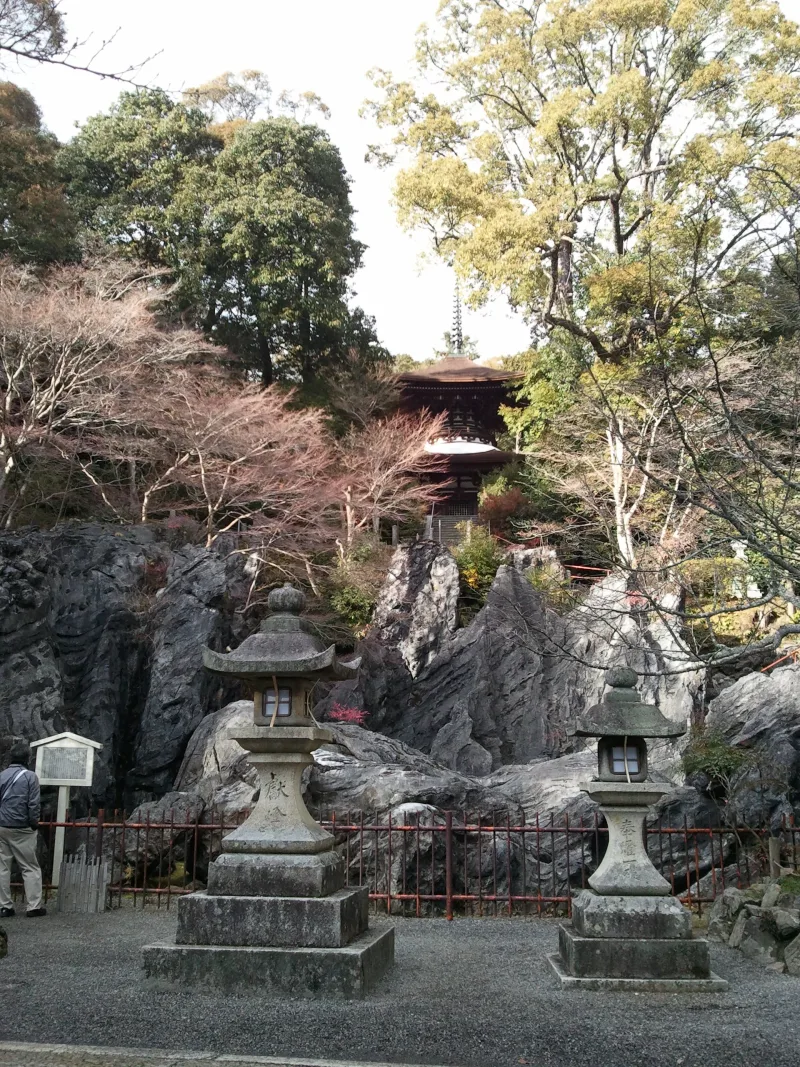
The first thing that catches your eye as you enter is a huge, rugged rock of wollastonite. It formed when limestone came into contact with granite pushing up from underground and was transformed by the heat. Such a large mass is rare, and it is designated a Natural Monument of Japan. The name Ishiyama-dera, "stone mountain temple", comes from this rock.
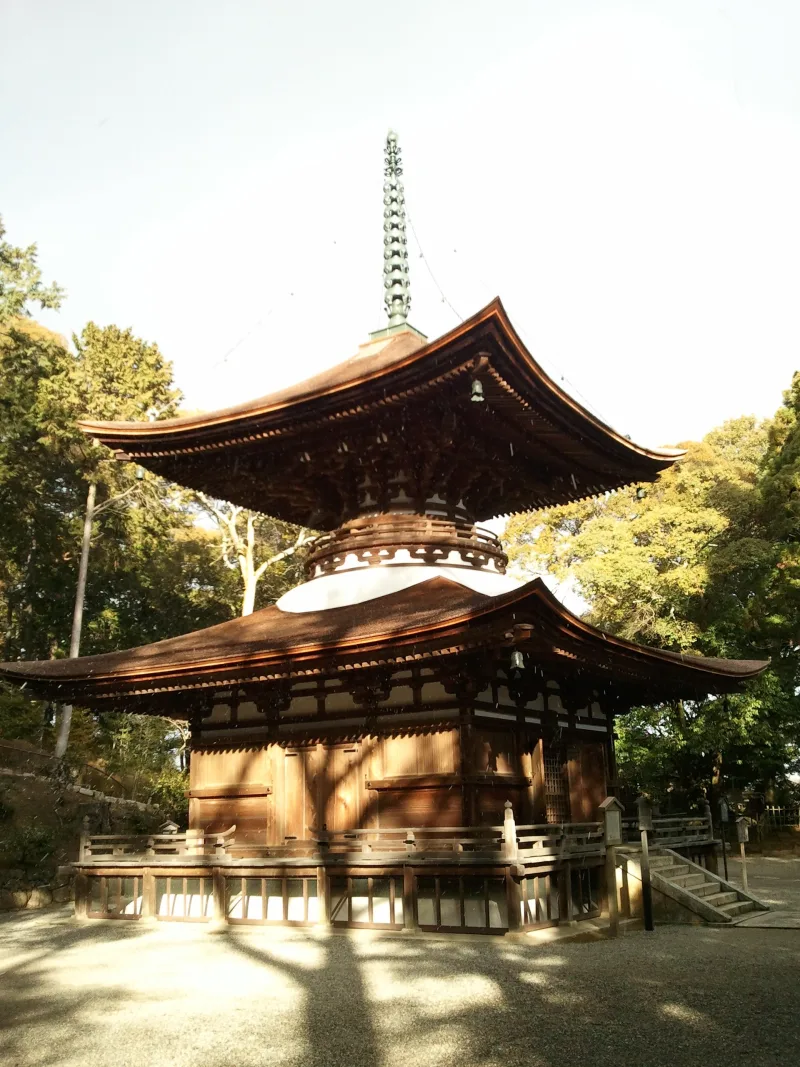
Standing on the rock is the Tahoto, a two-storey pagoda with a square lower level and a round upper level. Built in 1194 (Kenkyu 5) and said to have been donated by Minamoto no Yoritomo, it is a National Treasure. The temple describes it as "the oldest and most beautiful tahoto in Japan". You cannot go inside, but you can pray in front of it.
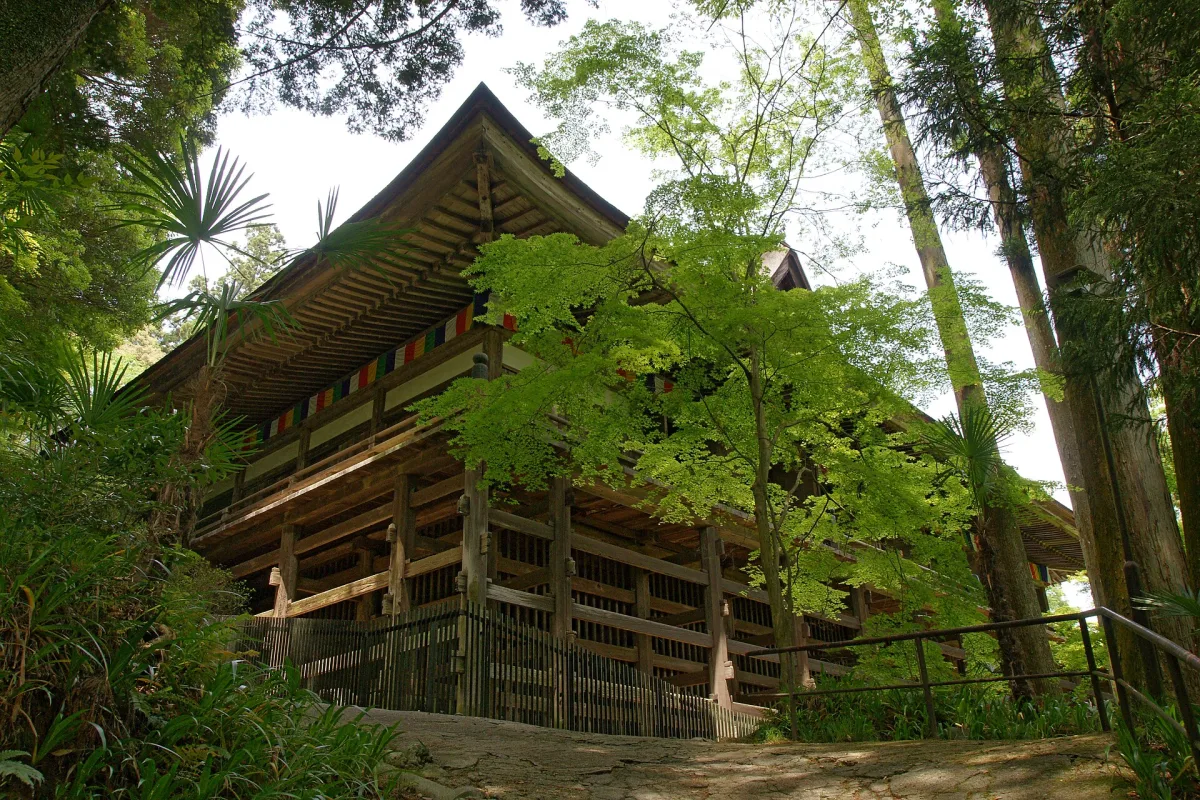
The main hall is also a National Treasure and, according to the temple, the oldest wooden building in Shiga Prefecture. Its inner sanctuary was rebuilt in 1096 (Eicho 1), and the outer part was built in 1602 (Keicho 7), donated by Yodo-dono, a consort of Toyotomi Hideyoshi.
Four seasons at the "temple of flowers"
Ishiyama-dera is also called the "temple of flowers", with plum blossoms, cherry blossoms, irises, autumn leaves and more colouring the grounds in each season. In autumn about 2,000 maples paint the rocks and buildings red, usually at their best from mid-November to early December. In November there is an evening illumination called Atarayo Momiji.
The grounds include the Tsukimi-tei, a pavilion for moon viewing. Around the harvest moon of mid-autumn, the temple holds its moon-viewing festival, Shugetsusai.
Getting there
It is about a 10-minute walk from Ishiyamadera Station on the Keihan line. From JR Ishiyama Station, take a bus for about 10 minutes to the Ishiyamadera Sanmon-mae stop. From JR Kyoto Station to Ishiyama Station it is about 13 minutes by rapid train on the Tokaido Main Line.
Visiting hours and admission fees can change, so check the official website.
Tips
- In 2026, the exhibition "Ishiyama-dera and Murasaki Shikibu" is being held in the Hojoden hall on the grounds from 1 September to 30 November (separate fee). If you want to see the temple's treasures related to The Tale of Genji, this is the time to go.
- On the 18th of every month, a market called Goo-san is held in front of the temple gate.
Sources
- 大本山 石山寺 公式ホームページ (opens in a new tab)
- 境内のご案内|大本山 石山寺 (opens in a new tab)
- 国宝 石山寺多宝塔 平成大修理|大本山 石山寺 (opens in a new tab)
- 石山寺の秋|大本山 石山寺 (opens in a new tab)
- 交通案内|大本山 石山寺 (opens in a new tab)
- 石山寺|比叡山・びわ湖 観光情報サイト (opens in a new tab)
Updated 30 September 2026. Opening hours and prices change, so check the official site before you go.