Japan is Nippon
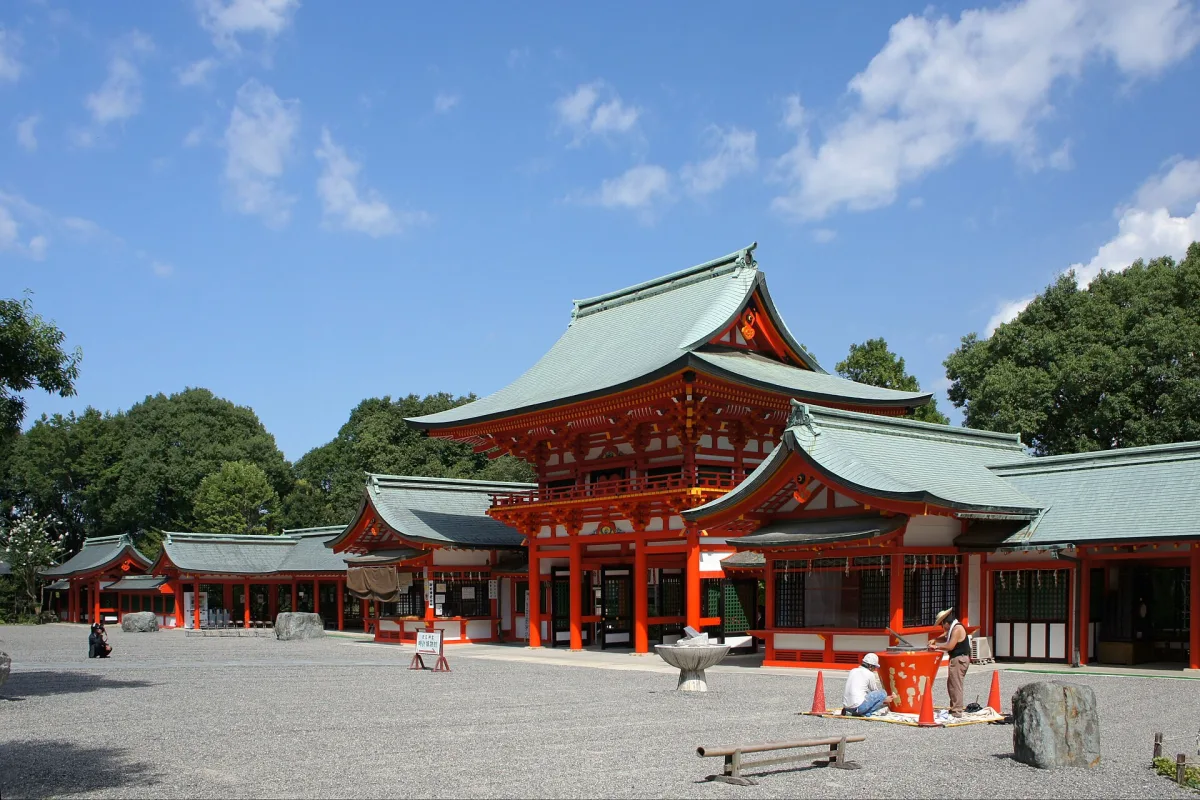
Omi Jingu Shrine
近江神宮
An Otsu shrine to the emperor who first told the time in Japan. A "god of clocks" and the home of competitive karuta, it greets you with a vermilion gate.
Emperor Tenji and the ancient capital of Otsu
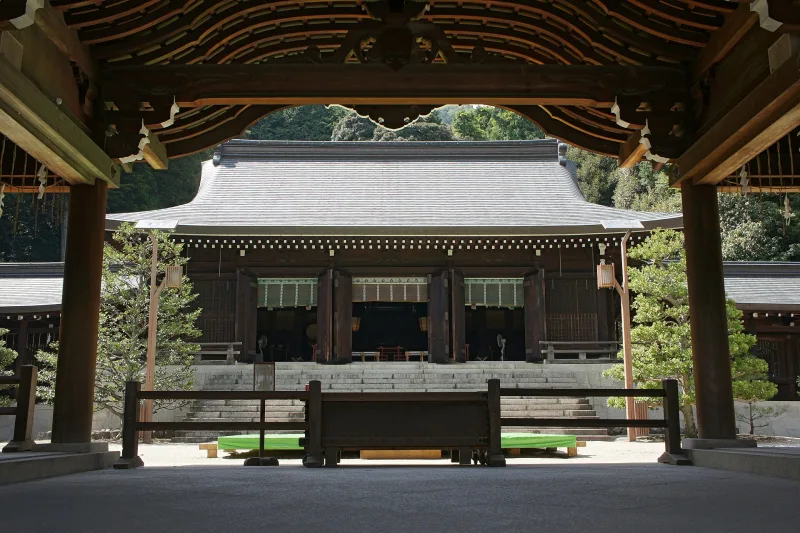
Omi Jingu is a Shinto shrine dedicated to Emperor Tenji, the 38th emperor. It was founded in 1940 on the site of Omi Otsu-no-miya (also called Otsu-kyo), where Emperor Tenji had his capital. As shrines go it is fairly new, but it stands on the site of a capital more than 1,300 years old.
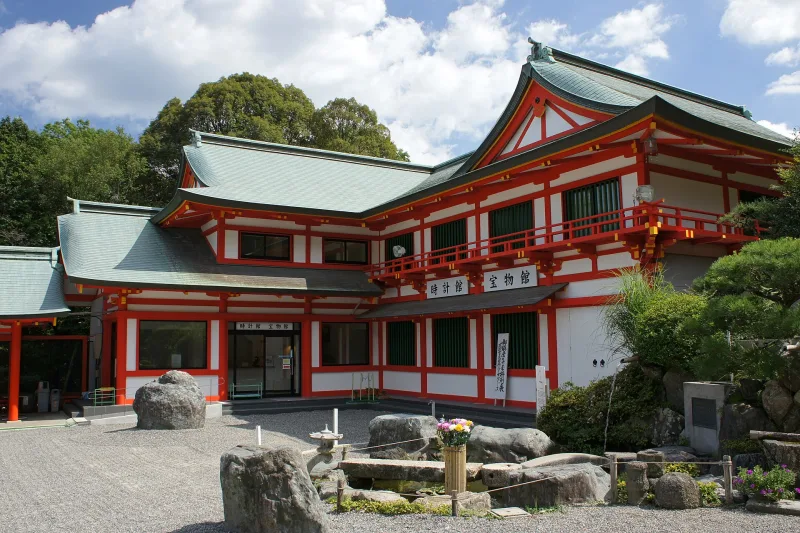
Its buildings are in a distinctive style called Omi-zukuri, and as fine examples of modern shrine architecture, the outer hall of worship and other buildings are registered as Tangible Cultural Properties of Japan. At the entrance to the wooded grounds stands a bright vermilion romon, a two-storey gate.
The "god of time" and the Clock Museum
Emperor Tenji is said to have set up a rokoku (a water clock that measures time by the flow of water) at Omi Otsu-no-miya and begun a system for announcing the time. Because of this, Omi Jingu is known as a shrine closely linked to clocks and time, and every year on 10 June it holds the Rokoku Festival.
The grounds have models of a water clock and a sundial, and the Clock Museum Treasure House displays old clocks and more.
The home of competitive karuta
The first poem in the Hyakunin Isshu (an anthology of 100 poems by 100 poets, also used for the card game karuta at New Year) is by Emperor Tenji. Because of this link, Omi Jingu has become a place where many competitive karuta tournaments are held.
Every January, the Meijin and Queen title matches of competitive karuta take place at the Omi Kangakukan hall in the shrine grounds. Omi Jingu is also known as a setting of Chihayafuru, a popular manga about competitive karuta.
Getting there
It is about a 9-minute walk from Omi-jingumae Station on the Keihan Ishiyama Sakamoto Line, and roughly half the way is through the shrine grounds. You can also take the Kosei Line from JR Kyoto Station to JR Otsukyo Station, about 11 minutes, and go from there.
Visiting hours can change, so check the official website.
Tips
- Parking is usually free, but from the evening of 31 December to 5 January it becomes paid, and so many people visit that overflow car parks are opened.
- At the Omi Kangakukan you can draw a karuta kuji, a fortune slip containing one Hyakunin Isshu card. Which poem you get is a surprise.
Sources
- 近江神宮 公式サイト (opens in a new tab)
- 交通アクセス|近江神宮 (opens in a new tab)
- 【かるたの聖地】「近江神宮」や「近江勧学館」|滋賀・びわ湖観光情報 (opens in a new tab)
- 近江神宮 - Wikipedia (opens in a new tab)
Updated 30 September 2026. Opening hours and prices change, so check the official site before you go.