Japan is Nippon
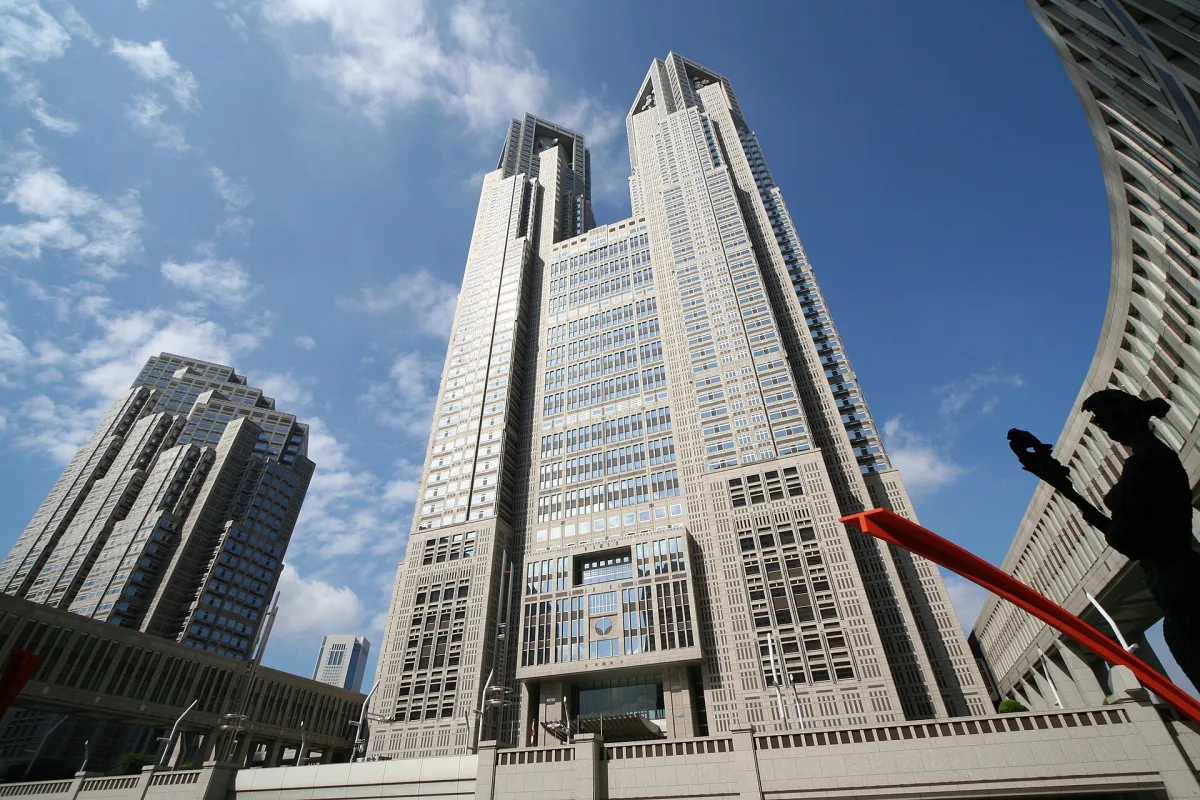
Tokyo Metropolitan Government Building North Observatory
東京都庁第一本庁舎 北展望室
A free observatory 202m up on the 45th floor of Tokyo's city hall in Shinjuku. Mount Fuji on clear winter days, projection mapping on the building at night.
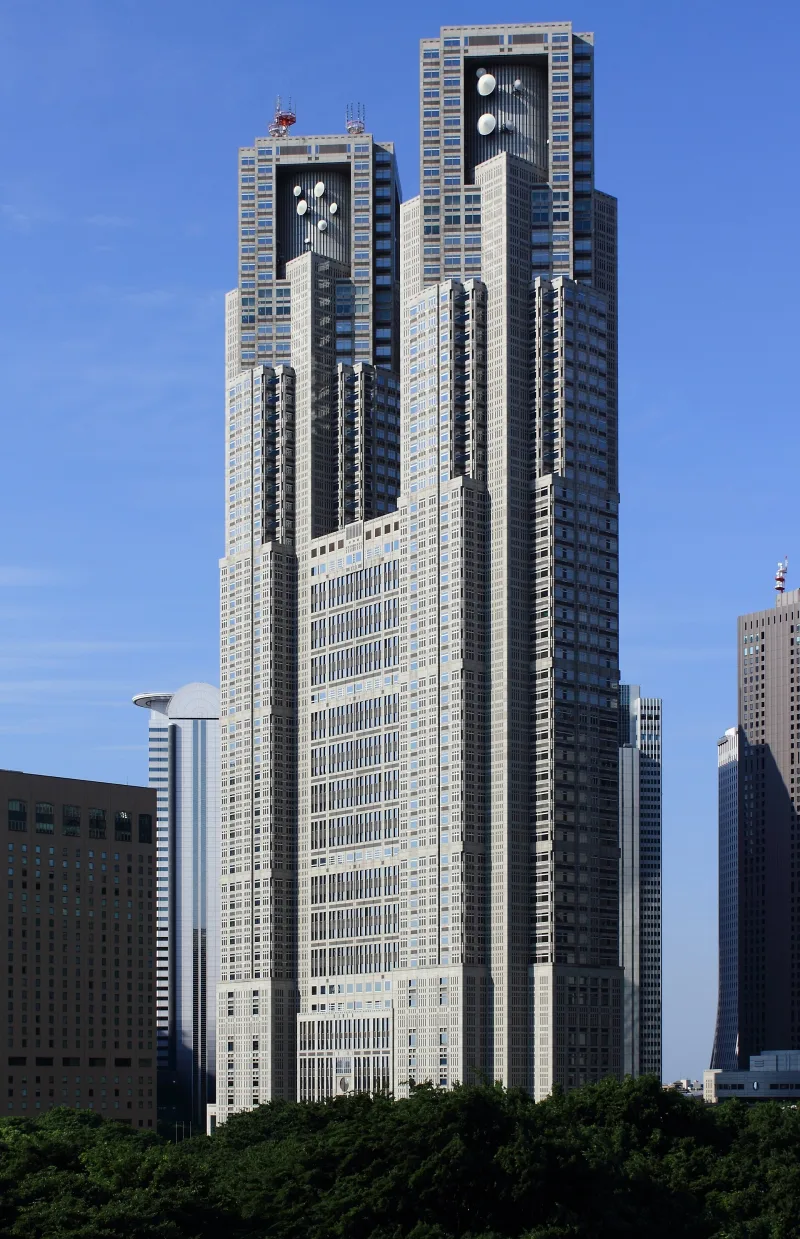
An observatory on top of city hall's twin towers
The Tokyo Metropolitan Government Building is the headquarters of Tokyo's government. It stands in Nishi-Shinjuku, the skyscraper district on the west side of Shinjuku, and its centrepiece, Main Building No. 1, is a pair of twin towers 48 storeys and about 243m tall. It was designed by the architect Tange Kenzo and completed in December 1990.
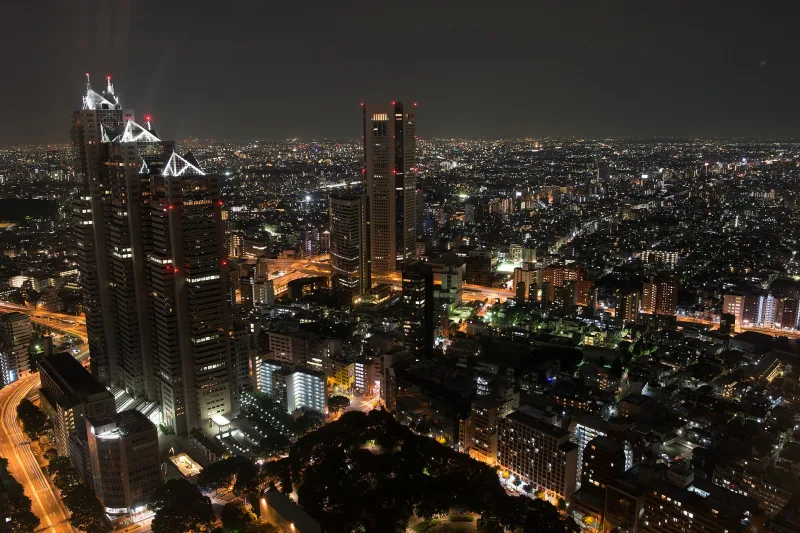
Each of the two towers has an observatory on the 45th floor. This is the North Observatory, in the northern tower, 202m above the ground. The Tokyo Metropolitan Government opens the observatories to the public as places to enjoy the view while learning about Tokyo and the city's work.
Views from Tokyo Skytree to Mount Fuji
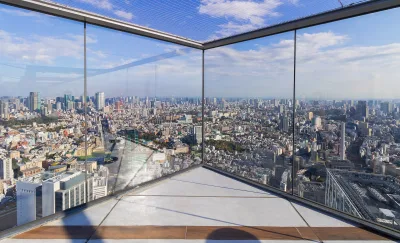
Each direction offers something different. To the north-east is Tokyo Skytree; to the south-east, the greenery of Shinjuku Gyoen and Meiji Jingu; to the south-west, skyscrapers such as Shinjuku Park Tower and Tokyo Opera City.
Mount Fuji lies to the west. From December to February, when the air is cold and visibility is long, there are more days when you can see it. Scan the QR codes on the display panels with your smartphone and TOKYO SKY GUIDE shows descriptions of 32 of the spots in view in your own language.
The North Observatory has a café and shop selling drinks, light meals and Tokyo souvenirs.
At night, the building itself is the show
After dark, the projection mapping show TOKYO Night & Light is projected onto the east face of Main Building No. 1, using it as a screen for a range of works in light and sound. It runs every day except in stormy weather and the like, and it is certified by Guinness World Records as the world's largest permanent projection mapping on a building.
The viewing spot is the Citizens' Plaza in front of the building. Show times and programmes are announced on the official website.
Getting in and getting there
Take the dedicated observatory lift from the 1st floor of Main Building No. 1. On weekends and public holidays the 2nd-floor entrance is closed, so go round to the main entrance on the 1st floor. Entry is free and you cannot book; at some times of day you may have to queue.
The nearest station is Tochomae on the Toei Oedo Line, connected directly to the building. It is about 10 minutes' walk from the West Exit of JR Shinjuku Station. The North and South observatories close on different days of the week and have different opening hours. They can also close suddenly in bad weather, so check the Tokyo Metropolitan Government's official website before you go.
Tips
- The North and South observatories have separate closing days and opening hours. If you want the night view, check on the official website which observatory is open late before you go.
- For Mount Fuji, aim for a clear day between December and February, when the air is crisp.
- You cannot use a tripod to take photos.
- After the observatory, it is worth waiting for the evening projection mapping and watching it from the Citizens' Plaza.
Sources
- 展望室のご利用案内|東京都庁見学のご案内|東京都財務局 (opens in a new tab)
- TOKYO Night & Light|東京都プロジェクションマッピング事業 (opens in a new tab)
- 東京都庁舎 - Wikipedia (opens in a new tab)
Updated 30 September 2026. Opening hours and prices change, so check the official site before you go.