Japan is Nippon
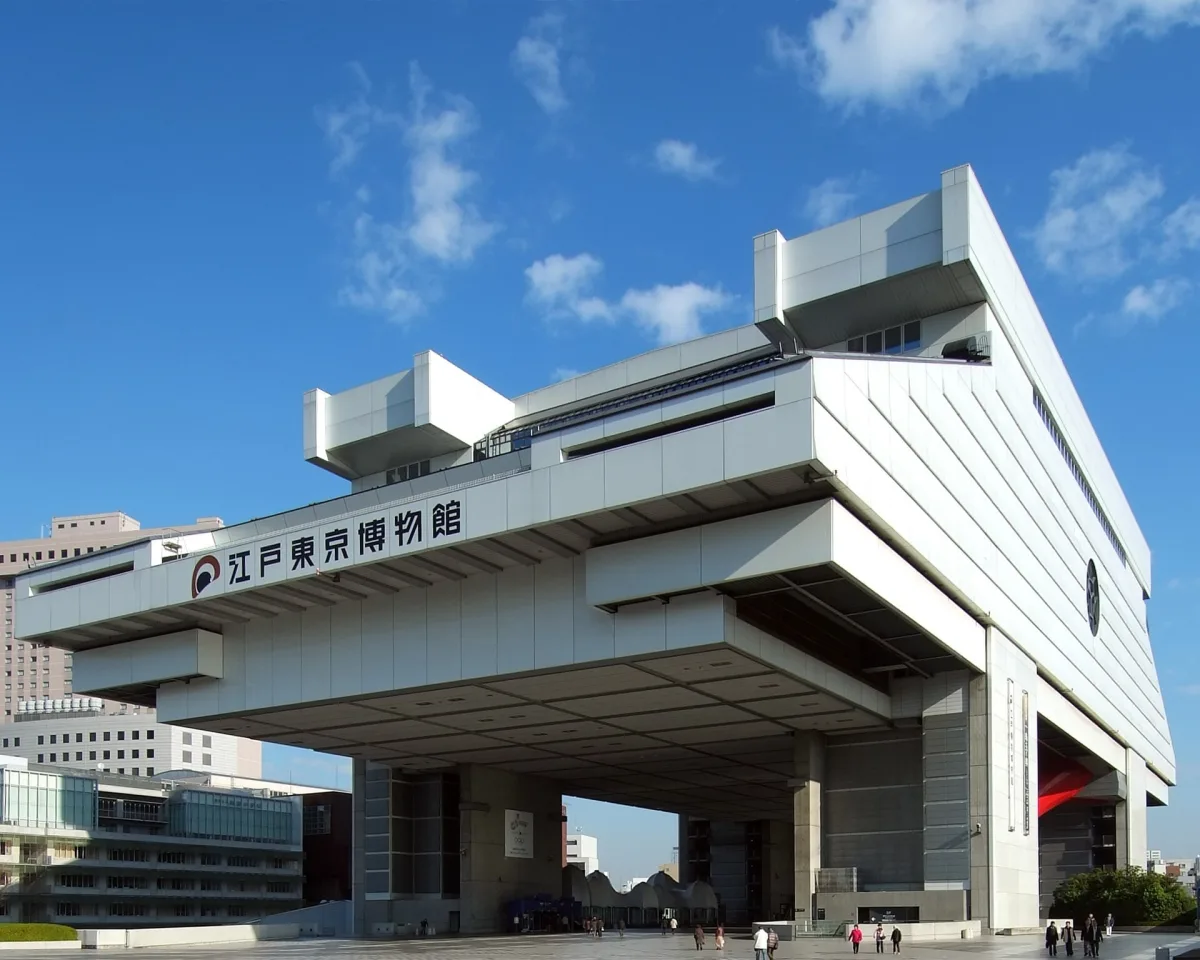
Edo-Tokyo Museum
江戸東京博物館
Cross a full-size Nihonbashi Bridge into old Edo. Reopened in March 2026 after about four years' work, this Ryogoku museum lets you feel 400 years of Tokyo.
A museum that traces the city from Edo to Tokyo
The Edo-Tokyo Museum (nicknamed "Edohaku") is a Tokyo Metropolitan museum on the history and culture of Edo (Tokyo's old name) and Tokyo. It opened in March 1993 in Ryogoku, the district that is home to the Kokugikan sumo arena.
Tokugawa Ieyasu arrived in the Kanto region in 1590 and made Edo his base, and after he set up his shogunate (military government) in 1603, Edo grew into Japan's leading city. The exhibits follow the story from this Edo era through modernisation after the Meiji period and on to Tokyo after the Great Kanto Earthquake and the wartime air raids.
The building, designed by the architect Kikutake Kiyonori, has a distinctive raised shape, as if lifted up on thick legs. The above-ground part is about 62m tall, roughly the same height as the old main keep of Edo Castle.
Cross Nihonbashi into the streets of Edo
The permanent exhibition begins with a full-size reconstruction of Nihonbashi, the bridge at the centre of Edo's town planning. Based on Edo-period records and pictures, the northern half of the bridge has been rebuilt here in zelkova and cypress wood.
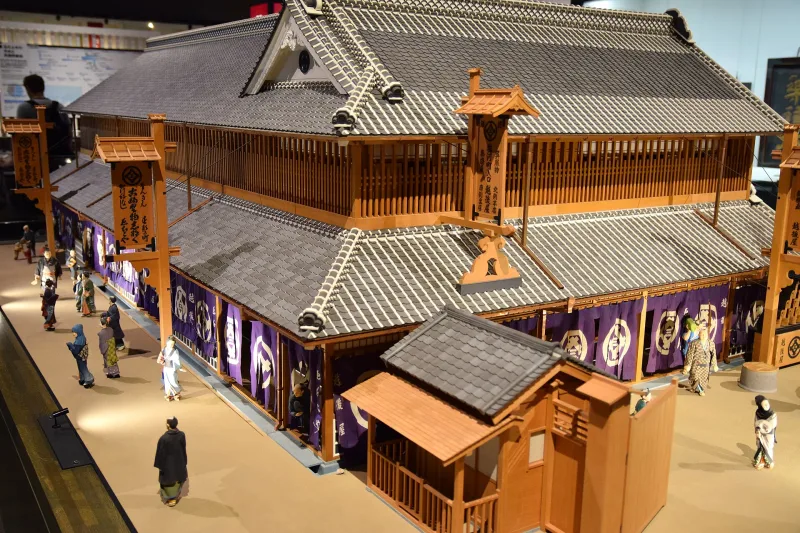
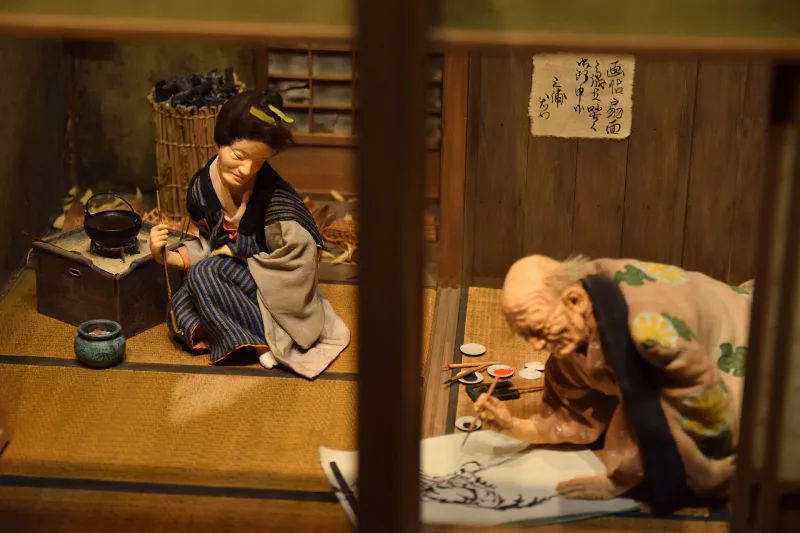
Across the bridge are scale models of a feudal lord's residence, the townspeople's quarter and the palace of Edo Castle at the very end of the Edo period. There is also a full-size nagaya (a row house: one building divided into many small homes), where most ordinary people in Edo lived, which shows clearly what life was like in a room of about four and a half tatami mats. There are large models of the Nakamura-za kabuki theatre and of the Hattori clock shop too.
What's new after the spring 2026 renovation
The museum closed for major renovation work for about four years from the 2022 financial year and reopened on 31 March 2026. In the exhibition hall, a noren (the cloth curtain hung at a shop entrance) now hangs just past Nihonbashi, and together with lighting effects it makes you feel as if you are stepping into the world of Edo.
New large-scale displays include a walk-through reconstruction of the gate of Hanayashiki, the amusement park in Asakusa, and a room from the Dojunkai Daikanyama Apartments, an early apartment block, recreated complete with furniture and everyday items. Special displays of kacchu (samurai armour) and ukiyo-e woodblock prints are only on for limited periods, so if there is something you want to see, check the exhibition schedule on the official website.
Getting there and making a day of it
The nearest station is Ryogoku (Edo-Tokyo Museum-mae) on the Toei Oedo Line, right by exits A3 and A4. From Ryogoku Station on the JR Sobu Line, it is a few minutes' walk from the West Exit.
Opening hours, closing days and admission fees can change, so check the official website. The Kokugikan sumo arena is right next door, so it is well worth combining the museum with a stroll around Ryogoku.
Tips
- The permanent exhibition fills a double-height space across the 5th and 6th floors, and the tour starts on the 6th floor at Nihonbashi. Look down from the bridge at the big models on the floor below.
- Opening hours may change in bad weather such as typhoons (a notice about typhoon effects went out in June 2026 too). If the weather looks rough, check the notices on the official website before you go.
- JR Ryogoku Station and the Toei subway's Ryogoku Station are separate stations. The one closer to the museum is Ryogoku on the Toei Oedo Line.
Sources
- 2026年3月31日江戸東京博物館がリニューアルオープン!|江戸東京博物館 (opens in a new tab)
- 常設展|江戸東京博物館 (opens in a new tab)
- アクセス|江戸東京博物館 (opens in a new tab)
- 2026年3月31日 江戸東京博物館リニューアルオープン|東京都 (opens in a new tab)
- 江戸東京博物館 - Wikipedia (opens in a new tab)
Updated 30 September 2026. Opening hours and prices change, so check the official site before you go.