Japan is Nippon
Rurikoji Temple
瑠璃光寺
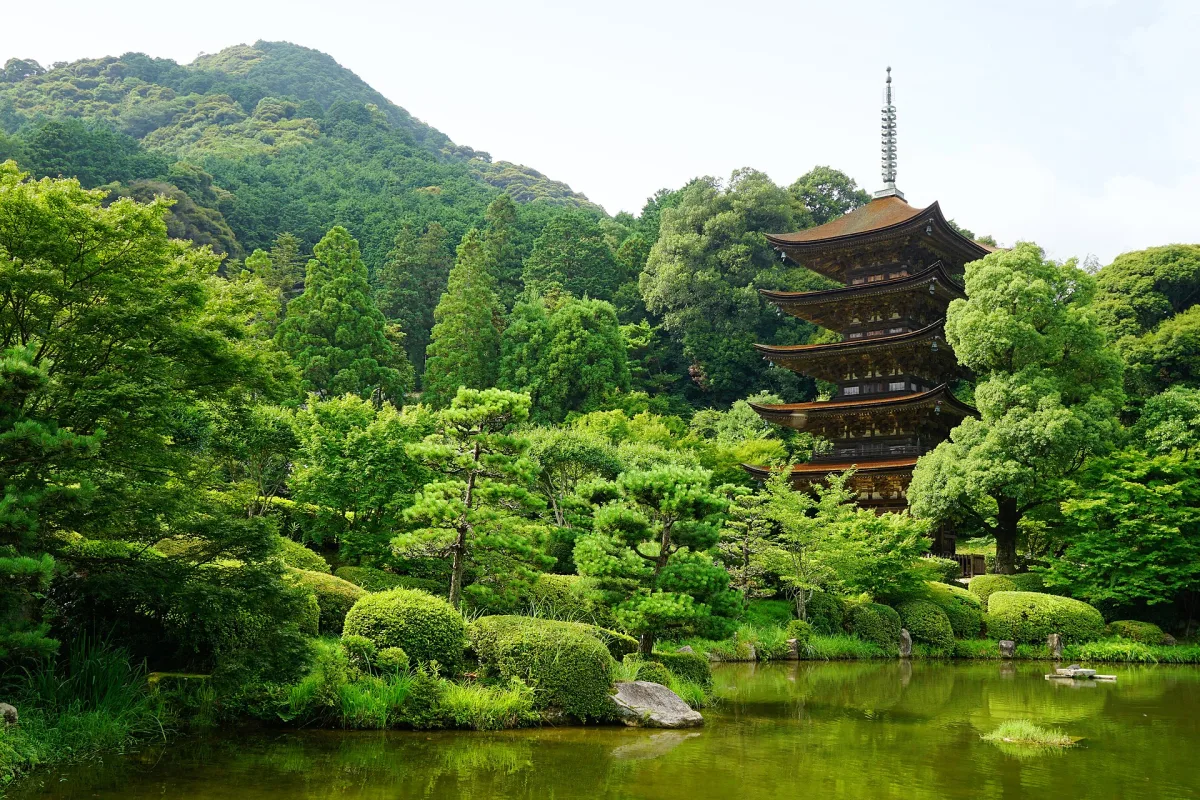
A Zen temple in Yamaguchi with a National Treasure Muromachi-period pagoda. After about 3 years of reroofing, the whole pagoda is on view again from 2026.
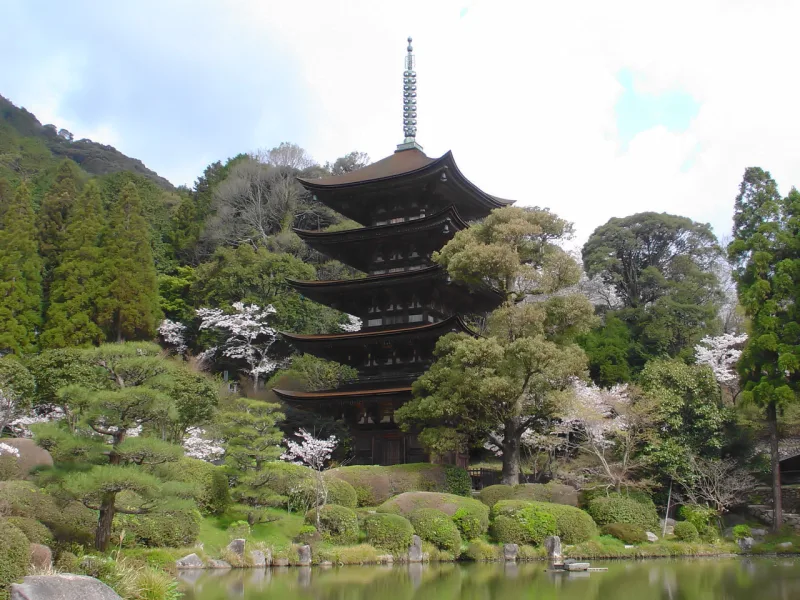
A National Treasure pagoda, symbol of the "Kyoto of the West"
Rurikoji is a temple of the Soto school (a branch of Zen Buddhism) in Yamaguchi City, Yamaguchi Prefecture. The five-storey pagoda in its grounds is a National Treasure and, together with the pagodas of Daigoji in Kyoto and Horyuji in Nara, is counted among Japan's three finest pagodas.
The pagoda is said to have been started by Ouchi Moriharu to mourn his elder brother, the feudal lord Ouchi Yoshihiro, who died in battle in 1399, and completed around 1442. In the Muromachi period, the Ouchi family modelled Yamaguchi on Kyoto, and the town flourished so much that it was called the "Kyoto of the West". The pagoda is a surviving piece of that Ouchi culture.
The temple itself is a Rurikoji that stood elsewhere and moved to this site in 1690.
The cypress-bark roof and the "great Reiwa restoration"
The pagoda is 31.2 metres tall. Its roofs are hiwadabuki, made from layers of Japanese cypress (hinoki) bark. From December 2022 to December 2025 it underwent repairs centred on a complete reroofing, the first in about 70 years, and during the work the pagoda was hidden inside a large enclosure. Now that the repairs are over, you can see the whole pagoda again.
The pagoda is lit up all year round from sunset until 10 pm.
Walking Kozan Park
The area around the pagoda has been laid out as Kozan Park, which is open 24 hours with free entry (Rurikoji's museum charges admission). The park includes the graves of the Mori family, who were the lords of the domain, and Rozando, among other sights.
The park has an "uguisu-bari stone pavement" that echoes with a sound like birdsong as you walk on it (uguisu is the Japanese bush warbler). In spring it is also known for its plum and cherry blossom. According to the Yamaguchi Prefecture Tourism Federation, you can see the whole park in about 1 hour 30 minutes.
Getting there
It is about 15 minutes by community bus from JR Yamaguchi Station. By car it is about 20 minutes from the Ogori interchange on the Chugoku Expressway, and there are car parks nearby.
Yamaguchi City also runs volunteer-guided tours of about an hour starting from Kozan Park (the days vary by season). See Yamaguchi City's tourism website for details.
Tips
- See the pagoda both by day and lit up at night to enjoy how different it feels.
- On the uguisu-bari stone pavement, walk slowly and listen for the sound rising from under your feet.
- October to December 2026 is the period of the Yamaguchi Destination Campaign, and limited-time events are planned around the five-storey pagoda.
Sources
- 香山公園 国宝瑠璃光寺五重塔 - 山口市観光情報サイト「西の京 やまぐち」 (opens in a new tab)
- 国宝 瑠璃光寺五重塔|おいでませ山口へ【公式】 (opens in a new tab)
- 国宝「瑠璃光寺五重塔」の保存修理が完成しました - 山口市 (opens in a new tab)
- 瑠璃光寺 - Wikipedia (opens in a new tab)
Updated 30 September 2026. Opening hours and prices change, so check the official site before you go.