Japan is Nippon
Kushikatsu (Deep-Fried Skewers)
Meat and vegetables on skewers, deep-fried and dipped in a shared sauce: Shinsekai in Osaka's speciality. Know the "no double-dipping" rule and you're set.
A local dish of Osaka
You will mostly find it in this area, rarely elsewhere in Japan.
- OsakaShinsekai, home of Tsutenkaku, is said to be the birthplace, known for the "no double-dipping" rule: one dip in the shared sauce
What is kushikatsu?
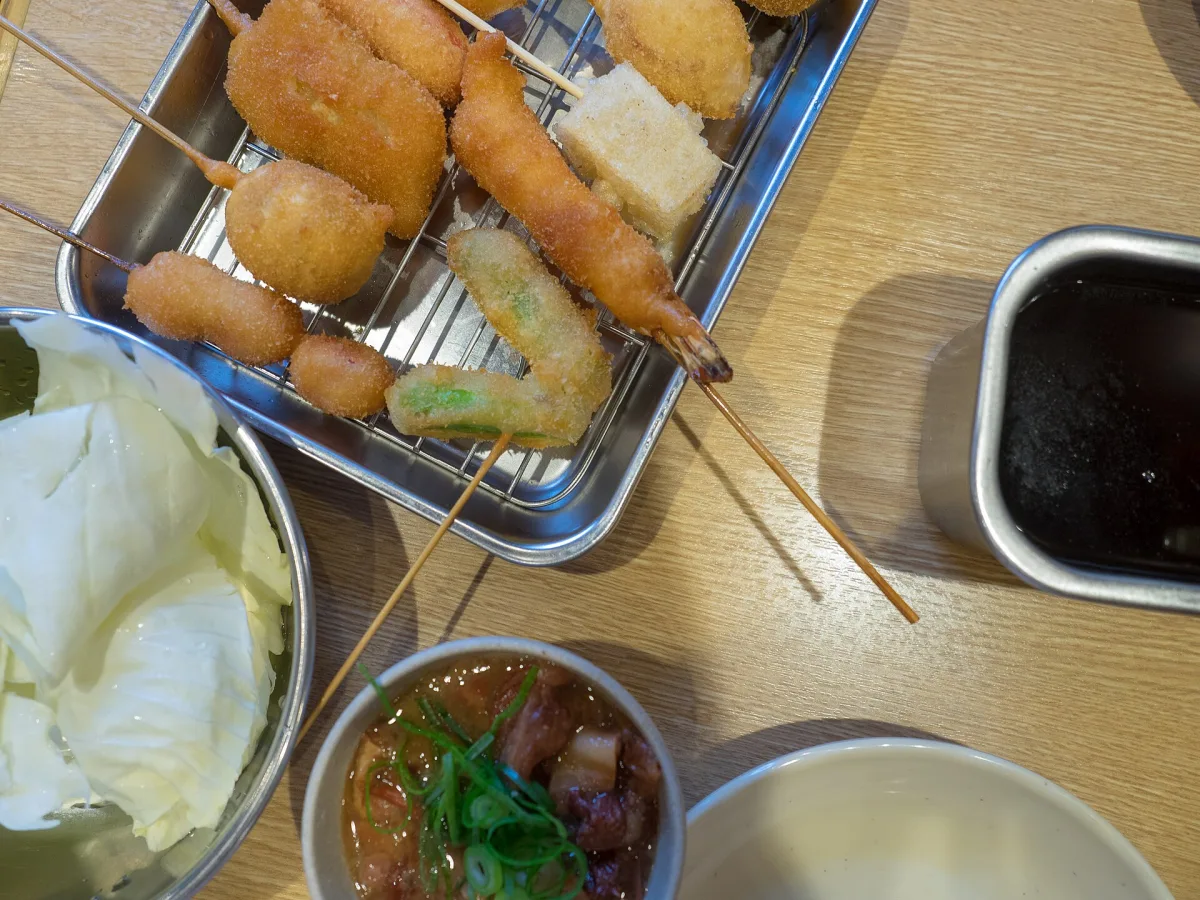
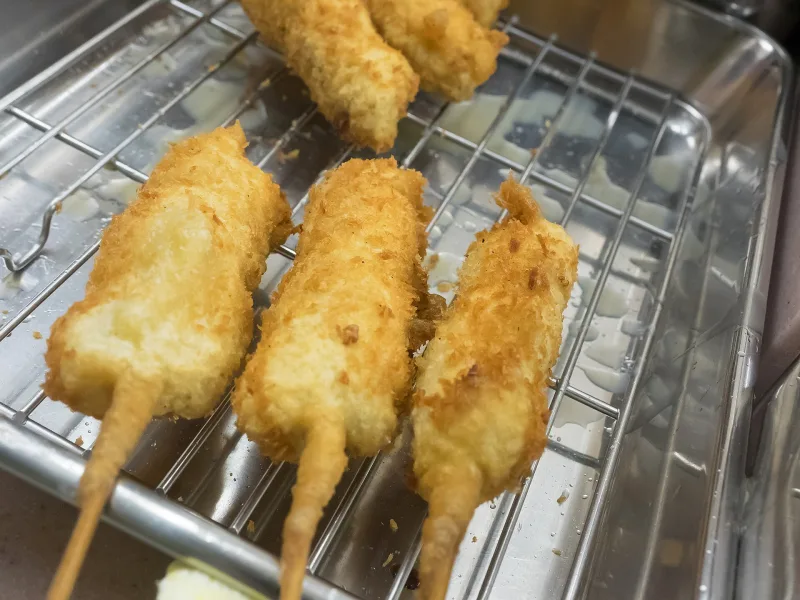
Osaka-style kushikatsu is bite-sized pieces of meat, seafood and vegetables, each threaded on its own skewer, coated in a batter of flour and water plus breadcrumbs, and deep-fried. You dip the freshly fried skewers in the sauce on the table and eat them. The Osaka Convention and Tourism Bureau says the real star is the crunchy coating.
There's a huge range of fillings. The Ministry of Agriculture, Forestry and Fisheries' "Our Regional Cuisines" (Uchi no Kyodo Ryori) lists beef as the basic ingredient, with quail eggs, lotus root, shishito (small green peppers) and whatever else you fancy also fried. Some places serve prawns, asparagus, cheese and more.
Note that in eastern Japan (especially the Kanto region), "kushikatsu" usually means cubes of pork skewered alternately with onion or leek and deep-fried, which is quite different from the Osaka dish.
Born in Shinsekai, food for working people
There are various theories about where kushikatsu came from, but a well-known one says it was born in Shinsekai, Osaka, between the end of the Taisho era and the start of the Showa era (around the 1920s). It's said to have been created to fill up the labourers working nearby: cheap, filling and quick to eat. Another often-told story says it began in 1929 (Showa 4), when the proprietress of a newly opened Shinsekai restaurant served bite-sized meat on skewers, deep-fried. It's also said that the batter became thicker because these working people appreciated a cheap meal.
After the Second World War, more and more places served kushikatsu, as fried food carried less risk of food poisoning. In the 2000s, restaurant chains operating nationwide promoted it as an "Osaka speciality", and it became known across Japan. Today it's eaten all year, mainly at restaurants, and each one puts its own twist on the fillings and sauce recipe.
The "no double-dipping" rule, and the cabbage
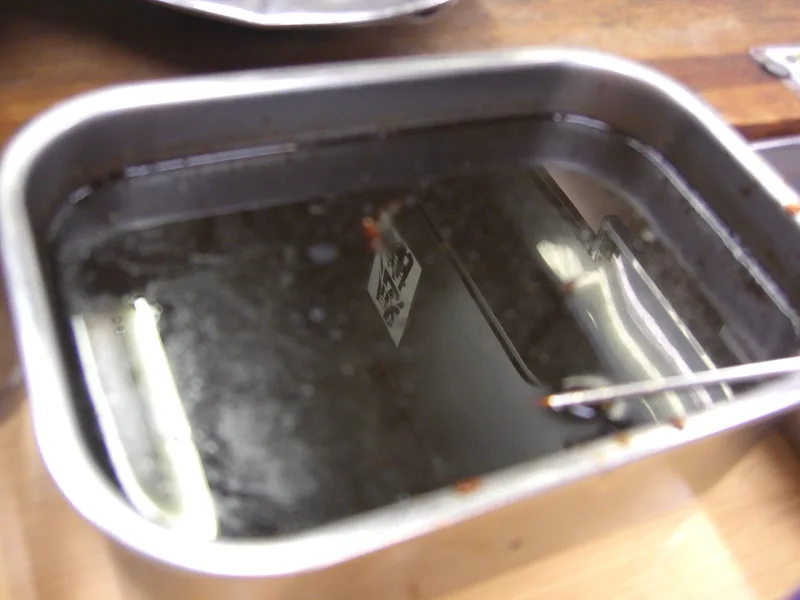
At Osaka kushikatsu restaurants the sauce comes in a tray (a rectangular container) that customers share. That's why dipping a skewer again after biting it is frowned upon as unhygienic, and "nido-zuke kinshi" (no double-dipping) is an iron rule. You get one dip, before you start eating.
If you want more sauce, the cabbage comes to the rescue. At many places, raw cabbage is free and all-you-can-eat. Scoop up some sauce with a cabbage leaf and pour it over your bitten skewer, and you've added sauce without breaking the rule. The cabbage is also said to help prevent the heavy stomach that fried food can bring.
Beyond Osaka: Nagoya's miso kushikatsu
Kushikatsu is now eaten all over Japan, but how it's eaten changes from region to region. In Nagoya's "Nagoya meshi" (Nagoya's local food), kushikatsu is one form of miso katsu, which is topped with a sauce based on mame miso (miso made mainly from soybeans). In Nagoya and elsewhere, some places dunk kushikatsu in the simmering liquid of doteni, a stew cooked in Hatcho miso (a type of mame miso).
Where and how to eat it
For the real atmosphere, head to Shinsekai in Osaka. This neighbourhood at the foot of Tsutenkaku (an observation tower that's a symbol of Osaka) is said to be the birthplace of kushikatsu, and it's still packed with kushikatsu restaurants. In particular, the narrow shopping street called Jan Jan Yokocho is lined with everything from long-established places founded just after the war to restaurants with queues outside. Many are casual, bar-style places with counter seats, but there are also specialist restaurants serving kushikatsu as an inventive treat.
When your freshly fried skewers arrive, dip each one in the sauce just once and enjoy. There are even groups promoting the dish, such as the Japan Kushikatsu Association, and it's popular with visitors.
For anyone with dietary restrictions: the batter uses wheat flour and egg, and the fillings include beef, pork and seafood such as prawns. Sauces and frying oil also vary from place to place, so if you have concerns, check before you order.
Tips
- Dip in the shared sauce only once. If you want more after taking a bite, scoop sauce up with cabbage and pour it on.
- Whether the cabbage is free depends on the restaurant. If you're unsure, check before going in or when you order.
- Osaka kushikatsu skewers are small, so order several kinds and compare.
- You can combine Shinsekai with a visit to Tsutenkaku. Jan Jan Yokocho, packed with kushikatsu restaurants, is just next to the tower.