Japan is Nippon
Monjayaki
Runny batter pressed onto a hotplate with a tiny spatula and eaten as it crisps. A quirky griddle dish that grew from a children's snack in old Tokyo.
A local dish of Tokyo and Gunma
You will mostly find it in this area, rarely elsewhere in Japan.
What is monjayaki?
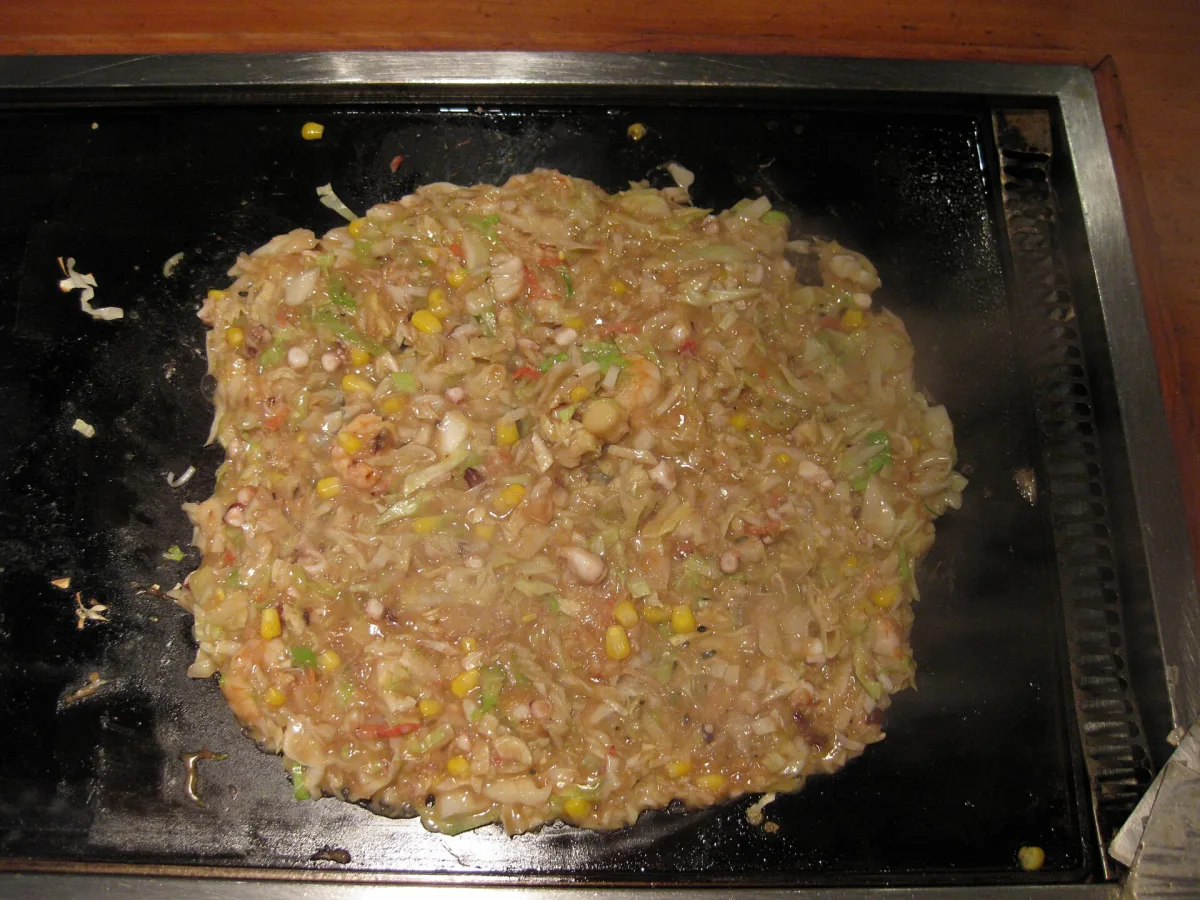
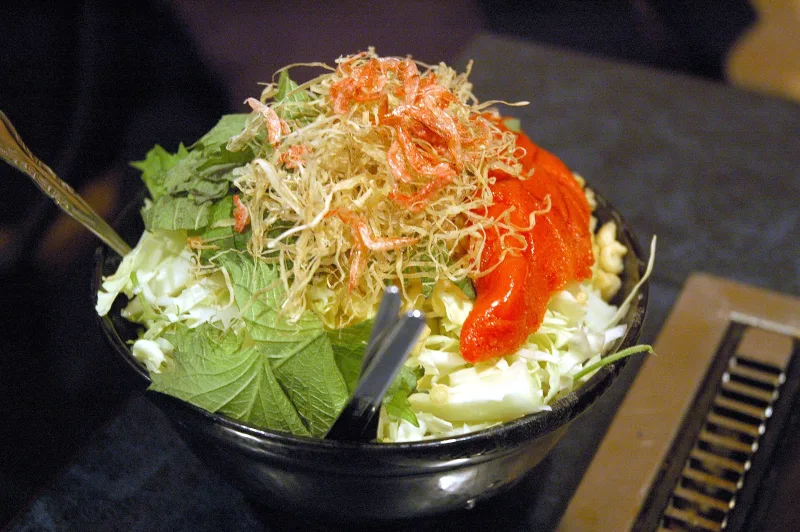
Monjayaki is a Tokyo dish made from a very loose batter of wheat flour and water, mixed with finely chopped cabbage and other fillings and cooked on a teppan (a thick iron griddle). It is often just called "monja". The batter is seasoned with things like Worcestershire-style sauce, soy sauce and katsuobushi (dried bonito flakes), and it usually includes sakura ebi (tiny dried shrimp) and agedama (little crunchy bits of fried tempura batter).
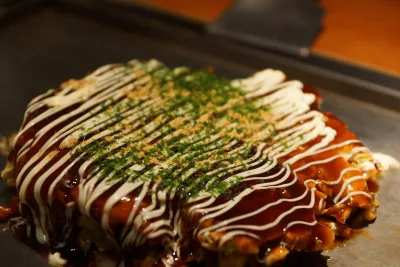
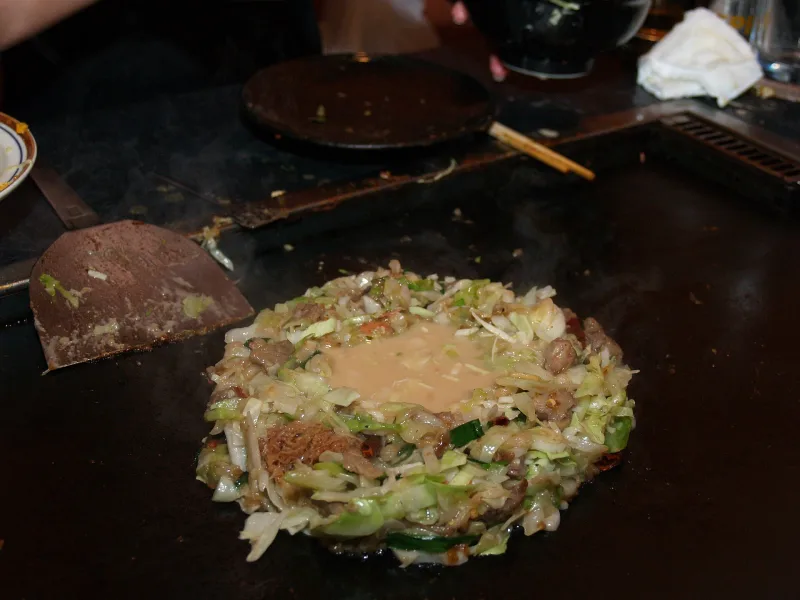
It looks a little like okonomiyaki, but the batter is very watery and the sauce is mixed right into it, so even once it's cooked it never sets firm and stays gooey. Only the side touching the griddle turns crisp and toasty, and scraping that up with a tiny spatula is the unique pleasure of this dish.
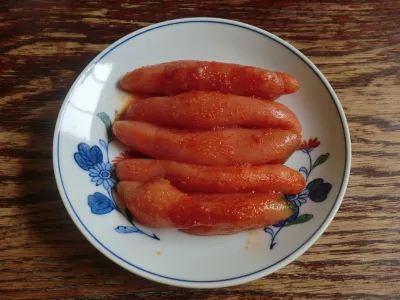
You can combine fillings however you like, adding pork, squid, mentaiko (cod roe marinated with chilli) or mochi (rice cake) to taste, and besides the classic sauce flavour people enjoy all sorts of versions, such as cheese or curry.
Where the name comes from, and a history that began in sweet shops
The name is said to have come from "mojiyaki", literally "letter grilling". According to Japan's Ministry of Agriculture, Forestry and Fisheries (MAFF), in an era when goods were scarce and paper and calligraphy tools were hard to come by, people would write letters on a hotplate with flour batter to teach children or to play, hence "mojiyaki"; "moji" then became "monji" and finally "monja". This is told as a traditional story. Separately, records show that Tokyo between the Edo period and the Meiji era (roughly the 17th to early 20th centuries) had a sweet children's snack called "mojiyaki", made by adding syrup to flour and cooking it on a copper plate.
In the lean years of the late 1940s and early 1950s (Showa 20s, roughly 1945 to 1954), a humble monja made simply of udon flour (wheat flour) mixed with water and flavoured with soy sauce or syrup was hugely popular with children, often at dagashiya (small sweet shops for kids). As the post-war economy grew, fillings such as cabbage, sweetcorn and agedama were added, and it gradually came closer to the dish we know today.
Later, the sweet shops where children used to gather shrank dramatically in number. Some monjayaki restaurants carried on to keep alive a taste people had loved since childhood, and monja turned into a grown-up dish enjoyed with a drink.
Tsukishima's "Monja Street" and Isesaki monja in Gunma
The neighbourhood best known for monjayaki is Tsukishima, in Tokyo's Chuo City. The Nishinaka-dori shopping street, which keeps its old-fashioned townscape, is nicknamed "Monja Street"; it is lined with monjayaki restaurants and is popular with Japanese and foreign visitors alike. The local association of shops, the Tsukishima Monja Promotion Cooperative, has several dozen member restaurants in the Tsukishima area. One reason given for Tsukishima becoming a famous spot is that after Tsukishima Station on the Yurakucho subway line opened in 1988, more and more businesses switched over to monja.
Besides Tsukishima, long-established shops also survive in Asakusa and other traditional neighbourhoods in east Tokyo. Isesaki in Gunma Prefecture has its own monja too. According to the Isesaki City Tourism and Products Association, whereas Tsukishima style has lots of fillings and is cooked inside a "dote" (bank), Isesaki style uses a simple batter of just flour, cabbage, aonori (green seaweed flakes), shredded dried squid and agedama, seasoned with sauce, and the fillings and liquid are cooked together.
How to cook and eat it: build a bank and use a tiny spatula
Here is the basic Tsukishima method. First put only the solid fillings from the bowl onto the hot griddle, fry them lightly and chop them finely with a spatula. When the cabbage has softened, push the fillings into a doughnut-like ring to make the "dote", then pour the liquid batter left in the bowl into the middle. Once the centre is bubbling and cooked through, mix everything together, spread it thinly across the griddle and wait until the underside is toasty. Some people finish it with aonori or bonito shavings.
To eat it you use a small spatula about 10 to 15 centimetres long, called a "hagashi" or "kote". The usual way is to scoop a little at a time from the outer edge, press it against the griddle to char it, and then pop it in your mouth. It isn't served onto plates; you eat it straight off the griddle.
For those with dietary restrictions: typical monjayaki contains wheat flour, katsuobushi (fish), seafood such as sakura ebi and shredded squid, soy sauce and sauce. Pork or mentaiko may also be added. If there are ingredients you need to avoid, check with the restaurant before you order.
Where to eat it
For the real atmosphere, head to Monja Street in Tsukishima, Tokyo. The restaurants are just a short walk from Tsukishima Station. These days monja restaurants aren't unusual in western Tokyo either, but its traditional home is the old neighbourhoods of east Tokyo.
In Isesaki, Gunma Prefecture, there are also restaurants serving the simple Isesaki-style monja. Many monja restaurants also serve okonomiyaki and other griddle dishes, so you can order them together and compare. At home, people also make it on a hotplate.
Tips
- If you pour all the liquid in at once it tends to run off the hotplate, so build a "dote" (bank) out of the fillings first and pour the liquid into the middle a little at a time.
- Don't eat it the moment it's cooked: press it against the hotplate with the little spatula and let it char a bit to get the toasty, crispy part. Scoop from the outside in, a little at a time.
- There are endless combinations, from mentaiko (spicy cod roe) and mochi to cheese and curry flavour. If you can't decide, order a few kinds and share.
- Most monja restaurants also serve okonomiyaki, which is handy if you want to compare Tokyo's flavours in one sitting.
- If you want to avoid seafood or pork, check the ingredients before you order.