Japan is Nippon
Takoyaki (Octopus Balls)
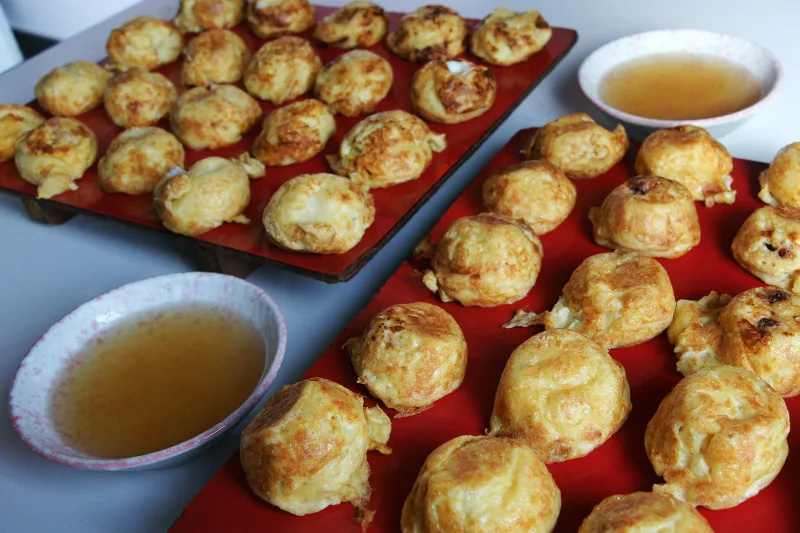
Balls of dashi-based batter with octopus inside, a street-stall favourite born in Osaka. Next door in Akashi there's another kind you dip in broth.
Eaten all over Japan
Best known in Osaka and Hyogo.
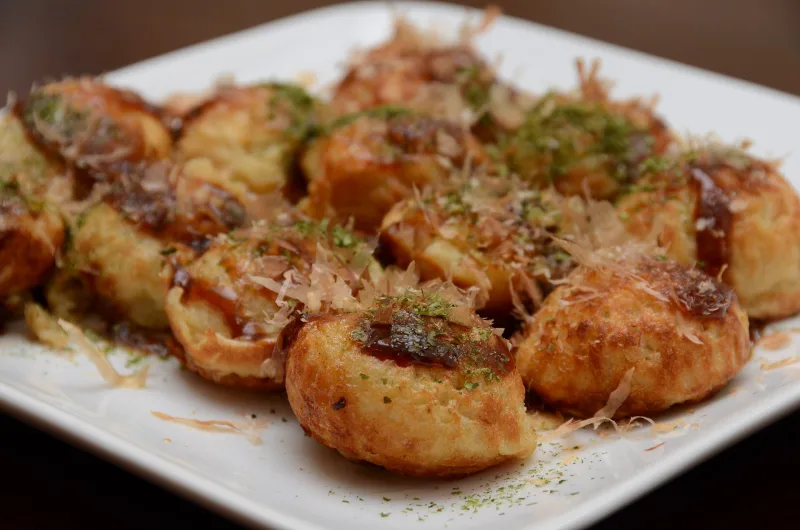
What is takoyaki?
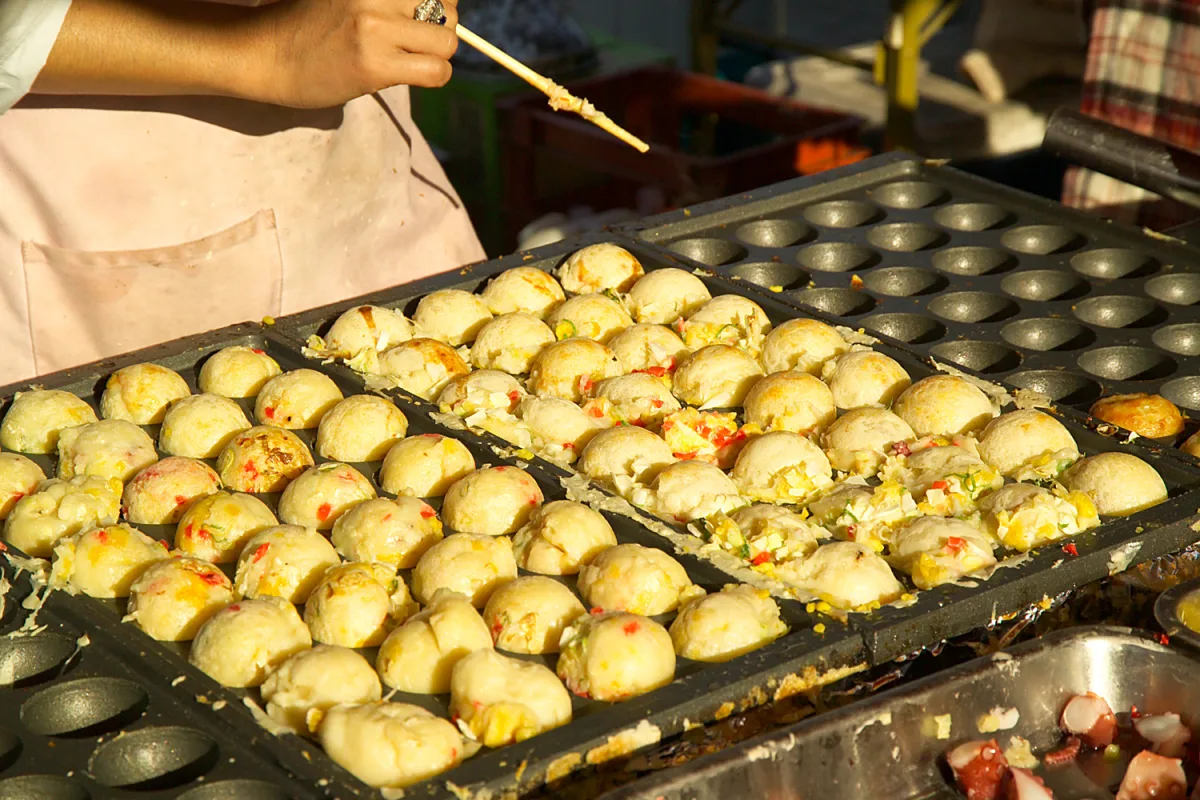
Takoyaki are made on an iron plate with rows of round hollows. A wheat-flour batter mixed with dashi (Japanese soup stock) and egg is poured in, chunks of boiled octopus and tenkasu (crunchy bits of batter left over from frying tempura) are added, and the batter is cooked into balls. Once done, they're brushed with sauce and mayonnaise and sprinkled with aonori (powdered dried seaweed) and kezuribushi (thinly shaved katsuobushi, dried bonito).
At street stalls, the cook flips the batter round and round with a pointed tool, shaping it into neat spheres. The classic style is to line up the freshly cooked balls in a boat-shaped tray and spear them with a toothpick. Good takoyaki are said to be crisp outside and gooey inside.
From penny-sweet "choboyaki" to Osaka icon
According to the Ministry of Agriculture, Forestry and Fisheries and the Osaka Convention & Tourism Bureau, takoyaki's roots are said to lie in choboyaki, a children's snack sold at dagashiya (cheap sweet shops) and festival stalls from the end of the Meiji era into the Taisho era. Batter of wheat flour and water was poured onto an iron plate with small hollows, filled with konnyaku, dried shrimp, red pickled ginger, spring onion and so on, seasoned with soy sauce and cooked.
When radio broadcasting began at the end of the Taisho era, "radio-yaki" appeared, named after the cutting-edge machine. Then, in the early Showa era, a street stall in Osaka City started using octopus as the filling for radio-yaki and selling it as "takoyaki". There are several theories about who came up with it.
At first takoyaki were eaten plain, but after rich, thick sauce was developed after the war, and with some influence from okonomiyaki, today's style topped with sauce, aonori and kezuribushi is said to have taken shape. According to the Osaka Convention & Tourism Bureau, takoyaki shops multiplied around the city from the Showa 30s (from around 1955), when plenty of octopus was being caught in Osaka Bay.
Akashiyaki (tamagoyaki): the other takoyaki, dipped in broth
In Akashi, Hyogo Prefecture, there's akashiyaki, which looks a lot like takoyaki. Octopus goes into a batter of wheat flour, jinko (starch refined from wheat flour), egg and dashi, and it's cooked in a copper pan and eaten dipped not in sauce but in a dashi of bonito and kombu kelp. The batter is rich in egg, and jinko doesn't harden when heated, so it turns out fluffy and soft.
Locally it has long been called tamagoyaki. The name "akashiyaki" was given around 1988 (Showa 63) by Akashi city officials to promote the town, and it spread across Japan under that name. From the end of the Edo period to the Taisho era, Akashi produced "Akashi-dama", ornaments made from egg whites, and one suggestion is that the dish began when the leftover yolks were combined with local octopus.
There are about 70 restaurants in Akashi serving akashiyaki (as of 2021), and it's often served lined up on a wooden board.
Where and how to eat it
Osaka is the home of takoyaki. Dotonbori in Osaka is lined with takoyaki shops and buzzing with visitors eating as they stroll. According to the Ministry of Agriculture, Forestry and Fisheries, many households in Osaka Prefecture own a takoyaki maker, so it's an everyday dish made at home too.
Today takoyaki are a staple of shopping streets and festival stalls all over Japan. Freshly cooked ones are extremely hot inside, so don't eat one in a single bite; let it cool a little first.
For those with dietary restrictions
Takoyaki contain wheat flour, egg and octopus, the batter is made with dashi, and they're topped with kezuribushi (fish). Akashiyaki also uses wheat flour, egg and octopus and is eaten dipped in dashi. If you have allergies or want to avoid seafood, check with the shop before you order.
Tips
- Freshly cooked takoyaki are extremely hot inside, so let them cool a little before eating.
- In Osaka, the shops cluster around Dotonbori, perfect for eating as you stroll.
- If you visit Akashi, try akashiyaki, dipped in broth, and compare it with Osaka's takoyaki.
- Takoyaki are a festival-stall staple too. With the boat-shaped tray and a toothpick, you can eat them standing up.