Japan is Nippon
Mentaiko (Spicy Pollock Roe)
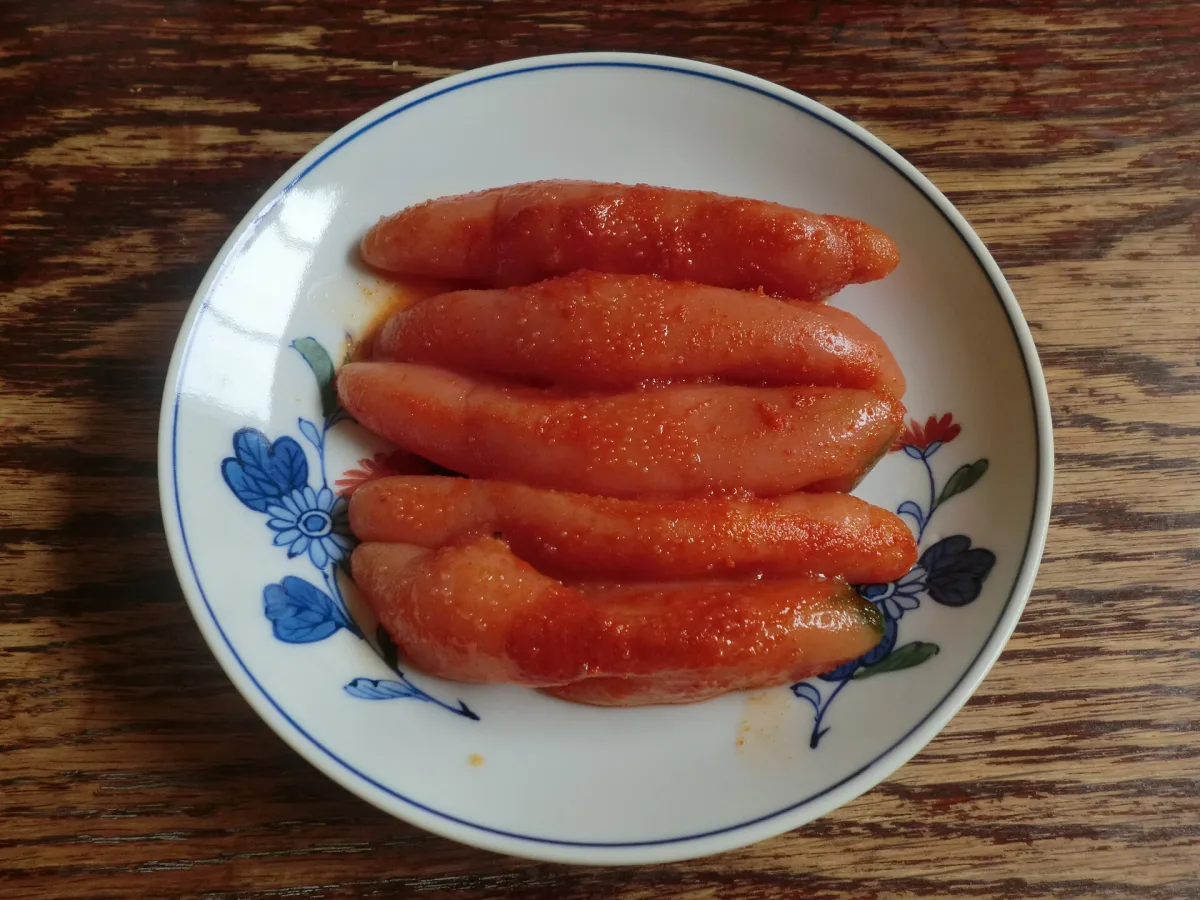
Spicy pollock roe to eat on white rice. Hakata's famous mentaiko has roots in the Korean Peninsula, remade for Japanese tastes by one post-war shopkeeper.
Eaten all over Japan
Best known in Fukuoka.
- FukuokaToday's spicy mentaiko was born in post-war Hakata and spread nationwide as a Hakata speciality; the prefecture says it leads Japan in both production and consumption
What is mentaiko?
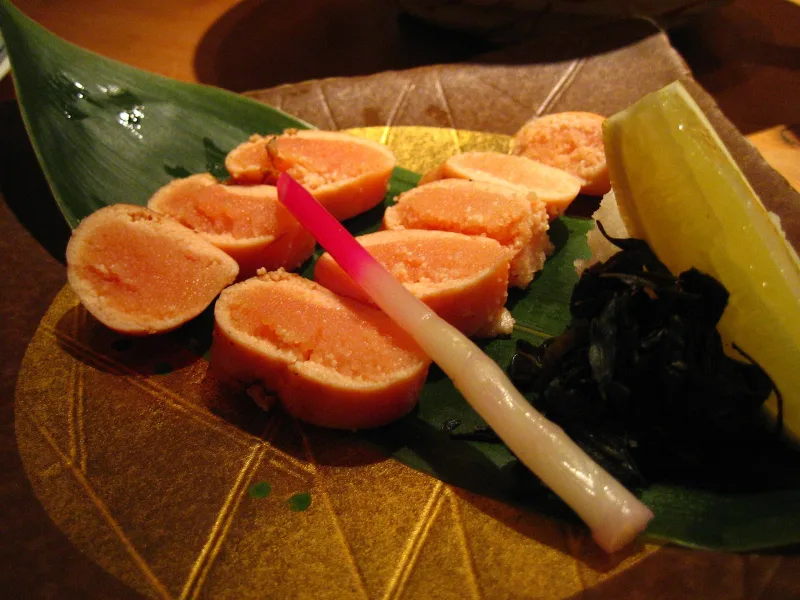
Mentaiko is the ovaries (the sacs packed with eggs) of a fish called Alaska pollock (sukesodara), seasoned in a marinade made with chilli pepper. Its formal name is karashi mentaiko ("spicy mentaiko"), and industry rules say that roe from any fish other than Alaska pollock must not be labelled karashi mentaiko.
It looks like two long, thin sacs joined together, orange to red in colour. Each pair is counted as one hitohara, and inside are hundreds of thousands of tiny eggs or more. Roe that has simply been salted is called tarako; once it is seasoned to be spicy with chilli, it is mentaiko. In some areas, though, people call tarako mentaiko as well.
The name and its roots on the Korean Peninsula
The custom of processing and eating Alaska pollock roe is thought to have been widespread on the Korean Peninsula by around the 17th century. In Korean, Alaska pollock is myeongtae, written with the Chinese characters 明太 (read "mentai" in Japanese), so its ko (roe) came to be called mentaiko.
Korean mentaiko, coated in chilli and garlic, began to be imported into Japan around the start of the Showa era (1926–1989). In places with a lot of traffic to and from the Korean Peninsula, such as Fukuoka, Kitakyushu and Shimonoseki, it was apparently an everyday side dish laid out at the fishmonger's.
"Japanese mentaiko", born in post-war Hakata
Mentaiko as we know it became a Hakata speciality (Hakata is the old name for central Fukuoka City) after the Second World War. Toshio Kawahara, who grew up on the Korean Peninsula, returned to Hakata and wanted Japanese people to taste what he had eaten there. From around 1949, it is said, he turned it into a product using his own method of steeping the roe in a chilli marinade, and began selling it in Nakasu, Hakata.
At first he tried to sell it just coated in chilli, as on the Korean Peninsula, but it was too spicy for Japanese customers and did not sell, so, the story goes, he adjusted the flavour by adding sweetness and the savoury depth of dashi (Japanese soup stock). He generously taught his method to other shops, and the number of mentaiko makers in Fukuoka City grew.
It became known nationwide after the Sanyo Shinkansen line reached Hakata Station in 1975. As a "Hakata speciality" it became a standard souvenir and gift, and today it is sold in department stores and supermarkets across Japan and widely used as a filling for onigiri and in pasta.
How to eat it: the classics
The simplest way is thinly sliced on top of hot rice. People also sear it lightly to make yaki mentaiko, use it in onigiri or ochazuke (rice with green tea or dashi poured over it), or serve it as a snack with drinks.
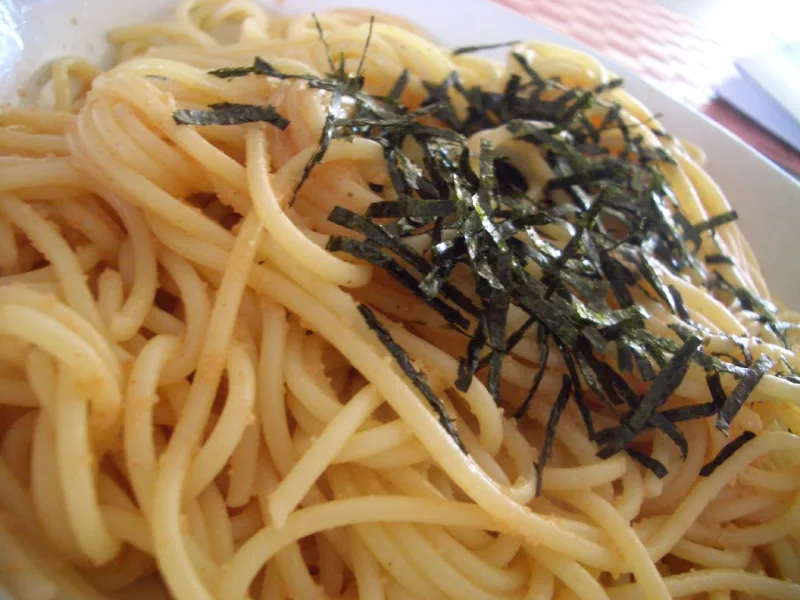
It is used a lot in Western-style dishes too. Spaghetti tossed with crumbled mentaiko and "mentai mayo" (mentaiko mixed with mayonnaise) are classics, and bakeries often sell mentaiko France: a baguette spread with mentaiko mixed with butter or similar.
At the counter you may see both mako, with the sacs neatly intact, and kireko, whose skins have split. Kireko is cheaper because it has lost its shape, but the taste is said to be no different, and it is a popular buy for eating at home.
Where to buy it and where to eat it
Its home is Fukuoka Prefecture, and above all Hakata. Fukuoka Prefecture's tourism website says Fukuoka leads Japan in both mentaiko production and consumption, and the souvenir shops at Hakata Station and Fukuoka Airport stock mentaiko from many makers. Some facilities in the prefecture let you tour the production process or try marinating your own.
For readers with dietary restrictions: mentaiko is fish roe (Alaska pollock eggs) and is usually eaten as it is, without cooking. The marinade may contain sake, katsuobushi (dried bonito flakes) or kombu (kelp) stock. Take care if you are allergic to fish roe or avoid raw seafood.
Tips
- If it is your first time, the best way is thinly sliced on hot rice. If you are worried about the heat, lightly searing it makes it easier to eat.
- If you are buying it as a souvenir, compare heat levels and flavourings at the shops in Hakata Station or Fukuoka Airport. For eating at home, inexpensive kireko (broken pieces) are perfectly good.
- Many mentaiko products need to be kept chilled or frozen, so bring a cool bag or ice packs for the trip home.
- Mentaiko is a popular onigiri (rice ball) filling all over Japan. For an easy first taste while travelling, start with an onigiri.
- If you are allergic to fish roe, avoid it.