Sushi
Nigiri sushi began as cheap street-stall food in Edo. From Osaka's box sushi to Toyama's trout sushi, here's how wide the world of sushi really is.
Eaten all over Japan
Best known in Tokyo and Osaka and Toyama and Nara and Shiga.
- TokyoThe city of Edo, where nigiri sushi took off; Edomae sushi with red-vinegar rice and carefully prepared toppings
- OsakaHome of box sushi pressed in wooden moulds and battera; conveyor-belt sushi was also born in Higashiosaka
- ToyamaMasu-zushi: trout and vinegared rice pressed into a round wooden box lined with bamboo leaves
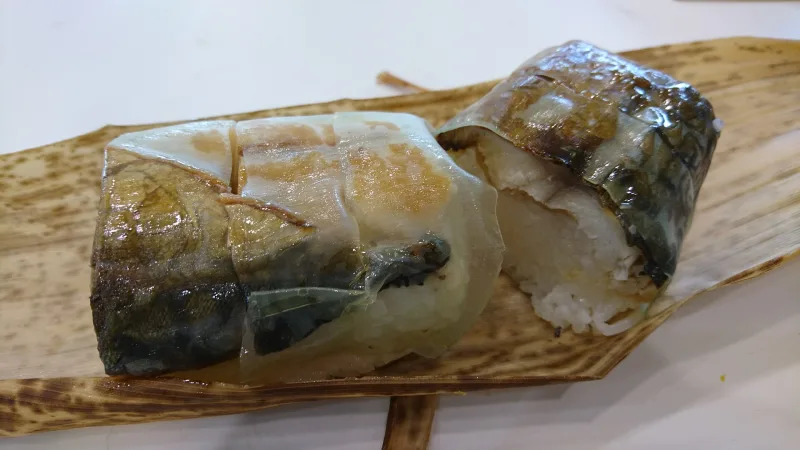
- NaraKakinoha-zushi from Gojo and the Yoshino area: pressed mackerel sushi wrapped in persimmon leaves
- ShigaFuna-zushi, an ancient form of sushi made by fermenting Lake Biwa crucian carp with rice
Sushi isn't "raw fish"?
Outside Japan, people often think sushi means raw fish, but the Japan National Tourism Organization (JNTO) explains that the heart of sushi is the slightly sweet vinegared rice, called shari. Whatever goes on top or is rolled inside is called neta, and it isn't only seafood: egg, vegetables and cooked ingredients are used too. Sashimi, slices of raw fish laid out without rice, isn't sushi, even when it's served at a sushi restaurant.
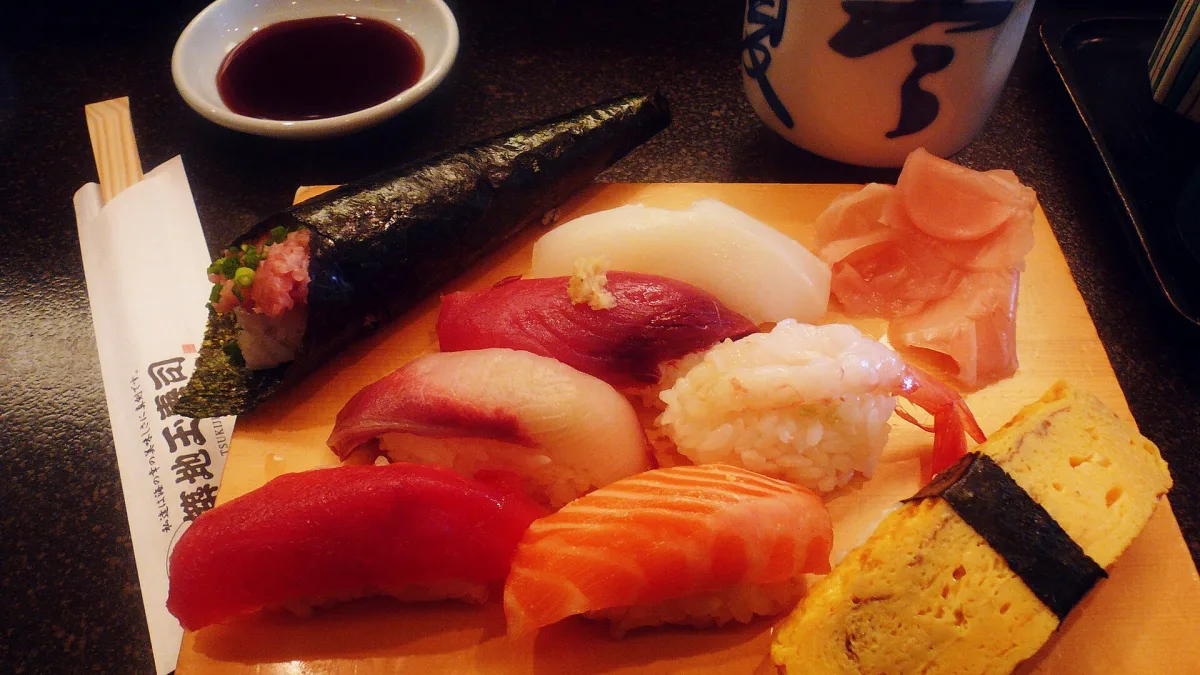
Sushi comes in all sorts of shapes: nigiri-zushi, hand-pressed rice with a topping; maki-zushi, rolled in nori seaweed; temaki-zushi, hand-rolled into a cone; chirashi-zushi, toppings scattered over a bowl of rice; inari-zushi, sweet simmered fried tofu pouches stuffed with vinegared rice; and oshi-zushi, pressed firmly into a wooden mould.
From preserved food to Edo's fast food
Sushi began as narezushi: salted fish packed in rice and left to ferment. According to the Ministry of Agriculture, Forestry and Fisheries, it was eaten as a preserved food in the Heian period. JNTO says the method is thought to have come to Japan along with rice farming, and that until around the Muromachi period the rice used for fermenting was thrown away.
In the Edo period, narezushi gave rise to haya-zushi ("quick sushi"), which didn't wait for fermentation, to pressed sushi and then to nigiri sushi. By the late Edo period, ordinary townspeople could casually eat nigiri sushi at street stalls. Nigiri then used about three times as much rice as today and was a snack to fill a hungry stomach. The way sushi is still made and handed over at a counter, even in proper restaurants, is a remnant of the street-stall days.
Edomae sushi pairs rice seasoned with akazu (red vinegar made from sake lees) with toppings that have been given a little extra work: vinegar-cured kohada (gizzard shad) and mackerel, simmered conger eel, steamed prawns, tamagoyaki and so on. Zuke, marinating in soy sauce, and kobujime, pressing between sheets of kombu kelp to transfer its flavour, are among its techniques.
Osaka's box sushi and Toyama's trout sushi: regional sushi
In Osaka, the signature style isn't nigiri but hako-zushi (box sushi), where vinegared rice and toppings are packed into a square wooden mould and pressed. Pressed sushi of vinegar-cured mackerel layered with a thin sheet of shiraita kombu is called battera. According to the Ministry of Agriculture, Forestry and Fisheries, it was created in 1891 (Meiji 24) by a restaurant in Minami-Senba, Osaka, and was originally made with a fish called konoshiro. It is said to take its name from the Portuguese word for a small boat, because of its boat-like shape. You can eat it without soy sauce, so it's ideal as a takeaway or a gift.
Toyama Prefecture's masu-zushi is made by lining a round wooden box (wappa) with bamboo leaves and pressing layers of salted trout and vinegared rice inside. It became known nationwide after it went on sale as an ekiben (station lunch box) in the Taisho era. In the Gojo and Yoshino area of Nara Prefecture, kakinoha-zushi, salt-cured mackerel and vinegared rice wrapped in persimmon leaves, has been handed down and made as a treat for summer festivals.
Shiga Prefecture's funa-zushi is an ancient form of narezushi made by fermenting nigorobuna, a crucian carp from Lake Biwa, full of roe, with rice. Fermentation softens even the bones, and in 1998 it was chosen as one of the "Shiga Food Cultural Assets", an intangible folk cultural property of Shiga Prefecture.
From conveyor belts to omakase at the counter
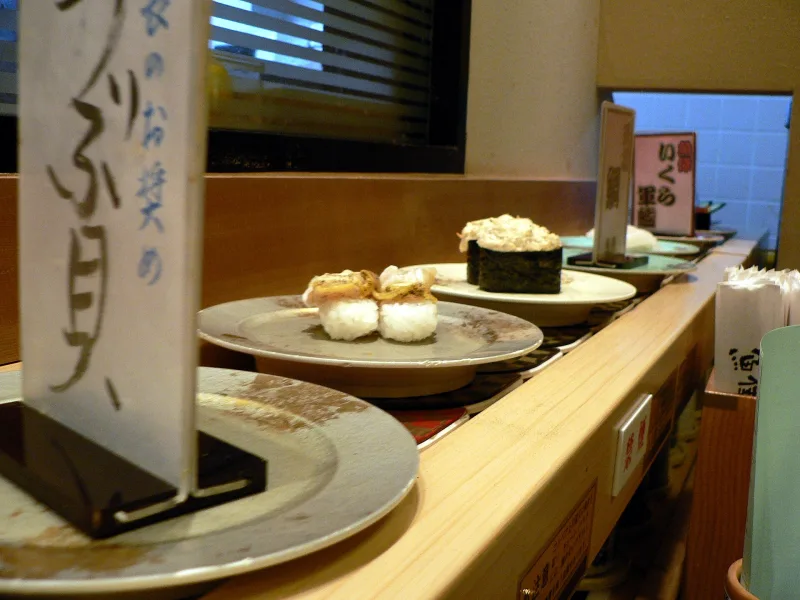
Conveyor-belt sushi (kaiten-zushi) was born in Osaka. According to the Osaka Convention & Tourism Bureau, someone who ran a standing sushi bar in Fuse, Higashiosaka, got the idea from a conveyor belt at a beer factory and opened the first restaurant in 1958. It became well known after appearing at the 1970 Osaka Expo, and helped turn sushi into an everyday food.
At a conveyor-belt restaurant you're free to take any plate that passes, but you must never put a plate back on the belt once you've taken it. If you're sitting where a chef is in front of you, you can also order directly. Green tea is often self-service.
At high-end restaurants, omakase, leaving the choice of toppings to the chef, is the norm. Many popular places have only a few seats and are hard to get into on the day without a booking, so check reservations while you're still planning your trip. These days you can also buy sushi at supermarkets, department store food halls and konbini (convenience stores).
Etiquette and dietary restrictions
Dip the topping side in soy sauce and don't soak the shari (rice) in it. The rice soaks up too much, making the flavour overpowering, and the sushi falls apart more easily. You can eat it with chopsticks or with your hands. The gari (sweet pickled ginger) on the side is for refreshing your palate before the next piece, not for putting on the topping.
As general chopstick etiquette, avoid passing food from chopsticks to chopsticks and sticking your chopsticks upright in rice.
For those with dietary restrictions: most sushi uses raw seafood. JNTO lists kappa-maki with cucumber, takuan-maki with pickled daikon radish, ume-shiso-maki with pickled plum and shiso leaf, and inari-zushi as vegetable-based sushi.
Tips
- Dip the topping, not the rice, in soy sauce, and only lightly.
- At a conveyor-belt sushi restaurant, never put a plate back on the belt once you've taken it.
- If you want to try omakase at a popular sushi restaurant, check whether you can book before your trip.
- Toyama's masu-zushi and Nara's kakinoha-zushi are also sold as ekiben (station lunch boxes) and souvenirs, perfect for a train journey.
- If raw fish isn't your thing, start with kappa-maki (cucumber rolls), inari-zushi or tamagoyaki (rolled omelette) sushi.