Japan is Nippon
Okinawa Soba
Called "soba" but made without a gram of buckwheat, this is Okinawa's everyday dish, and local noodle makers once negotiated with the state to keep its name.
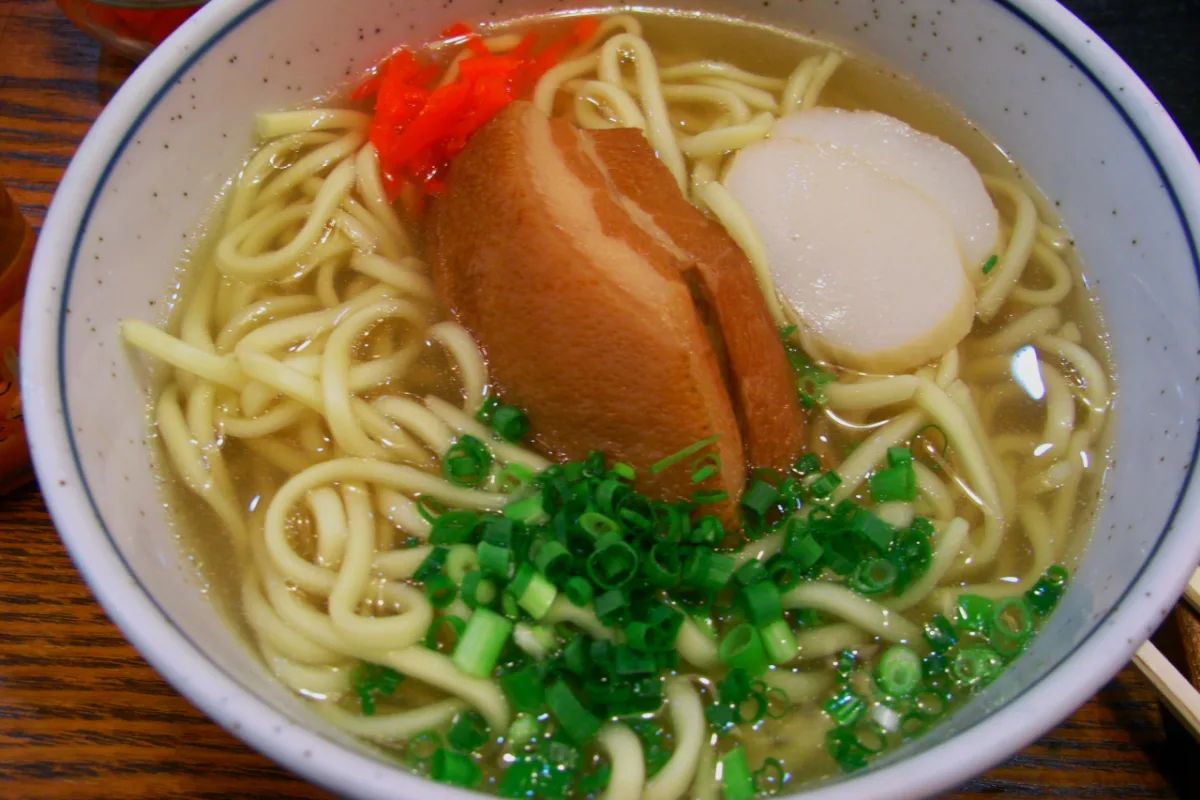
A local dish of Okinawa
You will mostly find it in this area, rarely elsewhere in Japan.
- OkinawaAn everyday dish across the prefecture; flat noodles in the north of the main island, wavy noodles around Naha, and distinct sobas on Miyako and Yaeyama
What is Okinawa soba?
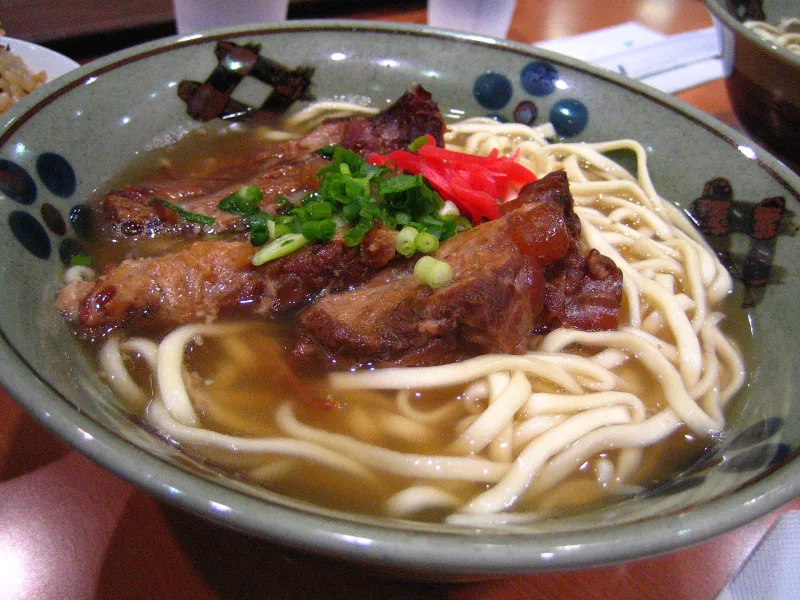
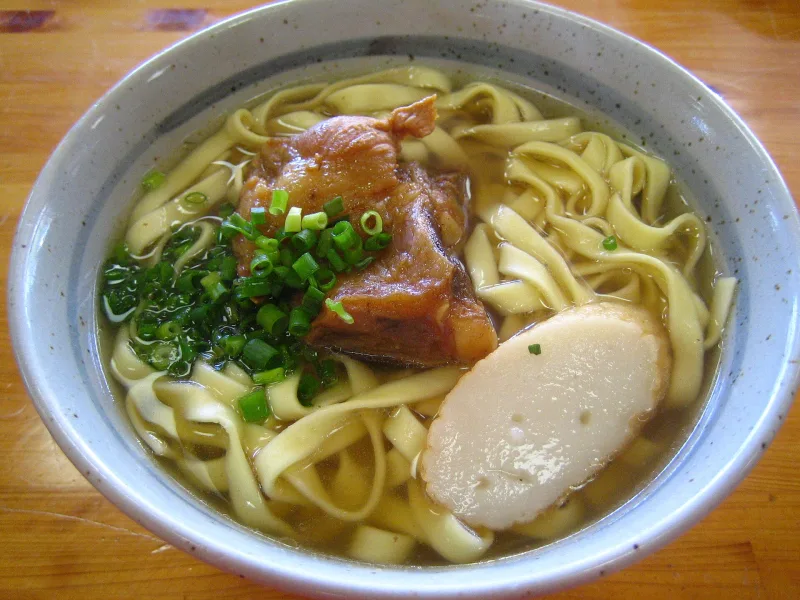
Okinawa soba is a hot noodle dish eaten practically every day in Okinawa Prefecture. Despite "soba" in the name, it is completely different from mainland Japanese soba (grey noodles made from buckwheat flour): the noodles are made from wheat flour with kansui (alkaline water). In terms of how they're made, they are classed as Chinese-style noodles, in other words the same family as ramen noodles. They are fairly thick, slightly yellow and firm to the bite.
The soup is basically a stock made from pork bones and katsuobushi (dried bonito), combining the richness of pork with the aroma of bonito. The standard toppings are sanmainiku, skin-on pork belly simmered sweet and savoury in sugar and soy sauce; a fried kamaboko (fishcake) unique to Okinawa; spring onion; and pickled red ginger. Within Okinawa it is also simply called "soba", or "suba" in the Okinawan language.
According to the Okinawa Fresh Noodle Cooperative, around 190,000 to 200,000 servings of Okinawa soba are eaten in the prefecture every day. It is made at home with shop-bought noodles and eaten daily at specialist restaurants and canteens: truly the people's dish of Okinawa.
From royal cuisine to post-war comfort food
The Okinawa Fresh Noodle Cooperative cites a Chinese record stating that in 1534 "fentang" (Chinese for noodles in soup) was offered at a memorial service for the king of Ryukyu (the kingdom that once ruled Okinawa), and presents this as the prototype of Okinawa soba. However, the cooperative itself says there is "no reliable record", and it is unclear when noodle dishes arrived from China.
According to the Okinawa Prefectural Archives, it is also said to have started with a noodle dish served at Chinese-run shops in Naha in the mid-Meiji era. At the time it was called "suba" or "shina suba" (Chinese suba), and the name "Okinawa soba" only became common after the Second World War. After the war it spread widely as ordinary people's food, and all sorts of Okinawa soba came to be made in different areas.
The time it nearly lost the right to be called "soba"
In 1976, four years after Okinawa was returned to Japan, the Japan Fair Trade Commission (a national government body) pointed out that noodles containing less than 30% buckwheat flour could not be labelled "soba". Had nothing changed, a name beloved by Okinawans would have had to go.
The Okinawa Fresh Noodle Cooperative negotiated with the government again and again to protect the name and the food culture. As a result, on 17 October 1978 the name "Honba Okinawa Soba" (authentic Okinawa soba) was officially recognised in the noodle labelling rules. To mark this, the cooperative has designated 17 October every year as "Okinawa Soba Day" since 1997.
To be labelled "Honba Okinawa Soba", noodles must meet a detailed list of conditions on everything from ingredients to method, including being made in Okinawa Prefecture, always being kneaded by hand after cutting and before boiling, and being coated in oil after boiling.
Noodles that change by region, and lots of toppings
The shape of Okinawa soba noodles varies by area. The northern part of Okinawa Island, such as Nago, is said to favour flat, ribbon-like noodles; the south, centred on Naha, wavy noodles of medium thickness; and outlying islands such as Ishigaki, thin round noodles. Japan's Ministry of Agriculture, Forestry and Fisheries also lists Miyako soba from Miyakojima and Yaeyama soba from the Yaeyama Islands as sobas with their own regional character.
There is plenty of variety in toppings too. The classics are soki soba, topped with simmered pork spare ribs on the bone, and nankotsu soki soba, which uses tender meat with soft cartilage. There is also nakami soba, made with pork offal, and vegetable soba, among others, and some restaurants these days offer more unusual creations.
Where and how to eat it
Its home is Okinawa Prefecture, and you can eat it at specialist restaurants and canteens all over the prefecture, from Naha and other towns to the north of the main island and outlying islands such as Miyakojima and Ishigaki. Sets of noodles and soup are also sold as souvenirs, so you can make it at home after your trip.
Many restaurants have a bottle of koregusu on the table, a condiment of shima togarashi (small, hot Okinawan chillies) steeped in awamori (Okinawa's distilled spirit). A few drops sharpen the flavour, but it is very hot, so try a little at first.
For those with dietary restrictions: the soup is basically made from pork bones and katsuobushi, and the toppings include pork and kamaboko (fish paste). The noodles are made from wheat flour. If you want to avoid pork or fish, check with the restaurant before ordering.
Tips
- If you can't decide, go for basic Okinawa soba topped with sanmainiku (pork belly), or soki soba topped with meat on the bone.
- The noodles differ in shape between northern and southern Okinawa Island and the outlying islands. Compare a few areas as you travel and you'll really notice the difference.
- The koregusu on the table is very hot, so don't pour in too much at once; add it a few drops at a time.
- 17 October is "Okinawa Soba Day". If you're visiting Okinawa around then, it's a nice conversation starter.
- If you want to avoid pork or fish stock, check the ingredients before ordering.
Sources
- Wikipedia「沖縄そば」(補足) (opens in a new tab)
- 農林水産省 うちの郷土料理「沖縄そば 沖縄県」 (opens in a new tab)
- 沖縄県公文書館「1978年10月17日 『沖縄そばの日』の由来」 (opens in a new tab)
- 沖縄生麺協同組合「沖縄そばについて」 (opens in a new tab)
- 沖縄生麺協同組合「沖縄そばの歴史と沖縄そばの日」 (opens in a new tab)
- 沖縄生麺協同組合「沖縄そばQ&A」 (opens in a new tab)
- Wikipedia「ソーキ」(補足) (opens in a new tab)