Japan is Nippon
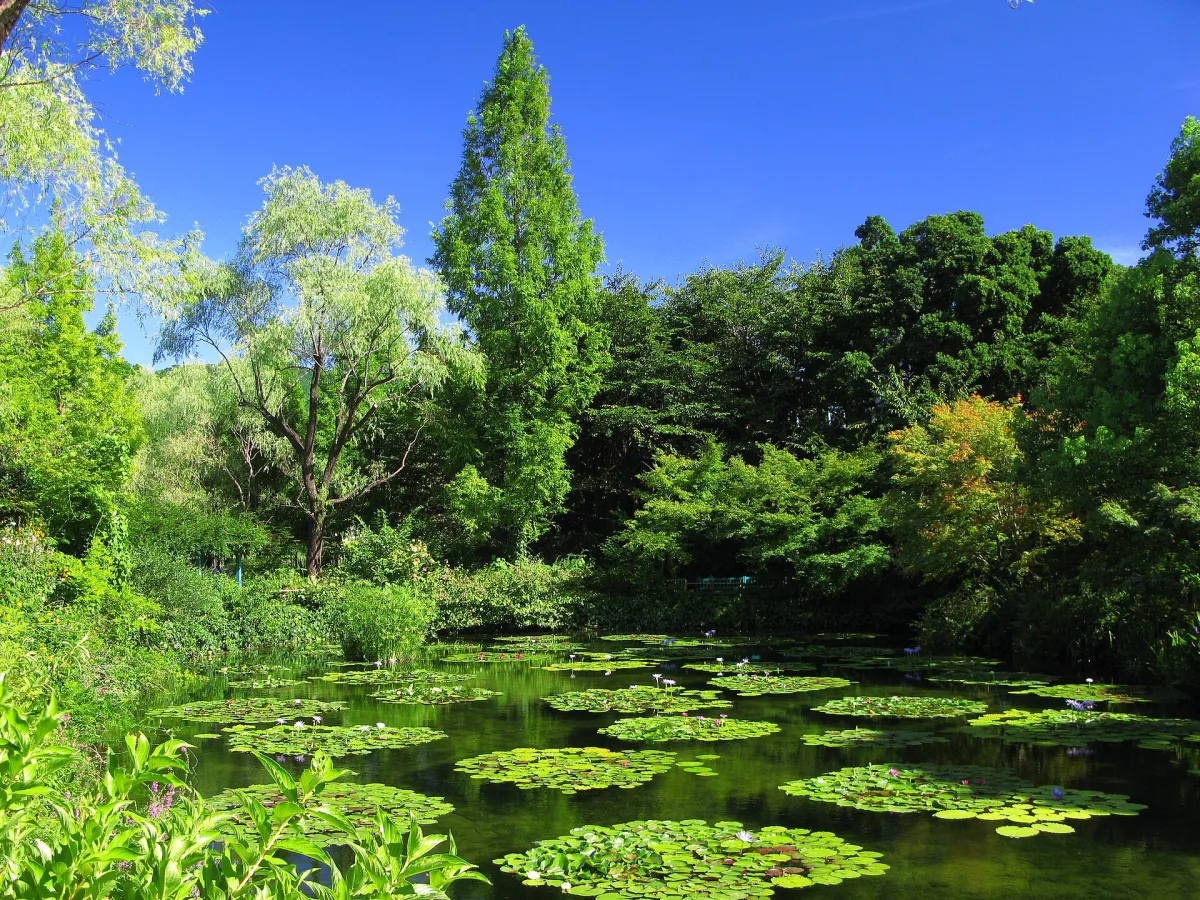
Kitagawa-mura Monet's Garden Marmottan
北川村「モネの庭」マルモッタン
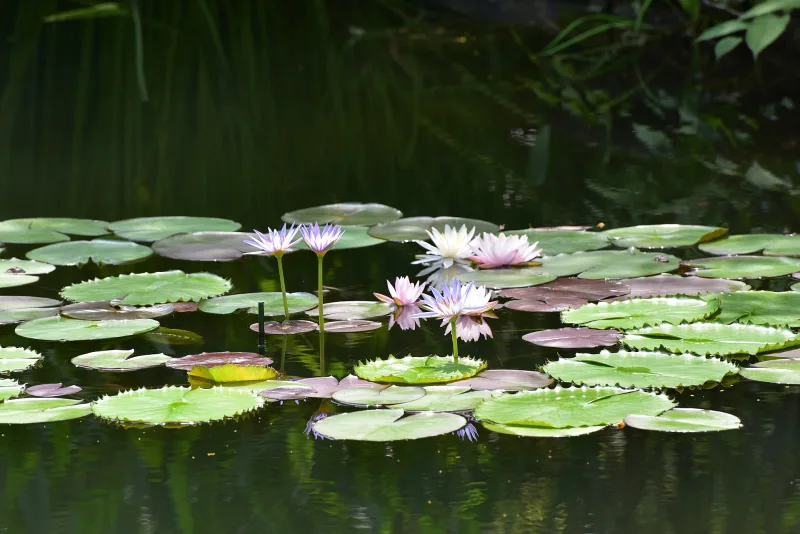
Monet's beloved garden at Giverny, recreated in a Kochi mountain village. From summer to autumn, the blue water lilies Monet longed to grow float on the pond.
A "Monet's Garden" approved by Giverny
At 43, the Impressionist painter Claude Monet moved to Giverny in northern France, where he chose the plants and made the garden himself and painted many works, above all his famous Water Lilies. Kitagawa-mura Monet's Garden Marmottan recreates that garden under the guidance of the Claude Monet Foundation, and it opened in 2000.
Kitagawa, a mountain village in eastern Kochi Prefecture, had tried to revive itself with its local speciality, yuzu (a fragrant Japanese citrus), but when that effort shrank, it chose to build a flower garden as a centre for tourism and culture. It all began when village officials visited Giverny without any connections there, and an exchange grew from that visit. The name "Monet's Garden" had never before been allowed to be used outside Giverny, and the French side gave it as a special gift.
Three gardens
The Water Garden is a pond of water lilies with an arched bridge, a wisteria trellis and willows. Monet was captivated by Japanese ukiyo-e woodblock prints and brought Japanese touches into his garden at Giverny. With trees and flowers reflected on the pond's surface, it feels like walking through one of his paintings.
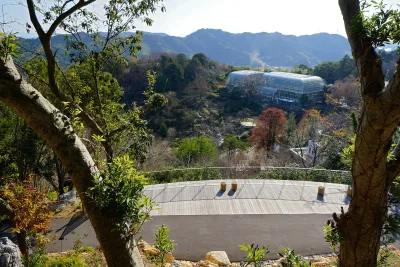
The Flower Garden is packed with small seasonal flowers spilling out of their beds. The Bordighera Garden takes as its theme the works Monet painted on a trip to Bordighera, a town on the Mediterranean. It mixes Mediterranean plants such as palms and olives with plants from Kochi, and from the terrace of the red-roofed Riviera Hut you can look out over the Pacific.
The season of blue water lilies
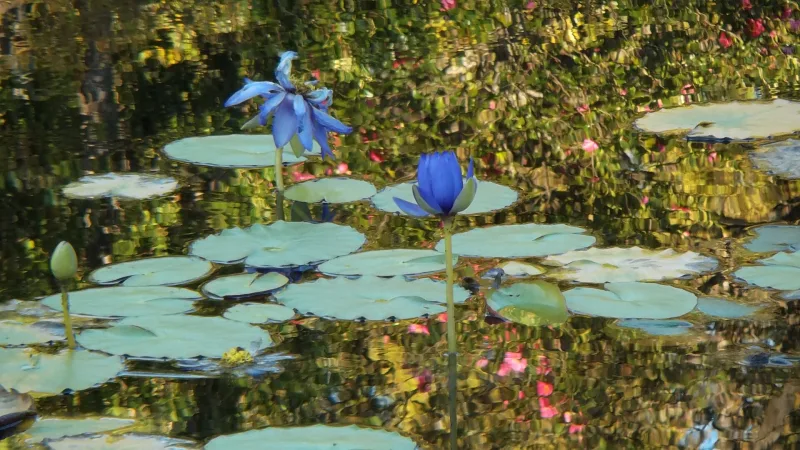
Only tropical water lilies produce blue flowers, and blue was the colour Monet dreamed of growing in his own garden. Here those blue water lilies bloom every year as a symbol of the friendship between Giverny and Kitagawa.
Water lilies close their flowers in the afternoon, but according to the official website the blue ones stay open relatively long. The flowers at their best each season are featured under "Flowers in bloom" on the official website.
Getting there
From Kochi Station take the JR Dosan Line to Gomen Station, then change to the Tosa Kuroshio Railway Gomen-Nahari Line and ride to the terminus, Nahari Station. From Nahari Station, a bus bound for Kitagawa village takes you to the Monet no Niwa (Monet's Garden) stop; by car it is about 10 minutes from Nahari Station. Drivers from central Kochi city head east on National Route 55, then north on National Route 493 from Nahari town. Check opening hours and admission fees on the official website.
Tips
- The garden has closing days: the first and third Wednesdays from June to October, and a winter closure from December to February. In 2027 the winter closure runs until 12 March because of renovation work on the Water Garden.
- Water lilies gradually close in the afternoon. The blue ones open more slowly in autumn, and a September 2026 notice said they were at their best from about 10 am. Late morning to early afternoon is the best time to visit.
- If you are going by train and bus, check the connection time at Nahari Station before you set off.
Sources
- モネの庭とは|北川村「モネの庭」マルモッタン(公式) (opens in a new tab)
- モネの庭ヒストリー|北川村「モネの庭」マルモッタン(公式) (opens in a new tab)
- 水の庭|北川村「モネの庭」マルモッタン(公式) (opens in a new tab)
- ボルディゲラの庭|北川村「モネの庭」マルモッタン(公式) (opens in a new tab)
- 見ごろの花|北川村「モネの庭」マルモッタン(公式) (opens in a new tab)
- 交通アクセス|北川村「モネの庭」マルモッタン(公式) (opens in a new tab)
- 開園日&イベントカレンダー|北川村「モネの庭」マルモッタン(公式) (opens in a new tab)
Updated 30 September 2026. Opening hours and prices change, so check the official site before you go.