Japan is Nippon
Ueda Castle Park
上田城跡公園
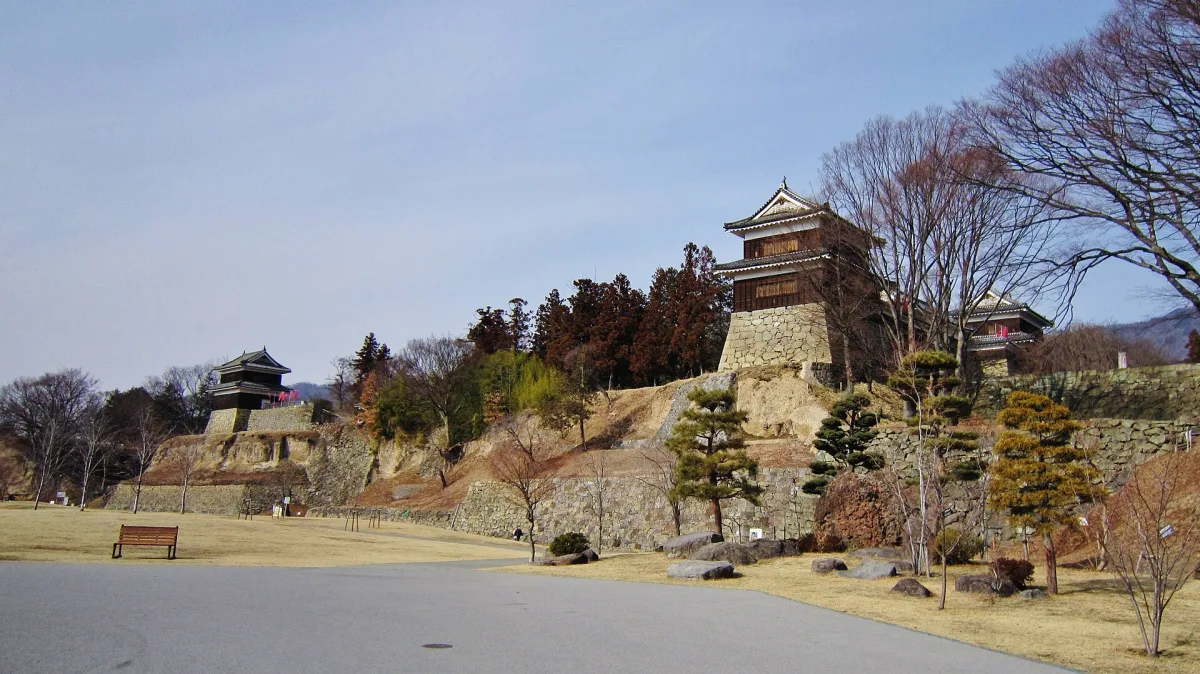
The site of Ueda Castle, built by Sanada Masayuki, which twice drove back huge Tokugawa armies. Its Edo-era turrets and clifftop tower still evoke a warring-states castle.
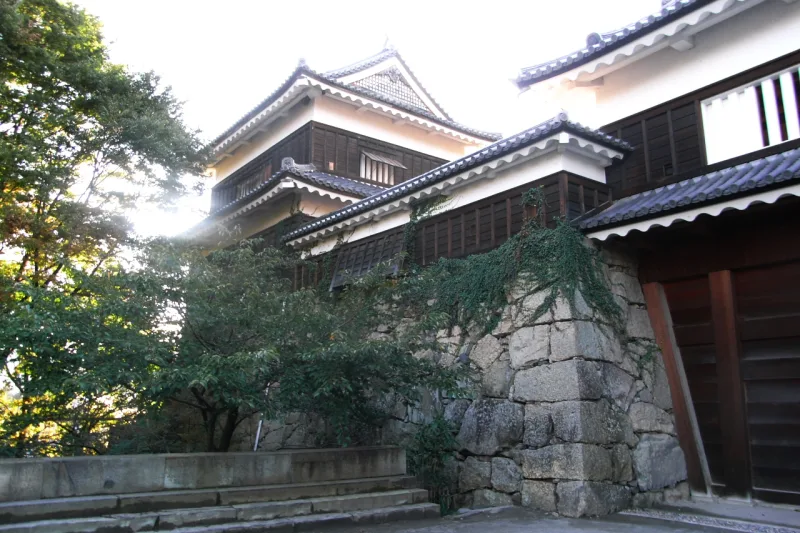
The Sanada castle that twice repelled the Tokugawa
Ueda Castle was built in 1583 by the warlord Sanada Masayuki. In 1585, a Sanada force of fewer than 2,000 drove back a Tokugawa army of just over 7,000. At the time of the Battle of Sekigahara in 1600, Masayuki and his son Nobushige (also known as Yukimura) held out in this castle and pinned down an army of 38,000 led by Tokugawa Hidetada. It is known as the castle that twice drove back the Tokugawa.
After the Battle of Sekigahara the castle was torn down, but its new lords, the Sengoku family, set about rebuilding it, and after them the Matsudaira family held it until the Meiji era. From the Meiji era onwards most of the buildings were lost, pulled down or sold off, and the castle site was gradually turned into a park. The south side of the castle was once a cliff above a branch of the Chikuma River, which served as a natural moat.
The Edo-era west turret, and the north and south turrets that came home
The West Turret, standing on the cliff at the south-west corner of the honmaru (main enclosure), is the only yagura (a building for keeping watch and defence) that has stayed on this spot since the Edo period without ever being demolished or moved.
The South and North Turrets, which stand on either side of the Higashi Koguchi (east gate; koguchi means a castle entrance) at the entrance to the honmaru, were once sold off outside the castle. In the Showa era a preservation society set up by local citizens bought them back, moved them to the castle site and rebuilt them. The turret gate between them was reconstructed in 1994 from old photographs and archaeological excavations. You can see inside the turrets for a fee.
The north-east corner of the honmaru has been deliberately cut away. North-east was considered the kimon (demon's gate), the direction from which demons enter, and this was a way of warding them off. In the honmaru you will also find the Sanada Well, said in legend to hide a secret escape tunnel, and Sanada Shrine, dedicated to the castle's successive lords.
Cherry blossoms and autumn leaves
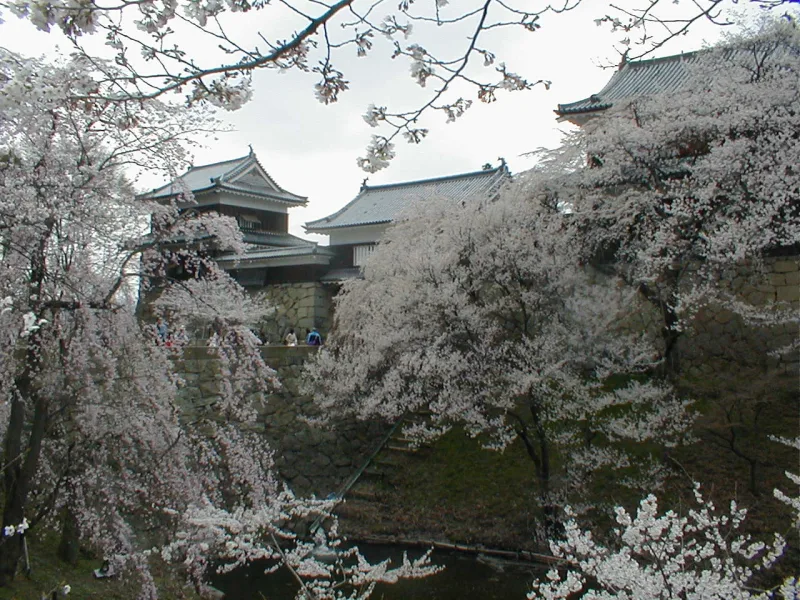
The park is well known for its cherry blossoms, and in spring it holds the Senbon Sakura (Thousand Cherry Trees) Festival. The old moat has become a walking path lined with zelkova trees, where you can stroll through fresh spring greenery or autumn colour. In autumn there is also an Autumn Leaves Festival.
The Ueda City Museum, next to the park, displays items such as katchu (armour and helmets) belonging to the castle's successive lords of the Sanada, Sengoku and Matsudaira families.
Getting there
It is about a 12-minute walk from Ueda Station, served by JR, the Shinano Railway and the Ueda Electric Railway. By car it is about 15 minutes from Ueda-Sugadaira IC (interchange) on the Joshin-etsu Expressway. The park is open 24 hours and entry is free.
Check the opening hours, closing days and prices of the turrets and the museum on Ueda City's official website. There is a period in winter when the turrets cannot be visited.
Tips
- Look up at the southern cliff crowned by the West Turret from below, and you will see how well the castle made use of the natural lie of the land.
- During the Senbon Sakura Festival, Golden Week and the Autumn Leaves Festival, parking charges at the park change and some car parks need to be booked in advance. At these times it is best to come by train.
- Ueda City is continuing its research to uncover what the castle built by the Sanada family looked like, and its work towards restoring the remaining turrets.
Sources
- 上田城の歴史|上田城サイト(上田市) (opens in a new tab)
- 上田城の見どころ|上田城サイト(上田市) (opens in a new tab)
- 上田城の調査・整備・復元|上田城サイト(上田市) (opens in a new tab)
- 上田城跡公園へのアクセス・駐車場|上田城サイト(上田市) (opens in a new tab)
- 上田城跡公園|信州上田観光協会 (opens in a new tab)
Updated 30 September 2026. Opening hours and prices change, so check the official site before you go.