Japan is Nippon
Suwa Taisha Shimosha Akimiya
諏訪大社 下社 秋宮
A Suwa Taisha shrine with no main hall that worships a yew tree as its deity. See its giant sacred rope, Edo master carvings, and hot spring water in the purification basin.
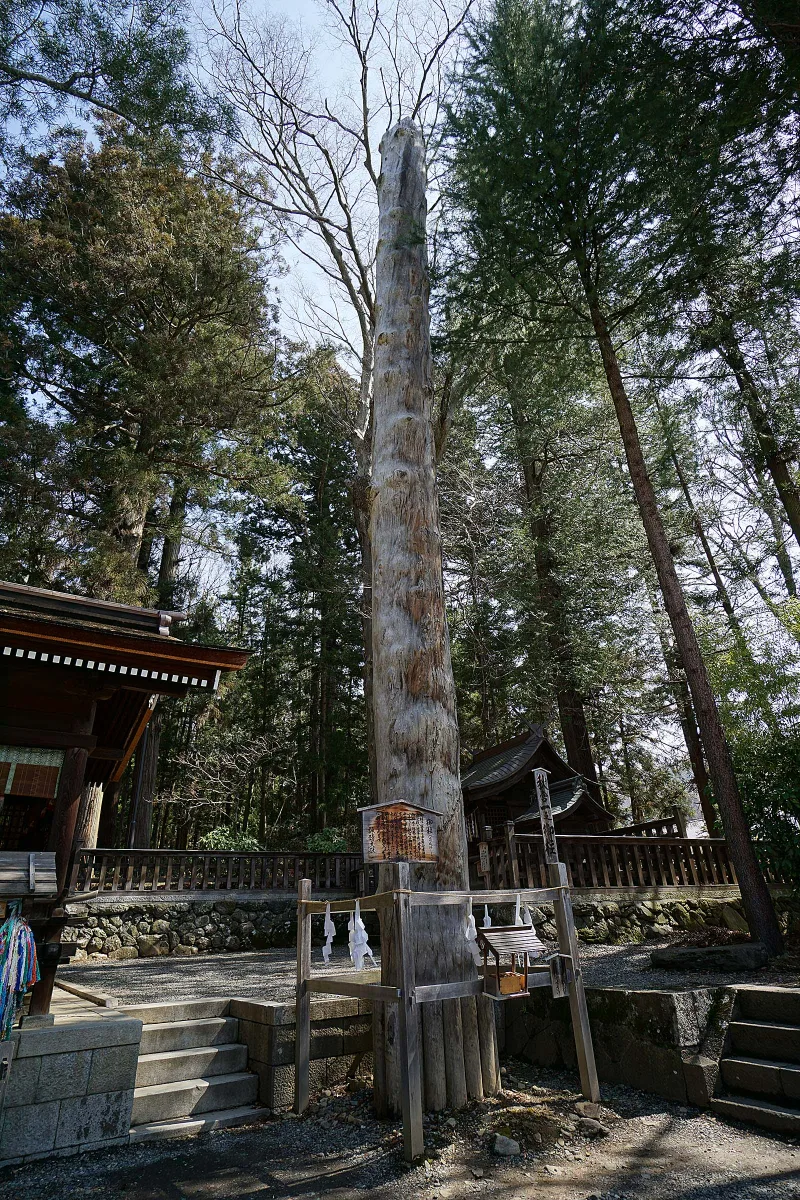
One of the four shrines of Suwa Taisha
Suwa Taisha is a shrine around Lake Suwa in Nagano Prefecture, and the head shrine of the more than 10,000 Suwa shrines across Japan. The Kamisha (upper shrine), with its Honmiya and Maemiya, lies to the south of Lake Suwa, and the Shimosha (lower shrine), with its Harumiya and Akimiya, to the north; together these four shrines make up Suwa Taisha. The Kamisha Honmiya has its own page on this site.
Suwa Taisha Shimosha Akimiya stands in the centre of the town of Shimosuwa. It sits at a key junction where two great Edo-period highways, the Nakasendo and the Koshu Dochu (today's Koshu Kaido), part ways.
No main hall: a tree worshipped as the deity
Suwa Taisha is known as a shrine without a honden (the main hall where the deity is believed to dwell). At the Shimosha, the goshinboku (sacred tree) behind the two treasure halls is worshipped as the embodiment of the deity: a yew at Akimiya and a Japanese cedar at Harumiya. This keeps alive an ancient form of faith that worships nature itself as divine.
Every year the Shimosha's deity moves from Akimiya to Harumiya in February, and back from Harumiya to Akimiya in August. From August to January the following year, the deity is at Akimiya.
The kagura hall's giant rope and Tatekawa-school carvings
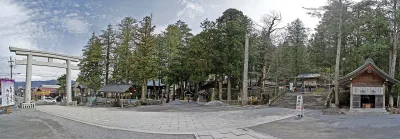
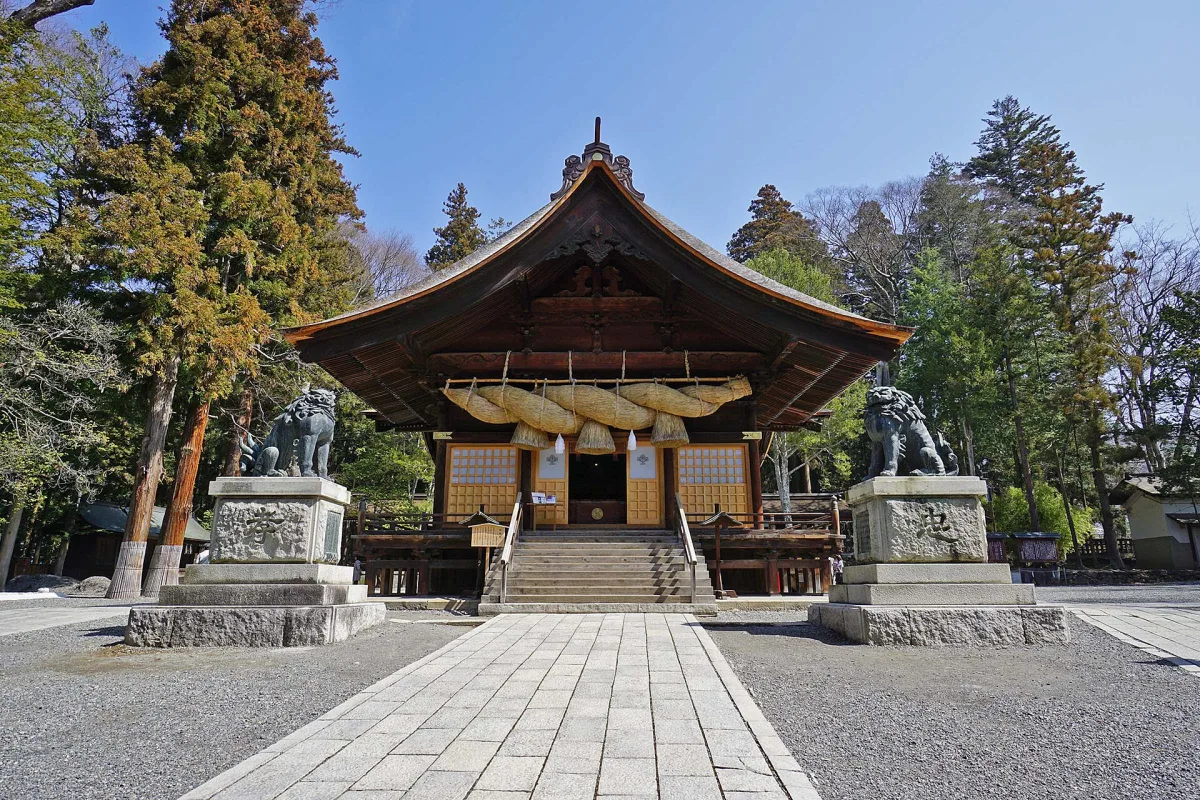
The large building straight ahead as you pass through the torii (the gate that marks a shrine) is the kaguraden (a hall where sacred dances and music are offered to the gods). It was completed in 1835 by the Edo-period master craftsman Tatekawa Washiro Tomimasa, the second of that name. The great shimenawa (a sacred rope marking a holy place) hanging across the front is about 13m long, weighs an estimated 500kg and is made anew for every Onbashira Festival. The komainu (lion-like guardian statues that protect the shrine) on either side stand 1.7m tall and are said to be the largest bronze ones in Japan.
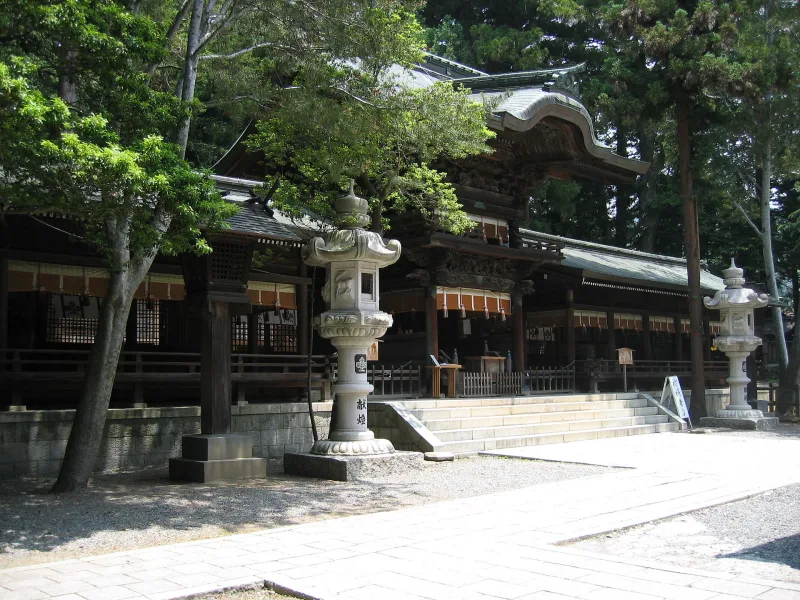
Behind the kaguraden is the heihaiden (offering and worship hall), the work of Tatekawa Washiro Tomimune, the first of the line, completed in 1781. It is famous for its superb carvings, and it is a national Important Cultural Property along with the kaguraden. Near the torii there is also a great sacred cedar called Neiri no Sugi, the "sleeping cedar", because its drooping branches make it look as if it is asleep.
The onbashira pillars, and getting there
At the four corners of the shrine buildings stand onbashira, pillars made from huge fir trees. Every six years, in the Year of the Tiger and the Year of the Monkey, they are replaced with trees cut from the mountains during the Onbashira Festival. The next Onbashira Festival is in 2028 (a Year of the Monkey).
It is about a 10-minute walk from Shimo-Suwa Station on the JR Chuo Line. By car it is about 15 minutes from Okaya IC (interchange) on the Nagano Expressway, and there is a car park. Check the treasure hall's opening hours and other details on the official website.
Tips
- Hot spring water known as "Goshinto" flows from the chozu (the water basin where you rinse your hands and mouth before praying) in the grounds. Shimosuwa is a hot spring town too.
- On weekends from April to November, free guided tours are offered in the shrine grounds. Look for staff in yellow jackets.
- Amulets made with bark from the Neiri no Sugi are said to help stop children crying at night.
Sources
- 諏訪大社下社秋宮|信濃國一之宮 諏訪大社(公式) (opens in a new tab)
- 諏訪大社下社秋宮|諏訪観光協会 (opens in a new tab)
- 諏訪大社下社秋宮|下諏訪観光協会 (opens in a new tab)
- 諏訪大社 - Wikipedia (opens in a new tab)
Updated 30 September 2026. Opening hours and prices change, so check the official site before you go.