Japan is Nippon
Oasahiko Shrine
大麻比古神社
The highest-ranking shrine of old Awa (today's Tokushima), with a camphor tree said to be 1,000 years old and a stone bridge built by German POWs in WWI.
Awa's top shrine, with a legend of hemp
Oasahiko Shrine is a Shinto shrine in Naruto city, Tokushima Prefecture, affectionately known to locals for generations as "Oasa-san". An ichinomiya was the shrine considered the highest-ranking in each of Japan's old provinces, and this is the ichinomiya of Awa Province.
According to the shrine's own history, long ago the deity Ame-no-Tomi-no-Mikoto sowed hemp and kozo (a tree whose bark is used to make washi paper) here, made hemp cloth and fibre cloth, and laid the foundations of local industry. The shrine began when he enshrined his ancestor, Ame-no-Futodama-no-Mikoto, as the guardian of that work. Later, Sarutahiko-no-Okami, who had been worshipped on the peak of Mount Oasa behind the shrine, came to be enshrined here as well. Mount Oasa has long served as a landmark for ships at sea.
The great torii and the thousand-year-old camphor
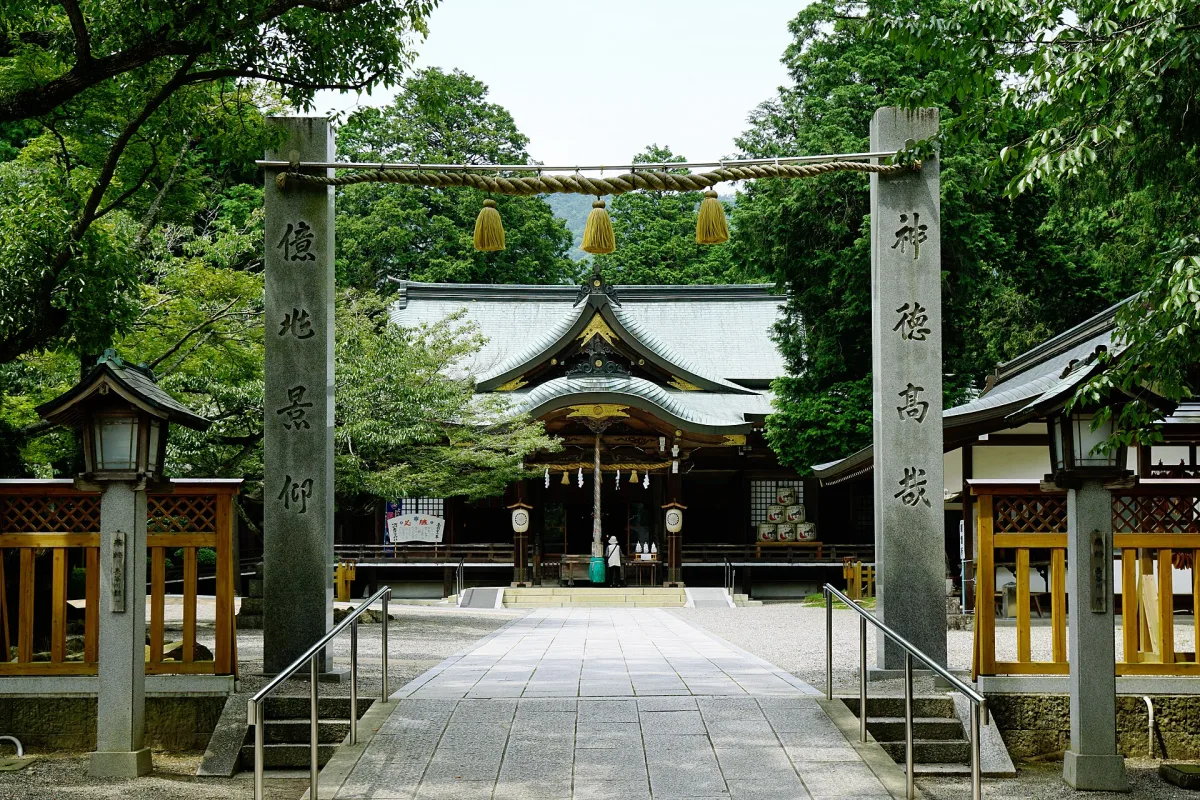
At the entrance to the approach stands a 14-metre torii (the gate that marks a shrine), and a path lined with stone lanterns leads up to the shrine buildings.
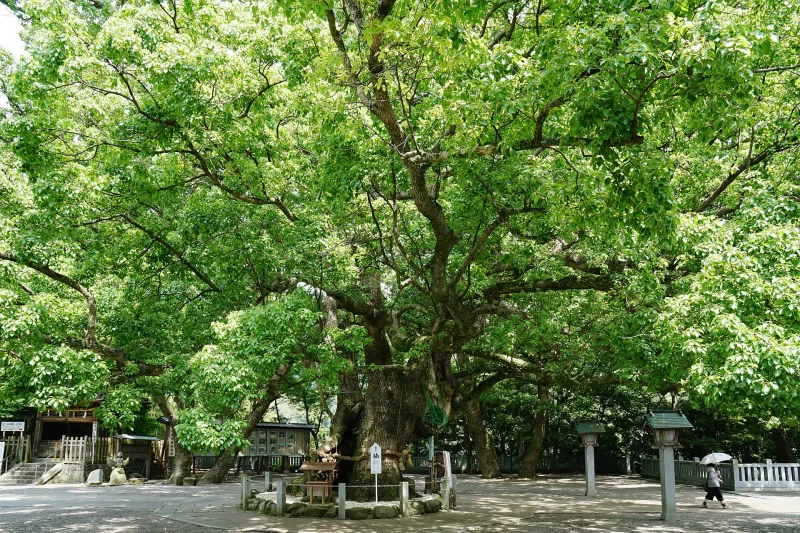
The thing that really catches the eye in the grounds is a huge camphor tree said to be 1,000 years old. It is a designated natural monument of Naruto city and is cherished as a shinboku, a sacred tree believed to be home to a deity. Reroofing of the main hall and the other shrine buildings was completed in October 2022.
The "German Bridge" built by prisoners of war
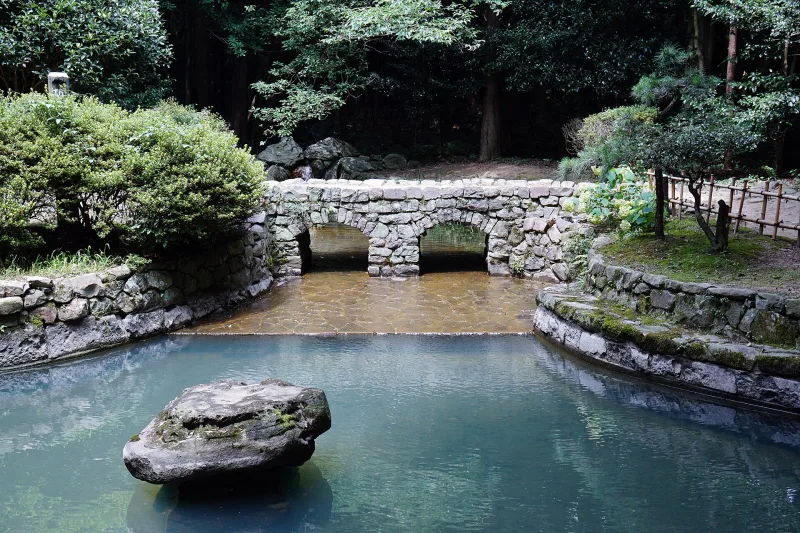
In the shrine grounds is a stone arch bridge known as the German Bridge. It was built around the time of the First World War by German prisoners of war held at the nearby Bando POW camp, using European stonemasonry techniques, and it is now a historic site of Naruto city. At the same time they also built the Megane-bashi ("Spectacles Bridge"), with two arches side by side, and a stone-paved walking path.
Naruto city presents the bridge as a reminder of how openly the camp was run and of the warm friendships between the prisoners and local people. If you want to learn more about the camp's history, carry on to the nearby Naruto German House museum.
Getting there
It is about a 25-minute walk north from JR Itano Station. By car it is about 10 minutes from Itano IC, about 15 minutes from Aizumi IC and about 20 minutes from Naruto IC, and there is a large free car park.
Nearby is Ryozen-ji, Temple No. 1 of the Shikoku 88 Temple Pilgrimage (a circuit of 88 temples around the island of Shikoku), so you can easily visit both.
Tips
- After your visit, stroll on to the German Bridge and the Megane-bashi. The stone-paved walking path was built at the same time.
- 1 November is the reitaisai, the shrine's most important festival of the year, and for part of the morning they stop taking requests for prayer ceremonies.
- The counter where you receive omamori (amulets) and ofuda (paper talismans) closes in the late afternoon, so go earlier in the day if you want one.
Sources
- 由緒書 - 大麻比古神社【公式】 (opens in a new tab)
- 所在地・ご連絡先 - 大麻比古神社【公式】 (opens in a new tab)
- 阿波一宮 大麻比古神社 - 鳴門市公式観光サイト (opens in a new tab)
- 大麻比古神社 - 鳴門市うずしお観光協会 (opens in a new tab)
- 史跡 ドイツ橋 - 鳴門市 (opens in a new tab)
- 板東と鳴門市ドイツ館 - 鳴門市うずしお観光協会 (opens in a new tab)
- 大麻比古神社 - Wikipedia (opens in a new tab)
Updated 30 September 2026. Opening hours and prices change, so check the official site before you go.